
Bloomfield, New Jersey homeowners know that a persistent musty smell can make a comfortable house feel unwelcoming. That stubborn scent is often a sign of hidden moisture and microbial activity rather than just a housekeeping issue. In this comprehensive guide, you will learn what causes mold odor, how to find the source, and the precise steps to eliminate it safely and effectively. If you prefer to tackle the problem with expert support, reliable local help for mold odor is available, but this guide will show you how to identify and resolve many issues on your own first.
“Mold odor” is commonly described as earthy, damp, or like wet socks. This smell is produced by microbial volatile organic compounds (MVOCs) released by mold and bacteria as they metabolize on damp materials. You may not see visible mold growth; in many Bloomfield homes, the odor appears before spots or discoloration. The challenge is to remove the smell by solving the underlying moisture and contamination problems—not merely masking it with fragrances or sprays.
What Causes Mold Odor In Bloomfield Homes
Bloomfield’s seasonal humidity, frequent rainfall, and temperature swings can drive moisture into building materials. Common culprits include roof or siding leaks, basement seepage, bathroom humidity, HVAC condensation, and plumbing pinhole leaks. Even brief wetting, like a small spill on a carpet that wasn’t thoroughly dried, can feed odor-causing microbes.
- Basements and crawl spaces: Poor drainage, foundation cracks, or high groundwater can keep air damp.
- Bathrooms and kitchens: Steam from showers and cooking without adequate ventilation can saturate drywall and caulk.
- Attics: Poor ventilation and roof leaks can dampen sheathing and insulation.
- Windows and doors: Condensation on cold glass can drip into sills and walls.
- HVAC: Dirty coils, clogged condensate drains, and wet ducts can spread musty air.
- Carpets and padding: Spills, pet accidents, or past leaks can feed microbial growth below the surface.
While the smell itself is not dangerous, it often signals conditions that can aggravate allergies and asthma, and it can contribute to gradual deterioration of building materials. That is why odor elimination must go hand-in-hand with moisture control and thorough cleaning.
Safety And Preparation
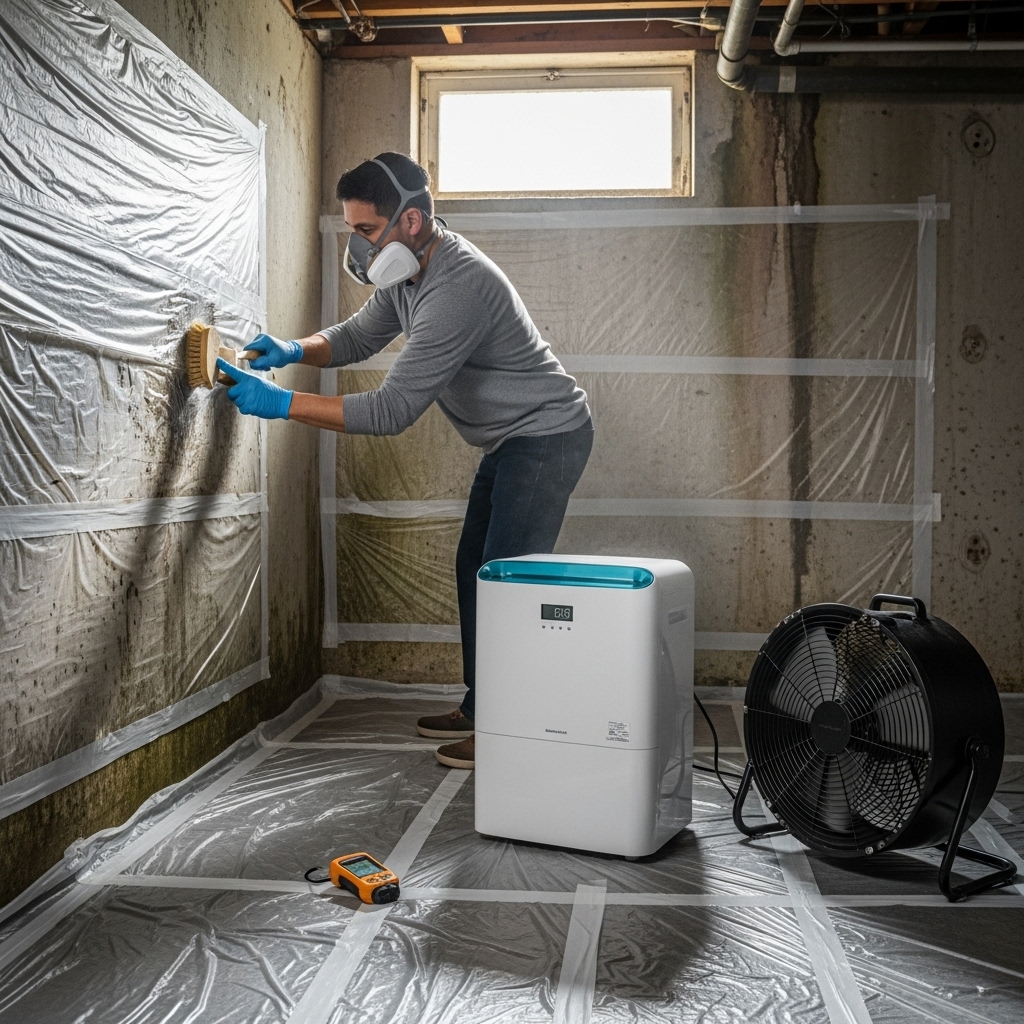
Before you begin, consider basic safety. Wear gloves and a respirator with a P100 or N95 filter when disturbing dusty or moldy areas. Ventilate the space by opening windows when weather allows, using box fans to exhaust air outdoors. Avoid mixing chemicals. Always test any cleaner on a small, inconspicuous area first.
Gather supplies: flashlights or headlamps, moisture meter (pin-type and/or pinless), hygrometer (to measure relative humidity), HEPA vacuum, unscented detergent, microfiber cloths, scrub brushes, disposable rags, plastic sheeting and tape, and contractor bags. A dehumidifier and air mover or fan can speed drying.
Step-By-Step Plan To Eliminate Mold Odor
- Pinpoint the source: Follow your nose to the strongest area, then investigate adjacent spaces above, below, or behind. Check basements, under sinks, behind toilets, around appliances, inside closets, and near exterior walls.
- Measure moisture: Use a moisture meter to compare “suspect” surfaces to known-dry areas. Drywall, baseboards, subfloors, and sill plates are key checkpoints. If readings are elevated, keep searching for active leaks.
- Control humidity: Aim for indoor relative humidity between 40% and 50%. Run a dehumidifier in damp zones like basements or bathrooms. Set bathroom fans to run during showers and for at least 20 minutes afterward.
- Fix water intrusions: Address the cause before cleaning. Repair plumbing leaks, unclog condensate lines, seal roof penetrations, and improve exterior drainage by cleaning gutters and extending downspouts away from the foundation.
- Isolate the work area: If you are cleaning moldy or dusty zones, contain them with plastic sheeting and tape to limit cross-contamination. Close HVAC vents in the area during cleaning to avoid spreading particles.
- HEPA vacuuming: Thoroughly vacuum floors, baseboards, window sills, and the tops of trim and cabinets. HEPA filtration captures fine particles that carry odor and allergens.
- Detergent cleaning: Wash hard, non-porous surfaces with a mild, unscented detergent and warm water. Scrub gently to avoid damaging finishes. Change rags frequently to avoid smearing residues.
- Porous materials: For light musty odors on porous items like unfinished wood shelves, use a slightly damp microfiber cloth with a small amount of detergent, then dry quickly with fans. For heavily contaminated carpets or pads, consider removal and replacement, as deep contamination is difficult to cure.
- Drying: Rapid drying is essential. Position air movers or fans to create airflow across wet surfaces. Continue dehumidification until moisture readings return to normal.
- Neutralize remaining odors: After thorough cleaning and drying, odors usually fade. Baking soda can help adsorb residual smells from carpets and cushions. Avoid strong fragrances; they mask rather than solve the problem and can trap moisture.
- HVAC inspection: Replace the filter, clean return grilles, and check the condensate drain. If the odor intensifies when the air conditioner or furnace runs, inspect ducts for leaks and consider professional duct cleaning if debris or wet insulation is present.
- Reassess: After a day or two, walk the home and check again. If the smell persists in a specific area, repeat the search for hidden moisture—especially behind baseboards, under vanities, and inside wall cavities near plumbing.
Hidden Areas That Commonly Hold Odor
- Behind baseboards and trim where dust and dampness collect.
- Under stair treads and basement steps.
- Inside sink cabinets and toe-kicks.
- Behind refrigerators where coils and drip pans can harbor moisture.
- Underneath carpets at exterior doors with past rain intrusion.
- Below windows with condensation damage to sills and drywall.
If you have addressed leaks and cleaned thoroughly yet the odor lingers, keep in mind that even small reservoirs—like a damp cardboard box or a stack of newspapers—can sustain the smell. Systematically remove and dry or discard materials until the odor subsides.
When To Seek Professional Help
Consider professional assistance if you discover extensive growth, recurring leaks, strong odors when the HVAC runs, or musty smells returning after thorough cleaning and drying. A professional can perform more advanced diagnostics, such as infrared thermography to find hidden leaks, borescope inspections inside walls, and air or surface sampling when needed to guide remediation strategy. In Bloomfield, rooms that repeatedly creep above 60% relative humidity during summer may need a dehumidification strategy tailored to your home’s design and airtightness. When evaluating options, remember that experienced teams focus on moisture control, source removal, and proper ventilation rather than perfumes or fogging that simply mask the odor. If you decide to consult local experts, you can explore resources focused on mold odor to understand typical procedures and what to expect from an effective remediation plan.
Prevention: Keep Odors From Returning
- Ventilation: Use bath and kitchen exhaust fans that vent outdoors, not into attics. Run them during moisture-generating activities and for 20–30 minutes after.
- Humidity control: Use a dehumidifier in basements and crawl spaces during humid months. Monitor with a hygrometer and keep indoor RH near 45%.
- Maintenance: Clean gutters twice a year and extend downspouts. Inspect caulking around tubs, showers, and sinks; repair as needed.
- HVAC care: Replace filters regularly and ensure condensate drains are clear. Set thermostats to prevent long periods of cool, stagnant air in summer that can invite condensation.
- Housekeeping: Vacuum with a HEPA filter, dust high shelves and trim, and avoid storing cardboard on basement floors. Use plastic bins with lids.
- Spill response: Dry spills and wet areas within 24–48 hours. Lift rugs and increase airflow until the area is completely dry.
Common Mistakes To Avoid
- Masking odors with fragrance rather than removing the source.
- Cleaning while an active leak continues.
- Leaving fans on without dehumidification in humid weather, which can recirculate damp air.
- Over-wetting carpets during cleaning and failing to dry them fully.
- Neglecting to check the HVAC system when odors intensify during heating or cooling cycles.
Frequently Asked Questions
Q: Is the musty smell itself dangerous? A: The odor is a signal of dampness and microbial activity. While the smell alone is not toxic, the conditions behind it can aggravate allergies and asthma and should be corrected.
Q: How long does it take for the odor to dissipate after cleaning? A: If the source is removed and materials are dried to normal moisture levels, improvement often occurs within a few days. Stubborn odors may require additional cleaning or discarding porous items.
Q: Should I use bleach to remove mold odor? A: On non-porous surfaces, diluted bleach can kill surface growth, but detergent cleaning and drying are often sufficient. Porous materials usually need removal or professional treatment. Never mix bleach with ammonia or acids.
Q: Can I prevent mold odor just by running an air purifier? A: HEPA filters reduce particles, but they do not solve moisture problems. Use purification as a supplement, not a substitute for leak repair and drying.
Q: When should I test the air? A: Testing can be helpful in complex cases, but many odors are resolved by locating moisture and cleaning thoroughly. Consider testing if symptoms persist despite corrective actions or when required for documentation.
Q: What humidity should I maintain in Bloomfield, NJ? A: Target 40%–50% RH. In summer, use dehumidifiers and ventilation. In winter, be cautious with humidifiers to avoid window condensation.
Q: Why does the odor return after rain? A: Exterior drainage issues or foundation cracks may be allowing water intrusion. Inspect gutters, downspouts, grading, and basement walls.
Q: Does replacing the carpet always fix the smell? A: Not always. If the subfloor or baseboards are damp, the odor can persist after new carpet installation. Dry and verify subfloor moisture before replacement.
Q: My attic smells musty—what should I check? A: Look for roof leaks, blocked soffit vents, inadequate ridge or gable ventilation, and bathroom fans that exhaust into the attic instead of outdoors.
Q: Will painting over the area trap the smell? A: Primers can help seal residual odors on certain surfaces, but painting over damp or contaminated material can make problems worse. Dry thoroughly and ensure cleanliness first.
If you are ready to reclaim a fresh, comfortable home in Bloomfield, act methodically and focus on moisture control, source removal, and consistent ventilation. For additional guidance or to accelerate your results with proven methods, reach out to a trusted local resource. When you are prepared to move forward, schedule a conversation with a team that understands mold odor and can help you breathe easier, sleep better, and enjoy your home again.