
When you notice discolored drywall, a stale odor, or damp spots after rain, the first and most important action is a thorough inspection. A structured inspection reveals how far contamination has spread, where moisture is entering, and what steps will return your home to a healthy condition. In Bloomfield, New Jersey, inspection is especially valuable because older basements, changing seasons, and heavy summer humidity can create complex moisture patterns. If you want experienced guidance from the outset, consider engaging professional mold removal support to align inspection findings with an effective remediation plan.
This article explains how inspections are planned and executed, what tools are commonly used, and how findings translate into practical steps. You will also learn which household clues suggest a small localized issue versus a more extensive situation, and how to avoid common pitfalls that lead to repeated cleanup cycles.
Inspection Goals
A mold-focused inspection aims to achieve three outcomes: identify moisture sources, map the full extent of impacted materials, and prioritize actions that restore normal conditions. These outcomes require more than a quick look at the obvious stain. They demand probing questions, consistent measurements, and a methodical walk-through of the home, inside and out.
Pre-Inspection Preparation
Start by gathering background: recent leaks, roof or window repairs, changes in ventilation, and seasonal patterns of odor. Note which rooms smell musty after showers or during humid weather. Collect photos from previous events and document any repairs. This context helps you target the investigation and avoid overlooking repeating contributors.
Exterior Review
Begin outside. Check gutters and downspouts, confirm that water is directed away from the foundation, and inspect grading. Look for cracks in masonry, gaps at penetrations, and signs of water splashing or pooling near the house. Pay particular attention to window wells and areas where landscaping may hold moisture against the foundation. Small exterior issues often create the indoor symptoms homeowners notice later.
Interior Walk-Through
Inside, rely on your senses and tools. Use a flashlight to examine baseboards, drywall seams, and corners where furniture blocks airflow. Look beneath sinks, behind washing machines, and around toilets and tubs. Note bubbling paint, curling vinyl, or warped trim. In finished basements, inspect along exterior walls and around utility penetrations where conduits enter.
Moisture Measurement and Mapping
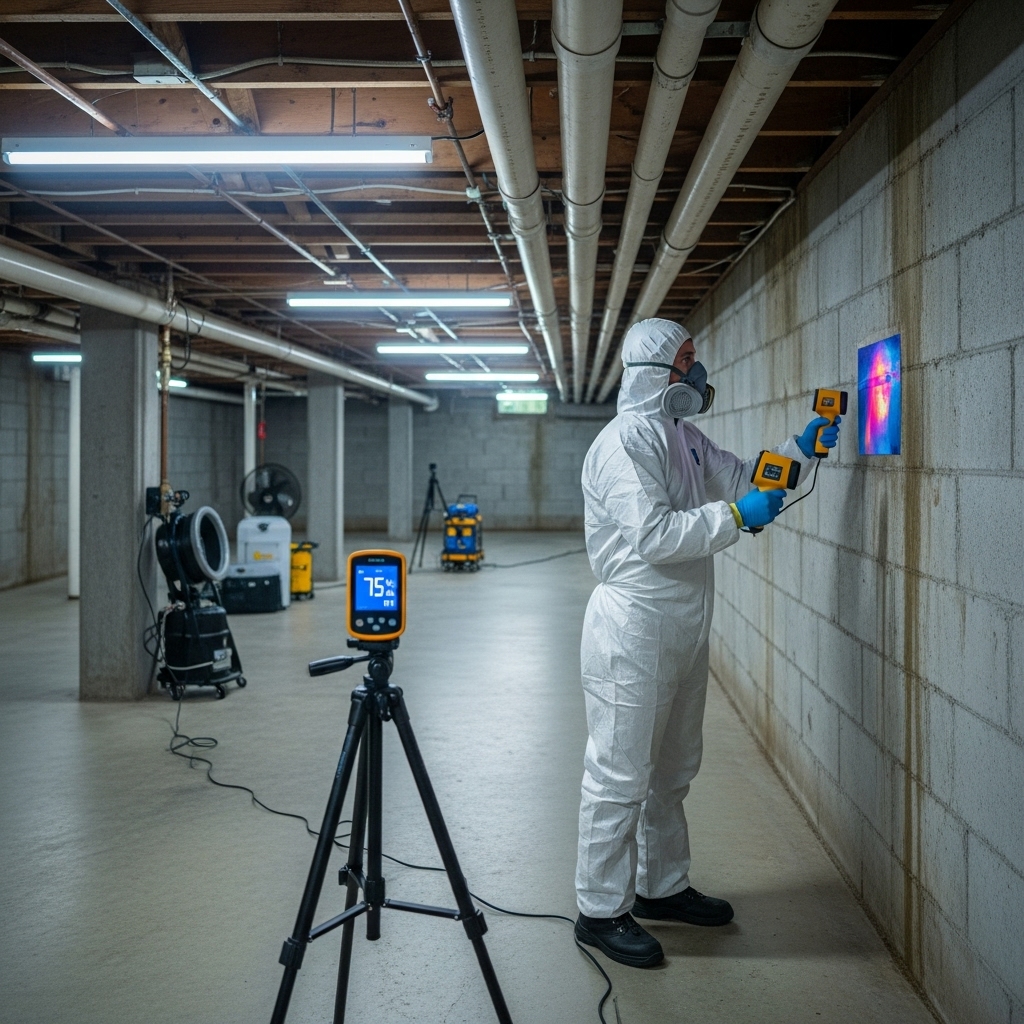
Good inspections use objective measurements. Moisture meters help you compare suspect materials with known dry areas. Thermal imaging can reveal cold spots that indicate hidden moisture. With a simple sketch of the floor plan, mark the readings to create a moisture map. This shows where conditions deviate from normal and helps you decide where to open walls or remove finishes.
Ventilation and HVAC Considerations
Ventilation strongly influences indoor humidity and condensation. Verify that bathroom and kitchen fans discharge outdoors rather than into attics or soffits. Inspect the HVAC air filter and note whether returns are located near the affected areas. If contamination is found close to returns, additional precautions may be needed to prevent distribution through ductwork during remediation.
Risk Categorization
After observations and measurements, categorize the situation. A small, surface-level patch on tile grout in a well-ventilated bathroom differs fundamentally from widespread staining on drywall in a damp basement. Your category informs the containment needed, the extent of removal, and the level of drying and verification appropriate to the case.
From Inspection to Action: The Steps
- Define containment boundaries to protect clean areas.
- Eliminate or control the moisture source.
- Remove unsalvageable porous materials beyond visible staining.
- Clean and treat cleanable, non-porous surfaces.
- Dry materials thoroughly and stabilize indoor humidity.
- Verify visually and by odor that conditions have normalized.
- Rebuild with moisture-resistant strategies and materials.
- Implement preventive maintenance.
Common Findings in Bloomfield Homes
- Basement seepage along one wall after heavy rain, often traced to downspouts discharging too close to the foundation.
- Bathroom moisture from underpowered or unused exhaust fans, causing recurring mildew on ceilings and grout.
- Window condensation during temperature swings, leading to staining on sills and drywall.
- Minor plumbing leaks below sinks or behind appliances, wetting cabinetry and trim.
- Attic condensation from blocked soffits or bath fans venting into the attic.
Documentation and Communication
Document what you find with photos, readings, and a short narrative. Clear documentation helps guide remediation and keeps everyone on the same page about the plan. If you work with a contractor, ask for a step-by-step scope of work based on the inspection results, including containment, removal areas, cleaning methods, and drying strategy.
Mid-Project Reassessment
Even with a careful inspection, hidden conditions sometimes emerge during demolition. Be ready to pause and reassess. Expand containment if the affected area is larger than expected, and update your moisture control approach if new sources appear. Professional mold removal help can be invaluable for interpreting new information quickly and keeping the project aligned with best practices.
Prevention Starts During Inspection
The best inspection not only reveals what to fix now but also what to monitor going forward. If basement walls show marginal dampness during humid months, plan for continuous dehumidification and periodic checks. If bathroom ventilation is borderline, install a timer switch and ensure the fan is properly ducted. If grading is suspect, correct it before the next heavy rainfall. Each preventive action reduces the chance of recurrence.
Frequently Asked Questions
What is the most important outcome of an inspection? Clarity about the moisture source and the true extent of affected materials. Without that, remediation can miss hidden pockets and lead to repeated issues.
Should I sample the air before starting? Air sampling can be useful in specific circumstances, but many projects proceed successfully with a solid moisture-focused inspection and visual assessment. The priority is identifying and resolving water intrusion and removing contamination.
How do I know if I need containment? If you will disturb materials, containment protects clean areas. The more extensive the removal, the more robust containment and ventilation should be.
Can I rebuild immediately after cleaning? Rebuild only when materials are dry and stable. Rushing to cover damp areas can trap moisture and cause odors or staining to reappear.
What if odors remain after remediation? Persistent odor suggests residual moisture or incomplete cleaning. Reinspect, continue controlled drying, and verify that ventilation is adequate.
Move Forward with Confidence
Inspection is not just a box to check—it is the foundation of successful remediation. By taking a structured, measurement-driven approach, you will understand what happened, choose the right steps, and prevent a repeat. When you want a knowledgeable partner to translate findings into action, schedule expert mold removal guidance and restore a clean, dry, and healthy home near Bloomfield.