Introduction
When your Bloomfield, New Jersey home smells musty or shows suspicious staining, you may be torn between buying a mold inspection kit or hiring a professional. DIY products promise quick answers, while a pro brings building science, specialized tools, and interpretive expertise. Which path makes sense for your situation? This guide compares kits and professional services across accuracy, scope, safety, and decision-making value. If you are leaning toward expert help, remember that the provider you choose for your mold inspection significantly influences the clarity and usefulness of the results.
Because Bloomfield homes often contend with basement humidity, aging roofs, and seasonal condensation, understanding moisture behavior is crucial. The right choice is the one that turns your questions into practical steps you can implement confidently.
What DIY Kits Offer—and What They Miss
DIY kits can detect the presence of spores or growth on a sampled surface. They are relatively simple to use and can provide a preliminary signal that further evaluation is warranted. For straightforward scenarios—like confirming that a small patch on a non-porous material is likely mold—a kit might offer reassurance or motivate next steps. Kits can also be useful if you are simply screening an area before deciding whether to bring in a professional.
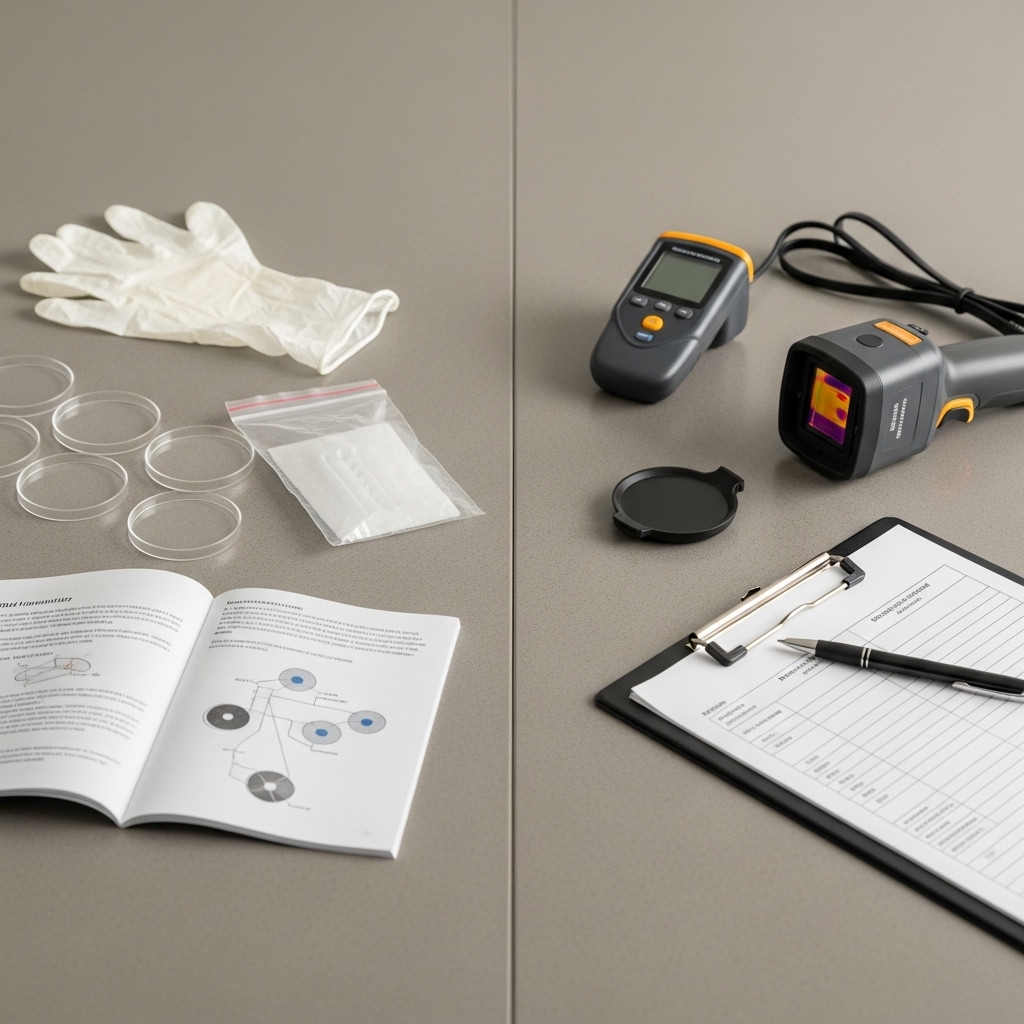
However, kits cannot identify why moisture is present, how it moves through your home, or where hidden reservoirs might exist. A plate left open in a room captures what settles onto it, not necessarily what you are breathing throughout the day, and environmental variables can skew results. Without a building-wide assessment, you may end up chasing symptoms rather than addressing the cause. In short, kits detect but do not diagnose.
What Professionals Bring to the Table
A qualified inspector arrives with tools and a systematic approach to find moisture sources and assess risk. They will evaluate the exterior for water management, use moisture meters and thermal imaging indoors, and consider ventilation, insulation, and HVAC influences. When testing is appropriate, sampling is targeted to answer specific questions, and chain-of-custody with accredited lab analysis ensures credible results. The written report connects findings to cause and effect, prioritizes actions, and helps you plan repairs or maintenance that prevent recurrence.
Professionals also communicate limitations honestly. They explain when testing adds value, when it is unnecessary, and how to interpret results in context. Most importantly, they help you avoid quick fixes that trap moisture—like painting over stains or using fogging products without addressing the underlying problem.
Accuracy and Context
DIY kits can yield false positives and false negatives because they do not control for airflow, humidity, or the timing of collection. Even when kits accurately detect spores, the result lacks context: Is the contamination from a hidden wall cavity leak, from a dusty HVAC system, or from outdoor air? A professional assessment integrates visual clues, moisture mapping, and targeted sampling to explain what is happening and why. Context turns raw data into a plan you can act on.
Safety and Scope
Homeowners using kits may disturb growth without proper containment, potentially spreading spores or dust. Professionals understand how to minimize disturbance during assessment and how to design containment if remediation becomes necessary. They also evaluate areas that homeowners often overlook, such as attic sheathing, crawlspace vapor control, and the back side of sink cabinets. The scope of a professional inspection is broad by design, ensuring that recommendations address the whole building system rather than a single symptom.
When a Kit Might Be Enough
There are cases where a kit can be a useful screening tool. If you have a small, isolated area on a non-porous surface and no sign of ongoing moisture, a kit may help you decide whether to proceed with cleaning and monitoring. If the result raises more questions than answers, or if odors persist, that is a signal to bring in a professional. Think of kits as a preliminary step—not a substitute for a thorough evaluation.
When a Professional Is the Smart Choice
If there is a history of leaks, recurring odors, or visible growth on porous materials like drywall or wood, professional help is advisable. The same holds for real estate transactions, sensitive occupants, or complex homes with finished basements and multiple HVAC zones. When the stakes include health, property value, or significant repairs, you want targeted assessment and clear reporting that supports decisions.
Bloomfield-Specific Considerations
Local homes commonly experience basement humidity and occasional seepage through masonry. Attic condensation can occur in winter if warm air escapes through gaps at ceiling penetrations. Bathrooms need effective exhaust fans that vent outdoors, not into attics. A professional who understands these patterns will tailor the inspection to known regional risks, saving you time and helping you avoid missteps.
Interpreting Results Without Overreacting
Both kits and professional sampling can produce results that seem alarming without context. Elevated counts in one room may reflect temporary conditions, cleaning activity, or outdoor influences. Surface growth on drywall may necessitate removal, while light growth on tile may call for cleaning and humidity control. The difference between overreaction and appropriate action lies in interpretation. A professional report helps you right-size your response, focusing on root causes and durable fixes.
Budget and Value Considerations
While a DIY kit can seem less expensive at first glance, consider the value of a comprehensive plan. If a kit leads you to misdiagnose the problem, you may spend more time and effort without solving the issue. A well-executed inspection provides a roadmap—moisture control, material decisions, and prevention—that can save time and reduce disruption. By clarifying priorities, a professional maximizes the return on your overall effort.
Time and Convenience
Kits promise fast results, but the learning curve can be steep if you are unfamiliar with sampling methods and interpretation. A professional streamlines the process: one visit to assess, sample if warranted, and deliver a clear report. This efficiency is especially valuable if your schedule is tight or if you are coordinating with contractors for subsequent work.
Mid-Process Check-ins with a Pro
During a professional inspection, expect periodic summaries of findings and discussion about whether testing is necessary. These check-ins help you decide on sampling locations, understand limitations, and align on next steps. The collaborative approach reduces uncertainty and ensures that every action serves a purpose. This midcourse clarity is one of the advantages of a well-managed mold inspection.
Reducing the Risk of Recurrence
Professionals emphasize prevention. They identify ventilation gaps, insulation voids that cause condensation, and materials that trap moisture. Their recommendations often include practical improvements like adjusting bathroom fan usage, sealing attic penetrations, controlling basement humidity, and selecting suitable finishes for below-grade spaces. Prevention protects the gains you make from any cleanup or repairs.
What a Good Report Includes
A high-quality report features photographs, moisture readings, and a narrative tying conditions to causes. It prioritizes steps so you know what to do first and what can wait. It explains when removal is necessary and when cleaning is sufficient. It also clarifies when follow-up verification is prudent, especially after significant work. This level of detail is difficult to achieve with a kit alone because you lack the building-wide perspective.
Frequently Asked Questions
Q: Can a DIY kit prove that my home is safe? A: Kits provide limited information and cannot confirm that sources of moisture are corrected. Safety depends on the building’s conditions and your ability to maintain a dry, clean environment.
Q: If a plate test grows something, does that mean I need remediation? A: Not necessarily. Plate growth indicates spores landed and grew under the test’s conditions, but it does not identify where they came from or whether the source is active. Professional assessment provides context.
Q: Will a professional always recommend testing? A: No. Ethical inspectors recommend testing when it answers a specific question or provides necessary documentation. Visible moisture damage with clear sources may call for direct corrective action first.
Q: Are there times when a kit is reasonable? A: Yes, for quick screening of a small, non-porous area when there is no sign of ongoing moisture. Persistent odors, health concerns, or visible growth on porous materials warrant a professional visit.
Q: How do professionals minimize disturbance? A: They use non-destructive tools first, manage airflow if sampling could agitate dust, and explain any steps that might create disruption so you can plan accordingly.
Q: How soon will I get a report from a pro? A: Timing depends on whether laboratory analysis is included. Expect a clear explanation of delivery time during scheduling.
Q: Can results vary day to day? A: Yes. Airborne particles fluctuate with humidity, activity, and weather. That is why interpretation in context is essential.
Making the Right Choice for Your Home
The ideal approach is the one that gives you clarity and a credible plan. Kits can be useful for initial screening, but they rarely answer the most important question: why moisture and growth are present. Professionals deliver a holistic view, targeted testing when needed, and practical steps to prevent recurrence. With Bloomfield’s mix of older homes and seasonal moisture challenges, that context is often decisive.
Ready to Get Clear Answers?
If you want actionable insight grounded in building science and tailored to local conditions, schedule a professional mold inspection and move forward with confidence.