When mold shows up in a home or business, it rarely stays confined to one small corner for long. In a community like Bloomfield, New Jersey—where seasonal humidity, aging housing stock, and varied building materials converge—addressing a growth early can protect health, preserve property value, and prevent larger structural concerns. Professional teams experienced in mold mitigation services bring the training, equipment, and local knowledge necessary to tackle contamination the right way the first time. From meticulous inspections and moisture mapping to safe removal and comprehensive prevention strategies, expert help ensures each decision is grounded in proven standards and tailored to the property’s unique conditions.
Professional mold mitigation is about more than removing visible growth. It’s a systematic approach to identify the underlying moisture source, contain and remove impacted materials safely, clean and filter the air, and create a foundation for long-term prevention. In Bloomfield, where basements, attics, and bathrooms frequently harbor elevated humidity and slow leaks, the difference between a quick cleanup and a fully managed mitigation project can be the difference between recurring problems and a healthier indoor environment.
Understanding Mold in Bloomfield, New Jersey
Mold spores are naturally present in outdoor air, and they regularly make their way indoors through ventilation, open doors, and on clothing. The trouble starts when spores encounter moisture and nutrients in a stagnant or damp location and begin to colonize. In Bloomfield, mold commonly appears in basements with inadequate dehumidification, bathrooms with poor ventilation, kitchens with undetected plumbing drips, and attics with insufficient insulation or improperly vented exhaust fans. Seasonal rain, snowmelt, and summer humidity can also introduce or sustain dampness in building cavities and on surfaces.
Beyond obvious leaks, condensation can be a hidden driver. Cold water pipes sweating in summer, poorly insulated exterior walls, or temperature differences between conditioned and unconditioned spaces can create microclimates where moisture lingers. Professional mitigation looks for these subtle contributors as carefully as it addresses obvious signs of damage.
Health and Structural Considerations
Mold affects properties and people differently. Some individuals may experience discomfort such as irritated eyes, nasal stuffiness, or coughing; others may be more sensitive and notice symptoms sooner. From a building perspective, mold digests organic material. Over time, paper-faced drywall, wood framing, and certain types of insulation can deteriorate when consistently wet, and finishes may discolor or develop odors. Prompt mitigation is essential to control the spread, protect occupants, and preserve structural elements.
Professional providers follow industry standards for containment and air handling to help limit aerosolized particles from moving to unaffected rooms. The goal is to deliver a thorough, controlled process that focuses on safety and verifiable results.
What Professional Mitigation Includes
A comprehensive mold mitigation plan is both investigative and corrective. It includes a detailed assessment, clear scope of work, engineering controls to isolate work areas, removal or cleaning of impacted materials depending on porosity and damage, moisture reduction and drying, and guidance for prevention. Communication with the property owner or manager—from initial findings through final documentation—is a defining characteristic of an effective professional service.
The Step-by-Step Process Professionals Use
- Initial consultation and inspection: Technicians evaluate reported concerns, visible growth, water staining, musty odors, and comfort complaints. They ask about recent plumbing issues, weather events, or HVAC changes to build context.
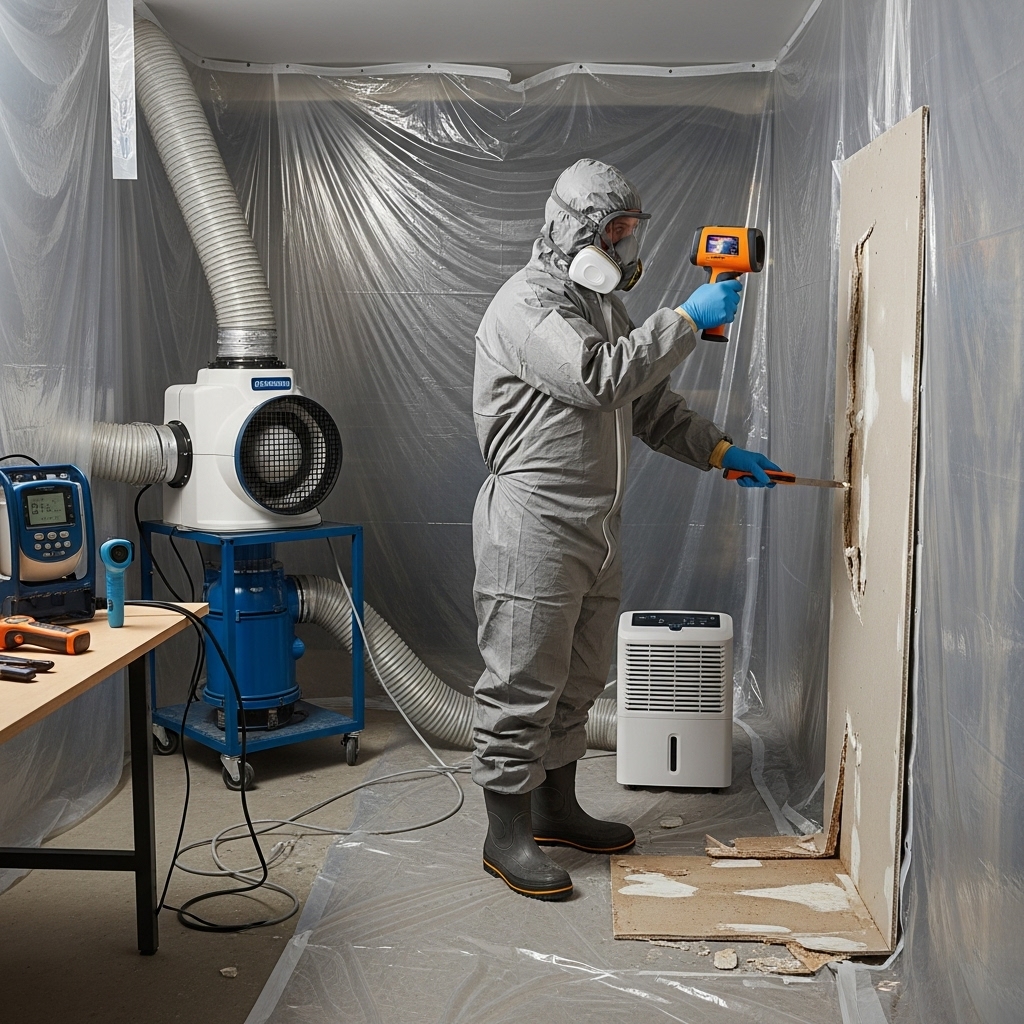
- Moisture mapping and instrumentation: Non-invasive meters, hygrometers, and thermal imaging help locate elevated moisture and temperature anomalies behind walls, under flooring, and around penetrations. This establishes the boundaries of the affected area.
- Containment and negative air: Poly sheeting, zipper doors, and controlled entry points isolate work zones. Negative air machines with HEPA filtration draw air from clean spaces into containment to reduce particle migration.
- Personal protective equipment (PPE): Appropriate respirators, gloves, eye protection, and coveralls protect workers and help keep impacted dust within the work zone.
- Source correction: Fixing the moisture driver—whether a leak, inadequate ventilation, or groundwater intrusion—prevents recurrence. This step is essential before or alongside removal.
- Selective demolition: Severely impacted porous materials such as drywall, carpeting, and certain insulation are removed. Salvageable structural components are cleaned and dried.
- HEPA vacuuming and damp wiping: Non-porous and semi-porous surfaces receive meticulous cleaning with HEPA vacuums and damp wiping methods to capture and remove settled spores and residues.
- Drying and dehumidification: Directed airflow and professional-grade dehumidifiers restore normal moisture levels in building materials.
- Post-mitigation verification: Visual inspections and moisture readings confirm that materials are dry and surfaces are clean. Independent testing may be coordinated when requested or appropriate.
- Documentation and guidance: Photos, moisture logs, and a narrative of the work performed provide a clear record. Preventive recommendations support longer-term health of the building.
Each step is completed with care to protect occupants and neighboring areas. By keeping the process orderly and transparent, professionals help owners understand what is happening and why it matters.
Standards, Certifications, and Safety
Reputable providers align their methods with well-recognized industry standards for mold remediation and water damage restoration and maintain training that emphasizes safety, containment, and cleaning effectiveness. Adherence to established guidance helps ensure effective results across a variety of building types—historic homes, modern townhouses, retail spaces, and offices—found throughout Bloomfield.
Safety extends to appropriate chemical use, equipment maintenance, electrical considerations around damp conditions, ladder and attic safety, and waste handling. An experienced team knows how to protect occupants and workers without cutting corners.
Tools and Technologies That Improve Outcomes
While experience and judgment are central to mitigation, appropriate tools enhance accuracy. Thermal imaging cameras highlight temperature differences that correlate with dampness. Moisture meters identify how deep moisture extends and confirm drying. HEPA-filtered air scrubbers and vacuums capture fine particles that ordinary devices would push back into circulation. Dehumidifiers sized to the cubic footage and moisture load accelerate drying. Together, these tools enable a thorough plan instead of guesswork.
In the heart of the process, clear communication remains vital. Mid-project updates, change-order transparency when hidden damage is discovered, and a documented path to completion minimize surprises. If you are comparing options in Bloomfield, ask about equipment specifications, documentation practices, and how post-mitigation verification is handled. During this evaluation, it helps to confirm that the provider has hands-on experience delivering comprehensive mold mitigation services across both residential and commercial properties in the area.
Local Conditions That Influence Mold in Bloomfield
Regional climate patterns can play a subtle but meaningful role in mold development. Warm, moist summers can elevate indoor humidity, especially in basements and first floors with limited ventilation. In winter, stack effect draws warm air upward, sometimes pulling humid air into attics and roof assemblies where it condenses on cold surfaces. Homes with older windows and minimal insulation may face condensation on sills, while buildings without sump pumps or adequate grading may see occasional seepage.
Mitigation that accounts for these factors leads to better long-term results. Solutions may include ventilation upgrades in bathrooms and kitchens, encapsulation or dehumidification strategies in basements, correct termination of dryer vents, and careful air sealing paired with balanced ventilation to reduce unintended moisture migration. Professional teams familiar with Bloomfield’s housing styles and common building assemblies can identify the best sequence of steps.
Professional vs. DIY: Knowing the Difference
For small, isolated patches on non-porous surfaces, simple cleaning can sometimes be appropriate. However, when growth covers a larger area, returns after cleaning, or is associated with wet building materials or musty odors, a professional strategy becomes essential. Proper containment, negative air, and HEPA filtration are not typically available to DIY efforts, and the risk of inadvertently spreading spores or missing the moisture source is real. Professionals bring both the methods and the mindset to restore a stable baseline for indoor air and materials.
Aftercare and Prevention Strategies
Post-mitigation, prevention is a partnership between the property and its occupants. Good habits and targeted improvements keep moisture in check.
- Control indoor humidity with dehumidification as needed, especially in basements and lower levels.
- Use exhaust fans during and after showers and cooking; verify they vent outdoors, not into attics or crawl spaces.
- Repair drips promptly, and monitor under sinks, around toilets, and near appliances for dampness.
- Maintain gutters and downspouts to move water away from foundations; ensure proper grading.
- Insulate cold water pipes to reduce condensation during warm months.
- Schedule seasonal HVAC maintenance and change filters regularly.
- Keep furniture and storage slightly off basement walls to allow airflow.
- Address window condensation with insulation upgrades or interior humidity control.
These steps reduce the conditions that allow mold to regain a foothold, extending the benefits of mitigation long after the cleanup is complete.
Working with Owners, Tenants, and Managers
In multi-unit buildings and shared spaces common to Bloomfield’s denser neighborhoods, clear communication matters. Professional providers coordinate with owners, property managers, and tenants to schedule work, establish containment that respects daily routines, and provide updates. When documentation is needed for organizational or compliance reasons, comprehensive records support transparency and peace of mind.
Frequently Asked Questions
Q: How fast should I act if I discover mold? A: As soon as practical. Mold can spread quickly in the presence of moisture. Rapid assessment prevents greater disruption by catching issues early and limiting contamination.
Q: Do I need to leave my home or close my business during mitigation? A: It depends on the scope. With proper containment and negative air, many projects proceed while adjacent areas remain usable. Your provider will advise on temporary adjustments to routines.
Q: Is testing always required? A: Not always. Many projects are scope-driven by visual observations and moisture readings. In some cases, testing can clarify the extent or verify post-mitigation conditions when requested.
Q: Will everything with mold be torn out? A: Only materials that are too damaged or too porous to clean effectively are removed. Non-porous and many semi-porous surfaces are cleaned and dried.
Q: What if mold is hidden? A: Professionals use moisture meters and thermal imaging to locate likely areas. If hidden growth is uncovered during work, the scope is adjusted with clear communication.
Q: How long does a typical mitigation take? A: Duration depends on the size of the affected area, how soaked building materials are, and how quickly drying can be achieved. Your provider will outline a timeline after the initial assessment.
Q: Can mitigation prevent mold from ever returning? A: Mitigation restores clean and dry conditions; ongoing prevention depends on maintaining proper humidity, ventilation, and prompt repairs. Combined, these steps greatly reduce the likelihood of recurrence.
Q: What should I do after mitigation is complete? A: Follow preventive recommendations, monitor humidity, and schedule any suggested ventilation or insulation improvements. Keep the documentation for your records.
Ready for Professional Help in Bloomfield?
If you have concerns about mold in a home or business, now is the time to act. Schedule a thorough inspection, get clear guidance on moisture control, and choose a provider that documents each step and prioritizes safety. For experienced, local support delivering proven mold mitigation services, reach out today and take the first step toward a cleaner, healthier property in Bloomfield.