
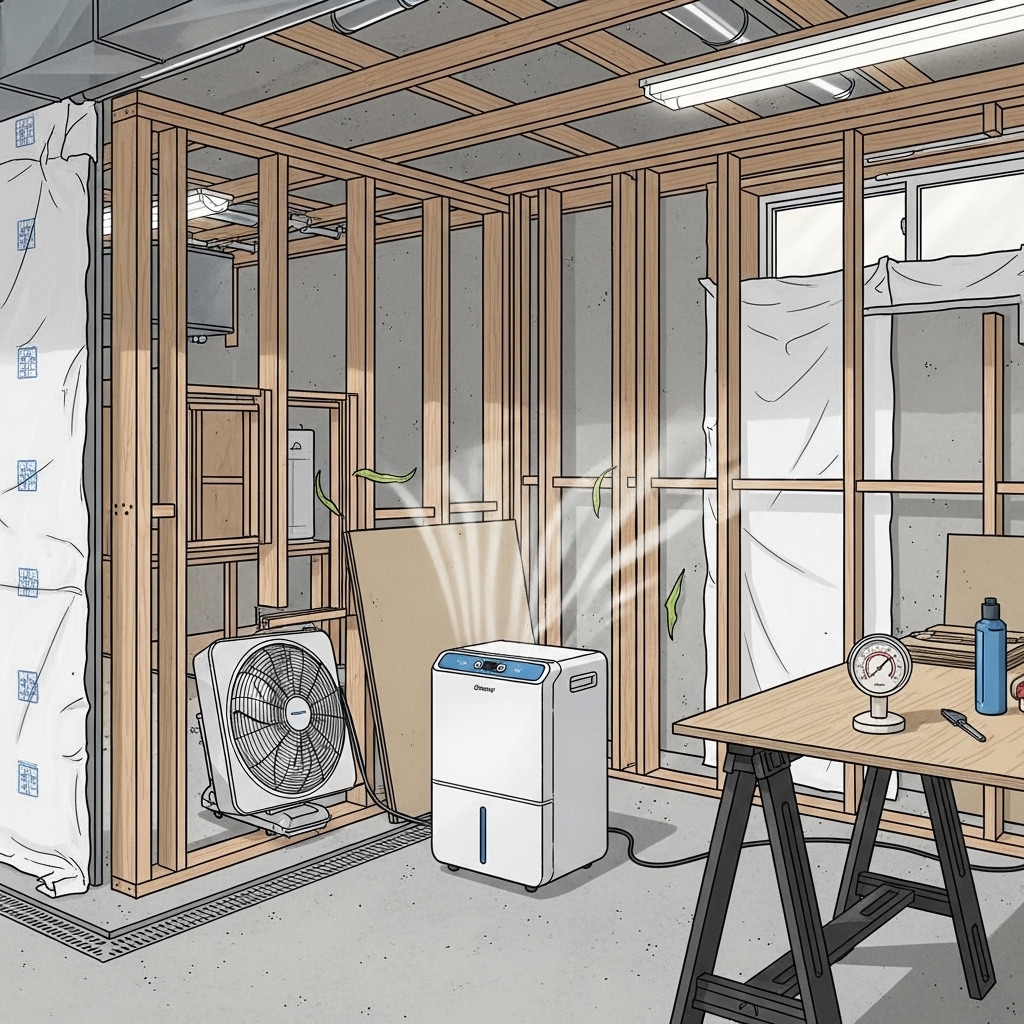
Basements in Bloomfield, New Jersey often serve as storage rooms, laundry areas, or finished living space, but they can also become the source of persistent musty smells. Because basements sit below grade, they face unique moisture dynamics that make mold odors common. This guide explains how to identify, remove, and prevent basement mold odors with a practical, step-by-step approach tailored to local conditions. If you are beginning your journey, learning about professional-grade strategies for mold odor removal can help you plan an efficient and thorough response.
Basement mold odor is often an indicator that moisture is consistently present. This moisture may come from groundwater seepage, plumbing leaks, condensation on cool surfaces, or even humid summer air. The key to success is identifying and stopping the moisture source before cleaning and deodorizing. Otherwise, odors tend to return.
In Bloomfield’s climate, temperature fluctuations and seasonal rains can push moisture through foundation walls or slab cracks. Unsealed utility penetrations, clogged gutters, poor grading, and inoperative sump systems compound the problem. Understanding the building science behind your basement helps you prioritize actions that deliver long-term results.
Step 1: Diagnose the moisture source
Begin with observation. Is the odor strongest near exterior walls, utility rooms, or floor drains? Do you see efflorescence (white, powdery mineral deposits) on walls? Are there visible water stains, peeling paint, or soft drywall? Take moisture readings if possible, and check humidity levels with a hygrometer. Record the conditions before changing anything so you can measure improvement later.
- Check gutters and downspouts for clogs and confirm downspouts discharge well away from the foundation.
- Walk the perimeter outside and look for negative grading that slopes toward the house.
- Inspect plumbing connections, water heaters, and laundry lines for slow leaks.
- Evaluate the sump pit and pump, including power and discharge line condition.
- Observe condensation on pipes, windows, and uninsulated walls.
A good diagnosis saves time and money by focusing on root causes. Persistent dampness behind finished walls or under flooring may require partial removal to access the real issue.
Step 2: Stabilize and dry the environment
Before cleaning, bring the basement’s environment under control. Aim for relative humidity under 50% where feasible. Use dehumidifiers, increase air movement with fans during drying (not during demolition if mold is present), and open vents to improve airflow. If outside air is more humid than inside, ventilation alone may not help; controlling indoor humidity with dehumidification is usually more reliable.
- Seal obvious cracks or gaps temporarily to limit moisture intrusion.
- Insulate cold-water lines to reduce condensation drip.
- Run the HVAC fan only when appropriate to avoid spreading contaminants from work areas.
- Use plastic sheeting and painter’s tape to establish basic containment if disturbing suspect materials.
Drying is both a step and an outcome. You want surfaces to reach target moisture levels, which may require days of sustained dehumidification, especially in humid months.
Step 3: Remove, clean, and capture
Basement materials vary in how they respond to mold odor. Non-porous surfaces like metal or sealed concrete can often be cleaned. Semi-porous materials such as wood framing may be cleaned and dried if structurally sound. Porous materials like gypsum drywall, paper-faced insulation, and carpet padding may need removal if they are contaminated or persistently odorous.
- Establish containment to prevent cross-contamination to upper floors.
- Use HEPA vacuuming on surfaces to capture fine particulates.
- Remove non-salvageable porous materials carefully and bag them inside the containment zone.
- Clean salvageable surfaces using appropriate cleaning solutions and controlled application methods.
- Run HEPA air scrubbers to reduce airborne particles during and after work.
When disposal is complete, reassess odor. If a musty smell lingers, revisit moisture sources and consider whether additional materials need attention. A systematic approach ensures you do not cover up a problem that will reemerge in a few weeks.
Step 4: Address the foundation and drainage
Many basement odors trace back to water movement at the foundation. Exterior solutions include clearing gutters, extending downspouts, and adjusting landscape grading. Interior strategies can include waterproofing coatings on masonry, installing or improving a perimeter drain, and managing the sump system.
- Downspout extensions: Ensure water is directed at least several feet from the foundation.
- Soil grading: Create positive slope away from the house so surface water flows outward.
- Crack repair: Seal cracks with compatible products to curb seepage.
- Perimeter drains: Consider a system that relieves hydrostatic pressure and guides water to the sump.
- Sump pump maintenance: Test operation, float switches, and check valves; ensure discharge lines remain clear year-round.
With the foundation protected, indoor humidity stabilizes and odors become easier to eliminate permanently.
Step 5: Improve ventilation and filtration
Ventilation plays a crucial role in controlling basement odors. Bathrooms, laundry rooms, and storage areas benefit from properly ducted exhaust fans. If your basement is part of a finished living area, ensure registers and returns promote balanced air movement. Portable air purifiers with HEPA filters can help capture remaining particles during the final phase of odor removal.
In some homes, installing a dedicated, continuous dehumidifier designed for basements keeps relative humidity in the target range through all seasons. Pairing dehumidification with air sealing in rim joist cavities and along sill plates can significantly reduce moisture intrusion.
Step 6: Rebuild and protect
After cleaning and drying, rebuild with moisture-smart materials and details. Use insulation with proper vapor control, select mold-resistant drywall where appropriate, and leave access panels for areas that may require future inspection. Maintain a gap between finished materials and the slab where needed to prevent wicking.
- Mold-resistant drywall or cement board in susceptible areas
- Closed-cell foam or rigid foam insulation with proper detailing
- Raised subfloor systems to separate finish flooring from the slab
- Sealants at penetrations and transitions to limit humid air infiltration
Thoughtful material choices make the basement more resilient. If storage is a priority, elevate contents off the floor on shelves or platforms and avoid cardboard boxes that can absorb moisture and odors.
Mid-project check and verification
Halfway through your odor removal project, pause to verify progress. Recheck humidity, inspect for remaining dampness, and confirm that odor intensity has decreased. This is also a good time to review resources that outline professional mold odor removal procedures so your approach mirrors proven methods. If something is not improving as expected, it is better to adjust now than to wait until rebuilding has begun.
Seasonal maintenance for Bloomfield basements
Odor control is not a one-time task. Seasonal habits reduce future risk:
- Spring: Clear yard drains, clean gutters, and test your sump pump before heavy rains.
- Summer: Monitor indoor humidity and run dehumidifiers consistently.
- Fall: Inspect seals around windows and doors; prepare for temperature swings that cause condensation.
- Winter: Watch for frost or condensation on cold surfaces; use ventilation during showers and laundry.
Keeping a simple log of humidity levels, odors, and maintenance tasks helps you spot trends and respond quickly to changes.
Frequently asked questions
Q: Why does my basement smell musty even when it looks clean? A: Odors can persist when moisture remains inside walls, under flooring, or in insulation. Even without visible mold, mVOCs can create a musty smell. Address hidden moisture and improve ventilation to resolve it.
Q: Should I paint the walls with waterproofing paint to stop odor? A: Coatings can help in some cases, but they work best when exterior drainage issues are under control. Otherwise, pressure behind the wall can push moisture through or around the coating.
Q: Can a dehumidifier alone solve the problem? A: Dehumidifiers are valuable but may not fix active leaks or groundwater intrusion. They are most effective as part of a broader plan that addresses source moisture.
Q: What about carpet in basements? A: Carpet and padding can trap odors. If you use carpet, consider raised subfloor systems and monitor humidity carefully. In many cases, hard-surface flooring is easier to keep odor-free.
Q: Do I need to replace all drywall? A: Not necessarily. The decision depends on moisture readings, visible damage, and odor persistence. Targeted removal and drying may be sufficient, but severely affected areas often require replacement.
Q: How long will odor removal take? A: Timelines vary by source, extent of moisture, and drying conditions. Projects can take from several days to a few weeks, especially if structural repairs are needed.
Q: Should HVAC ducts be cleaned? A: If ducts run through the basement or the air handler is located there, inspection and cleaning can help remove residual odors and prevent recirculation.
Protect your investment and comfort
A fresh, dry basement makes your entire home more comfortable and usable. By diagnosing sources, controlling humidity, cleaning thoroughly, and rebuilding thoughtfully, you can eliminate musty smells and prevent their return. Take a methodical approach, verify progress at each stage, and keep seasonal maintenance on your calendar.
Move forward with confidence
If the odor is persistent or complicated by hidden moisture, do not hesitate to seek professional support. Coordinated services that combine assessment, drying, cleaning, and prevention offer reliable results. To better understand the end-to-end process and prepare for a successful project, explore guidance about mold odor removal, then schedule an assessment to get your Bloomfield basement back to clean, comfortable, and usable condition.