
When a musty smell lingers in your Bloomfield, New Jersey home, it is more than a nuisance. It is often a warning sign of hidden moisture and microbial growth. Understanding what causes mold odor and how to fix it empowers you to protect your house from long-term damage and keep indoor air fresh. This guide explains common sources, practical fixes, and prevention strategies that work in Bloomfield’s climate. If you want a deeper dive into methods used by professional remediation teams, review resources about comprehensive mold odor removal so you can make informed decisions for your home.
Mold odors are typically associated with microbial volatile organic compounds (mVOCs) released by growing colonies. These compounds give off the characteristic earthy, damp smell many people describe as “musty.” Even without visible mold, the presence of odor suggests there is moisture supporting growth somewhere in the building assembly—behind walls, under floors, or inside the HVAC system.
Top causes of mold odor in Bloomfield homes
Moisture is the primary driver. The following categories cover the most common sources:
- Basement and foundation moisture: Seepage, capillary action through concrete, and hydrostatic pressure push water into below-grade spaces.
- Roof and exterior envelope leaks: Failed flashing, aging shingles, and compromised siding allow water to reach sheathing and framing.
- Plumbing leaks: Slow drips inside walls or under sinks may go unnoticed for weeks, allowing odor to build.
- Condensation: Cold surfaces—windows, pipes, or exterior walls—can condense humidity, wetting nearby materials.
- HVAC issues: Blocked condensate drains, dirty coils, and dust accumulation can create damp microclimates in air handlers or ducts.
- Inadequate ventilation: Bathrooms and kitchens without effective exhaust leave steam and moisture trapped indoors.
Understanding these categories helps you prioritize your initial checks. Start where the odor is strongest and work outward. If the smell intensifies after rain, suspect exterior leaks or foundation issues. If it is worse in bathrooms or laundry areas, investigate ventilation and plumbing first.
How to confirm the source
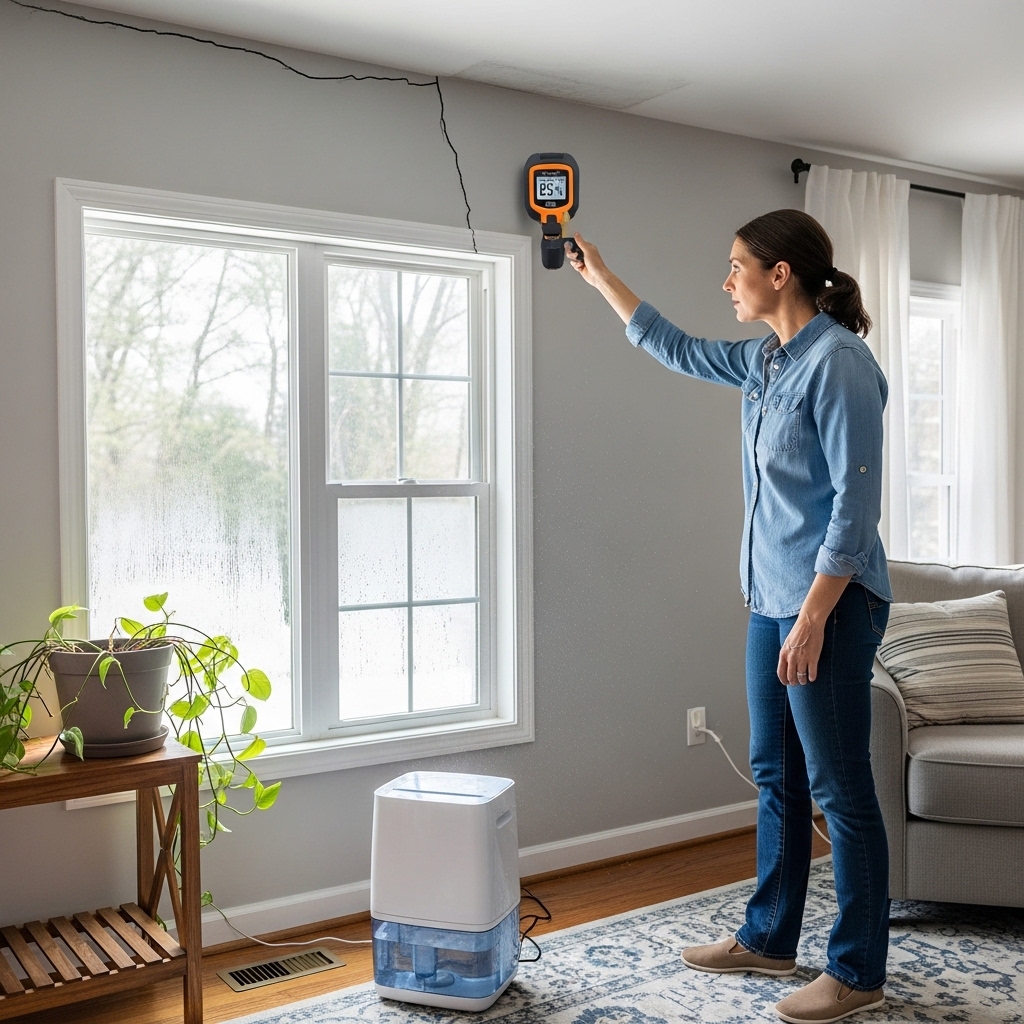
Because odor can travel, what you smell in a hallway may originate in a different room. Confirming the source often requires a combination of observation and simple tools. Moisture meters identify wet materials. Hygrometers track humidity over time. Thermal cameras reveal temperature differences that can indicate wet insulation or framing.
- Follow the odor gradient: Track the strongest smell and note environmental conditions like recent weather or humidity.
- Inspect suspect areas: Check around windows, door thresholds, and utility penetrations where air and water move.
- Open access points: Look behind access panels or removable kick plates under cabinets for hidden leaks.
- Evaluate the HVAC: Inspect the condensate pan and drain, and examine filter cleanliness and duct joints.
Documentation is helpful. Take photos of stains, measure moisture levels, and note dates when the odor is most noticeable. This record helps you verify whether a fix is working.
Fixes that address the cause, not just the smell
A true solution removes the conditions that support microbial growth. Improve drainage, repair leaks, manage humidity, and clean or replace affected materials. The combination of source control and targeted remediation restores a fresh, neutral indoor smell.
- Stop active water intrusion: Repair roof leaks, seal flashing, and correct window or door leaks.
- Improve foundation drainage: Clean gutters, extend downspouts, verify grading, and consider interior drains or sump systems if necessary.
- Repair plumbing issues: Replace failing supply lines, traps, or seals and check for slow drips after repairs.
- Control humidity: Maintain indoor relative humidity below 50% where feasible with dehumidifiers and ventilation.
- Clean and remove: HEPA vacuum, damp wipe non-porous surfaces, and remove non-salvageable porous materials.
- Address HVAC: Clear condensate lines, clean coils, and consider duct cleaning if contamination is evident.
After repairs and cleaning, reassess odor. Persistent smell indicates either remaining moisture, incomplete cleaning, or an overlooked source like a crawlspace or attic. Stay systematic until the space smells neutral.
Room-by-room guidance
Every room has unique risks and remedies. Here is how to approach each area:
- Basement: Focus on exterior water management, humidity control, and careful selection of rebuilding materials. Keep storage off the floor and avoid cardboard boxes.
- Bathroom: Install a properly sized and ducted exhaust fan; run it during and after showers. Reseal tile and repair grout to prevent water migration.
- Kitchen: Use the range hood when cooking; check under-sink cabinets for leaks; verify dishwasher and fridge water lines.
- Laundry: Vent dryers to the exterior; fix washing machine hose leaks; manage humidity from drying clothes.
- Attic: Ensure adequate ventilation; repair roof leaks; verify that bath fans vent outside, not into the attic.
- Living areas: Inspect windows for condensation; manage indoor humidity; address any past water damage beneath flooring.
These targeted steps, combined with whole-home humidity management, produce long-lasting odor relief.
Bloomfield climate considerations
In Bloomfield’s humid summers, basements and lower levels often see elevated moisture. During winter, cold exterior temperatures increase the risk of condensation on poorly insulated walls and around windows. You can reduce these challenges by sealing air leaks, improving insulation details, and operating dehumidifiers consistently during warm months. A holistic strategy prevents odor from rotating seasonally from one area to another.
Verification and maintenance
After implementing fixes, verify results rather than assuming the problem is gone. Use a hygrometer to track relative humidity. Inspect for new stains after storms. Smell the previously affected rooms at different times of day. If odor returns, trace it again and consider whether any areas were not opened or cleaned during the first pass.
Midway through a comprehensive project, it is wise to compare your results to established best practices. Review guidance that explains how professional teams handle mold odor removal—from containment to HEPA filtration—so you can calibrate your approach. Adjusting early saves time and prevents rework.
Common mistakes to avoid
- Masking odors with fragrances or ozone treatments alone without fixing moisture sources.
- Skipping containment during demolition, spreading dust and spores into clean areas.
- Rebuilding too quickly before materials reach target moisture levels.
- Relying only on ventilation when outdoor air is humid.
- Overlooking HVAC condensate issues, which can quickly recreate odor.
A careful, source-first approach is more effective and durable than quick fixes.
Frequently asked questions
Q: Can mold odor be present without visible mold? A: Yes. Odor is often the earliest sign and may occur when growth is hidden. Follow the smell and verify with moisture readings and targeted inspection.
Q: How long does it take to eliminate the smell? A: Timelines depend on the cause and extent. Fixing leaks and drying can take days, while complex projects with demolition and rebuilding take longer. The key is to move sequentially: stop water, dry, clean, then rebuild.
Q: Will replacing carpet remove the odor? A: It helps if carpet was the reservoir, but if the underlying slab or subfloor is damp, odors can return. Always address moisture first.
Q: Is it safe to use the HVAC system during remediation? A: It depends on containment and whether the system is part of the problem. Professionals often isolate work areas and may adjust HVAC operation to prevent spreading particles.
Q: Do dehumidifiers increase energy use? A: They do use power, but they also protect materials and maintain comfort. Choose an efficient unit sized for your space and run it consistently during humid seasons.
Q: How can I tell if the smell is from plumbing? A: Check under sinks, around toilets, and behind access panels. Look for water stains, swollen materials, or active drips. Water meters can sometimes indicate continuous flow from hidden leaks.
Q: What if the smell is strongest in the attic? A: Inspect for roof leaks, inadequate ventilation, or bath fans venting into the attic. Wet insulation can retain odor until dried or replaced.
Long-term prevention plan
Prevention is a combination of design, maintenance, and habits. Keep gutters clear and downspouts extended. Slope soil away from the foundation. Ventilate kitchens and bathrooms effectively. Monitor humidity and use dehumidifiers during summer. Repair leaks immediately and dry wet areas within 24 to 48 hours. Choose materials that tolerate occasional moisture in at-risk areas.
Finally, make an annual schedule to review vulnerable zones: the basement perimeter, under sinks, around windows, the attic after heavy storms, and the HVAC condensate line before the cooling season. These quick checks can stop small issues from becoming major odor problems.
Take the next step
You can eliminate mold odors by matching fixes to causes, confirming results, and maintaining good indoor conditions year-round. If you suspect hidden moisture or want expert guidance, schedule an assessment and move forward with a clear plan. For a deeper understanding of techniques and sequencing used by specialists, review insights on mold odor removal, then apply those principles to your Bloomfield home to restore a fresh, healthy indoor environment.