
Musty, earthy smells in a home are a common concern for Bloomfield, New Jersey residents. Whether the odor comes from a basement after heavy rain, a bathroom with poor exhaust, or an HVAC system with drainage issues, a structured plan can restore a fresh indoor environment. This guide provides a clear, step-by-step sequence that tackles the root cause of mold odor, not just the symptom. If you want to align your efforts with proven methods used by professionals, review reputable approaches to comprehensive mold odor removal so your project stays efficient and effective.
Mold odor comes from microbial volatile organic compounds produced during growth. These compounds are strongest where moisture is consistent—beneath flooring, behind walls, and around cold surfaces where condensation forms. To eliminate the smell, you must remove the conditions that allow growth, clean affected materials, and verify that odor does not return.
Step 1: Identify the source area
Start by locating where the smell is strongest. Note whether it worsens after rain or during humid weather. Check basements, bathrooms, laundry rooms, and around windows. Use a moisture meter if available. Odor often travels, so the source may be adjacent to the room you notice first.
- Look for stains, bubbling paint, or soft drywall.
- Check for efflorescence on foundation walls.
- Open access panels or toe-kicks beneath cabinets to inspect hidden spaces.
- Trace plumbing lines and inspect valves, traps, and hoses.
Document everything with photos and notes. This record helps you verify improvement as you proceed through the steps.
Step 2: Stabilize humidity and airflow
Bring indoor relative humidity below 50% where feasible. Run dehumidifiers in basements and lower levels. Use targeted ventilation in bathrooms and laundry rooms. During initial investigation and demolition, limit whole-home air movement to avoid spreading contaminants; rely instead on controlled airflow and containment if necessary.
- Install or upgrade bathroom exhaust fans and operate them after showers.
- Vent dryers to the exterior and check duct joints.
- Insulate cold-water pipes to reduce condensation.
- Seal obvious air leaks at rim joists and around window frames.
Stabilizing the environment slows growth and makes subsequent steps more effective.
Step 3: Establish containment for work areas
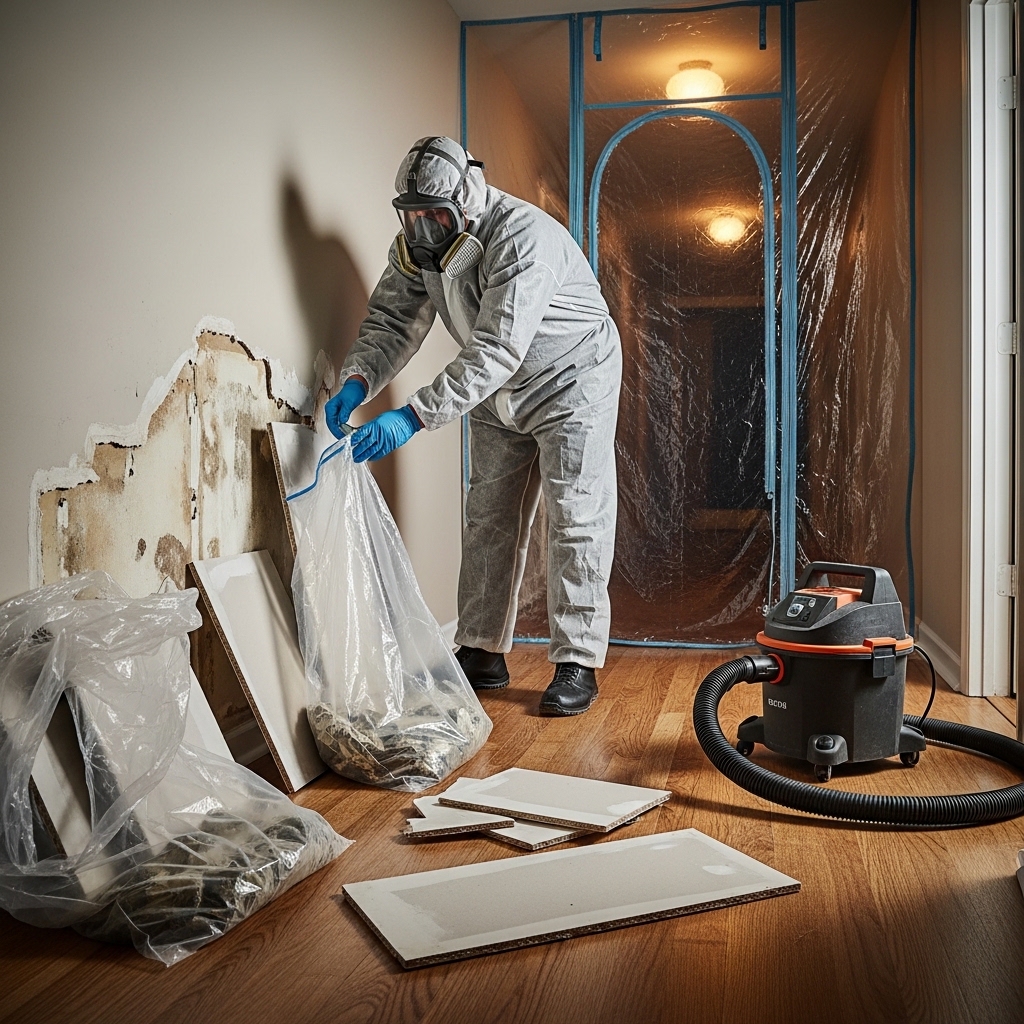
If you plan to remove affected materials, set up containment to prevent cross-contamination. Use plastic sheeting to isolate the work zone. Limit door openings and foot traffic. If available, use a HEPA air scrubber inside the containment to capture airborne particles. Proper setup protects clean rooms while you address odorous materials.
Step 4: Remove non-salvageable porous materials
Porous materials such as wet drywall, paper-faced insulation, and carpet padding can harbor odor even after surface cleaning. When moisture readings are elevated or materials are deteriorated, remove and bag them within containment. Mark studs to document measurements and help with future rebuilding.
- Score cut lines and remove affected drywall to the next stud bay.
- Extract wet insulation and bag it immediately.
- Lift carpet and padding to check the condition of the subfloor or slab.
- Dispose of materials according to local guidelines.
With non-salvageable items removed, you can focus on cleaning and drying the remaining structure.
Step 5: Clean and HEPA vacuum
Use HEPA vacuums on framing, subfloors, and other surfaces to capture fine particulates. Damp wipe non-porous surfaces and allow them to dry thoroughly. Avoid saturating materials during cleaning; the goal is to remove residues without adding excessive moisture. Repeat as needed while monitoring odor reduction.
Step 6: Dry to target moisture levels
Deploy dehumidifiers and controlled airflow to bring materials to acceptable moisture content. Use moisture meters to verify progress and log readings. Do not rebuild until baseline levels are achieved. Patience at this stage prevents recurring odors later.
Step 7: Fix source moisture and building details
Odor returns if water intrusion persists. Correct exterior drainage by cleaning gutters, extending downspouts, and improving grading. Repair plumbing leaks and replace failed seals. Ensure bath and kitchen fans vent outside. If an HVAC condensate line is clogged, clear it and confirm proper slope to the drain.
- Seal foundation cracks with compatible products.
- Install or service a sump pump where needed.
- Add insulation in cold corners and around pipes to limit condensation.
- Air seal rim joists and sill plates to reduce humid air infiltration.
By addressing the building’s water and air pathways, you remove the conditions that feed odor.
Step 8: Rebuild with moisture-smart materials
Once the structure is dry and odor-free, rebuild thoughtfully. Consider mold-resistant drywall in vulnerable areas. Use appropriate insulation and maintain clearances from slabs or exterior walls where moisture can migrate. Choose flooring suitable for basements, such as vinyl plank or tile, or use a raised subfloor system if you prefer carpet.
Step 9: Verify and monitor
After rebuilding, continue monitoring humidity, especially in Bloomfield’s humid months. Periodically sniff-test previously affected areas and check for condensation on windows after cold nights. Keep a simple maintenance checklist to ensure fans, gutters, and sump systems remain in good working order.
Mid-project checkpoints
At key milestones—after demolition, after cleaning, and after drying—pause to reassess. Confirm that odor is diminishing and that humidity targets are met. Consult reputable summaries of professional mold odor removal to ensure your sequence matches best practices. If you find a remaining odor pocket, revisit upstream causes before proceeding to finish work.
Special considerations for Bloomfield homes
Many Bloomfield houses have basements with masonry walls that can wick moisture. Efflorescence is a sign that water is moving through the material. In such cases, exterior drainage improvements and interior dehumidification often work together to control odor. Older homes may also have original windows or minimal insulation, making condensation management important during winter.
Newer homes, while better sealed, can trap moisture without adequate mechanical ventilation. A balanced approach—air sealing to block uncontrolled leaks, paired with proper exhaust and humidity control—keeps odors at bay while preserving energy efficiency.
Frequently asked questions
Q: Can I eliminate the smell with odor absorbers? A: Absorbers may reduce intensity temporarily, but they do not address the cause. Fixing moisture sources and cleaning affected materials provides durable results.
Q: How do I know if drywall must be removed? A: Check for swelling, softness, or visible staining. Use a moisture meter; if readings are elevated and odor persists, targeted removal is often necessary.
Q: Is it safe to run fans during demolition? A: Avoid directing fans across contaminated materials outside containment. Use controlled airflow and HEPA filtration within the work zone to prevent spreading particles.
Q: Should I clean ducts? A: If the odor seems to originate from the HVAC system or if dust and moisture have accumulated, inspection and cleaning can help prevent recirculation of musty smells.
Q: What relative humidity should I maintain? A: Aim for below 50% where feasible. In humid months, a dedicated basement dehumidifier often provides reliable control.
Q: Will repainting solve the problem? A: Paint may hide stains, but it will not stop odor if moisture remains. Address the source, clean thoroughly, then repaint as part of the finishing phase.
Q: How fast should I act after a leak? A: Dry wet areas within 24 to 48 hours to minimize odor and microbial growth. The sooner you act, the easier the recovery.
Keep your home fresh and comfortable
The steps above provide a clear path to remove mold odor in Bloomfield homes: find the source, stabilize the environment, remove and clean affected materials, fix underlying issues, and rebuild with moisture-smart details. By verifying progress at each stage, you protect your investment and restore a pleasant indoor environment.
Make your next move
If the odor persists or you suspect hidden moisture behind walls, consider a professional assessment. Coordinated services that combine diagnostics, drying, cleaning, and prevention will help you reach a durable solution. For a straightforward overview of processes and sequencing that work, review practical information about mold odor removal, then schedule an evaluation to bring fresh air back to every room in your Bloomfield home.