For homeowners in Bloomfield, New Jersey, the terms mold testing and mold inspection are often used interchangeably, but they are not the same. Knowing the difference helps you choose the right service for your situation, whether you are investigating a musty odor, responding to water damage, or documenting conditions for a real estate transaction. At its core, inspection focuses on finding moisture and understanding why it is present, while testing gathers samples to be analyzed. If you need a clear starting point, consider how a comprehensive mold inspection can organize the search for moisture sources and guide your next steps.
What Is a Mold Inspection?
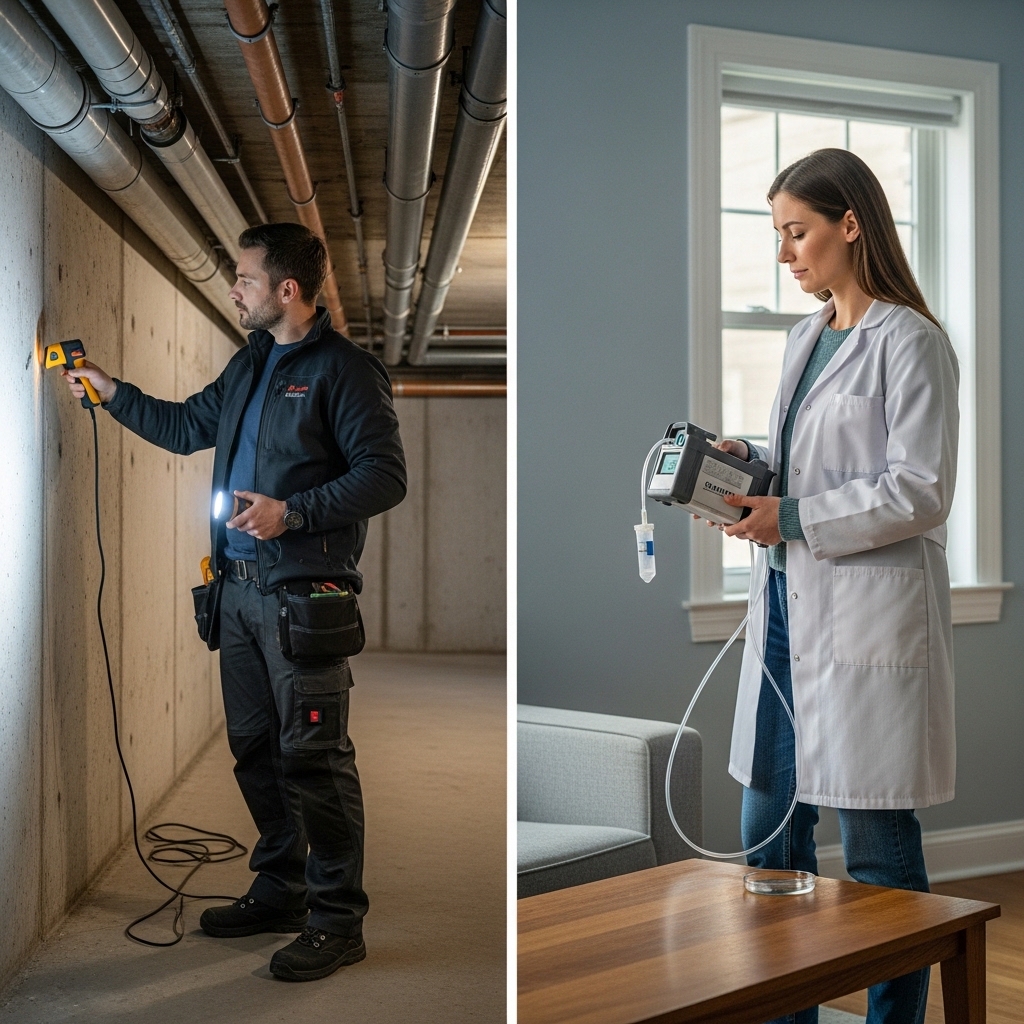
A mold inspection is a structured evaluation of the building, inside and out, that aims to locate moisture, determine causes, and assess the risk of mold growth. Inspectors interview you about symptoms, past leaks, and renovations. They review exterior water management—roof, gutters, grading—and move indoors to examine bathrooms, kitchens, basements, and attics. Tools like moisture meters identify damp materials, and thermal imaging can visualize temperature differences that suggest hidden moisture. The final report documents findings with photos, explains likely causes, and recommends actions to prevent recurrence.
What Is Mold Testing?
Mold testing involves collecting air or surface samples for analysis. Air samples provide a snapshot of airborne particles at the time of collection, while surface samples can confirm what type of growth is present on a material. Testing can be useful for documentation or when conditions are ambiguous, but it is not a substitute for the building science of finding and controlling moisture. Without understanding why moisture is present, testing alone does little to prevent future growth.
When to Choose Inspection, Testing, or Both
Choose inspection when you suspect moisture, see staining, or notice odors. The inspection will trace sources, define the scope of concern, and map out corrective actions. Choose testing when you need laboratory confirmation or documentation for transactions or sensitive health conditions, provided that testing is paired with a moisture-focused assessment. In many cases, inspection comes first; testing follows only if it answers a specific question that the inspection cannot resolve on its own.
Why the Distinction Matters in Bloomfield
Bloomfield homes face a mix of seasonal humidity, winter ice dams, and the legacy of older construction. In some properties, bathrooms vent into attics rather than outdoors, trapping humid air. In others, grading directs water toward the foundation. An inspection that prioritizes source identification will tailor solutions to these local patterns. Testing may document conditions, but without the context of a thorough inspection, results may not translate into effective action.
What a Thorough Inspection Includes
- Interview to capture history of leaks, renovations, and observed odors or symptoms.
- Exterior review of roof, gutters, downspouts, grading, and siding.
- Interior walkthrough focusing on bathrooms, kitchens, laundry rooms, basements, and attics.
- Moisture mapping with meters to identify damp materials and potential hidden issues.
- Thermal imaging when appropriate to visualize temperature anomalies linked to moisture.
- Ventilation and HVAC checks to ensure humid air is properly exhausted.
- Documentation with photos, readings, and prioritized recommendations.
Limitations of Testing Without Inspection
Testing alone can produce results that are hard to interpret. Air samples reflect momentary conditions influenced by weather, occupant activity, and ventilation. Surface samples confirm types of growth on a specific material but do not explain why moisture is present. Without a strategy grounded in building science, testing may create more questions than answers. Pairing testing with an inspection ensures results are placed in context and lead to practical solutions.
Mid-Guide Checkpoint
If you are in the middle of deciding between testing and inspection, consider your objectives. Are you trying to solve a moisture problem or document conditions for a transaction? A well-structured mold inspection will identify causes and outline steps to resolve them. Testing becomes a useful complement when it answers a specific question that the inspection cannot address alone.
Real-World Scenarios in Bloomfield
Scenario one: After a storm, a homeowner notices discoloration at the base of a basement wall. An inspection maps moisture, evaluates exterior drainage, and recommends extending downspouts, sealing penetrations, and monitoring humidity. Testing may be unnecessary if the moisture source is clear and addressed promptly. Scenario two: A buyer experiences throat irritation during showings and wants documentation before closing. The inspector performs a full assessment and recommends air sampling to document conditions, combined with ventilation improvements. In each case, the strategy aligns with the objective and the building’s behavior.
How Inspectors Communicate Findings
Communication is central to effective service. A quality report explains where moisture is present, why it is there, and what to do next. It prioritizes recommendations so you can take immediate action on the most important items. It also differentiates between cosmetic issues and conditions that indicate ongoing moisture. This clarity helps you make informed decisions about maintenance, repairs, and any need for remediation.
Tips for Homeowners
- Do not mask odors or stains before the inspection; transparency supports accurate diagnosis.
- Provide a concise timeline of leaks, repairs, and renovations to guide the evaluation.
- Confirm that exhaust fans vent outdoors and are used during and after humid activities.
- Track indoor humidity with a simple hygrometer to understand seasonal patterns.
- Schedule inspections alongside other maintenance, such as gutter cleaning or HVAC service, to catch changes early.
Frequently Asked Questions
Question: Do I always need testing with an inspection? Answer: No. Many moisture issues are resolved through visual assessment and measurements. Testing adds value when it answers a specific question or serves a documentation need.
Question: Which is more important, inspection or testing? Answer: Inspection is foundational because it identifies causes and solutions. Testing is a supportive tool that can confirm conditions or provide evidence when necessary.
Question: How long does an inspection take compared to testing? Answer: Inspection time varies with property size and complexity. Testing adds collection time and a waiting period for analysis. The value of both lies in how the results inform decisions.
Question: Can testing alone determine if I have a problem? Answer: Testing alone can indicate what is present at a moment in time, but it does not explain why. Effective action requires understanding moisture sources and building dynamics.
Question: Are older Bloomfield homes more likely to need both? Answer: Not automatically. Older homes may have ventilation or drainage issues that favor inspection first. Testing is added when the situation calls for confirmation or documentation.
Question: What should I expect in the report? Answer: Expect photos, moisture readings, and clear explanations of causes and recommendations. The report should help you prioritize immediate and long-term steps.
Choosing the Right Path
The best choice depends on your goals. If you aim to reduce risk and prevent recurrence, start with inspection. If you need evidence for a transaction or to inform a medical discussion, testing can complement inspection effectively. By understanding the difference, you can invest in the service that aligns with your needs and the realities of your home.
Move Forward With Confidence
When you are ready to act, choose a Bloomfield professional who communicates clearly, understands local housing, and uses tools judiciously. The right partner will help you identify moisture, explain findings, and map out a plan to keep your home dry and healthy. To get started on the most effective path, book a comprehensive mold inspection and make informed decisions with the support of a clear, detailed report.