Bloomfield, New Jersey homeowners know that moisture from heavy rains, humid summers, and older building envelopes can make indoor spaces vulnerable to mold growth. Addressing mold the right way is about more than cleaning what you can see; it is a safety-centered process that protects your health, your home’s structure, and your indoor air quality. In this guide, you will learn how to plan, contain, remove, and prevent mold with practical steps tailored to Bloomfield’s climate and housing stock. If you decide the job is bigger than you want to tackle, you can always consult professionals specializing in mold remediation to ensure a thorough and compliant cleanup.
Before you begin, remember that mold remediation is a combination of moisture control, careful containment, removal, and verification. It is also a safety exercise. The objective is to protect people first, then property. From personal protective equipment (PPE) to proper ventilation and waste handling, every step matters. The tips below align with widely accepted industry practices and are tailored to common scenarios in Bloomfield—think finished basements, plaster walls, and older windows that may allow condensation.
Know Your Enemy: Mold Basics For Bloomfield Homes
Mold is a natural organism that thrives where moisture, food sources (like drywall paper, wood, and dust), and the right temperatures converge. In Bloomfield, fluctuating temperatures and humid summers can cause condensation in basements, attics, and around HVAC components. Roof leaks after storms, clogged gutters, and poorly vented bathrooms are equally common triggers. Identifying why mold formed is step one; removing it without solving the moisture source is a temporary fix.
- Common sites: basement wall corners, behind furniture against exterior walls, rim joists, under sinks, shower enclosures, attic sheathing, and around HVAC air handlers or ductwork.
- Common triggers: seepage through foundation walls, high indoor humidity, leaking appliance supply lines, condensation on single-pane or failing double-pane windows, and poorly sealed roof penetrations.
- Common signs: earthy odor, discoloration (black, green, white, orange), peeling paint, and allergy-like symptoms indoors that improve outdoors.
Health And Safety Come First
Safety is the thread running through every part of remediation. Even small areas can aerosolize particles when disturbed. The goal is to minimize exposure and cross-contamination while restoring clean conditions.
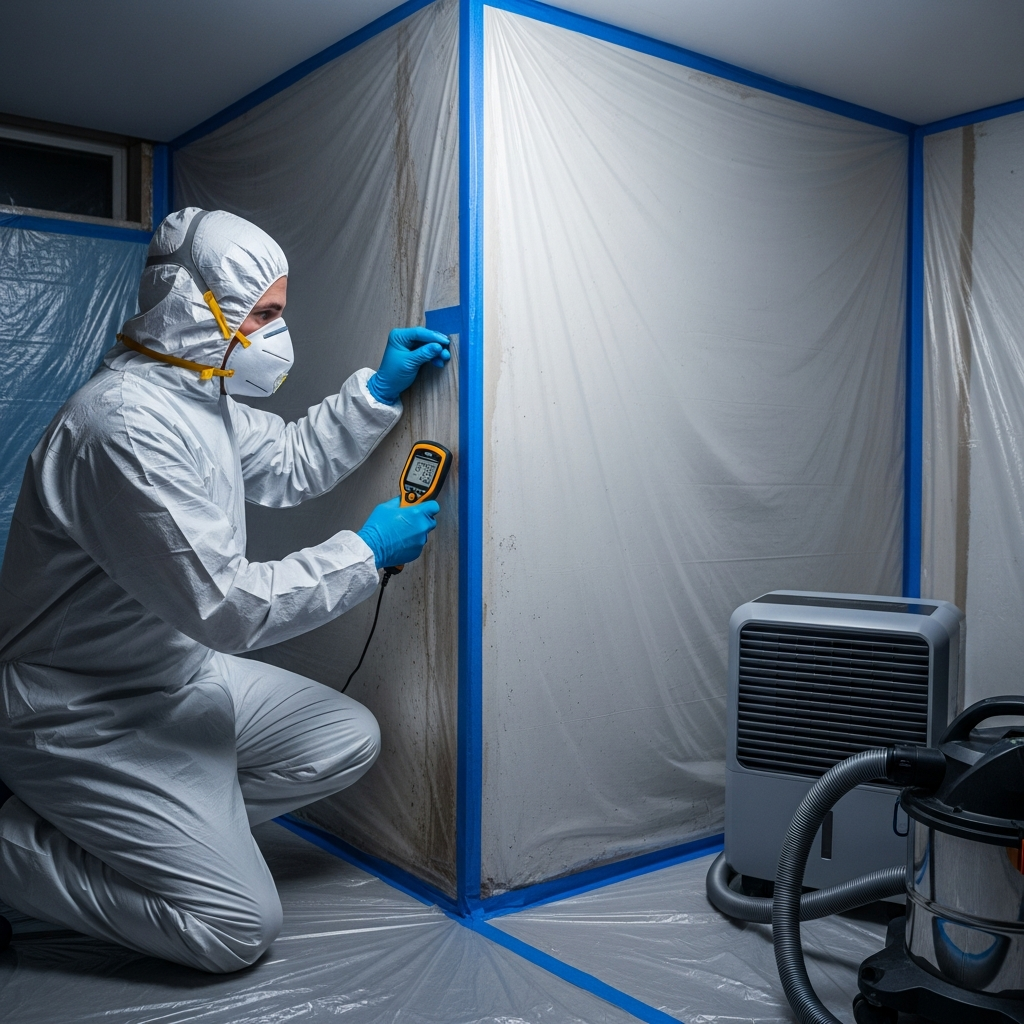
- PPE: Use a properly fitted respirator (commonly an N95 or, for more extensive work, a reusable half-face respirator with P100 cartridges), gloves, and eye protection. Wear long sleeves and disposable or washable coveralls.
- Ventilation and Pressurization: When feasible, create negative pressure in the work area using a fan exhausting to the exterior through a window with a close-fitting panel. This helps keep particles from moving into clean areas.
- Containment: Seal off the work zone with plastic sheeting and painter’s tape. Cover vents and returns. Create a zipper entry if you need to pass in and out without tearing the barrier.
- Protect belongings: Remove or cover furniture and soft goods with plastic. Anything porous that is significantly impacted may need to be discarded based on condition.
Assessment: How Big Is The Problem?
While only visual inspection and moisture readings are needed in many cases, an assessment helps set scope. Look behind baseboards, under flooring edges, and inside cabinets where plumbing passes through. Use a moisture meter if you have one. If you see widespread staining, suspect hidden growth, or smell a strong musty odor but cannot find the source, consider consulting a qualified local professional to help you plan safe remediation steps.
- Small areas: Limited patches on hard, non-porous surfaces may be handled with careful cleaning and drying.
- Larger or hidden issues: Wall cavities, insulation, and subflooring often require more extensive containment and removal.
- Water still present: If active leaks or seepage are ongoing, stop and fix the moisture source first.
Step-By-Step: Safe Mold Remediation Workflow
- Find and fix moisture: Repair roof leaks, seal plumbing drips, unclog gutters, and ensure downspouts discharge away from the foundation. Add dehumidification in damp areas, especially Bloomfield basements during humid months.
- Set up containment: Isolate the work zone with plastic. Close doors and seal supply and return vents. If possible, establish negative pressure vented outdoors.
- Wear PPE: Put on your respirator, gloves, and eye protection before entering the contained area. Keep PPE on until cleanup is complete.
- Remove porous materials that cannot be cleaned: Materials like wet drywall, paper-faced insulation, and carpet padding that have visible growth or heavy water damage are typically discarded. Cut drywall in controlled sections and bag waste inside the containment.
- Clean surfaces: For non-porous or semi-porous materials (framing, sheathing, subfloor, concrete), start with mechanical cleaning—HEPA vacuuming to capture settled spores and dust. Then wipe with a detergent solution. Allow to dry thoroughly. Avoid aggressive methods that spread dust unless contained and captured with HEPA filtration.
- Detail cleaning: After bulk removal, HEPA vacuum again, including ledges, window sills, tops of door frames, and floor edges. Use damp wiping to lift residual dust. Repeat as needed until surfaces are visually clean.
- Drying and dehumidification: Run dehumidifiers and fans that do not blow directly on moldy surfaces during removal. After cleaning, maintain relative humidity below about 50% to discourage regrowth.
- Verification: Visually inspect for dust and staining. Surfaces should be dry and free of residues. Odors should diminish as humidity drops. If you used negative pressure, run it during final cleanup to capture remaining airborne particles.
- Rebuild thoughtfully: When you reinstall drywall or flooring, consider moisture-resistant materials where appropriate. Add bath fans that exhaust outdoors and verify attic and crawlspace ventilation.
Bloomfield-Specific Tips To Prevent Regrowth
- Basements: Seal obvious gaps where wall meets floor, maintain gutters and downspouts, and use a dehumidifier during spring through fall. Keep storage slightly off walls to promote airflow.
- Bathrooms: Install timers on exhaust fans, run them during and at least 20 minutes after showers, and check that ducts vent outdoors.
- Kitchens and Laundry: Vent range hoods and dryers to the exterior and ensure vent lines are clean and unobstructed.
- Windows: Reduce condensation by improving air circulation, using insulated curtains with care, and adding weatherstripping where practical.
- HVAC: Replace filters regularly and keep condensate drains clear.
Common Mistakes To Avoid
- Bleach-only fixes: Bleach is not a universal solution and can add moisture without removing embedded growth or spores. Mechanical removal and drying are essential.
- Skipping containment: Even small jobs can spread dust and spores to clean rooms if you do not seal the area.
- Painting over growth: Stains may bleed through and hidden colonies can continue to spread if the substrate remains damp.
- Ignoring the moisture source: Remediation without moisture control is temporary. Always fix leaks and manage humidity first.
- Underestimating safety: Inadequate PPE, poor ventilation, and improper waste handling can increase exposure risks.
When To Call A Professional
Consider a pro when you face large areas, recurring growth with no obvious source, complex building assemblies, or occupants with health sensitivities. Professionals bring containment equipment, HEPA air filtration, and trained protocols for safe removal and thorough cleanup. They can also coordinate with independent inspectors if needed for third-party verification. If you need expert support midway through a DIY effort, you can still step back and bring in help; many local providers are accustomed to assisting at any stage of the process, especially when the project reveals bigger problems than anticipated. In such cases, hiring certified help for comprehensive mold remediation can save time and reduce risk.
Frequently Asked Questions
How quickly should I act after discovering mold? Act as soon as possible. Isolate the area, stop moisture, and begin drying. The longer materials stay damp, the more likely growth will spread.
Do I need testing before remediation? Often, no. If you see visible growth and know the moisture source, you can proceed with safe removal. Testing may be useful for hidden issues, sensitive occupants, or post-remediation verification by a third party.
Can I keep items exposed to mold? Hard, non-porous items can typically be HEPA vacuumed and cleaned. Soft, porous items with heavy growth may need to be discarded. Items with sentimental value may be restored by specialized cleaners depending on condition.
What humidity level should I maintain? Aim to keep indoor relative humidity below about 50%, particularly in basements and bathrooms. Use dehumidifiers and exhaust fans as needed.
Is it safe to remain in the home during remediation? For small, contained projects, yes, as long as the work area is isolated and ventilated properly. For larger jobs, consider staying out of the work zone or coordinating temporary relocation during demolition and heavy cleaning.
How do I know the job is complete? Surfaces should be clean, dry, and free of dust and staining, odors should dissipate, and the moisture source should be resolved. Some homeowners opt for third-party visual or air sampling to verify results.
Putting It All Together
Successful mold remediation in Bloomfield is about planning, protecting, and preventing. Fix moisture, contain the work area, remove impacted materials, and clean thoroughly. Then keep humidity in check. If you reach a point where the scope, safety requirements, or building complexities exceed your comfort level, consider bringing in trained help for complete mold remediation with proper containment, HEPA filtration, and drying strategies.
If you are ready to safeguard your Bloomfield home, take the next step today. Connect with a trusted local team that understands our climate, building styles, and moisture challenges so you can move from problem to prevention with confidence. Reach out now to get expert guidance and schedule professional mold remediation that puts safety and lasting results first.