Mold thrives where moisture lingers, and in Bloomfield, New Jersey, fluctuating seasons, periodic storms, and older basements create the perfect combination for hidden growth. This complete guide walks you through what mold mitigation is, why it matters, how the process unfolds, and what you can do to prevent regrowth. Whether you are dealing with a musty basement, a bathroom that never quite dries out, or a recent leak, understanding the science and the workflow behind mitigation will help you make confident, informed decisions.
At its core, mitigation is about control: stopping spread, reducing contamination, and managing the moisture that feeds colonies. Skilled professionals who provide mold mitigation services use standardized procedures—containment, negative air, HEPA filtration, and moisture correction—to protect the unaffected areas while remediating the problem zone. This guide compiles practical insights you can apply immediately, from selecting a provider to preparing your home and confirming results.
Why mold mitigation matters in Bloomfield
Local housing ranges from pre‑war brick homes with stone foundations to newer additions with mixed materials. Each construction style offers different moisture pathways: capillary action through masonry, condensation on cool surfaces, or minor flashing failures around windows and roofs. Add in humid summers and cold winters, and you get a cycle that pushes and pulls moisture through the building envelope. Mitigation closes those gaps by controlling the environment while affected materials are removed or cleaned, and by addressing the sources that keep spaces damp.
The science of mold in simple terms
Mold is a natural decomposer that spreads through microscopic spores. When those spores land on a damp food source—paper‑faced drywall, wood framing, carpet backing—they can colonize. Given enough time and moisture, colonies burrow into porous materials where surface wiping will not reach. Effective mitigation therefore requires two core strategies: isolate the environment so spores do not spread, and remove or clean materials to a verifiable standard.
Typical triggers of growth
- Slow plumbing leaks inside walls or under sinks.
- Basement seepage through cracks or unsealed joints.
- Roof and flashing issues causing attic or wall moisture.
- Poor ventilation in bathrooms and laundry rooms.
- Condensation on cold ducts, pipes, or uninsulated walls.
- Storm‑related intrusions from wind‑driven rain.
What a professional assessment includes
An initial walkthrough should be systematic. Providers examine visible discoloration and staining, measure moisture in materials with calibrated meters, and look for humidity drivers like inadequate exhaust, broken dampers, or insufficient dehumidification. In some cases, they employ thermal imaging or a borescope to look into cavities with minimal disturbance. The goal is to map the “wet” and “suspect” areas and to connect them to probable water sources so the plan addresses the root cause.
Containment and environmental controls
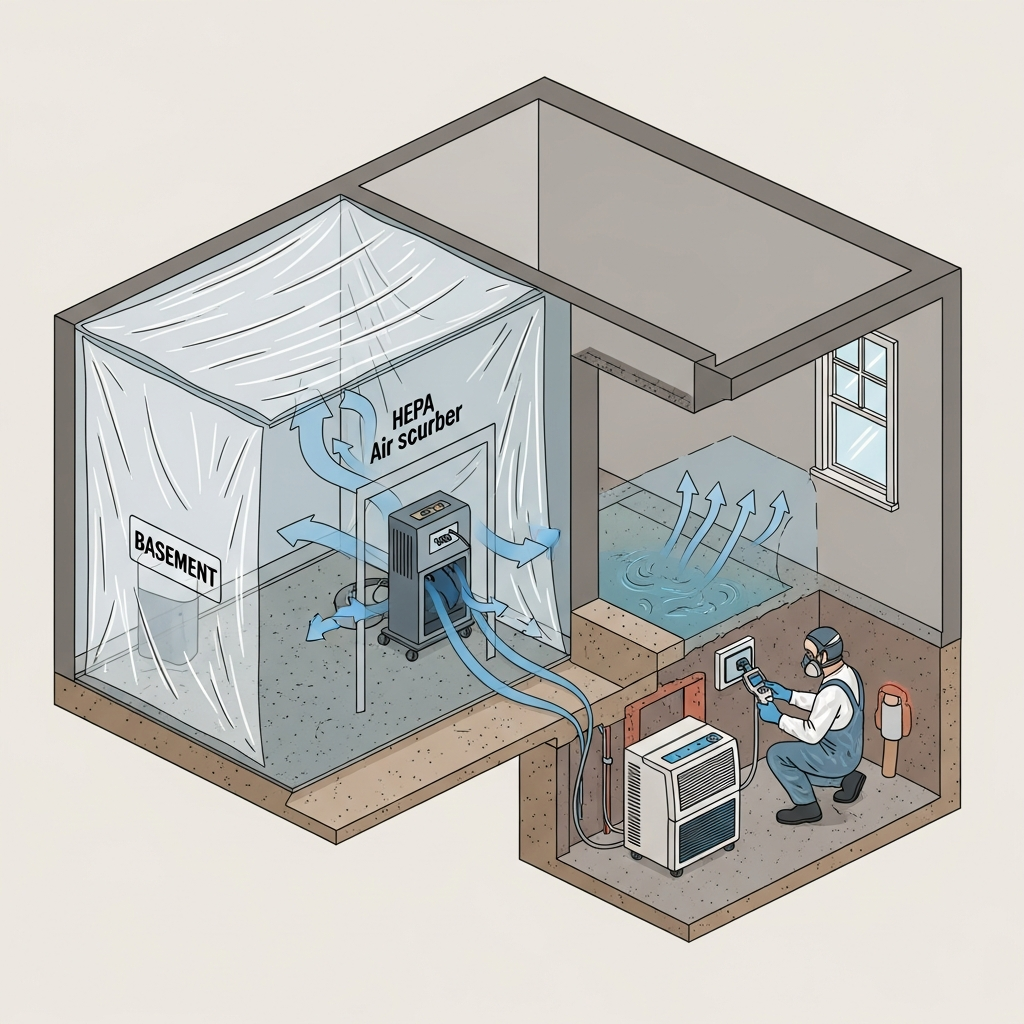
Containment prevents cross‑contamination to clean areas. This often includes 6‑mil poly barriers with zipper doors, sealed penetrations around outlets or fixtures, and protective floor coverings. Negative air machines fitted with HEPA filters draw air from the work zone and exhaust it safely, creating directional flow that keeps particles inside the controlled area. Air scrubbers capture airborne spores and fragments stirred up during demolition and cleaning.
Material removal and cleaning
Porous materials that are damaged or colonized—such as carpet, pad, and water‑stained drywall—are removed to a safe margin beyond visible growth. Semi‑porous materials like framing may be sanded or media‑abraded, then cleaned with appropriate agents. Non‑porous surfaces are wet‑wiped and HEPA‑vacuumed after drying. The emphasis is on physical removal of contamination rather than masking odors. Final cleaning is performed in stages to capture disturbed particles as airflow and dust settle.
Moisture control and drying strategy
Mitigation is incomplete without moisture correction. Teams use dehumidifiers and, when appropriate, a controlled number of air movers to accelerate evaporation without spreading dust. They set humidity targets and measure progress with hygrometers and moisture meters. Depending on source, recommendations may include improving exterior drainage, sealing foundation penetrations, adding insulation to reduce condensation, or upgrading ventilation in bathrooms and kitchens.
Verification and documentation
Verification combines a clean visual inspection, target moisture readings, and, if part of the plan, third‑party testing. Documentation should include photographs of contained zones, removed materials, cleanliness of structural members, equipment logs, and post‑work recommendations. This record helps future maintenance and supports any property documentation you may need for management or transactions.
How to choose the right provider
Look for clarity. A robust proposal lists containment square footage, number and capacity of HEPA units, negative air setup, demolition scope, cleaning methods, and drying targets. Ask about PPE, daily housekeeping, and communication. Demand local references and verify that crews—not just sales reps—have the training to execute the plan. Providers who specialize in local housing types understand how stone foundations, slab‑on‑grade additions, or shared walls in multi‑family buildings influence moisture and airflow.
Common pitfalls to avoid
- Skipping containment during demolition or cleaning.
- Using fragrance to mask odors rather than removing sources.
- Assuming visible cleanliness equals dryness—always verify with readings.
- Neglecting to address ventilation and humidity after the job.
- Overlooking HVAC protection, which can spread particles throughout the home.
Bloomfield‑specific considerations
In winter, pay attention to ice dams and condensation on cold attic sheathing; in spring, monitor seepage and gutter performance; in humid summers, run dehumidification to maintain indoor relative humidity below 50%. Basements with fieldstone or older block walls may wick moisture even without active leaks, so interior air management and exterior grading both matter. Providers familiar with these regional patterns will tailor strategies to your home’s age and construction details.
DIY versus professional help
Small, recent surface spots on non‑porous materials can sometimes be cleaned by homeowners who wear proper PPE and correct the moisture source immediately. However, anything that involves porous materials, large areas, or hidden voids should be evaluated by professionals. Disturbing growth without containment can disperse spores and fragments, complicating cleanup and increasing exposure.
Preparing your home for mitigation
- Declutter areas leading to and within the work zone to speed setup and protect belongings.
- Plan for temporary relocation of pets and sensitive individuals during demolition.
- Identify power sources for equipment and ensure clear access to electrical panels.
- Discuss parking logistics and elevator use if in a multi‑unit building.
- Share any chemical sensitivities so cleaning agents can be chosen accordingly.
Day‑by‑day overview of a typical project
- Day 1: Assessment confirmation, containment setup, negative air establishment, protection of HVAC.
- Day 2: Selective demolition of unsalvageable materials, bagging and disposal, initial cleaning.
- Day 3: Targeted drying with dehumidifiers, secondary cleaning, HEPA vacuuming.
- Day 4: Detail cleaning, clearance inspection, and adjustments to drying equipment.
- Day 5: Final verification, removal of containments, and homeowner walkthrough.
Working with testing professionals
Independent testing can provide baseline and post‑work data, particularly useful for sensitive occupants or transactions. Coordinate sampling schedules with the mitigation team so that airflow conditions are stable and cleaning is complete before post‑clearance sampling. Ensure labs are independent and that reports include methods and detection limits.
Maintaining a healthy home after mitigation
Prevention is a habit. Ventilate bathrooms and kitchens to the exterior, insulate cold surfaces, check gutters and downspouts seasonally, and maintain dehumidification in basements and crawl spaces. Use a hygrometer to monitor humidity and respond quickly to leaks. Keep storage off basement floors and away from foundation walls to allow airflow and early detection of dampness.
Comparing local options effectively
When you review proposals from local providers, concentrate on method and measurables. Ask how many air changes per hour their negative air setup will achieve, what filter ratings they use, and how they confirm containment integrity. Providers offering local references and rapid response are often best positioned to protect adjacent rooms and limit demolition. As you evaluate Bloomfield‑area mold mitigation services, prioritize those who treat moisture correction as integral rather than optional.
Frequently Asked Questions
Q: How long does mold mitigation usually take?
A: Duration depends on the size of the affected area, the complexity of containment, and how quickly materials dry to target levels. Many residential projects span several days from setup to verification, with equipment sometimes running beyond active cleaning.
Q: Is it safe to stay in the home during mitigation?
A: Often yes, because work zones are isolated and kept under negative pressure. People with respiratory sensitivities may prefer to be away during demolition and the dustiest phases. Discuss your household’s needs with the provider to tailor the schedule.
Q: Do I need post‑work testing?
A: If you want third‑party verification or have sensitive occupants, independent testing adds assurance. It should complement—not replace—thorough cleaning and moisture control.
Q: What if I only see a small stain?
A: Small stains can signal a larger moisture issue behind the surface. An inspection with moisture meters helps determine whether the problem is superficial or requires professional intervention.
Q: Will paint or sealant alone solve the issue?
A: Coatings can help protect clean, dry surfaces but will not fix persistent moisture or existing contamination in porous materials. Address moisture first, then consider protective finishes as part of a broader plan.
Putting knowledge into action
With a clear understanding of assessment, containment, removal, drying, and verification, you can evaluate providers and prepare your home with confidence. The most successful outcomes come from matching proven methods with local building knowledge and consistent aftercare. Make mitigation a structured process, not a quick patch, and your home will be healthier for years to come.
Start protecting your home today
When you want a methodical plan tailored to Bloomfield’s climate and construction styles, partner with a team that delivers comprehensive mold mitigation services. From the first inspection to final verification and prevention guidance, expert support will help you safeguard air quality and preserve your property for the long term.