The Smart Guide to Mold Odor Removers for Bloomfield Homes
Choosing the best way to neutralize mold odors can feel overwhelming when your home in Bloomfield suddenly smells musty after a humid spell, a basement seep, or a minor leak. The right remover depends on the materials involved, the extent of dampness, and whether the odor is active (with ongoing moisture) or residual (after drying). This guide compares practical options—from simple pantry staples to specialty products—so you can act with confidence. If you want a faster, end-to-end solution while you sort through choices, consider professional mold odor removal that pairs odor neutralization with source control.
Any product or method works best when combined with moisture management. Keep relative humidity at 30%–50%, ventilate when outdoor conditions are dry, and use fans to speed evaporation. With that foundation, the following options can help you clear the air and keep it fresh.
First Principles: Dry, Then Deodorize
Odor molecules intensify when materials are wet. Start with extraction and drying: blot or vacuum standing water, run dehumidifiers, and move air across damp surfaces. Remove or isolate items that hold odor easily—cardboard, fabric, and dusty clutter. Once everything is drying or dry to the touch, odor removal products can work efficiently instead of fighting a losing battle against moisture.
Household Staples That Help
- Detergent and Warm Water: Basic cleaning removes films that trap musty compounds. Rinse and dry fully.
- White Vinegar: Acetic acid can help with light odors on non-sensitive surfaces. Test first and rinse if needed.
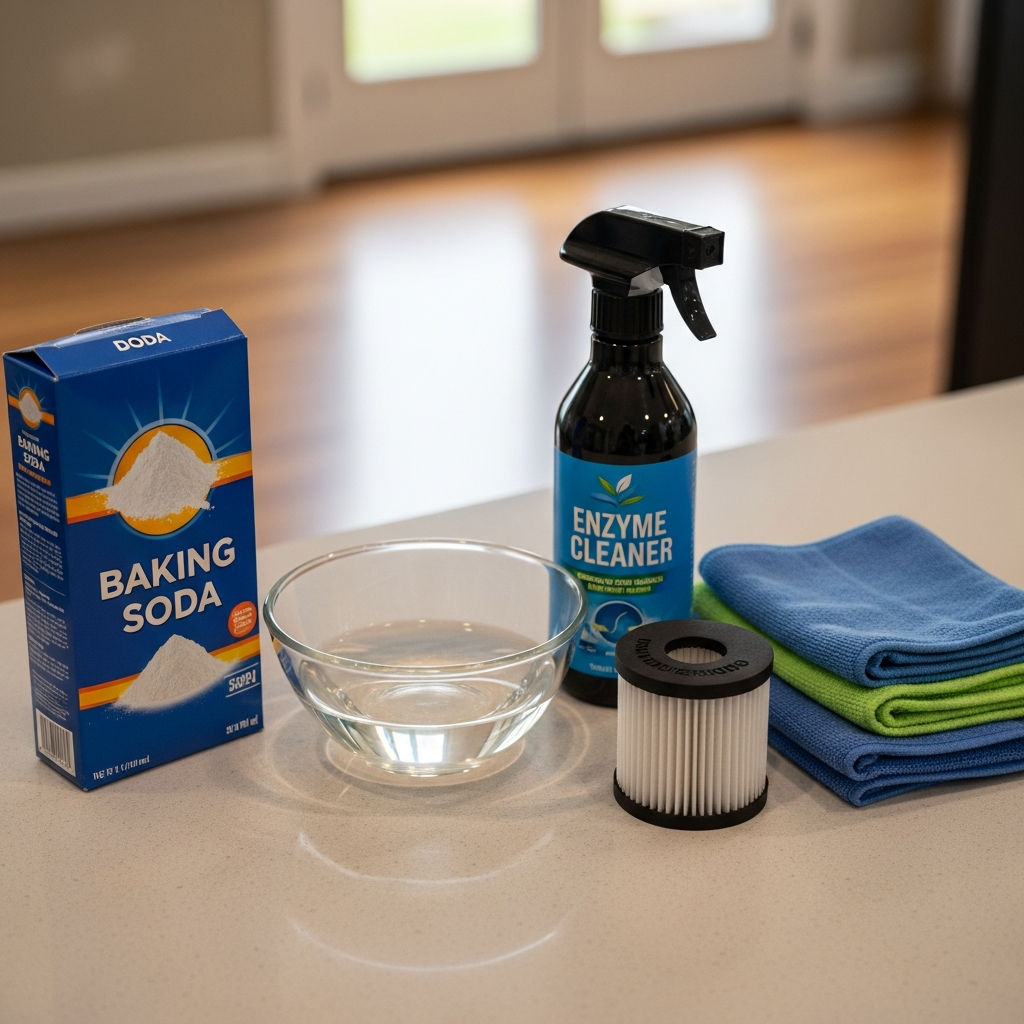
- Baking Soda: Useful as a dry absorbent in small containers placed in closets or on shelves. Replace regularly.
- Hydrogen Peroxide (3%): Helpful on some nonporous surfaces. Avoid mixing with other cleaners and test for discoloration.
- Sunlight and Fresh Air: For removable items, brief sun exposure can speed drying and disperse odors.
Specialty Odor Neutralizers
When basic cleaning is not enough, consider products designed for building materials and textiles. Look for formulations labeled for microbial or musty odors and always follow manufacturer instructions:
- Enzymatic Cleaners: Target organic residues that can harbor smells on fabrics and carpets.
- Oxidizing Deodorizers: Break down odor molecules on hard surfaces; use with ventilation and test on finishes.
- Activated Carbon Filters and Bags: Adsorb airborne compounds; useful in closets and small rooms.
- Absorbent Granules: Placed near odor sources to capture moisture and VOCs; replace as saturated.
- Professional-Grade Counteractants: Applied by restoration technicians to treat structural materials after drying.
Surface-by-Surface Recommendations
- Concrete and Masonry: Clean with detergent, rinse, and dry thoroughly. Consider a breathable sealer only after moisture issues are resolved to avoid trapping vapor.
- Drywall: If dry and intact, wash painted surfaces lightly and ventilate. If soft, stained, or odorous behind baseboards, partial removal may be necessary.
- Wood Framing and Subfloors: HEPA vacuum, wipe with a gentle cleaner, and continue airflow until fully dry.
- Carpet and Rugs: Extract, launder small rugs, and dry pads and subfloors. Persistent odors may require pad replacement.
- Upholstery and Mattresses: Use targeted fabric-safe deodorizers and ensure deep drying, or move items out of musty areas until conditions stabilize.
Caution With Certain Methods
- Ozone Generators: Not recommended in occupied spaces due to health risks and potential material damage.
- Heavy Fragrances: Mask odors without solving moisture problems; may cause irritation.
- Excessive Wet Cleaning: Over-wetting porous materials can worsen odor and prolong drying.
HVAC Considerations
Even the best odor remover fails if your HVAC circulates musty air. Replace filters after moisture incidents, check the condensate drain, and verify that return ducts are sealed and clean. If the air handler is in a damp basement or crawl space, solve the local odor first or isolate the system to avoid recirculation. Portable air cleaners with HEPA and carbon can reduce airborne particles and odor during cleanup.
Matching Options to Bloomfield’s Conditions
Bloomfield’s humid summers and occasional storm surges mean basements, crawl spaces, and lower-level bathrooms are frequent odor sources. Choose solutions that respect those conditions. In summer, run dehumidifiers continuously and avoid keeping windows open during muggy days. After snowmelt and spring rains, watch for seepage lines on basement walls and around floor cracks. Always prioritize drying before product application for the best results.
When DIY Is Not Enough
If odor returns days after cleaning, suspect trapped moisture in building cavities or porous materials. Restoration professionals can measure moisture inside walls, under flooring, and in substructures, and then apply targeted drying, cleaning, and deodorizing methods. They can differentiate between residual smell and ongoing growth, saving you repeated trial and error. For an efficient plan and quicker relief, coordinate comprehensive mold odor removal tailored to your home’s layout and materials.
Product Comparison by Scenario
- Light Mustiness After Humid Weather: Increase dehumidification, HEPA vacuum, wipe hard surfaces, and use carbon filters.
- After a Small Leak Repaired Quickly: Dry aggressively, clean, and use a mild oxidizing deodorizer on hard surfaces.
- Basement Seepage With Odor in Stored Items: Replace cardboard with plastic bins, launder textiles, and use enzymatic cleaners.
- Musty HVAC Closet: Replace filter, clean the area, and ensure condensate lines are clear and sealed.
- Persistent Odor Near Exterior Walls: Inspect for dampness, use a moisture meter if available, and consider opening small sections to dry hidden spaces.
Step-by-Step Odor Elimination Plan
- Identify and stop moisture at the source.
- Ventilate and dehumidify to target 30%–50% RH.
- Remove or isolate odor-holding contents.
- Clean surfaces, starting with the least aggressive method.
- Apply specialized neutralizers as needed and verify drying.
- Monitor for recurrence and adjust storage, sealing, or drainage.
Frequently Asked Questions
Q: What is the single best mold odor remover? A: There is no one-size-fits-all answer. The best result comes from drying first, then using cleaners or neutralizers suited to your materials—detergent on hard surfaces, enzyme products for fabrics, and carbon for airborne odor.
Q: Will vinegar remove all mold odors? A: Vinegar can help with minor, surface-level odors, but persistent smells usually reflect moisture in porous materials that vinegar alone will not fix. Drying and source control are essential.
Q: Are natural deodorizers enough? A: Baking soda and carbon can reduce light odors in small spaces, but more serious smells require comprehensive drying and cleaning.
Q: Can I seal concrete to stop odor? A: Only after moisture is controlled. A breathable sealer on a dry surface may help future cleanup, but sealing a damp slab can trap moisture and prolong odor.
Q: How long should I run a dehumidifier? A: Continuously during humid weather or until materials stabilize at a dry state. Check your hygrometer daily during recovery.
Q: Do essential oils help? A: Fragrances may mask odor but do not address moisture or microbial sources. Use them only after the root problem is solved, if desired.
Q: Are foggers effective? A: Fogging may distribute deodorizers but does not replace drying and can add moisture. Professional guidance is recommended for fogging methods.
Bring Your Home Back to Fresh
Armed with the right combination of drying, smart product choices, and prevention, you can restore clean air throughout your Bloomfield home. If you would rather skip guesswork and move straight to proven results, reach out to trusted local experts for comprehensive mold odor removal that pairs science-based drying with targeted deodorization and long-term prevention.