
Mold Odor Removal Guide for Basements in Bloomfield New Jersey
Basements in Bloomfield, New Jersey face a perfect storm for musty odors: humid summers, clay soils that hold moisture near foundations, older masonry that wicks dampness, and occasional storm events that overwhelm drainage. When you step downstairs and smell that unmistakable earthy scent, it signals persistent moisture and microbial activity somewhere within the space—on walls, wood framing, stored items, or carpeting. This in-depth guide walks you through the basement-specific steps to eliminate mold odor, prevent its return, and restore crisp, clean air under your living areas without relying on perfumes or masking agents.
Odor is a symptom, not the root cause. Successful basement deodorization involves three coordinated phases: find and stop the moisture, clean and dry all affected surfaces and contents, and maintain balanced humidity over time. While homeowners can accomplish much of this with patience and a careful plan, there are times when outside help shortens the timeline and improves results. If you prefer a direct handoff or expert verification during your project, consider engaging reputable mold odor removal services to assess hidden sources, manage containment, and accelerate drying.
Recognize Common Basement Odor Sources
Basements accumulate odors for specific reasons tied to their location below grade. Concrete and block walls can transmit ground moisture; hairline cracks and mortar gaps allow seepage; window wells collect water that leaks around frames; and unsealed slab interfaces permit vapor to rise. In finished basements, drywall, carpet, and wood trim face elevated humidity for longer periods, absorbing moisture and odor. Mechanical systems add complexity: cold water pipes attract condensation; dehumidifier reservoirs overflow when neglected; and washer drains or utility sinks can introduce dampness or occasional spills.
Another frequent source is stored materials. Cardboard boxes against exterior walls, old area rugs laid directly on concrete, and upholstered furniture placed in cool corners act like moisture sponges. When you smell mustiness, trace it to precise zones: along baseboards, behind storage racks, near sump pits, around window wells, and at floor-wall joints. Keep a notebook and map the areas of strongest odor to guide cleaning and verification later.
Safety and Setup
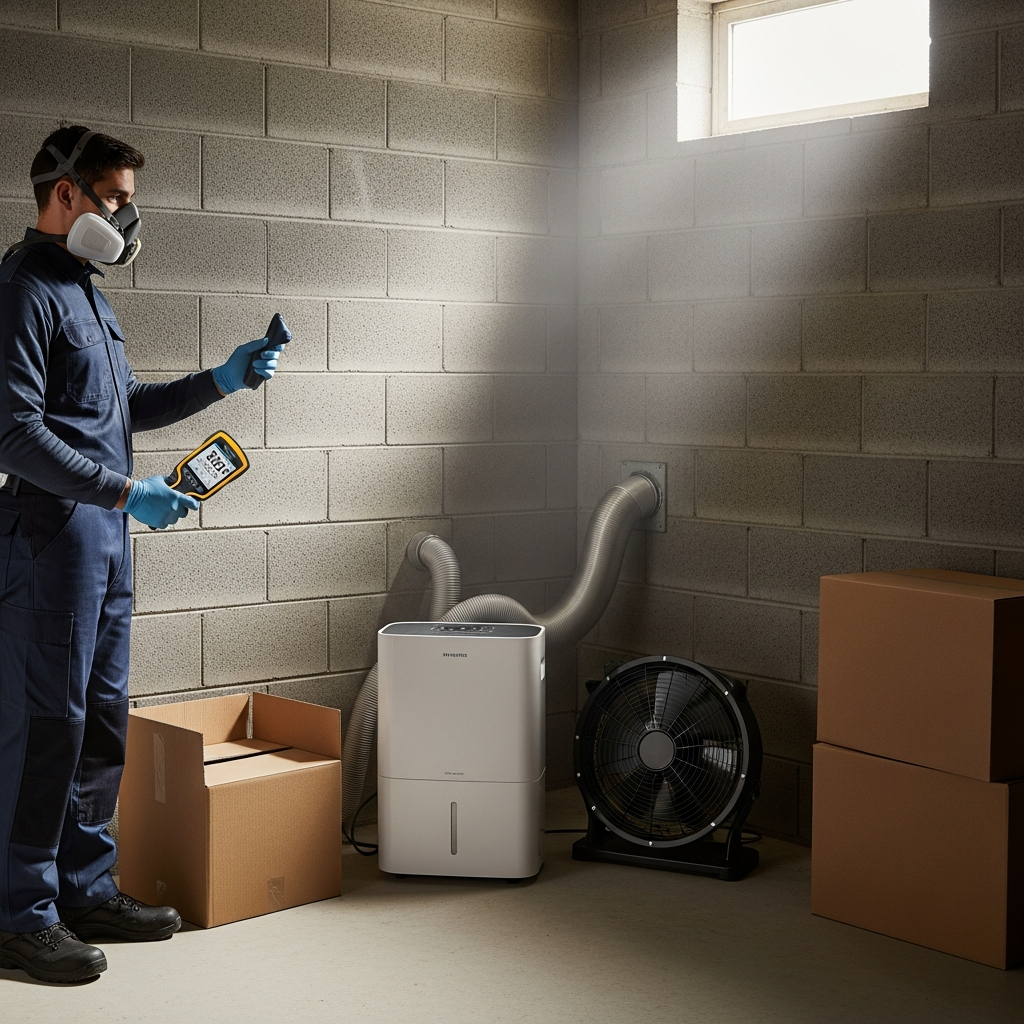
Before starting, plan safe access, lighting, and ventilation. Wear gloves and an appropriate respirator for particulate control. If you expect heavy dust, consider gently misting dusty surfaces before vacuuming to reduce disturbance. Switch your HVAC to off in the work zone if the return is in the basement, and close doors to finished upper levels. Designate a clean staging area near the stairs for supplies and bags. Keep trash bags ready for discarding porous items that cannot be salvaged without prolonged drying or that retain stubborn odor despite cleaning.
Ventilation helps, but do not blow directly onto suspect surfaces. Position a fan to exhaust air outdoors when weather allows, and open windows on opposite sides to encourage crossflow. During humid summer days, run a dehumidifier in tandem so you do not bring in excess moisture along with fresh air. The goal is steady drying rather than abrupt air blasts that could spread particulates.
Stop Moisture Intrusion and Condensation
You cannot deodorize a wet basement. Address intrusions first. Seal obvious wall cracks and pipe penetrations with appropriate patching materials, ensure downspouts discharge several feet from the foundation, and confirm that gutters are clear. Regrade landscaping to move water away from the home where feasible. Inside, insulate cold pipes to reduce condensation drips, and check that the water heater and washing machine hoses are sound. Keep the sump pit covered except during maintenance, and test the pump ahead of heavy rain.
Humidity is the long-term battle. Use a quality dehumidifier sized for the basement’s square footage, set to a target range that prevents condensation on cool surfaces. Empty collection buckets frequently or connect a continuous drain to a floor drain if available. Monitor the relative humidity and adjust settings seasonally for best results.
Deep Cleaning and Drying Sequence
Once moisture is under control, begin a structured cleanup. Start by removing clutter. Relocate salvageable items to the staging area and discard obviously damaged or musty materials. Next, perform a slow, methodical HEPA vacuuming of floors, ledges, joists, and the tops of pipes and ducts. This dry step captures settled particulates without pushing them deeper into pores. Follow with damp wiping using an appropriate cleaning solution for non-porous surfaces like sealed concrete, vinyl tile, and painted walls. Rinse cloths frequently and change the solution when it becomes cloudy.
For masonry walls that feel cool and slightly damp, use light, repeated cleaning passes rather than saturating the surface. Allow extended drying time with dehumidification and air movement between passes. On unfinished wood joists and sill plates, avoid heavy wetting; lightly clean, then keep steady airflow across the grain. If drywall or carpet smells musty after drying attempts, consider partial removal to access the hidden faces where odor often lingers.
Flooring and Subfloor Considerations
Concrete slabs can harbor moisture at the interface with floor coverings. If you have carpet over slab and smell mustiness, lift a section to evaluate the pad. Discolored, brittle, or odorous padding may need replacement. For vinyl or laminate installed over vapor barriers, check for trapped moisture or compromised seams. Where water intrusion has occurred, targeted removal of baseboards and a few inches of drywall can allow airflow to cavities, speeding the return to a dry, odor-free state.
Do not overlook stairs, posts, and the underside of the first-floor decking. These areas collect dust and humidity. A thorough vacuum and wipe-down can reduce the persistent faint odors that otherwise hang in the air.
HVAC, Ducts, and Returns in the Basement
Basements often contain the air handler and main returns. Replace filters promptly and confirm the condensate drain is clear and pitched properly. Inspect return cavities; if a return pulls air adjacent to a musty corner, you amplify odors throughout the house. Improve sealing or relocate returns away from damp areas when possible. After cleaning, run the system with a clean filter to move air through the space while the dehumidifier manages moisture.
Content Management: What to Clean, What to Let Go
The fastest path to odor relief is often clearing porous reservoirs. Old boxes, papers, musty shoes, and fabric items that sat on concrete can hold a smell even after the room is dry. Keep what matters and can be fully cleaned and dried; discard what cannot. Washable fabrics should be laundered and thoroughly dried. Furniture with particleboard components is particularly prone to odor retention after dampness—evaluate carefully before committing to lengthy restoration efforts.
Deodorizing the Right Way
After moisture control and cleaning, residual scents typically fade as the space continues to dry. Facilitate this with ongoing dehumidification, regular air exchanges on suitable days, and time. Avoid heavy masking fragrances that mingle with mustiness. Instead, maintain a simple, clean-smelling space free of damp reservoirs until the odor is gone. If a stubborn smell persists, revisit your moisture checks; lingering dampness somewhere is usually the reason.
When to Bring in a Professional
Signs you may need assistance include recurring odor despite diligent drying, visible growth that covers multiple wall sections or the underside of decking, ongoing seepage that you cannot control with basic measures, or health sensitivities among occupants. Professionals can apply negative air strategies, advanced cleaning, and targeted material removal with minimal disruption. If you would like a streamlined path to a verifiably fresh basement, coordinate with experienced mold odor removal specialists who can identify hidden sources, document moisture levels, and perform a contained cleanup.
Prevention Plan for Bloomfield Basements
Odor-free basements are the product of routine care. Keep gutters clean and downspouts extended, service the sump system, and verify that exterior grading sheds water away. Inside, maintain a dedicated dehumidifier during humid months, and store belongings on shelves or in sealed plastic bins rather than on the floor. Choose floor finishes designed for below-grade areas and leave a small gap at walls to reduce capillary wicking. Ventilate laundry areas during use and promptly address drips or spills.
Schedule seasonal checkups. After major storms or snowmelt, inspect for seepage lines on walls and floors. In summer, note any condensation on pipes or along cold slab edges and adjust dehumidifier settings accordingly. These small interventions reinforce the dry baseline that keeps odor from forming.
Frequently Asked Questions
Q: My basement smells musty only after rain—what does that mean? A: It likely indicates foundation seepage or poor drainage that allows water to sit near the walls. Improving gutters, downspouts, and grading while sealing minor cracks can make a dramatic difference.
Q: Will paint or sealers alone stop odor on masonry? A: Coatings can help slow vapor transmission, but they are not a substitute for drainage improvements and dehumidification. Apply them only after the substrate is dry and moisture entry is controlled.
Q: How long should I run a dehumidifier after cleaning? A: Continue until the space consistently maintains balanced humidity and no new condensation appears on cool surfaces. In summer, many Bloomfield basements benefit from continuous operation.
Q: Do I have to remove finished walls to eliminate odor? A: Not always. Sometimes targeted removal at the base along with focused drying restores fresh air. However, if the odor persists or you see extensive staining, more open access may be necessary.
Q: Can I keep carpet in the basement? A: It depends on moisture control and your tolerance for maintenance. Carpet can be comfortable but is less forgiving than hard surfaces below grade. If you keep it, use low-pile styles with moisture-resistant pads and monitor humidity closely.
Restore Fresh Air and Peace of Mind
You can reclaim a fresh, clean-smelling basement by addressing moisture first, cleaning with care, and maintaining steady humidity control. With a clear plan and some persistence, even stubborn odors can be resolved. If you want a confident, efficient path to results, partner with local experts in mold odor removal who understand Bloomfield basements, from foundation dynamics to seasonal humidity, and can help you achieve lasting freshness below grade.