Introduction: Protecting Business Continuity in Bloomfield, New Jersey
For property managers, facility directors, and business owners in Bloomfield, New Jersey, mold is more than a maintenance issue—it is an operational risk. Unchecked growth can affect indoor air quality, damage finishes, and interrupt daily operations. A strong commercial mold mitigation plan balances safety, compliance, and speed so your organization can protect people and return to normal quickly. This guide outlines the essentials of commercial response, from risk assessment and containment to communication strategies with tenants and staff. When you need rapid, expert support, partner with proven mold mitigation services that understand complex buildings and business priorities.
Risk Profiling for Commercial Properties
Commercial buildings vary widely—retail spaces, office suites, restaurants, healthcare clinics, schools, warehouses, and multi-tenant complexes each present unique challenges. Risk profiling starts with identifying likely moisture sources: roof penetrations, facade failures, plumbing risers, foundation seepage, or HVAC condensate issues. Occupant density, hours of operation, and the presence of sensitive populations (like in clinics or childcare settings) also shape mitigation strategies. A well-built profile guides everything from containment design to scheduling decisions that minimize disruption.
Comprehensive Assessment and Moisture Mapping
Professional teams use moisture meters, thermal imaging, and physical inspection to map contamination and intrusion pathways. In multi-tenant buildings, vertical shafts, chases, and shared mechanical systems can carry moisture and spores across units. Detailed mapping helps establish proper containment boundaries and prioritize areas that pose the highest risk for spread. Documentation supports internal reporting and aligns stakeholders on the path forward.
Containment Design for Commercial Spaces
- Zoned Containment: Segment large floor plates to keep safe egress routes and operational areas accessible.
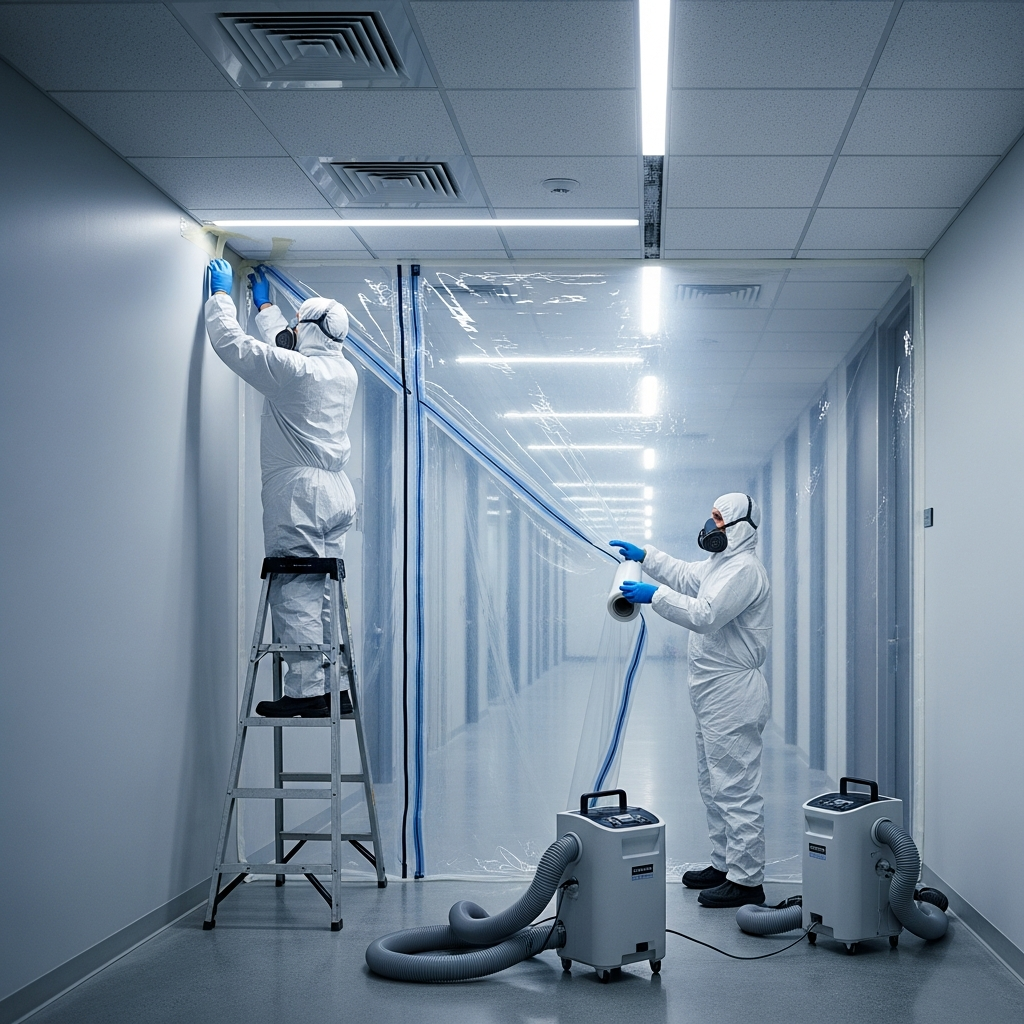
- Pressure Management: Use negative air machines to maintain directional airflow and protect adjacent zones.
- HVAC Coordination: Isolate affected air handlers, seal returns and supplies as needed, and plan post-project cleaning.
- Traffic Planning: Establish material staging areas, waste pathways, and decontamination zones to reduce cross-contamination.
Operational Continuity and Scheduling
Maintaining business continuity is a priority. Where feasible, work can be scheduled during off-hours, weekends, or in phased sequences. Clear signage, wayfinding, and access control help tenants and staff navigate temporary changes. Regular updates—brief, plain-language summaries of progress and next steps—build confidence and maintain cooperation across departments.
Cleaning and Removal Protocols
Effective mitigation requires selecting the right level of removal versus cleaning for each material. Porous items exposed to prolonged moisture may be removed, while non-porous and some semi-porous surfaces can be cleaned and verified. HEPA vacuuming, detail cleaning, and careful handling of waste protect unaffected spaces. In specialized environments like food service or healthcare, enhanced cleaning protocols and verification steps add layers of protection.
Middle Priorities: Air Quality, Verification, and Reporting
Continuous air filtration and negative pressure are crucial in busy commercial settings where people may be nearby or passing through adjacent areas. Verification includes confirming dryness in structural materials and ensuring surfaces have been cleaned to established standards. Teams should deliver concise reports—moisture maps, photo logs, and equipment run records—summarizing the scope and results. If your organization needs experienced guidance and transparent reporting, collaborate with proven mold mitigation services that understand compliance requirements and stakeholder communications.
Special Considerations by Property Type
- Retail: Visual presentation and customer flow matter; discreet containments and clean staging areas minimize impact on sales.
- Offices: Noise and access constraints require careful scheduling and communication to keep productivity high.
- Healthcare: Sensitive populations demand enhanced precautions, stricter verification, and coordinated reentry protocols.
- Education: Work often occurs during breaks or evenings; clear signage and safety briefings for staff are essential.
- Warehouses: Large volumes and high racks may complicate airflow; containment design must account for vehicle paths and fire egress.
Stakeholder Communication Plan
Effective communication reduces confusion and stress. Identify key contacts for ownership, property management, tenants, and any third-party vendors. Provide concise updates at predictable intervals, share an overview of the containment zones, and offer a channel for questions. In multi-tenant settings, a brief FAQ distributed to occupants can prevent misinformation and foster cooperation.
Preventive Measures for Long-Term Resilience
- Drainage and Envelope Maintenance: Regularly inspect roofs, facades, and sealants; ensure water is routed away from foundations.
- HVAC Optimization: Maintain filters, verify condensate management, and balance ventilation rates for occupancy levels.
- Humidity Management: Monitor relative humidity with building automation or portable sensors in vulnerable zones.
- Water Monitoring: Consider leak detection at critical points like mechanical rooms, risers, and kitchens.
- Documentation Culture: Keep records of past events, repairs, and inspections to spot patterns early.
Training and Readiness
Empower on-site staff with simple protocols for early detection—what to look for, who to call, and how to contain a small incident until professionals arrive. Quick action reduces the scope of damage and supports faster resolution. Regular tabletop exercises with building teams keep response skills sharp and build confidence.
Frequently Asked Questions
Q: Can mitigation occur during business hours? A: Often yes, with zoned containment, noise management, and clear wayfinding. Critical operations may require after-hours work to minimize impact.
Q: How do you protect tenants and customers? A: By isolating affected areas, maintaining negative pressure in work zones, using HEPA filtration, and scheduling intrusive tasks when occupancy is low.
Q: What documents will we receive? A: Expect moisture maps, photo logs, daily progress notes, and a final summary outlining verification of dryness and cleanliness.
Q: What if mold returns? A: Recurrence usually indicates persistent moisture. A post-project review should address drainage, ventilation, or envelope defects that need correction.
Q: How are contents handled? A: Items are categorized by material and exposure; some can be cleaned and returned to service, while others may require disposal.
Move Forward with Confidence
Safeguard your operation and protect occupants by coordinating with knowledgeable mold mitigation services that can respond quickly, communicate effectively, and deliver verifiable results. With a clear plan and the right partner, your Bloomfield property can remain healthy, compliant, and ready for business.