
Why Mold Odor Demands a Formal Repair Process in Bloomfield, New Jersey Businesses
In a commercial setting, a lingering musty odor does more than unsettle employees and customers; it signals hidden moisture and microbial activity that can undermine operations, damage assets, and erode brand trust. For Bloomfield, New Jersey businesses, seasonal humidity, winter thaw cycles, and severe rain events raise the risk of odor-causing conditions in basements, restrooms, storage rooms, and mechanical spaces. A structured repair process integrates diagnostics, containment, moisture control, and restoration so you can return to normal operations quickly and confidently. If you require outside expertise, partner with specialists in commercial mold odor to align safety, compliance, and business continuity.
Unlike a home, a business must balance odor resolution with minimal downtime, occupant safety, and regulatory or insurance requirements. The following framework provides a practical sequence you can adapt to facilities ranging from retail storefronts and offices to restaurants, clinics, and light industrial spaces.
Step 1: Triage, Communication, and Safety
Begin with a clear internal report. Identify the first notice of odor, affected areas, and any events such as roof leaks, plumbing failures, or storms. Notify stakeholders, including property management and tenants, if applicable. Establish safety measures appropriate to the situation, such as temporarily closing a restroom or isolating a storage room. Provide employees with basic guidance on avoiding disturbance of suspect materials and on reporting symptoms that worsen in the building.
Document baseline conditions. Record relative humidity and temperature in multiple zones, photograph visible staining or water, and note when the odor intensifies—during HVAC cycles, after rain, or at opening time after the building sat overnight. This data informs decisions and supports insurance documentation if needed.
Step 2: Source Identification and Moisture Mapping
Use moisture meters and, if available, infrared imaging to trace dampness. Examine roof penetrations, exterior walls, window systems, plumbing chases, and floor drains. In older Bloomfield buildings, masonry foundations can wick moisture, requiring both exterior drainage improvements and interior dehumidification. Distinguish between one-time events and chronic sources; a single overflow in a restroom differs from ongoing condensation on chilled water lines in an equipment room.
Assess the HVAC system. Inspect cooling coils, condensate pans, and drain lines for standing water or biofilm. Evaluate ventilation rates in restrooms, kitchens, and areas with high occupant density. Note whether odor is strongest at certain supply registers, which may indicate contamination within a duct branch.
Step 3: Containment and Protection
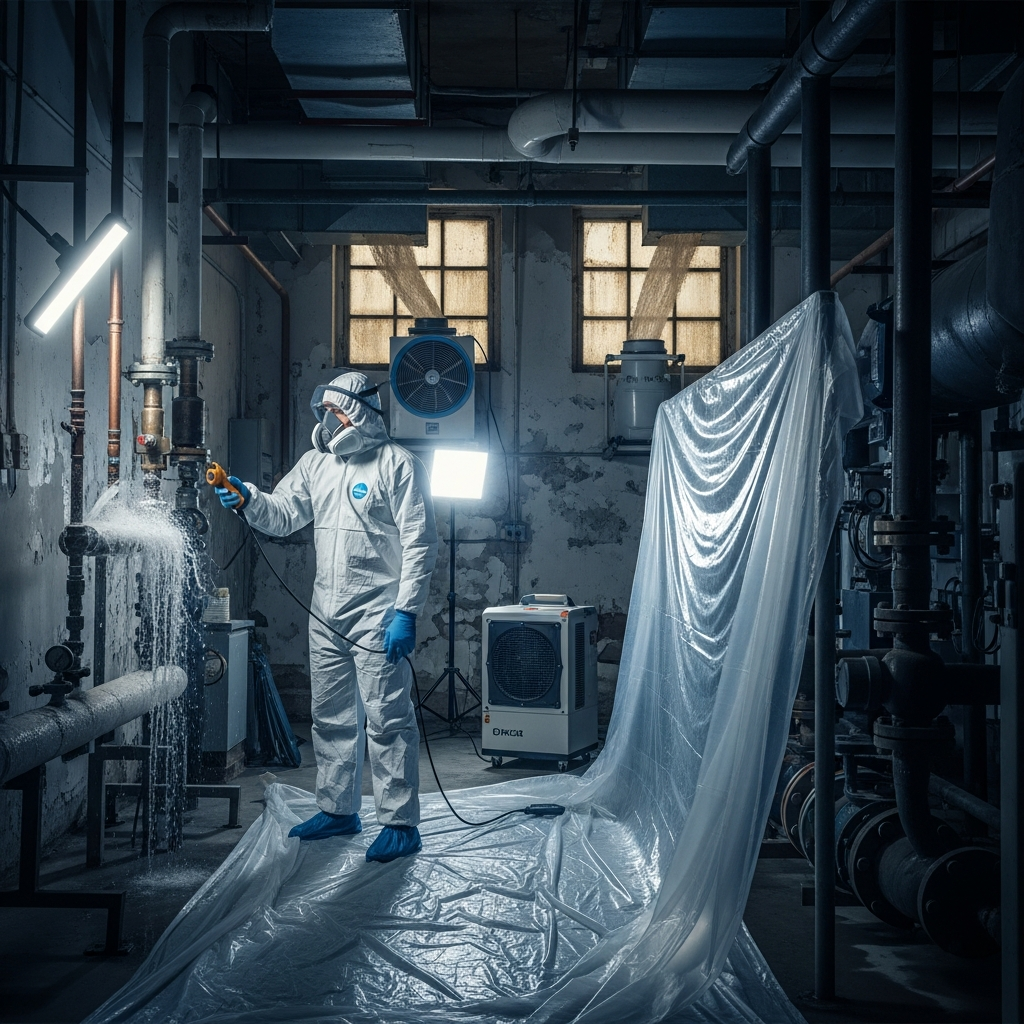
Before disturbing suspect materials, plan containment proportional to the scope. Use plastic barriers to isolate work zones and establish negative pressure if removal of porous materials is required. Protect adjacent areas with floor coverings and restrict access. Where operations must continue nearby, schedule noisy or dusty tasks during off-hours to minimize disruption.
Set clear waste handling procedures. Bag removed materials promptly and route them through designated paths to avoid cross-contamination. Communicate with building occupants about timelines and safety measures so expectations remain aligned and confidence stays high.
Step 4: Drying, Cleaning, and Selective Removal
Stabilize humidity quickly. Deploy dehumidifiers to maintain relative humidity near 45 to 50 percent and increase air movement across wet surfaces. For nonporous surfaces showing light growth, apply damp-wipe cleaning to minimize aerosolization. For porous materials like wet ceiling tiles, saturated carpet pad, or crumbling drywall, plan for removal and replacement. Avoid aggressive dry brushing or sanding that can release particles into occupied zones.
Clean dust reservoirs thoroughly. Vacuum carpets and upholstery with high-efficiency filtration, and damp-wipe horizontal surfaces in surrounding areas to reduce residual odor. Coordinate cleaning with HVAC operation to ensure adequate filtration captures airborne particles during and after work.
Step 5: HVAC Remediation and Air Quality Stabilization
If inspections implicate the HVAC system, schedule focused remediation. Clean coils, treat and clear the condensate pan and drain line, and replace filters with appropriate ratings. If lined ducts are contaminated or wet, targeted replacement may be necessary. Balance the system to ensure sufficient ventilation in high-moisture areas, such as restrooms and kitchens, where negative pressure helps prevent odor spread into public spaces.
Monitor post-cleanup air quality. Use spot measurements for humidity and particle counts if available, and solicit occupant feedback. Persistent odor when the system cycles suggests remaining contamination within air paths and warrants further investigation.
Step 6: Verification, Documentation, and Re-occupancy
Verification is essential for businesses. Re-measure moisture in previously wet materials, confirm that humidity stabilizes below 50 percent, and conduct a final walkthrough to ensure odor has dissipated. Update your documentation with post-repair photos and measurements. If work was insurance-related, provide the complete package of reports, invoices, and before–after evidence to streamline claims.
Plan a phased re-occupancy if necessary, reopening areas as they are verified. Share updates with staff and customers to reinforce confidence. Clear communication about the steps taken and the preventive improvements implemented reassures stakeholders and protects your brand.
Step 7: Prevention and Maintenance Program
A repair is complete only when the root causes are addressed and a maintenance plan is in place. Establish a schedule for gutter cleaning, roof inspection, and exterior caulking. In mechanical rooms, insulate cold lines to limit condensation, and confirm floor drains are functional and trap seals are maintained. In restrooms and kitchens, set timers or controls to run exhaust fans long enough to clear moisture loads during peak use.
Train staff to recognize early signs of moisture problems, from peeling paint and warped baseboards to intermittent musty bursts after the building sits closed overnight. A simple reporting channel and quick response protocol will prevent small issues from escalating into expensive repairs.
Common Commercial Scenarios in Bloomfield
Retail storefronts often battle odor from basements used for storage, especially after heavy rains. Improving exterior drainage and installing dedicated dehumidification usually stabilize conditions. Restaurants face moisture from cooking and dishwashing; properly balanced exhaust and makeup air are critical. Offices can encounter odor from underperforming restrooms or from HVAC condensate issues that spread smells via supply ducts.
Medical and dental practices require special care to protect sensitive occupants and equipment. Here, pre-planned containment, after-hours work, and rigorous verification are standard. Light industrial spaces may deal with process-related humidity or cooling water systems that encourage condensation; routine inspection and insulation upgrades are often the answer.
Frequently Asked Questions
Q: Can we remain open during mold odor repairs? A: Often yes, with proper containment, scheduling, and communication. Critical areas can be isolated while others operate. Safety and local regulations guide the final decision.
Q: Do we need testing before repairs? A: Testing can be helpful for scoping and verification, especially in sensitive occupancies. However, if moisture sources and affected materials are obvious, targeted repairs may proceed while documenting conditions and results.
Q: How fast should we act after detecting odor? A: Immediately begin assessment and stabilization. The first 24 to 48 hours are crucial for drying and limiting spread, which reduces both downtime and cost later.
Q: Will deodorizing alone solve the problem? A: No. Deodorizing without moisture control and source removal provides only temporary relief and can mask conditions that worsen over time.
Q: What role does the HVAC system play? A: A major one. Poor drainage, dirty coils, and inadequate ventilation can sustain or distribute odor. Inspection and remediation of HVAC components are often central to a successful repair.
Q: What documentation should we keep? A: Save inspection notes, measurements, photos, work orders, and verification results. Comprehensive records support compliance, reassure stakeholders, and simplify insurance claims.
Restore Confidence and Protect Your Business
With a structured process, clear communication, and attention to moisture control, your team can stop mold odors and keep them from returning. When time, scope, or operational complexity demand expert help, align with local professionals in mold odor remediation who understand Bloomfield’s climate and commercial realities. You will gain a reliable plan, efficient execution, and a workplace that smells as professional as it performs.