
Commercial Mold Inspection: The Process for Bloomfield, New Jersey Businesses
Whether you manage a retail storefront on Broad Street, a healthcare office near Watsessing, or a light industrial facility, a mold inspection program protects employees, visitors, and assets while preserving business continuity. Commercial buildings present unique challenges—complex HVAC systems, multiple tenants, and varied occupancy schedules can complicate moisture dynamics. This guide outlines a clear, repeatable process so Bloomfield businesses can plan, document, and act with confidence. If you are scoping vendors, begin by identifying experienced partners who provide comprehensive mold inspection services and understand the realities of operating environments.
In a commercial setting, time is money, but so is precision. Inspections should be scheduled to minimize disruption while capturing representative conditions. That means coordinating access to mechanical rooms, rooftops, tenant suites, and any spaces with past incidents of leaks or odors. Choosing a methodical process ensures consistent outcomes across multiple properties or campuses.
Discovery and Scoping
Every successful inspection begins with discovery: gathering building history, reviewing maintenance logs, and mapping prior incidents such as roof leaks, plumbing breaks, or flooding. The scope should define zones of priority, sampling plans if appropriate, and reporting deliverables that support decision-making with facilities teams, risk managers, and stakeholders. In multi-tenant buildings, communication plans clarify who is notified, when access is needed, and how findings will be shared.
Occupant interviews provide valuable context. Reports of morning odors, afternoon condensation on windows, or discomfort in specific rooms help inspectors trace air pathways, pressure imbalances, and hidden moisture reservoirs. Long-term patterns matter; so do recent changes like new rooftop equipment, window replacements, or tenant buildouts that could affect airflow and vapor movement.
On-Site Assessment and Tools
Commercial inspections leverage a mix of visual review, moisture mapping, and targeted use of instruments. Infrared thermography highlights potential wet zones behind finished walls. Non-invasive moisture meters quantify moisture content in drywall, wood, or concrete. Hygrometers track humidity and temperature trends, while borescopes allow viewing inside tight cavities with minimal disturbance. Where necessary, air and surface sampling can complement observations, especially if occupants report symptoms without visible growth.
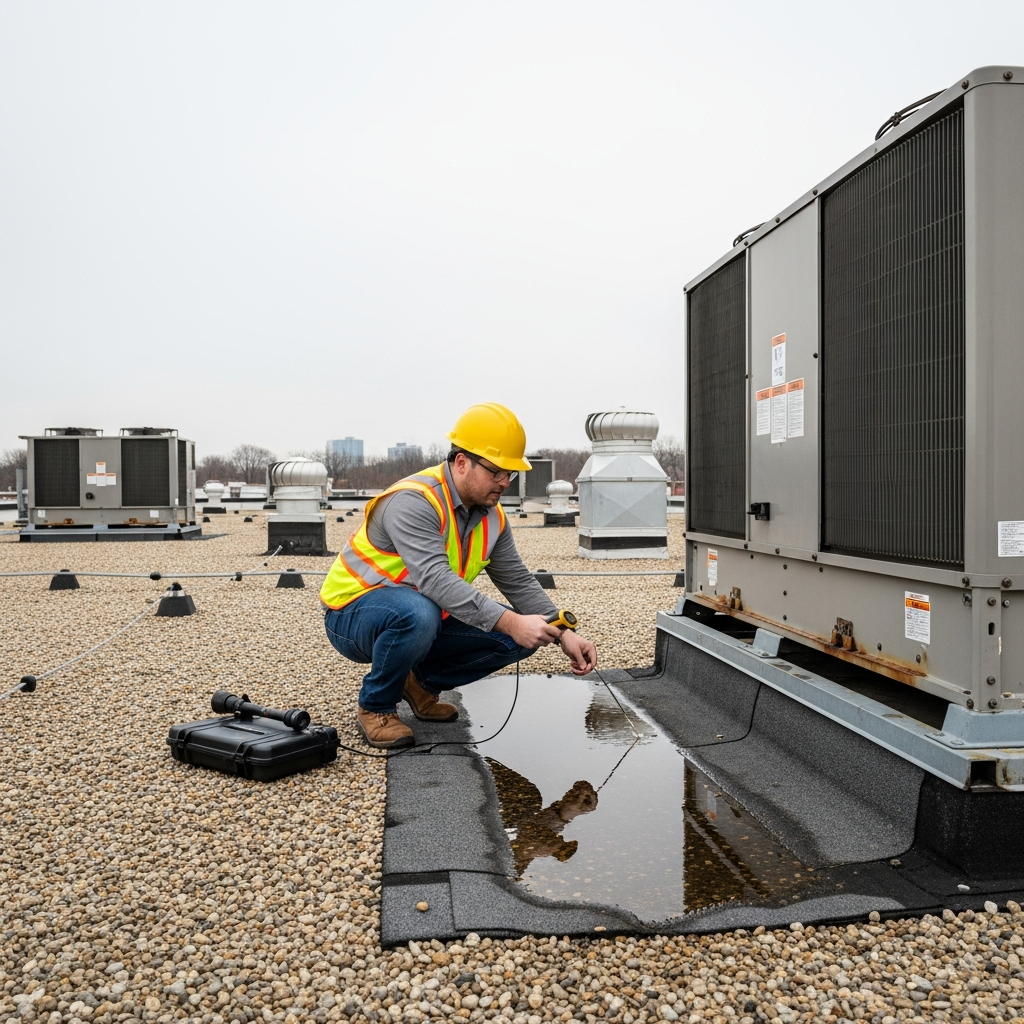
Rooftops and building envelopes receive focused attention. Inspectors check for ponding water, compromised flashing, membrane punctures, and rooftop units that discharge condensate improperly. Inside, mechanical rooms are evaluated for condensate management, filter condition, and duct sealing. Negative pressure zones near loading docks or stairwells can draw humid air into conditioned spaces; documenting these dynamics supports practical corrections.
HVAC Systems: The Heart of Commercial Airflow
Heating, ventilation, and air-conditioning systems in businesses are often more complex than in homes. They may include economizers, variable air volume boxes, return air plenums, and multiple zones with differing schedules. An inspection reviews coil cleanliness, drain pans, and filter specifications, and looks for bypasses that could recirculate unfiltered air. Inconsistent maintenance intervals can allow microbial buildup in damp areas like condensate lines. Recommendations may include coil cleaning, drain line service, sealing returns, and calibrating controls to maintain stable indoor humidity.
In some buildings, fresh air intake rates are insufficient or unbalanced, causing pressure differentials that pull humid air from basements, docks, or stairways. Inspectors evaluate outdoor air dampers, control sequences, and sensor placement to ensure ventilation supports rather than undermines indoor air quality.
Sampling Strategy and Documentation
In sensitive environments—such as clinics, labs, or food service—sampling may be warranted to supplement visual and moisture data. A defensible plan clarifies where and why samples are collected and how results will inform actions. Chain-of-custody documentation, calibrated pumps for air spore traps, and consistent outdoor baseline sampling build confidence in the data. Equally important is context: lab results are interpreted alongside moisture readings, building history, and occupant feedback to avoid false conclusions.
Reports should be executive-friendly and technically detailed. Expect a clear summary for leadership, followed by photos, annotated floor plans, and data tables that facilities teams can act on. Priority rankings help schedule corrections without disrupting operations.
Risk Mitigation and Business Continuity
Inspection findings translate into risk mitigation steps: correcting drainage, sealing penetrations, balancing HVAC systems, and scheduling remediation where needed. For critical environments, contingency plans might include off-hours work, temporary negative pressure containment, and communication templates for tenants or employees. Establishing a cadence of re-inspections—seasonally or after major weather events—keeps risk low and predictable.
Working with Stakeholders
Facility managers, property owners, tenants, and service vendors each have roles. Early coordination avoids access delays and surprises. Inspectors benefit from floor plans, recent maintenance logs, and a designated point of contact. After reporting, a debrief with stakeholders aligns on priorities, budget sequencing, and timing for any follow-up verification. Mid-project comparisons among providers of mold inspection services can illuminate differences in reporting clarity, sampling philosophy, and post-remediation support.
Common Commercial Findings in Bloomfield
Typical issues include rooftop flashing failures, poorly drained cooling towers or condensate lines, negative pressure near loading docks, and unresolved leaks from tenant buildouts. Suspended ceiling cavities can conceal chronic drip points or uninsulated supply ducts that sweat in summer. Carpeting in entryways may trap moisture tracked in from rain or snow, creating localized odor issues. Long-lived buildings may also have legacy ventilation routes that no longer align with new layouts, leaving certain rooms stagnant while others receive too much airflow.
Turning Insights into Action
A strong process ties findings to corrective tasks and verification. First, fix water entry. Second, adjust ventilation and humidity controls. Third, remove or remediate affected materials as appropriate. Fourth, monitor and confirm success with follow-up inspections or targeted sampling. Documentation at every step supports risk management, lease negotiations, and future real estate transactions.
Frequently Asked Questions
Q: Can inspections be performed outside business hours? A: Yes. Many providers accommodate early morning, evening, or weekend schedules to reduce operational impact.
Q: Do all commercial inspections require sampling? A: No. Sampling is used when it adds value—such as when symptoms are reported without visible findings or when documentation is needed for sensitive environments.
Q: How can we reduce future risk? A: Establish routine roof checks, verify condensate management, maintain filters and coils, and schedule seasonal HVAC tune-ups. Pair these with periodic professional assessments.
Q: What should tenants expect? A: Clear communication, defined access windows, and prompt sharing of relevant results. Coordinated efforts keep buildings healthy and operations smooth.
Q: How are multi-building portfolios handled? A: Create standard scopes, reporting templates, and performance benchmarks so results are comparable across sites and corrective actions can be prioritized consistently.
Move Forward with Confidence
Protect your workforce, customers, and assets by implementing a consistent, well-documented inspection process. Coordinate access, communicate expectations, and act decisively on moisture control and remediation recommendations. For a clear path from discovery to verification, partner with specialists who deliver reliable mold inspection services and understand the operational demands of Bloomfield businesses.