
Introduction
Environmental mold inspection brings together building science, moisture diagnostics, and clear reporting standards to help property owners make informed decisions. In Bloomfield, New Jersey—where housing ranges from early-20th-century homes to newer, tightly sealed structures—adhering to rigorous protocols is essential for credible results. If you are beginning your search for a qualified provider, it helps to review trusted mold inspection services that prioritize methodical assessment, transparent reporting, and prevention-focused guidance.
This guide outlines core standards for environmental mold inspections, including scope definition, documentation practices, sampling protocols, chain of custody, and ethical considerations such as avoiding conflicts of interest. You will also find preparation tips, Bloomfield-specific insights, and a thorough FAQ to help you evaluate providers confidently.
Defining Scope and Objectives
A clear scope is the foundation of a high-quality environmental inspection. The scope should define:
- Client goals: Transaction documentation, occupant concerns, or verification after water damage restoration.
- Areas of focus: Entire property or targeted zones with known issues.
- Methods to be used: Visual examination, moisture mapping, thermal imaging, and sampling if warranted.
- Deliverables: A written report with photographs, moisture readings, and prioritized recommendations.
Scope clarity prevents misunderstandings and ensures the inspection produces actionable results rather than generic conclusions.
Documentation Standards
Reliable inspections produce reliable records. Expect a report to include:
- Date, weather conditions, and occupancy status to contextualize findings.
- Annotated photographs showing locations and directions.
- Moisture readings with units and materials identified.
- Diagrams or simple maps for basements, crawl spaces, and attics when layout complexity warrants.
- Clear limitations, such as inaccessible areas, locked rooms, or safety constraints.
Good documentation supports decision-making and allows other professionals—roofers, plumbers, or remediation contractors—to act on the findings accurately.
Instrumentation and Calibration
Environmental inspections rely on calibrated equipment. Inspectors should use:
- Pin and pinless moisture meters suitable for wood, drywall, and masonry.
- Thermal imaging cameras with adequate resolution for building diagnostics.
- Hygrometers to log relative humidity and temperature data during the visit.
- Borescopes where minimally invasive visual access is needed.
Calibration records and model information may be included upon request, adding confidence to measurements used for decisions.
Sampling Protocols
Sampling is most valuable when it answers specific questions. Standards emphasize:
- Decision criteria: Sampling should be tied to goals such as documenting hidden impact, verifying remediation, or informing containment boundaries.
- Method selection: Air, surface, and wall-cavity sampling are chosen based on site conditions and the questions to be answered.
- Replicates and controls: Outdoor or control samples provide context for indoor results.
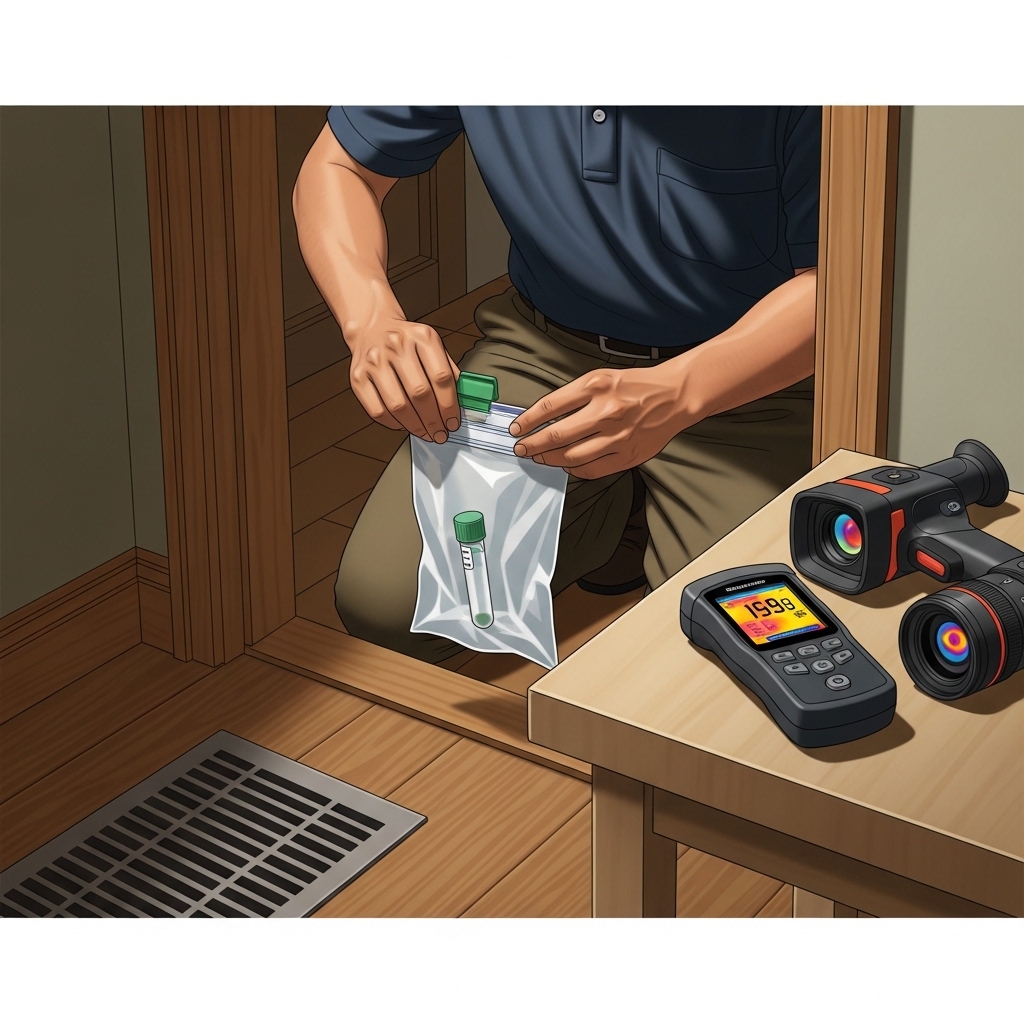
- Handling and chain of custody: Samples must be labeled, sealed, and documented from collection to laboratory receipt.
Sampling without a clear purpose can add complexity without improving outcomes. The best inspectors explain exactly how results will inform next steps.
Chain of Custody and Laboratory Coordination
Chain of custody ensures sample integrity. Expect labels with location, date, time, and collector’s initials; sealed containers; and documented transfer to the lab. Laboratories should be reputable and capable of appropriate analysis methods for the samples collected. The final report should integrate lab results into the site narrative rather than present them in isolation.
Ethics and Conflict of Interest
Environmental standards emphasize impartiality. Many property owners prefer independent inspection from firms that do not profit from subsequent remediation. Where one company offers both, transparency is critical. Look for clear separation of inspection and remediation scopes, written recommendations based on evidence, and verification protocols that confirm success regardless of who performs the work.
Bloomfield, New Jersey Considerations
Local context matters. Bloomfield’s climate and building stock present recurring themes:
- Basement humidity during warm months and after storms, often intensified by limited airflow behind storage.
- Leaf-clogged gutters that overflow, sending water toward fascia and foundation lines.
- Attic ventilation imbalances that can cause seasonal condensation on sheathing.
- Window and door assemblies subject to wind-driven rain in nor’easters.
Inspectors familiar with these patterns will prioritize risk zones and tailor recommendations to the features of your property.
Preparing for an Environmental Inspection
Preparation supports safety and thoroughness:
- Provide a history of water events, repairs, and renovations, including dates where possible.
- Clear access to plumbing, mechanical rooms, attic hatches, and basement perimeter walls.
- Secure pets, and move fragile items from areas under attic access points.
- Leave HVAC on typical settings to capture representative interior conditions.
These steps allow the inspector to devote more time to diagnostics and documentation.
Interpreting Results and Prioritizing Actions
A well-structured report will provide prioritized recommendations that begin with moisture source correction, followed by remediation where needed and prevention strategies to limit recurrence. Expect the report to translate technical findings into practical steps, identifying who should perform each task and suggesting verification approaches.
Mid-Project Review and Provider Selection
If you are comparing providers or refining timelines, it can help to consult established mold inspection services that provide sample reports, clear scopes, and transparent methods. Aligning expectations early reduces the likelihood of scope creep and ensures that documentation meets your needs.
Prevention and Maintenance Standards
Environmental stewardship favors prevention. Adopt standards-based routines:
- Maintain gutters and downspouts; verify discharge away from the foundation.
- Operate bathroom and kitchen ventilation during and after use.
- Monitor indoor humidity and encourage air movement in storage areas and closets.
- Inspect attics and top-floor ceilings after major storms for early signs of leaks.
- Address window condensation quickly by balancing humidity and improving air sealing as needed.
Consistent attention to moisture control protects both building materials and indoor comfort.
Working With Remediation Contractors
If remediation is recommended, the inspection report provides a blueprint. Ask contractors to align their scopes with containment and cleaning protocols appropriate to the materials involved. Request details on occupant protection, waste handling, and verification steps, including visual checks and targeted sampling when warranted.
Frequently Asked Questions
Q: What makes an inspection “environmental”?
A: It integrates building science, moisture diagnostics, and structured documentation, focusing on conditions and sources rather than just surface appearance.
Q: Do all inspections include sampling?
A: No. Sampling is performed when results will influence decisions, documentation, or verification; inspection alone often identifies moisture sources and needed actions.
Q: How long does an environmental inspection take?
A: Time depends on property size, access, complexity, and whether sampling is conducted, but many homes can be assessed within a few hours.
Q: What if areas are inaccessible?
A: Reports should disclose limitations and recommend options for limited access or follow-up evaluation where necessary.
Q: Who should perform remediation?
A: Choose contractors who follow recognized containment and cleaning protocols. Many owners prefer independent inspection to preserve impartiality.
Q: How are lab results explained?
A: The final report should interpret results in plain language and connect them to site observations and next steps.
Q: Are Bloomfield’s older homes at special risk?
A: Older homes can have unique moisture pathways, but many perform well with vigilant maintenance, proper ventilation, and routine checks.
Q: When should I schedule follow-up verification?
A: After moisture corrections and remediation, particularly when documentation is required for real estate or multi-tenant settings.
Schedule an Environmental Mold Inspection
Bring clarity and confidence to your property decisions with a standards-based evaluation that prioritizes moisture control, targeted remediation, and prevention. Coordinate with a trusted provider of mold inspection services to schedule your Bloomfield inspection, review reporting examples, and align the scope with your objectives.