In commercial settings, mold can disrupt operations, affect customer confidence, and impact employee comfort. Whether you manage a retail space near Bloomfield’s town center, oversee an office suite, operate a restaurant, or maintain a healthcare or educational facility, a swift and organized response is essential. Experienced providers of mold mitigation services understand the unique demands of commercial properties: minimizing downtime, protecting inventory and equipment, maintaining safety and cleanliness, and documenting the process for stakeholders.
Commercial mitigation blends technical rigor with logistical planning. Work often unfolds during off-hours, strategically sequenced to keep critical areas open when possible. Clear communication with facility managers, tenants, and maintenance teams ensures that containment, access, and verification steps are coordinated efficiently.
Why Mold Appears in Commercial Properties
Business environments are diverse, but moisture drivers are familiar: roof penetrations, aging HVAC systems, plumbing leaks, improperly vented cooking or sanitation areas, and groundwater or façade infiltration during heavy rain. In spaces with high occupancy or steam-generating activities, humidity can rise quickly. Storage areas with limited airflow may trap moisture. Materials commonly found in commercial build-outs—drop ceilings, drywall partitions, carpeting, and composite wood fixtures—can all be impacted if dampness persists.
Bloomfield’s seasonal climate compounds these conditions. Summer humidity challenges air handling systems, while winter temperature differentials can lead to condensation along exterior walls or in unconditioned zones. A commercial mitigation plan addresses both immediate contamination and ongoing moisture control within the building’s operational realities.
Core Elements of Commercial Mold Mitigation
- Assessment and scope definition: The team evaluates affected areas, interviews staff who reported issues, and maps moisture to identify boundaries and priorities.
- Stakeholder alignment: Facility managers, tenants, or franchise owners review the plan, approve containment zones, and align on scheduling that limits disruption.
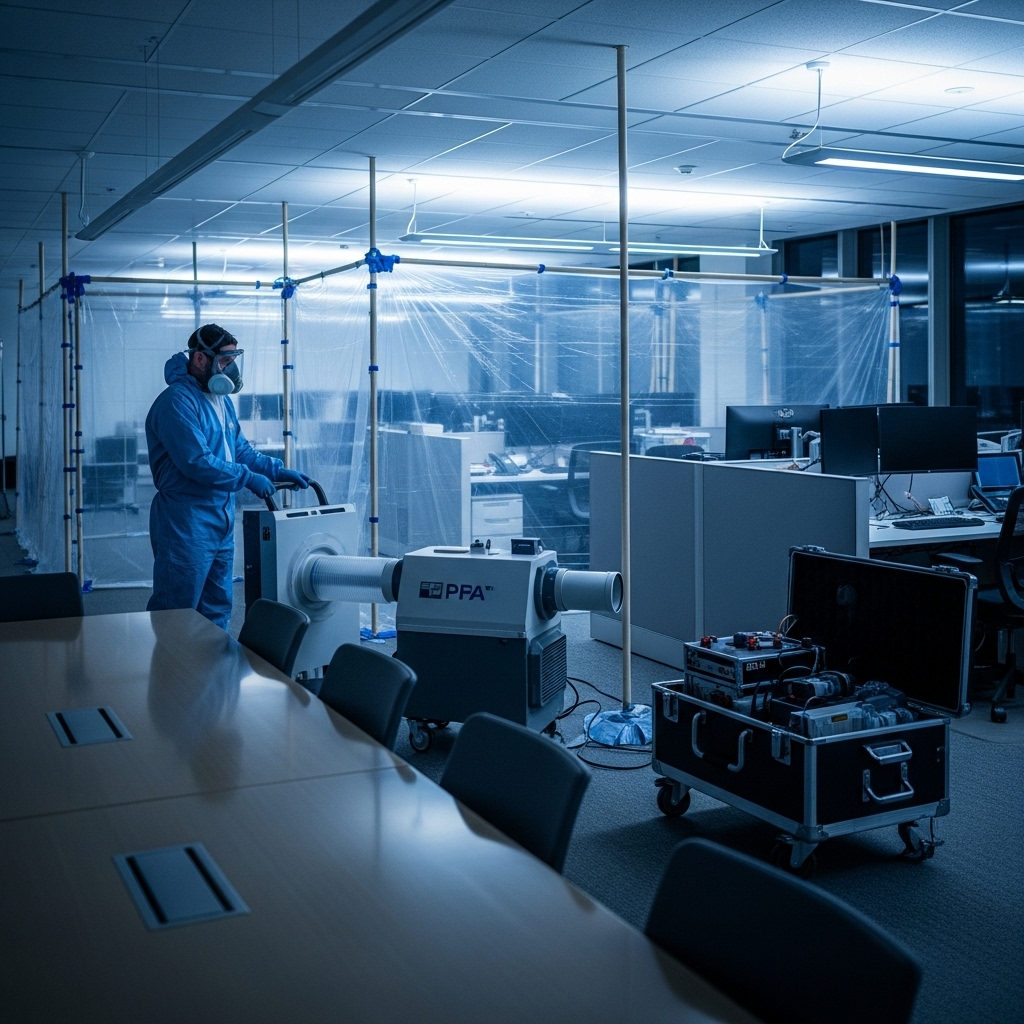
- Containment and environmental controls: Negative air, HEPA filtration, and controlled access points prevent particle migration into customer-facing or critical operations areas.
- Selective removal and cleaning: Severely affected porous materials are removed; salvageable surfaces are cleaned and dried following industry-aligned methods.
- Moisture source correction: Roof and façade repairs, HVAC adjustments, ventilation improvements, or plumbing fixes stabilize conditions.
- Verification and documentation: Visual confirmation, moisture readings, and detailed records support compliance and internal reporting.
This framework is flexible enough to match different property types while ensuring consistency and safety. Thorough documentation supports audits, lease requirements, and communication with corporate offices or boards.
Industry-Specific Considerations
Each commercial sector brings unique constraints. Restaurants require careful coordination to protect food prep areas and meet hygiene expectations. Offices and co-working spaces need low-disruption sequencing, with after-hours work and weekend phases. Healthcare and wellness environments demand heightened attention to cleanliness and privacy. Retail spaces must preserve a welcoming atmosphere while behind-the-scenes remediation proceeds.
Professional teams tailor containment, signage, and cleaning to the setting. They also coordinate protective measures for inventory and equipment, taking special care in server rooms, storage areas, and locations with sensitive electronics.
Managing Downtime and Communication
Downtime management starts with a clear plan. Transparent scheduling, phase-by-phase updates, and consistent points of contact streamline decision-making. When hidden damage is discovered, change orders are communicated with options that keep business priorities in view. Staff receive brief guidance on temporary routes, safety around work zones, and any changes to HVAC settings during mitigation.
Communication extends to signage that directs customers or occupants around containment or to alternate entrances. In multi-tenant buildings typical of Bloomfield’s mixed-use corridors, coordination with neighbors prevents confusion and ensures a unified approach to safety.
Equipment and Techniques that Deliver Results
Commercial-grade HEPA air scrubbers, vacuums, and negative air machines manage airborne particles efficiently. Moisture meters and thermal imaging allow technicians to pinpoint hidden dampness behind partitions and above ceiling tiles. Dehumidifiers sized for the cubic footage and moisture load accelerate drying. These tools, paired with trained technicians, transform a potentially disruptive event into an organized, effective response.
Mid-project evaluations confirm progress and support decisions about opening sections of a property sooner. Providers with broad experience delivering comprehensive mold mitigation services across different industries understand how to tailor the plan while keeping the technical fundamentals consistent.
Prevention in Commercial Environments
- Schedule routine roof and façade inspections to identify infiltration points.
- Maintain HVAC systems, ensuring adequate dehumidification and filtration.
- Verify that exhaust systems in kitchens, restrooms, and laundry areas push moisture outdoors.
- Monitor storage areas for dew point and humidity; add circulation where needed.
- Train staff to report small leaks immediately; investigate musty odors promptly.
- Use materials suited to the space; consider finishes that tolerate occasional moisture in vulnerable areas.
When prevention becomes part of normal operations, the likelihood of disruptions falls dramatically and indoor conditions remain more stable.
Frequently Asked Questions
Q: Can mitigation be done after hours? A: Yes. Commercial plans often include off-hours or weekend work to minimize impact on daily operations.
Q: How do you protect customers and staff? A: Containment, signage, and negative air prevent particle migration. Communication keeps everyone informed about temporary routes and safety considerations.
Q: Will we need testing? A: It depends on the scope, building policies, and verification goals. Many projects rely on visual and moisture-based criteria; testing can be added if required or requested.
Q: What documentation do we receive? A: Expect photos, moisture readings, and a clear narrative of work performed. This helps with internal reporting and compliance needs.
Q: Can mitigation address recurring humidity problems? A: Yes. A strong plan includes ventilation and HVAC recommendations that stabilize humidity and reduce future risk.
Q: How quickly can a team respond? A: Response is prioritized based on urgency and scope. Providers align with your operational needs to limit disruptions.
Protect Your Business with a Strategic Response
If you’ve noticed musty odors, staining, or persistent humidity in your Bloomfield property, take action before the issue grows. Choose a partner that understands commercial logistics, communicates clearly, and documents every step. For responsive and professional mold mitigation services, connect with a trusted local team and safeguard your operations, people, and reputation.