Choosing the right team to tackle mold in your home is about much more than cleaning visible spots. In Bloomfield, New Jersey, seasonal humidity, aging housing stock, and frequent freeze–thaw cycles can drive moisture into basements, crawl spaces, and wall cavities where spores thrive. A thoughtful selection process will protect your home’s structure, preserve indoor air quality, and support the health of everyone inside. Before you sign a contract, it helps to understand how mold behaves in our local climate, what a high‑quality provider offers, and how to compare options systematically.
While minor surface growth can sometimes be addressed through housekeeping, established colonies inside porous materials demand professional evaluation and containment. Reputable professionals delivering mold mitigation services combine building‑science know‑how with proven safety protocols to stop spread, remove contamination, and correct moisture sources. The right partner will also educate you about prevention so the problem does not return the next time New Jersey weather swings from snowstorm to spring thaw.
This guide explains, step by step, how to choose a qualified provider in Bloomfield. You will learn what credentials matter, how to read proposals, which questions reveal true expertise, and how to evaluate guarantees without getting distracted by flashy promises. With a clear checklist and a firm grasp of best practices, you can select a contractor who protects your home and peace of mind.
Understand why mold forms in Bloomfield homes
Mold growth is fueled by a simple equation: spores plus moisture plus organic material equals a thriving colony. In Bloomfield, typical contributors include damp basements, poorly vented bathrooms, roof leaks, ice dams, and condensation on cool surfaces like foundation walls or uninsulated ducts. Older homes may have limited vapor barriers, and newer airtight construction can trap humidity if ventilation is inadequate.
When assessing your situation, consider how water may be entering and lingering. Wind‑driven rain, clogged gutters, negative pressure created by exhaust fans, and even landscaping that slopes toward the foundation all influence moisture levels. The best mitigation companies treat water management as part of their mandate, not an afterthought.
Differentiate mitigation, remediation, and restoration
Industry terms often get used interchangeably, but they emphasize different stages of the solution. Mitigation focuses on stopping spread and reducing severity—think containment, air filtration, and immediate moisture control. Remediation typically involves actual removal of contaminated materials and cleaning of affected surfaces. Restoration addresses returning the space to pre‑loss condition by rebuilding or refinishing. Top providers are fluent across all three or coordinate seamlessly with partner trades so you are not left managing gaps between steps.
Key credentials and qualifications to look for
A trustworthy provider relies on proven standards, documented training, and transparent safety measures. Use this checklist to verify the essentials before inviting anyone to work in your home.
- Third‑party training and certifications that align with industry standards for mold assessment, containment, and removal.
- Comprehensive insurance, including general liability and workers’ compensation, with certificates naming you or your property manager as certificate holder during the project.
- Written health and safety plan addressing personal protective equipment (PPE), decontamination procedures, and handling of contaminated materials.
- Experience with Bloomfield housing types—brick foundations, fieldstone basements, plaster walls, and mixed‑material additions—so they anticipate hidden moisture paths.
- Clear chain of custody for samples if air or surface testing is part of the plan, using independent labs for unbiased results.
- Documented process for negative air pressure setups, HEPA air filtration, and isolation of work zones to protect clean areas.
- References from recent local jobs, ideally in similar structures or with similar moisture causes.
How reputable providers scope a project
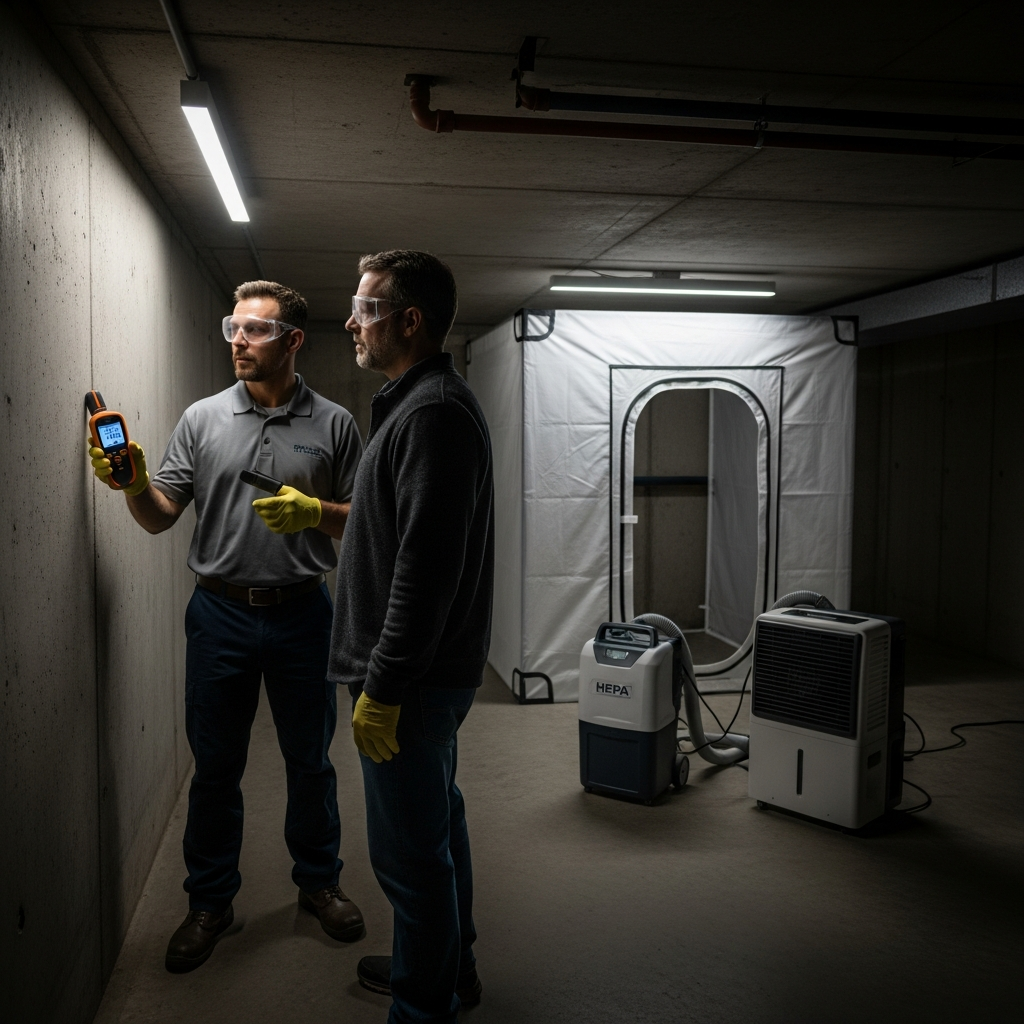
High‑quality teams begin with a structured inspection that ties visual observations to moisture readings and, when needed, borescope imaging behind walls. They will map the affected area, identify likely moisture sources, and propose a containment plan that suits your layout. Instead of vague promises, they share step‑by‑step tasks: establishing containments with 6‑mil poly, creating negative pressure, setting HEPA scrubbers, removing porous materials beyond the visible edge, and verifying dryness with calibrated meters.
A detailed scope also addresses logistics—access points, protection of personal property, daily housekeeping, noise expectations, and estimated duration. If your home includes sensitive occupants such as infants, elders, or individuals with asthma, an experienced company will suggest scheduling and ventilation strategies that minimize disruption while maintaining safety.
Comparing proposals without getting overwhelmed
It is common to receive multiple proposals that look very different. Focus on the substance behind the formatting. Do they specify the square footage of containment? Do they enumerate equipment types and capacities (for example, HEPA filter ratings and air changes per hour)? Is there a plan for source moisture correction, such as dehumidification targets or guidance for exterior drainage improvements? Are cleaning products disclosed, and are they appropriate for your building materials?
When weighing options, prioritize clarity and method over buzzwords. A concise, technically sound plan beats a glossy brochure every time. If language is vague, ask for elaboration in writing so expectations are aligned and measurable.
Questions to ask before you hire
- How will you isolate the affected area from the rest of the home, and how will you verify containment integrity?
- What is your protocol for negative air pressure and how do you monitor airflow during the job?
- Which surfaces do you consider salvageable, and how do you decide to remove versus clean?
- What methods do you use to confirm dryness before and after mitigation?
- How will you protect HVAC systems and ducts during the project?
- Who is the site lead each day, and how will they communicate progress or unforeseen findings?
- What documentation do you provide at completion (photos, readings, maintenance plan)?
- How do you minimize disruption for families, pets, and neighbors in multi‑unit buildings?
Red flags that signal a poor fit
- They promise instant results without containment or air filtration.
- They refuse to describe their process or provide it in writing.
- They downplay moisture control, implying removal alone will solve the issue.
- They discourage independent testing or will only use an in‑house lab without transparency.
- They lack local references or cannot describe how Bloomfield’s climate affects their approach.
- They rely on strong fragrances rather than verified cleanliness and dryness.
What a thorough process looks like
Expect methodical steps. First, the team protects entry paths and sets up a clean zone for equipment. Next, they build containments around affected areas, seal penetrations, and install HEPA air scrubbers vented appropriately. They establish negative pressure and confirm with manometer readings or smoke tests. Porous materials like saturated drywall or carpet are removed to a safe margin, bagged, and disposed of according to local rules. Semi‑porous framing is cleaned and may be sanded or media‑abraded to remove residual growth. Non‑porous surfaces are wiped with approved cleaners and HEPA‑vacuumed post‑drying.
Moisture control occurs in parallel: dehumidifiers, air movers when appropriate, and source corrections such as sealing penetrations, improving ventilation, or recommending exterior drainage adjustments. Final verification includes visual inspection, dryness readings, and, if part of the plan, third‑party testing. Documentation—photos, logs, and maintenance notes—helps you prevent recurrence.
When to bring in independent testing
While not every job requires testing, independent assessments can be valuable for baseline conditions, sensitive occupants, or real estate transactions. A separation between those who test and those who mitigate helps maintain objectivity. If testing is elected, coordinate timing so baselines are taken before demolition and post‑clearance sampling occurs after cleaning and air filtration are complete. Your provider should welcome collaboration and plan their schedule accordingly.
Weighing local experience and response time
In Bloomfield, storms and freeze–thaw weather can create sudden water intrusions. Local experience matters because it shortens the learning curve on typical building details and moisture patterns. Quick response reduces cross‑contamination and limits demolition. When comparing local mold mitigation services, consider how quickly teams can mobilize, their access to rental or backup equipment, and their familiarity with municipal disposal guidelines.
Preparing your home for work
Good preparation makes the job faster and cleaner. Remove small personal items from affected rooms, clear pathways to utility areas, and plan for temporary relocation of pets during demolition. Identify parking access and electrical outlets for equipment. If the HVAC system serves the work area, plan for it to remain off or isolated. Share any known allergies or sensitivities so cleaning agents can be selected accordingly.
Aftercare and prevention
Post‑mitigation success depends on maintaining dryness. Keep indoor relative humidity below 50% with dehumidification where needed. Vent showers and laundry to the exterior. Insulate cold pipes and ducts to reduce condensation. Seal foundation cracks and redirect gutter downspouts away from the house. Consider a humidity monitor in basements and bathrooms. Schedule seasonal walkthroughs to look for musty odors, water stains, or peeling paint that can signal new moisture pathways.
Documentation you should receive
- Before‑and‑after photos of affected areas and containment setups.
- Logs of HEPA run times, filter changes, and negative pressure readings.
- Moisture and humidity readings during and after work.
- Disposal records where applicable.
- Recommendations for ventilation, dehumidification, and maintenance tailored to your home.
Frequently Asked Questions
Q: How do I know if I need professional help versus DIY cleaning?
A: If growth covers more than a small patch, recurs after cleaning, involves porous materials, or coincides with musty odors and moisture readings above normal, bring in a professional. Persistent moisture or hidden cavities call for containment and specialized tools.
Q: Will mitigation disrupt my household for days?
A: Expect noise from equipment and limited access to contained rooms. Skilled teams minimize disruption by planning access routes, cleaning daily, and communicating schedules. Most homes remain safely occupied, though sensitive individuals may choose to be off‑site during demolition.
Q: Do I need air testing?
A: Testing can be helpful for sensitive occupants or documentation needs, but it is not a substitute for moisture control and visual cleanliness. Discuss with your provider whether independent testing adds value for your situation.
Q: What if mold returns?
A: Recurrence usually means moisture has not been fully addressed. Review humidity, ventilation, and exterior water management. A solid provider will help you trace sources and adjust maintenance practices.
Q: How long should equipment run after cleanup?
A: HEPA air scrubbers and dehumidifiers often continue 24–72 hours after removal and cleaning to capture residual particles and stabilize humidity. Your provider will set targets and confirm results with readings.
Putting it all together
Choosing wisely means insisting on clarity, safety, and moisture control from day one. With a structured evaluation and the questions in this guide, you can identify a partner who treats your home with care and solves the root problem rather than just the symptoms. Documented processes, local experience, and ongoing communication are the hallmarks of a successful outcome.
Get help today in Bloomfield
If you are ready to protect your home’s air quality and structure, connect with a trusted local team for comprehensive mold mitigation services. An expert‑led plan—from containment to prevention—will help you breathe easier and sustain a healthy living environment through every season in Bloomfield, New Jersey.