Industrial facilities in Bloomfield, New Jersey—warehouses, manufacturing plants, distribution centers, and R&D labs—face distinctive mold risks driven by large indoor volumes, complex mechanical systems, and variable processes that introduce moisture. When mold takes hold, it can jeopardize product quality, equipment reliability, worker comfort, and regulatory compliance. The most effective response combines swift containment with a plan to stabilize humidity, fix sources of water, and verify cleanliness before production resumes. Engaging experienced mold mitigation services gives facility managers a structured path from discovery to sign-off with minimal disruption to operations.
Why Industrial Environments Are Vulnerable
Industrial buildings often include high ceilings, loading docks, cold or warm zones, and rooms with different air pressures. These conditions can drive condensation on structural steel, roof decks, and ductwork. Occasional roof leaks, process water, and washdown activities add moisture. When airflow patterns shift during seasonal changes or equipment maintenance, stagnant pockets can develop where mold thrives. The scale of these buildings means that even a small leak can cause significant hidden damage.
Operational Impacts of Mold
Unchecked mold can contaminate stored goods, reduce insulation performance, and cause odors that affect employee morale. Sensitive processes—such as food handling, pharmaceuticals, or electronics—may require heightened precautions. In some industries, QA protocols demand documented proof that mold-prone zones have been remediated and the environment has been stabilized before operations resume.
Key Elements of an Industrial Mitigation Plan
Industrial projects require meticulous planning and communication. A professional plan typically includes:
- Rapid Assessment and Moisture Mapping: The team identifies visible growth, measures moisture in building materials, and pinpoints sources—roof penetrations, process lines, or condensation on cold surfaces.
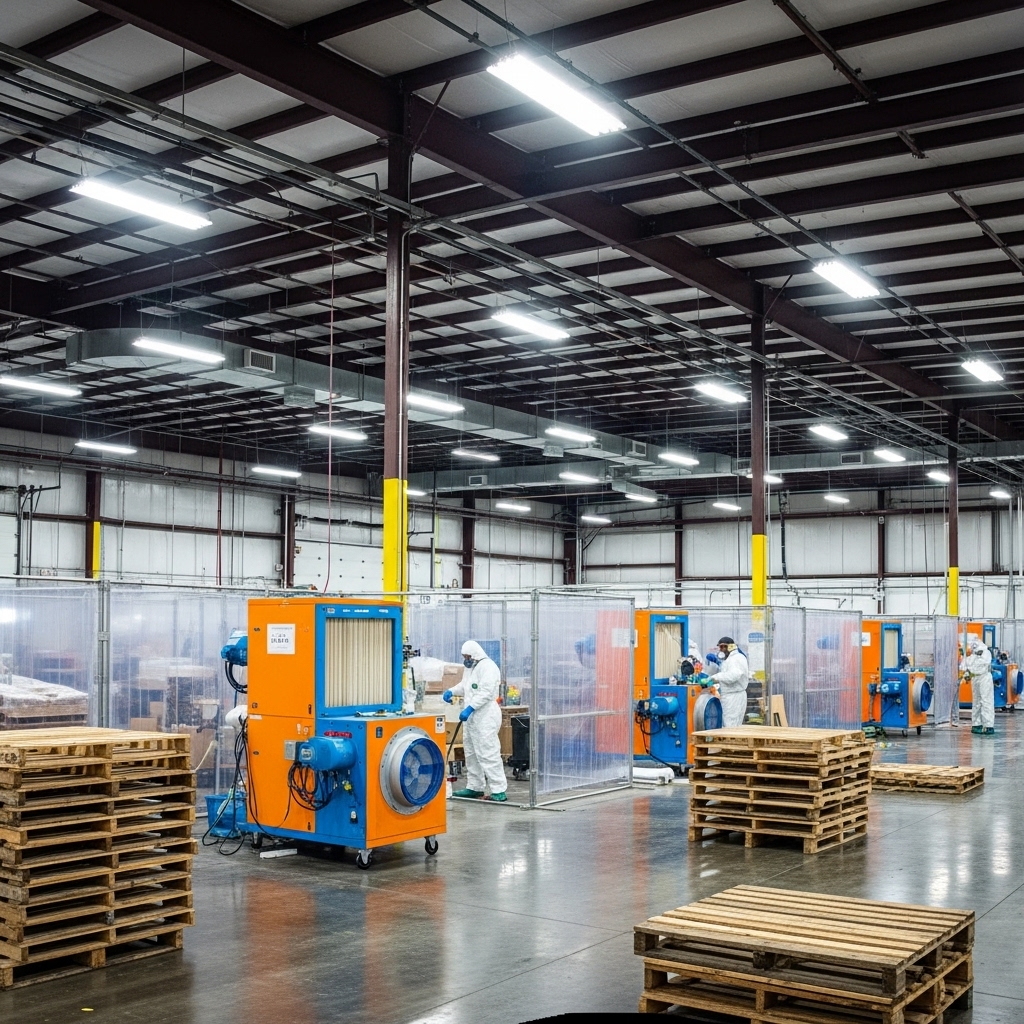
- Phased Containment: Large facilities benefit from staged zones that maintain production where possible while isolating affected areas with barriers and negative air machines equipped with HEPA filtration.
- Material Handling Strategy: Pallets, racking, insulation, and duct liners are evaluated for cleaning or removal. Logistics ensure safe storage and prevent cross-contamination.
- Cleaning and Removal: Appropriate methods are applied to structural steel, concrete block, drywall, and insulation. HEPA vacuuming and detail cleaning reduce settled spores.
- Environmental Stabilization: Dehumidification, ventilation adjustments, and repairs to the building envelope restore a balanced environment and prevent recurrence.
- Verification and Documentation: Clear records—photos, readings, and where relevant, sampling—support internal QA and external audits.
Safety and Compliance
Industrial mitigation should align with site-specific safety plans and any applicable regulations. Crews must be trained in hazard communication, equipment lockout/tagout where necessary, and safe handling of waste materials. PPE, clear signage, and controlled access protect both workers and the remediation team. The plan should also address shift schedules and coordinate with EHS to maintain compliance throughout the project.
Coordination with Operations
Masters of industrial mitigation work hand-in-hand with plant managers and maintenance teams. The objective is to remove contamination without hindering critical operations. This often involves off-hour shifts, sequenced work zones, and pre-planned equipment staging to keep pathways clear. Regular huddles keep everyone aligned on progress, new findings, and next steps.
Common Sources of Industrial Moisture
Moisture drivers vary across facilities. Some of the most common include:
- Roof leaks around penetrations, curbs, and drains that go unnoticed until stains or odors appear.
- Condensation on HVAC components, chilled lines, or uninsulated pipes during seasonal changes.
- Washdowns or sanitation processes that do not dry thoroughly between cycles.
- Dock doors that admit humid air, creating dew points on cooler interior surfaces.
- Inadequate ventilation in storage areas, leading to stagnant microclimates.
Protecting Inventory and Equipment
Inventory at risk may include porous packaging, textiles, paper goods, and products with organic components. Protecting these items means adjusting storage during mitigation and evaluating whether cleaning or replacement is appropriate. Equipment such as air handlers, conveyors, and control panels must be shielded from dust and moisture during work. Your contractor should provide a plan for coverings, route protection, and daily cleanup.
Role of Building Envelope and Insulation
Industrial roofs and walls with compromised insulation can harbor hidden moisture. Wet insulation loses performance and can become a reservoir for mold spores. During mitigation, expect a targeted inspection of insulation layers, vapor barriers, and flashing details. Repairs that restore the envelope’s integrity are vital to long-term control.
Airflow Management and IAQ
Large-volume spaces depend on balanced airflow to prevent stagnant zones. A mitigation plan may include temporary fans, adjustments to HVAC setpoints, and filter upgrades to capture fine particulates. Maintaining clean air pathways during work reduces the risk of spreading spores and supports a swift return to normal operations.
Documentation for QA and Audits
Industrial sites often require robust documentation. Your contractor should deliver annotated floor plans, photo logs, moisture and humidity data, and a summary of methods used. When needed, third-party clearance supports audits or internal sign-offs. Complete records reduce future disputes and demonstrate a culture of safety and quality.
Communication with Stakeholders
From executives to line supervisors, stakeholders need clear updates. Establish a communication rhythm—daily summaries, weekly recaps, or milestone briefings—so that everyone understands progress. Transparent reporting builds trust and helps leaders plan production schedules around work zones.
Choosing the Right Industrial Partner
Industrial mitigation partners must bring technical depth and logistical discipline. Look for teams with proven processes, specialized equipment, and experience working in active facilities. Favor contractors who can mobilize quickly and who understand the cost of downtime. Engaging reputable mold mitigation services with industrial experience helps your operation move from discovery to resolution with fewer surprises.
Frequently Asked Questions
Will mitigation halt production? Not necessarily. With phased containment and off-hour work, many facilities maintain partial operations. Your plan should prioritize critical lines and schedule work to minimize impact.
How long do industrial projects take? Timelines vary with the size of the affected area, the need for structural drying, and any envelope repairs. A clear schedule with milestones keeps teams aligned.
Do we need testing? Some facilities require testing for QA or regulatory reasons. Others rely on visual and moisture verification. Decide based on your industry standards and risk tolerance.
How do we prevent recurrence? Control humidity, fix leaks promptly, maintain insulation, and monitor airflow. Routine walkthroughs after seasonal changes help spot condensation risks early.
What about employee safety? Safety is integral—expect PPE, barricades, signage, and compliance with site safety protocols. Daily coordination with EHS ensures hazards are addressed.
Can we clean inventory? Non-porous items may be cleaned; porous materials with embedded growth often require disposal. Decisions should balance product integrity and contamination risk.
Action Plan for Bloomfield Facilities
For facilities in Bloomfield, establish a baseline: inspect roof and wall assemblies, review drainage paths, assess HVAC setpoints, and monitor interior humidity. Train supervisors to report odors, water stains, or condensation immediately. Partner with a mitigation team that can respond quickly, document thoroughly, and stage work without disrupting critical operations.
Moving from Risk to Resilience
Industrial mold mitigation is more than cleanup; it is an opportunity to strengthen building performance and operational reliability. With a disciplined process, clear communication, and attention to moisture control, your facility can reduce risk and protect people, products, and equipment.
Protect Your Operation with a Trusted Team
When mold threatens production or storage, time matters. Choose a partner who understands industrial logistics, safety, and documentation. Start with a focused assessment and a step-by-step plan aligned to your schedules. For a streamlined path to a cleaner, safer facility, connect with local professionals who specialize in containment, drying, and verification. Explore proven mold mitigation services today to safeguard your operation and keep your workflow moving.