Homeowners in Bloomfield, New Jersey are often surprised by how quickly a small moisture issue can lead to a large mold problem. When it comes time to plan a residential mitigation project, the most important considerations are scope, safety, and long-term prevention. Professional mold mitigation services help you understand what is happening behind walls, beneath flooring, and inside HVAC systems so you can choose an approach that resolves both the visible growth and the underlying moisture conditions.
This guide explains the key factors that shape the scale and duration of a residential project in Bloomfield—without focusing on dollar amounts. You will learn how building type, materials, ventilation, and the severity of contamination influence planning decisions, and how to prepare your home so work proceeds efficiently from inspection through verification.
What Drives the Scale of a Residential Mold Project
Extent of impacted areas: A small bathroom corner with superficial staining requires different planning than a finished basement with multiple rooms affected. The size and layout of the impacted area determine containment design, the number of work zones, and the sequence of tasks.
Material types: Porous materials like drywall, carpet, padding, and paper-faced insulation typically require removal when heavily colonized. Non-porous surfaces such as tile, glass, and metal can often be cleaned. Semi-porous materials like wood framing are evaluated carefully for structural integrity and depth of growth.
Moisture source and duration: A brief leak caught quickly differs from a months-long shower exhaust problem that drove humidity into wall cavities. The longer the moisture exposure, the more likely growth has moved into hidden areas.
Accessibility: Attics with limited headroom, tight crawl spaces, and built-in cabinetry around affected areas demand more careful maneuvering and may add setup time for safe access.
Environmental controls: Establishing proper containment, negative pressure, and HEPA filtration is essential. The complexity of these controls grows with the number of rooms involved and the need to maintain livable spaces nearby.
Inspection First: Clarity Before Action
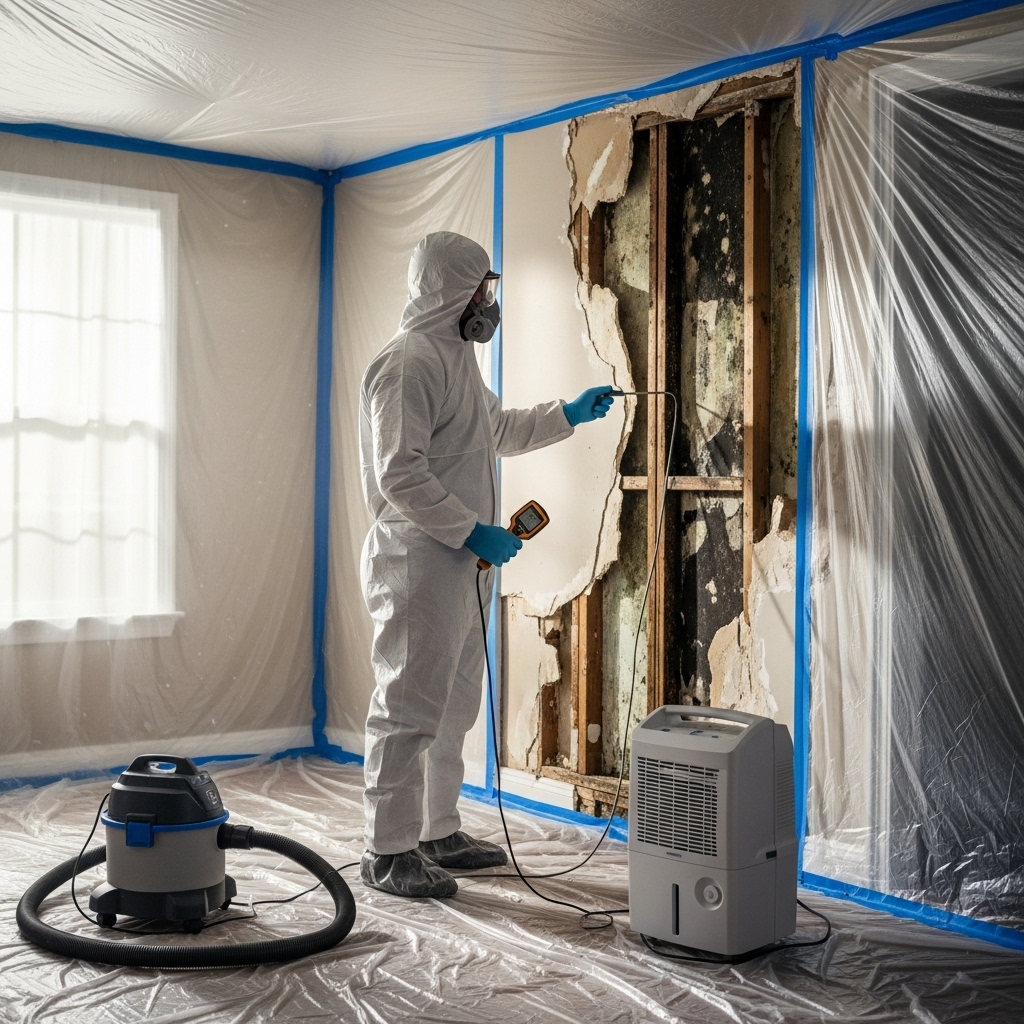
A detailed residential inspection is the foundation for a successful plan. Investigators use moisture meters, thermal imaging, and focused visual assessment to trace leaks and condensation patterns. In some cases, sampling is appropriate to understand the breadth of contamination or to document post-mitigation conditions.
Your inspector will map damp materials, identify obvious pathways such as failed caulk or misdirected condensate lines, and assess ventilation in bathrooms, kitchens, and laundry areas. These findings inform the demolition and cleaning plan, which specifies what can be cleaned and what should be removed.
Containment and Safety Within a Home Environment
Because families often remain in the home during residential projects, containment and airflow management have to be particularly diligent. Technicians isolate work zones with plastic barriers, maintain negative pressure using HEPA air filtration, and create decontamination paths for workers and materials. This helps protect unaffected rooms from dust and spores while maintaining a comfortable living environment.
Air changes and filtration rates are tuned to the size of the workspace. Doorways are sealed and zipper entries established. Floors are protected, and registers and returns within the containment are addressed to prevent system contamination.
Demolition, Cleaning, and Drying
Removal focuses on materials that are damaged or heavily colonized. Crews cut and bag sections of drywall, pull affected carpet and padding, and remove water-damaged insulation. HEPA vacuuming and damp wiping follow on all surfaces inside the containment area, including framing, subfloors, and any remaining fixtures. Appropriate cleaning solutions are selected for each material type.
Drying is more than just running a dehumidifier. Technicians set moisture targets based on acceptable levels for wood, drywall, and concrete, then monitor progress with moisture meters. Air movement is balanced carefully to avoid spreading dust. The aim is to return the structure to stable moisture conditions and reduce the potential for regrowth once finishes are reinstalled.
Household Logistics and Scheduling Tips
Clear the work area: Move furniture and personal items from impacted rooms if possible. This reduces the time spent on protective coverings and allows deeper cleaning of exposed surfaces.
Plan for temporary room closures: Containment may block access to certain spaces. Think ahead about alternate paths through the home and schedule around high-traffic times.
Communicate about pets and children: Ensure everyone understands which areas are off-limits while equipment is running, and clarify daily start and end times with your provider.
Designate a staging area: A small space for materials and waste handling helps the team work efficiently and keep the rest of the home tidy.
Preventive Upgrades That Reduce Future Risk
Bathroom ventilation: Install or upgrade exhaust fans to vent outdoors, and use them during and after showers. Verify ducts are intact and not discharging into the attic.
Basement dehumidification: Use a properly sized dehumidifier during humid months to maintain healthier indoor relative humidity. Keep doors and windows closed during peak humidity.
Air sealing and insulation: Address gaps around windows and doors, repair flashing, and add insulation where needed to minimize condensation.
Exterior drainage: Clean gutters and extend downspouts to direct water away from the foundation. Regrade soil if necessary to improve runoff.
Working With a Residential Specialist
Look for a provider that explains containment boundaries, demolition criteria, and cleaning procedures. They should offer a step-by-step plan from inspection through verification and be willing to discuss how you can prepare the home to streamline each phase. Ask about documentation: moisture maps, daily progress notes, and final readings that confirm the structure is dry and clean.
Mid-project updates are essential. If inspection reveals hidden moisture in an adjacent room or behind a tub surround, the scope may need to expand to address the full problem. A flexible team will explain findings clearly and work with you to maintain safe living conditions while adjustments are made. When in doubt, reliable mold mitigation services can coordinate the necessary changes without losing momentum.
Frequently Asked Questions
Q: How long does a residential mitigation project typically take? A: Duration depends on the size of the affected area, material drying times, and the complexity of containment. Many single-room projects finish quickly, while multi-room situations require more days.
Q: Do I need to leave my home? A: Many families remain at home during work, particularly when containment keeps activity in one part of the house. Larger projects or those affecting essential spaces may prompt temporary relocation.
Q: Will everything be torn out? A: Not necessarily. Non-porous items can often be cleaned. Heavily affected porous materials are removed, while semi-porous materials are evaluated for structural soundness and cleanliness after treatment.
Q: What prevents mold from returning? A: Fixing the moisture source is paramount. Good ventilation and humidity control, combined with thorough cleaning and drying, significantly reduce recurrence risk.
Q: Is sampling required? A: Sampling is used when it will inform decisions or confirm cleanliness. It is not mandatory in every case.
How Bloomfield’s Housing Stock Influences Planning
Many Bloomfield homes feature plaster-and-lath walls in older sections alongside newer drywall additions. Basements may have a mix of masonry and finished living spaces. These hybrid conditions demand careful transition planning at the edges of work zones, plus diligent attention to hidden cavities where moisture can travel. Attics with complex dormers, skylights, or knee walls also require targeted inspection to find insulation gaps and ventilation irregularities.
Next Steps for Homeowners
If you suspect growth, start with a focused inspection. Document visible staining, musty odors, and any recent water events. Keep track of temperature and humidity and note areas that feel damp or cooler than the surrounding space. A methodical approach makes mitigation more predictable and helps protect the rest of your home during work.
Plan Your Bloomfield Home Restoration
When you are ready to move forward, seek a team that communicates clearly, protects your living spaces, and prioritizes moisture control and verification. To coordinate inspection, containment, removal, and drying under one roof, reach out to trusted local mold mitigation services and restore a healthier, cleaner home environment with confidence.