Water finds its way into buildings through leaky roofs, burst pipes, appliance failures, and ground seepage—often at the least convenient times. In Bloomfield, New Jersey, seasonal storms and humid summers raise the stakes for timely, professional action. When water intrusion occurs, mold can begin to take hold within 24 to 48 hours, especially in warm, stagnant air. Coordinated inspection, water extraction, structural drying, and targeted cleanup by expert mold mitigation services help you reduce damage, protect indoor air quality, and restore a healthy environment.
This guide explains the critical relationship between water damage and mold, what to do in the first hours after a leak or flood, and how a structured mitigation plan prevents small problems from becoming significant, costly repairs down the line.
First Steps After Water Intrusion
Stay safe: Before entering wet spaces, ensure electricity is off where necessary and assess for slip hazards. If the source is ongoing (like an active supply line), shut off the water and call a professional.
Stop the source: Locate and stabilize the leak, whether it is a roof penetration, a broken pipe, or a failed appliance. Tarps, clamps, and temporary patches may be necessary before permanent repairs.
Promote airflow: Open interior doors to encourage circulation if conditions are safe. Avoid running HVAC systems that might spread moisture or contaminants until a professional has evaluated the situation.
Document conditions: Take photos and note the time of discovery. Record standing water depth, visible staining, and any musty odors to help guide the inspection and restoration process.
Inspection: Understanding Moisture Pathways
Water migrates along the path of least resistance. An upstairs leak can appear as a stain on a downstairs ceiling, and seepage can travel under baseboards and into wall cavities. Inspectors use thermal imaging to identify cool, damp areas and moisture meters to confirm saturation levels in drywall, wood, and concrete. This mapping reveals the full footprint of the water event and informs the drying strategy.
The inspection also includes ventilation assessment. Bathrooms and kitchens require robust exhaust to prevent condensation. Basements and crawl spaces are checked for infiltration and for dehumidification needs during humid months. Together, these steps form the blueprint for mitigation.
Water Extraction and Material Decisions
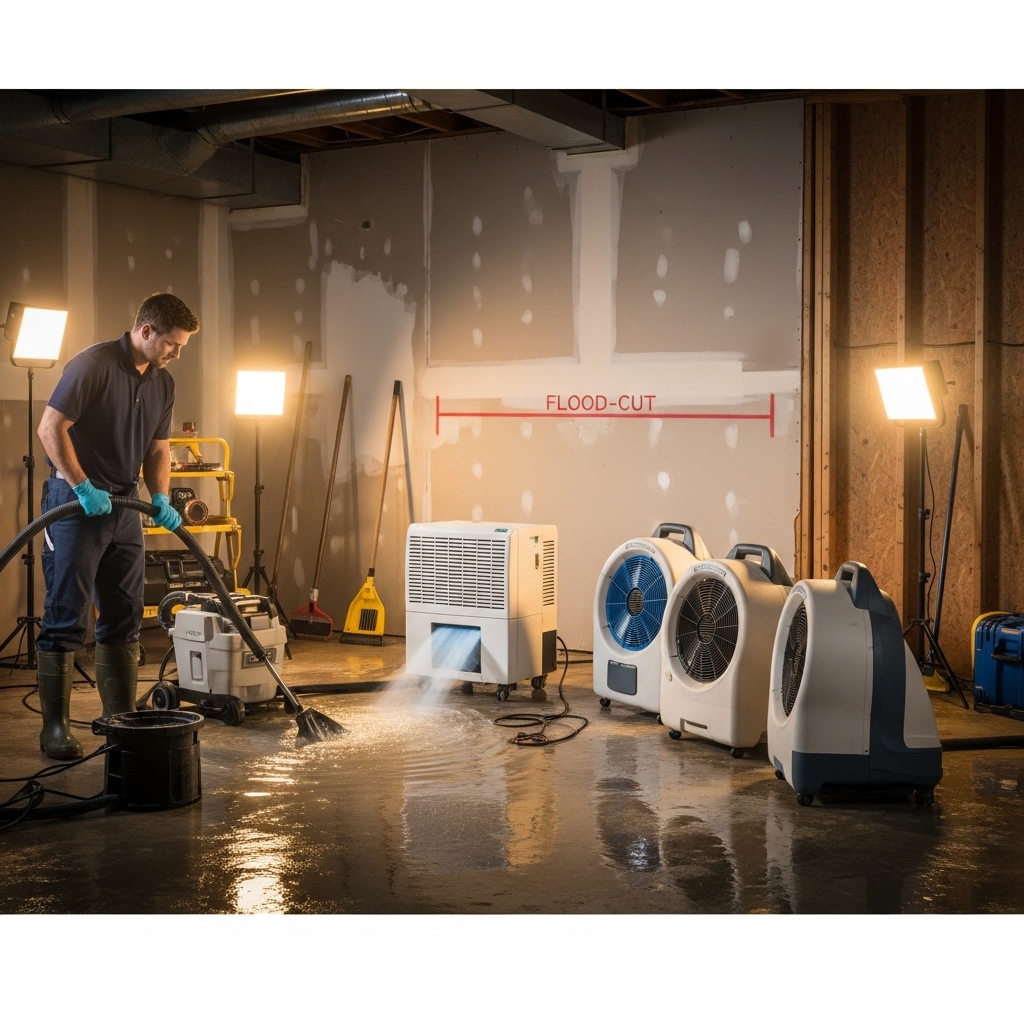
Standing water is removed using pumps and extractors, followed by targeted removal of waterlogged materials that cannot be restored. Heavily saturated carpet padding, ceiling tiles, and certain types of insulation are typical candidates for disposal. Salvageable materials are cleaned and dried, while non-porous surfaces are disinfected and prepared for monitoring.
Judicious demolition creates access for airflow and dehumidification. For example, cutting flood cuts in drywall can release trapped moisture and allow technicians to dry wall cavities efficiently without removing entire panels.
Drying the Structure: Science and Monitoring
Drying succeeds when airflow, temperature, and dehumidification are balanced. Technicians position air movers to encourage evaporation and use dehumidifiers to remove moisture from the air. Daily measurements track the progress of materials like framing, subfloors, and drywall toward target moisture content.
Drying too quickly or without adequate dehumidification can cause secondary damage, such as warping or cupping of wood floors. Conversely, insufficient airflow slows the process and may allow microbial growth to take hold. The goal is a controlled, measured approach backed by data.
When Mold Enters the Picture
Even with prompt extraction, certain conditions—such as hidden insulation pockets or chronically damp basements—may allow mold to develop. When growth is detected, the project pivots to include containment and specialized cleaning. Technicians isolate the work area, establish negative pressure with HEPA filtration, and follow a sequence of removal and cleaning that limits cross-contamination.
Porous materials with heavy colonization are removed under containment. Remaining surfaces receive HEPA vacuuming and damp wiping with appropriate solutions. Verification includes visual inspections, moisture readings, and sometimes sampling, especially in sensitive environments or to document cleanliness after significant events.
Bloomfield-Specific Risk Factors
Seasonal storms and rapid temperature swings can stress building envelopes, from flashing to siding and window seals. Older homes in Bloomfield may have a mix of plaster-and-lath and newer drywall, and many basements have partially finished areas adjacent to masonry walls. These conditions require careful inspection at transitions between materials and in concealed spaces like knee walls and soffits.
Groundwater and exterior drainage management are recurring concerns. Ensuring proper grading, maintaining gutters and downspouts, and installing or servicing sump pumps help keep liquid water away from foundations and reduce the chance of recurring moisture issues.
Protecting Indoor Air Quality During Recovery
Negative pressure in the work area helps capture disturbed particles. Registers and returns in the containment zone are sealed or managed to prevent system contamination. HEPA filtration devices remove airborne particulates, and technicians use cleaning protocols that leave surfaces free of residues that could attract dust.
Communication with occupants is also part of air quality protection. Clear schedules, signage, and expectations about noise and temporary closures reduce stress and ensure that containment boundaries are respected during work hours.
Prevention: Building Resilience
Ventilation improvements: Bathrooms and kitchens should exhaust outdoors. Attics need balanced intake and exhaust, and dryer vents must be intact and unobstructed.
Humidity control: Keep relative humidity within a healthy range. In humid seasons, run a dehumidifier in basements and other vulnerable spaces, and avoid bringing moist outdoor air inside during peak humidity.
Routine maintenance: Inspect roofs, sealants, and plumbing regularly. Address small leaks promptly and monitor hidden areas after severe weather.
Landscaping and drainage: Maintain proper grading and keep gutters clear. Extend downspouts away from the foundation to prevent water pooling near the building.
Frequently Asked Questions
Q: How quickly should I act after discovering water damage? A: Immediately. The sooner water is removed and drying begins, the less likely mold will develop and the faster materials can be stabilized.
Q: Can I run my HVAC system during drying? A: It depends. A professional will advise based on contamination risks and the configuration of your system. Sometimes sections of the system will be isolated.
Q: When is sampling necessary? A: Sampling is used to answer specific questions—such as verifying post-mitigation cleanliness or documenting conditions in sensitive environments. It is not mandatory for every project.
Q: Will everything wet be torn out? A: Not always. Some materials can be dried in place if they are structurally sound and not heavily colonized. Others, like saturated carpet padding and certain insulations, are typically removed.
Q: How do I reduce the chance of recurrence? A: Address the water source, maintain ventilation, manage humidity, and follow through with preventive maintenance and inspections.
Coordinating With Professionals
Effective recovery depends on coordination among inspectors, mitigation technicians, and, when necessary, other trades such as roofing, plumbing, and HVAC. You should receive a clear plan describing containment, removal, drying targets, and verification steps. Expect daily updates on moisture readings and the overall progress of the project.
Restore Your Property With Confidence
Water damage can be stressful, but a structured response brings clarity and results. Start with a thorough inspection, stabilize the source, and move smoothly into extraction, drying, and targeted cleanup as needed. For responsive help that understands Bloomfield’s climate and building styles, contact experienced mold mitigation services to return your property to a clean, dry, and healthy condition.