
Eliminate Mold Odor from Wood Surfaces in Bloomfield New Jersey
Wood is warm, beautiful, and durable—but when it absorbs moisture, it can trap musty odors that linger long after a spill, a humid spell, or a minor leak. In Bloomfield, New Jersey, seasonal humidity and temperature swings challenge everything made of wood: floorboards, trim, cabinets, shelving, framing, and furniture. If your nose catches a faint earthy scent near a baseboard or bookcase, you are detecting volatile compounds that indicate microbial activity. This guide explains how to safely remove mold odor from wood surfaces, distinguish between salvageable items and those too damaged to keep, and prevent the problem from returning in our local climate.
Smell is the earliest, most accessible tool for finding hidden dampness inside or on wood. The right plan combines methodical drying, careful cleaning tailored to the type of wood and finish, and ongoing humidity control. If you prefer expert verification or want to accelerate results when the odor persists after your first pass, you can enlist local mold odor removal support with the tools and techniques to address both the wood and the surrounding environment.
Understand Why Wood Holds Odor
Wood is a porous, hygroscopic material that readily absorbs moisture from the air and direct contact. When relative humidity rises or water spills occur, wood takes in this moisture, and microscopic life can colonize the surface fibers or even slightly below the finish. The musty smell you notice often lingers because those fibers hold both moisture and odor compounds even after the surface seems dry. Finished wood complicates matters: glossy coatings can trap residues beneath them; unfinished wood exposes more open grain that absorbs quickly but also dries predictably with airflow.
In Bloomfield homes, basements, bathrooms, and kitchens are frequent hotspots. Trim near cold exterior walls, the lower edges of cabinets, and the underside of stair treads can accumulate humidity. Furniture positioned directly on cool floors or tight against walls limits air circulation and encourages localized condensation. These microclimates are where odor begins and where your remediation efforts should focus.
Safety, Containment, and Setup
Protect yourself and the rest of the home before you disturb potentially contaminated dust. Wear gloves and an appropriate respirator for particulate control. Create a simple containment by closing doors to nearby rooms and, when weather allows, ventilate to the outdoors without blowing directly on suspect wood. Place clean towels or mats under furniture you move to capture debris, and prepare trash bags for disposable wipes and heavily damaged items that cannot be salvaged without prolonged drying.
A gentle approach preserves wood. Avoid harsh abrasives and flooding the surface with water. Plan to work in small sections, giving each area time to dry fully between passes. Keep fans moving air parallel to the surface rather than directly at it to reduce the chance of driving moisture deeper into the grain.
Diagnose the Source and Extent
First, determine whether the odor is surface-level or deeper within the wood or adjacent materials. Smell along seams, edges, and the underside of boards or shelves. If the odor is strongest where wood meets damp masonry or near plumbing, address that moisture route first. For floorboards, check from below if you can access the basement or crawl space; sometimes the odor originates on the underside due to rising moisture or a spill that seeped between boards.
Note differences among wood types and finishes. Solid hardwood responds differently than veneered or engineered products. Particleboard in cabinet boxes absorbs and retains odors readily and may not recover after heavy dampness. In contrast, a solid oak shelf with a light finish can often be brought back with careful cleaning and steady drying.
Step 1: Stabilize Moisture and Improve Airflow
The fastest way to reduce odor is to remove excess moisture from the air and adjacent surfaces. Run a dehumidifier to bring indoor humidity into a balanced range. Increase air movement with fans that pass air across, not into, the wood. Separate furniture slightly from walls, and lift items off the floor to encourage air circulation on all sides. Fix plumbing drips, stop seepage, and adjust ventilation in bathrooms and kitchens where steamy air concentrates.
Be patient with moisture stabilization. Wood takes time to release water it has absorbed. Keep conditions steady for days to weeks as needed. Rushing into aggressive chemical treatments before wood stabilizes can seal in odors or damage finishes unnecessarily.
Step 2: Dry Removal and Gentle Cleaning
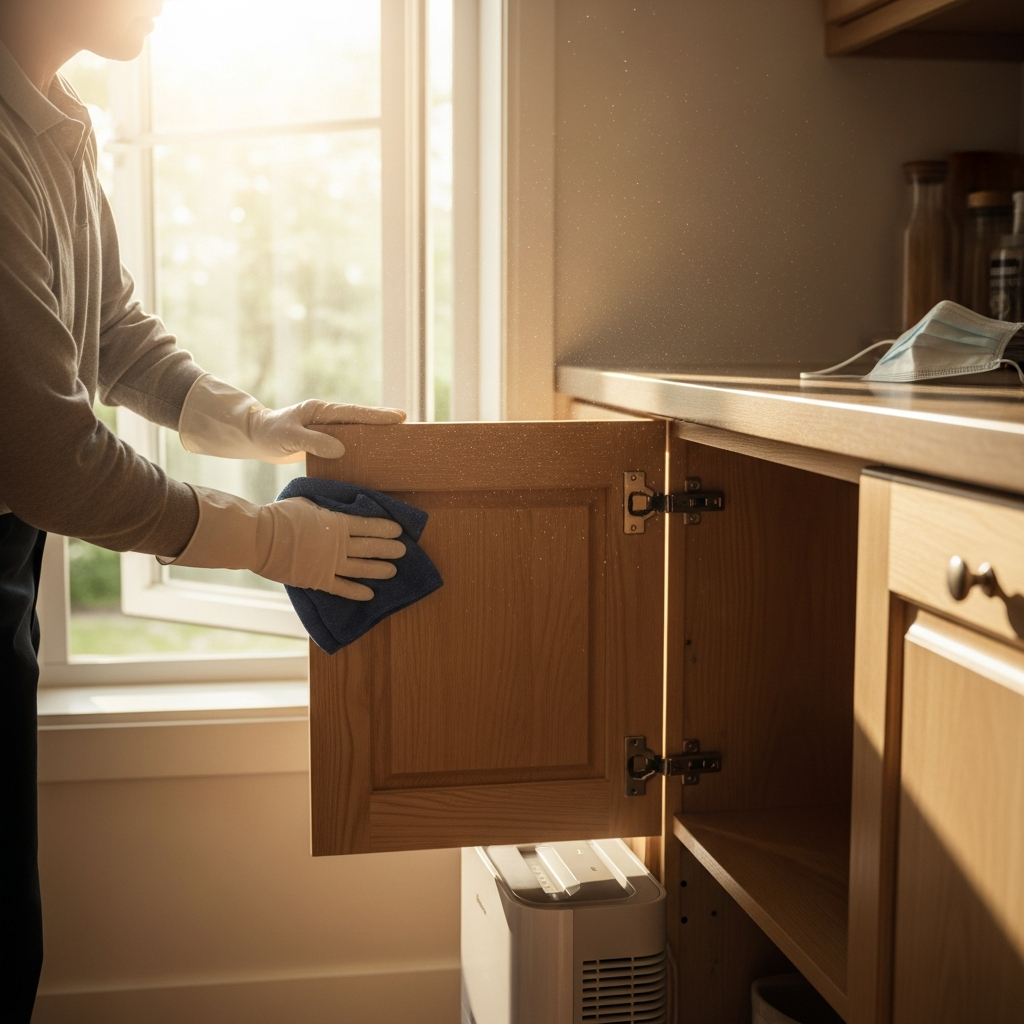
Begin with HEPA vacuuming to collect dust and particulates from the surface, grooves, and joinery. Use soft brush attachments that will not scratch. Follow with gentle damp wiping using an appropriate cleaning solution for the finish type. For sealed, glossy finishes, a mild detergent in water applied with a wrung-out cloth works well; quickly dry with a clean towel after each pass. For unfinished or lightly finished wood, use minimal moisture: a slightly damp cloth or pad, multiple light passes, and immediate airflow to carry off residual dampness.
Avoid saturating end grain, edges, and joints. Excess liquid in these areas can wick into the core and prolong drying. Replace cloths frequently, and do not allow dirty solution to dry on the wood. The goal is to remove residues from the surface fibers while preserving the integrity of the finish and grain.
Step 3: Targeted Treatments for Stubborn Odors
If a faint mustiness remains after basic cleaning and drying, apply a targeted approach appropriate for the wood and finish. Lightly finished or unfinished framing can sometimes benefit from additional gentle passes, followed by extended drying with dehumidification. For cabinets or furniture with sealed finishes, focus on hidden surfaces where odors accumulate—undersides, backs, and interior edges—and repeat cleaning as needed.
When odors persist in particleboard or veneer substrates after careful efforts, consider selective component replacement. Drawer bottoms, toe-kick panels, or backer boards can be swapped out with minimal impact on the visible cabinet. Likewise, a shelf or baseboard section may be easier to replace than to rehabilitate when odor has penetrated deeply into low-density material.
Step 4: Sanding and Surface Renewal (When Appropriate)
If the odor resides just below the finish on solid wood, light, controlled sanding can expose fresh fiber, followed by careful cleaning and thorough drying. This approach is best reserved for pieces where you are prepared to refinish the area for a uniform look. Use dust control measures and clean meticulously afterward to prevent re-depositing fine particulates elsewhere. Always confirm moisture is controlled first; sanding damp wood can smear residues and complicate finishing.
After sanding and drying, a renewal coat of an appropriate finish can help seal residual odors away from the living space, provided the underlying wood is dry and clean. Allow ample curing time before closing cabinets or placing items against the surface.
Subfloors, Framing, and Hidden Faces
Many musty wood smells originate on the hidden sides you rarely see. The underside of stair treads, floor joists above a humid basement, and the backs of baseboards or panels can all harbor odor. Access these faces when possible. A sequence of HEPA vacuuming, light cleaning, and extended drying close to the wood grain can greatly reduce persistent scents without invasive demolition. If you discover widespread dampness or visible growth along framing, expand your moisture investigation to adjacent materials like insulation or wall cavities.
Furniture Care: Special Considerations
Furniture combines multiple materials—solid wood, veneers, particleboard, fabrics, and adhesives—each responding differently to moisture. Isolate pieces with the strongest odor for focused treatment. Remove drawers and shelves to expose hidden edges, and clean all contact points. Avoid over-wetting joints and veneer edges. If a cloth continues to pick up fine residues after several passes, give the piece more drying time and airflow before resuming. For sentimental pieces with persistent odor, replacement of select hidden panels can often save the whole item.
Preventive Strategies for Bloomfield Homes
Prevention revolves around humidity management and airflow. Run exhaust fans during and after showers and cooking, venting to the outdoors. Keep storage a few inches off basement floors and away from exterior walls. Use breathable pads under rugs on wood floors so moisture does not become trapped. Maintain gutters and downspouts, and check for condensation risks around cold seasons. Regular housekeeping matters too: dust and vacuum wood surfaces and crevices to remove the fine particles that can harbor odors.
When seasons change, reassess problem spots. If a cabinet near a dishwasher or a vanity under a sink has been a repeat offender, install drip trays, improve ventilation gaps, or re-route small leaks promptly. Small fixes yield large, long-term odor benefits.
When to Call a Professional
Consider outside help if the smell persists after thorough drying and cleaning, if you find damage under finishes across multiple rooms, or if an occupant has respiratory sensitivities. Experts can verify moisture with meters, apply negative air containment for dusty operations like sanding or selective removal, and use specialized tools to clean hidden faces efficiently. If you want a streamlined solution with documentation of dryness before refinishing, coordinate with reliable mold odor removal professionals familiar with wood-specific challenges.
Frequently Asked Questions
Q: Is bleach safe for finished wood when removing musty odor? A: Harsh chemicals can discolor finishes, raise grain, and leave residues that complicate refinishing. Gentle cleaning, moisture control, and targeted surface renewal are usually more effective and safer for wood.
Q: How long will it take for odor to disappear after drying and cleaning? A: If the source is addressed and humidity stays balanced, light odors can fade within days to a couple of weeks. Persistent smells typically indicate deeper moisture or hidden surfaces that need attention.
Q: Can I seal in the odor with a finish without cleaning first? A: Sealing over dampness or residues often traps odor and risks adhesion problems. Always stabilize moisture and clean thoroughly before applying any new finish.
Q: What humidity level protects wood from musty smells? A: Balanced indoor humidity minimizes wood’s moisture swings. Pair dehumidification in summer with adequate ventilation year-round, and avoid placing wood items flush against cold or damp surfaces.
Q: How do I handle particleboard panels that smell musty? A: Particleboard readily absorbs odors and may not release them fully. Selective replacement of drawers bottoms, shelves, or backs is often the most efficient way to restore a fresh-smelling cabinet or furniture piece.
Bring Back the Beauty of Fresh, Clean Wood
Restoring wood to a fresh, odor-free state is a careful process: stabilize moisture, clean gently, target stubborn areas, and prevent recurrence with steady humidity control and airflow. With patience and the right methods, most solid wood can be revived to look and smell great again. For persistent problems or when you want confidence from start to finish, reach out to trusted local experts in mold odor removal who understand wood, finishes, and Bloomfield’s unique climate, and who can help you enjoy the natural warmth of wood without the musty undertone.