
Introduction: Say Goodbye to Musty Odors in Bloomfield, NJ Homes
If you step into your Bloomfield, New Jersey home and notice a persistent musty smell, you are likely dealing with mold odor. Even when visible mold is not obvious, that earthy scent is a strong sign of excess moisture and microbial growth somewhere indoors. The good news is that with a systematic approach, you can eliminate that smell, address the underlying moisture, and prevent it from coming back. For homeowners who prefer professional support, specialized teams offer thorough assessments and treatments for mold odor removal while helping you safeguard your indoor air quality long term.
This comprehensive guide walks you through how to find the source, correct moisture problems, clean and deodorize safely, and keep your home fresh season after season in Essex County’s variable climate.
Why Mold Odor Happens in Bloomfield Homes
Bloomfield experiences four distinct seasons, with humid summers, rainy springs and falls, and cold winters that can encourage condensation. Older housing stock with basements, crawlspaces, and mixed building materials often accumulate moisture in hidden pockets. Mold grows in damp, dark, and poorly ventilated spaces—think behind baseboards, under carpeting, in insulation, in wall cavities near leaky pipes, or on the back of furniture pressed against chilly exterior walls. As mold metabolizes, it releases volatile organic compounds that produce the characteristic musty smell, even when colonies are small or hidden.
Because odor can travel, you may smell it in one room even if the source is elsewhere. That’s why a careful inspection and moisture control plan are essential.
Quick Diagnostic Checklist
- Walk room to room and note where the musty odor is strongest—entryway, basement stairwell, closets, bathrooms, or near HVAC returns.
- Look for visible clues: dark spotting, fuzzy growth, peeling paint, swollen trim, or yellow-brown water stains.
- Check humidity with a hygrometer if you have one; aim to keep indoor relative humidity between 30% and 50% year-round.
- Inspect plumbing under sinks, behind washing machines, near dishwashers, and around toilets for slow leaks and drips.
- Examine window sills, sash tracks, and frames for condensation and mildew.
- Test for dampness in basements and crawlspaces; touch foundation walls and floor edges to sense cool, clammy surfaces.
- Sniff textiles like area rugs, stored blankets, and rarely worn coats—porous materials trap and release odor long after a moisture event.
Step-by-Step Plan to Remove Mold Odor
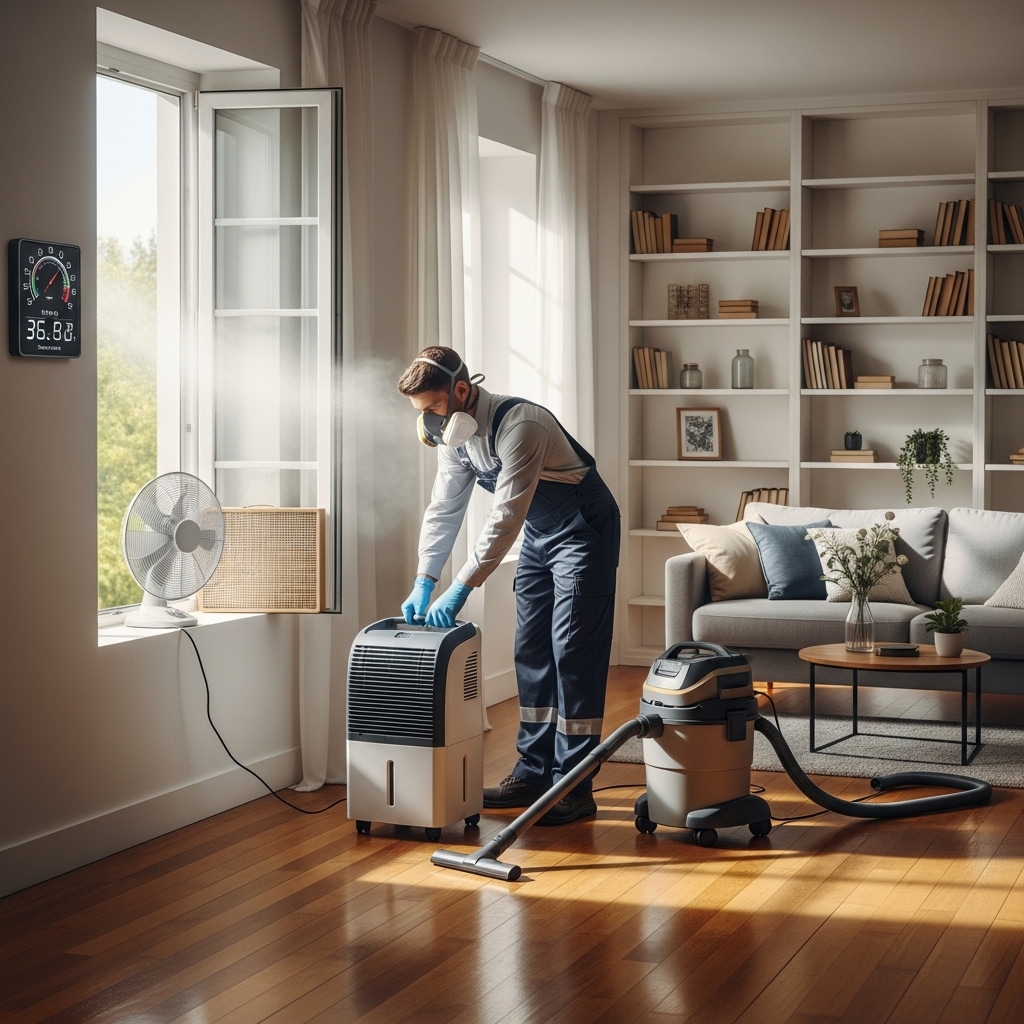
- Dry the space first. Mold odor persists when moisture lingers. Run a dehumidifier in damp rooms, especially basements and bathrooms. Encourage airflow by opening interior doors, moving furniture a few inches off walls, and using fans to circulate air across damp surfaces. Drying before cleaning prevents spreading growth during scrubbing.
- Fix moisture sources. Address roof flashing leaks, pipe drips, failed caulk around tubs, leaking shower pans, or foundation seepage. Redirect downspouts away from your home, extend them several feet, and confirm gutters are clear. Seal exterior gaps where wind-driven rain can intrude.
- Contain and protect. Wear gloves and a well-fitting respirator, and close off work areas if you expect significant disturbance. Place a box fan in a window exhausting outward to create negative pressure so spores do not travel through the home.
- HEPA vacuum first. Use a HEPA-filtered vacuum on floors, baseboards, window sills, and soft furnishings to capture fine particles that contribute to odor. This step reduces allergen load before wet cleaning.
- Clean hard surfaces. Wipe non-porous and semi-porous surfaces with a detergent solution. In kitchens and baths, focus on grout lines, tub surrounds, and under-sink cabinets. Replace deteriorated caulk and re-seal joints once dry.
- Treat porous items judiciously. Launder musty textiles with a standard detergent and an extra rinse cycle; sun-dry when possible. If rugs or carpets remain odorous after deep extraction and drying, consider professional evaluation or disposal of heavily contaminated items.
- Use odor absorbers in the short term. Activated charcoal, baking soda, and mineral-based sorbents can temporarily capture odors while you address root moisture. Place small trays or breathable bags in closets, cabinets, and near return vents.
- Refresh the HVAC system. Replace filters with high-quality options and gently clean supply registers and return grilles. If odor is strongest when the system runs, consider professional duct inspection for moisture, dust, or debris accumulation.
- Re-check humidity for several days. Keep dehumidifiers running until readings stabilize. In summer, air conditioning assists in moisture removal; in winter, avoid over-humidifying and address window condensation promptly.
- Repaint and seal as a finishing step. After surfaces are dry and cleaned, prime stained areas with an appropriate stain-blocking primer and repaint. This locks in residual discoloration and supports a fresh, odor-free finish.
Room-by-Room Strategies That Work
- Basements: Verify that your sump pump and perimeter drainage are functional. Seal minor foundation cracks and install a vapor barrier on bare earth in crawlspaces. Keep stored items off the floor on shelving, and avoid cardboard boxes which hold odor.
- Bathrooms: Run exhaust fans during showers and for 20 minutes afterward. Squeegee tiles and shower doors to reduce moisture. Replace aging silicone around tubs and sinks.
- Kitchens: Check the dishwasher supply line and drain hose, the refrigerator water line, and the area under the sink for hidden drips. Clean the drip pan beneath the refrigerator if accessible.
- Bedrooms and Closets: Increase airflow by leaving an inch of space between furniture and exterior walls. Rotate and wash textiles seasonally so stored fabrics do not become odor reservoirs.
- Laundry Rooms: Inspect washing machine gaskets and dispensers; leave the door open after cycles to dry. Ensure dryer vents exhaust outdoors and are lint-free.
Bloomfield Climate Tips
In Bloomfield, heavy spring rains can drive moisture into basements. In late summer, warm humid air can condense on cooler surfaces indoors, especially in air-conditioned rooms. During cold winters, cooking and showering add moisture that collects on windows and in tight corners. The best defense is attention to seasonal habits: dehumidify in late spring and summer, ventilate during and after moisture-generating activities, and insulate or air-seal areas that show frequent condensation.
Safe Cleaning and What to Avoid
- Avoid dry brushing moldy surfaces; it scatters particles into the air.
- Do not mix cleaning agents. Use a simple detergent solution for cleaning, and rinse thoroughly. If you choose to use any specialty cleaner, follow the label exactly.
- Do not fog or aerosolize chemicals casually; these methods can be counterproductive without professional containment and ventilation.
- Do not rely solely on air fresheners. Fragrances can mask odors without solving the problem and may irritate sensitive individuals.
When to Call a Professional
Consider expert help when the odor is intense and widespread, when water intrusion is ongoing, when you suspect growth inside walls or under flooring, or when members of your household are sensitive to poor indoor air. Pros use moisture meters, infrared imaging, and controlled demolition to expose hidden reservoirs safely. They can set up negative air pressure, HEPA air filtration, and thorough cleaning protocols to resolve stubborn odor. If you need guidance beyond DIY steps, a local team experienced in mold odor treatment can assess your home and provide targeted next steps tailored to Bloomfield’s housing styles.
Long-Term Prevention
- Maintain gutters and downspouts twice a year and after major storms.
- Grade soil so water flows away from your foundation.
- Install and use bath and kitchen exhaust fans that vent outdoors.
- Keep indoor humidity in the 30–50% range and monitor during season changes.
- Address plumbing issues immediately; even small drips add up and feed odor.
- Schedule periodic HVAC maintenance and change filters regularly.
- Store belongings in plastic bins, not cardboard, and keep closets from becoming packed tight.
Frequently Asked Questions
Q: Why does the odor come back after I clean? A: If moisture remains or porous materials stayed damp too long, odor-causing compounds continue to off-gas. Ensure thorough drying, address leaks, and consider deeper cleaning of textiles and hidden surfaces.
Q: Can I get rid of mold odor without removing moldy materials? A: Masking odor rarely lasts. Porous materials like carpet padding or soggy drywall usually need removal if significantly affected.
Q: Is a dehumidifier enough to solve the smell? A: Dehumidifiers reduce moisture and help prevent recurrence, but you must also eliminate leaks, clean contaminated surfaces, and address any affected materials.
Q: How do I know if the smell is from the HVAC? A: If odor worsens when the system runs, inspect filters, returns, and accessible duct sections. A professional can evaluate internal duct conditions and air handler components.
Q: Are “natural” odor absorbers effective? A: Baking soda and activated carbon can help capture odors temporarily, especially in closets and cabinets. They are best used alongside source removal and drying.
Q: What safety gear should I use? A: Gloves, eye protection, and a well-fitting respirator are recommended when cleaning moldy areas. Ventilation and containment further reduce exposure.
Q: When should I replace drywall or insulation? A: If materials have been wet for more than 24–48 hours, show visible growth, or remain odorous despite drying, replacement is often the safest route.
Q: Does repainting remove mold odor? A: Paint alone does not fix odor. Clean and dry first, then prime stains with a suitable primer before repainting.
Ready to Breathe Easier in Bloomfield?
If you have followed these steps and still notice a musty smell, or if you prefer a thorough assessment from the start, bring in local specialists who can locate hidden moisture, design a targeted plan, and restore fresh indoor air. Take the next step toward a healthier home with trusted mold odor services and enjoy the comfort of a clean, dry living space all year long.