
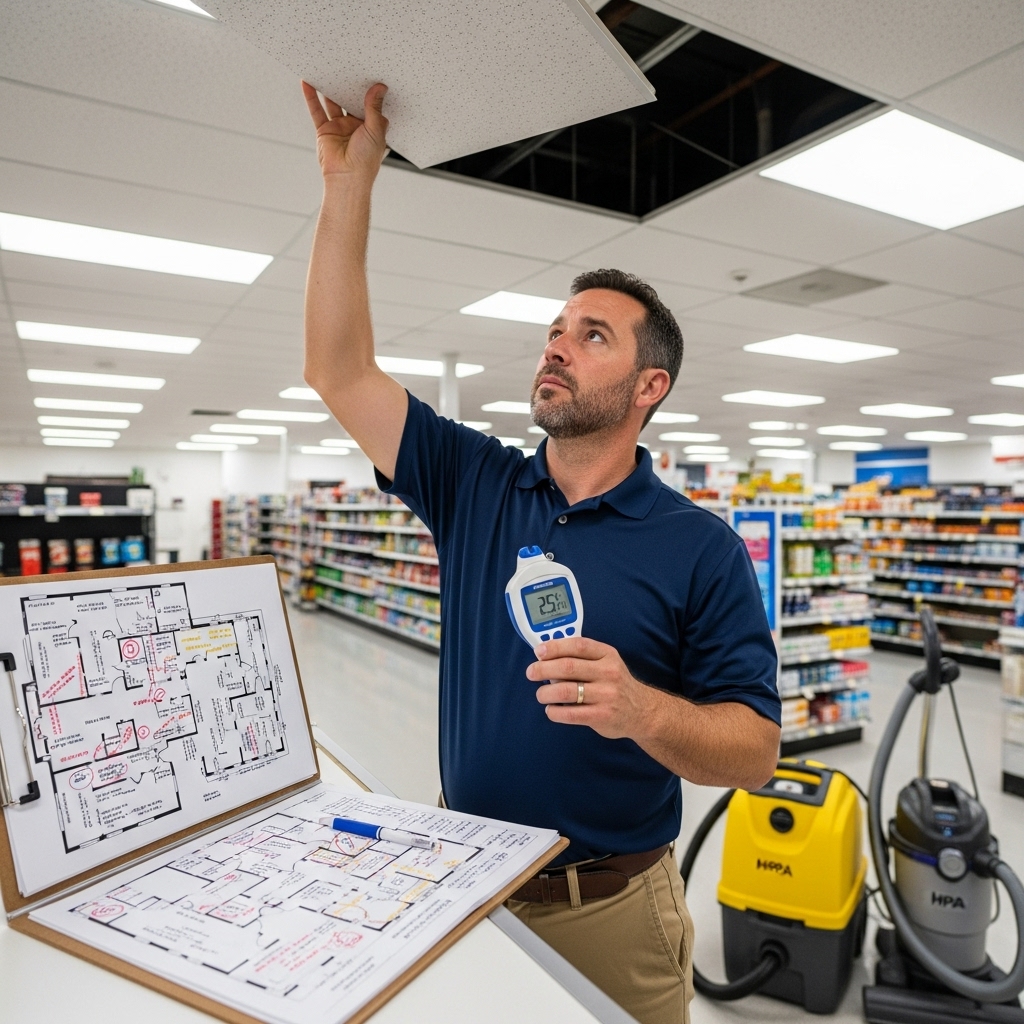
For businesses in Bloomfield, New Jersey—whether retail shops on Broad Street, offices in mixed-use buildings, restaurants, gyms, schools, or healthcare facilities—musty odors are more than a nuisance. They can affect customer impressions, employee comfort, and even product integrity. A clear, repeatable inspection process helps you pinpoint the source, correct it efficiently, and prevent recurrence across seasons. This guide provides a step-by-step framework tailored to commercial spaces of varying sizes and uses, emphasizing documentation, communication, and operational continuity.
Because commercial buildings often have complex HVAC systems, multiple tenants, and diverse storage and usage patterns, odor sources can be layered: a damp basement, underperforming ventilation, intermittent roof leaks, or products stored in cardboard on concrete floors. The following process streamlines the path from first complaint to verified resolution. If at any stage you prefer professional support, reputable specialists can investigate and address persistent mold odor so your team can focus on core operations.
Step 1: Intake, Triage, and Safety
Begin with a structured complaint intake. Collect details: where the odor is noticed, when it is strongest, whether it correlates with weather, and whether HVAC cycles affect it. Note any occupant symptoms and identify vulnerable populations, such as children in daycare settings or patients in medical offices. If water intrusion or electrical hazards are suspected, secure the area and escalate immediately.
Assign a point person for the investigation and create a simple log to track observations, actions, and outcomes. Clear ownership accelerates resolution and communication.
Step 2: Visual Survey and Moisture Screening
Walk the affected areas and adjacent spaces. Look for stains, warped finishes, efflorescence, damp carpet edges, and rusty fasteners. Use a pinless moisture meter along baseboards, around windows and doors, and beneath restrooms and kitchens. In commercial settings, check janitorial closets, mop sinks, and behind refrigerators or ice machines for slow leaks and standing water.
Document with photos and annotated floor plans. Note storage practices, such as cardboard on concrete, which can harbor odors when ambient humidity is high.
Step 3: HVAC Assessment
Commercial HVAC systems can transport and amplify odors. Review filter maintenance records, inspect return grilles, and check the air handler’s coils, drain pans, and condensate drains. Confirm that outside air dampers are functioning and that ventilation meets occupancy needs. If the odor intensifies during startup or under certain loads, examine ductwork in unconditioned spaces for insulation failures and condensation.
Balance is critical. Pressure imbalances can draw humid air from basements or outdoors into conditioned spaces, pushing odors along with it. If needed, involve your HVAC service provider to measure airflow, static pressure, and to tune ventilation rates appropriately.
Step 4: Occupant Interviews and Pattern Mapping
Interview staff who noticed the odor. Ask about times of day, activities underway, and whether doors or windows were open. For multi-tenant buildings, cross-reference reports between suites and common areas. Build a pattern map that tracks intensity over time and weather conditions. In Bloomfield, thunderstorms, heat waves, and cold snaps can shift building dynamics quickly and reveal the true source.
Step 5: Targeted Intrusive Inspection (If Needed)
If non-invasive methods suggest hidden moisture, plan surgical openings with minimal disruption. Remove baseboards or access panels to inspect cavities with a flashlight or borescope. Prioritize wet readings, stained areas, and locations beneath known leak points such as roof penetrations or bathrooms. Schedule this work during low-traffic hours to keep operations running smoothly.
Step 6: Material Classification and Action Plan
Classify affected materials by porosity and function. Non-porous surfaces can often be cleaned. Semi-porous finishes may be cleaned if damage is superficial. Porous materials like ceiling tiles, carpet padding, and acoustic panels often trap odor compounds and are best replaced when musty. For inventory areas, migrate products from cardboard to sealed plastic bins and elevate them on shelving to reduce moisture exposure.
Develop an action plan with responsibilities, timing, and containment needs. In occupied spaces, set up localized exhaust and work zones to minimize odor migration during cleaning or demolition.
Step 7: Remediation and Ventilation Optimization
Fix the root cause first—repair leaks, improve drainage, or correct ventilation shortfalls. Then perform HEPA vacuuming to remove dust reservoirs. Clean non-porous surfaces with detergent-based solutions and dry thoroughly. Replace porous materials that remain odorous after drying. In high-humidity zones like basements, deploy dehumidifiers set to 45–50 percent RH with continuous drainage. Confirm that kitchen and restroom exhaust systems are functional and properly vented.
For spaces with high occupancy, consider continuous ventilation settings or energy recovery ventilators to maintain air quality without large energy penalties. Coordinate settings with your HVAC provider to sustain target humidity and airflow.
Step 8: Validation and Documentation
After corrective actions, validate success. Re-walk spaces with the original complainants if possible. Re-check moisture readings and note indoor RH values at multiple times of day. If you used temporary exhaust during remediation, switch to normal ventilation and confirm the odor does not return. Update your log with before-and-after photos, measurements, and outcomes to create a record for future reference.
Special Considerations by Business Type
Retail: Merchandise can absorb odors, especially textiles and paper goods. Maintain steady humidity, keep storage areas tidy and elevated, and rotate stock to avoid long-term stagnation.
Restaurants and Cafes: Cooking produces significant moisture. Ensure hoods and make-up air systems are balanced so that humid kitchen air does not migrate into dining rooms and storerooms. Inspect under sinks and refrigeration condensate drains frequently.
Gyms and Fitness Studios: High perspiration and frequent cleaning add moisture. Increase ventilation during peak hours and use durable, cleanable flooring. Dry mats and towels promptly and store them in ventilated areas.
Healthcare and Dental Offices: Comfort and hygiene standards require vigilant humidity control. Keep mechanical rooms clean and dry, and inspect areas behind sterilizers and sinks for leaks.
Schools and Daycares: Dense occupancy means robust ventilation is essential. Monitor RH and teach staff to report leaks immediately. Use sealed storage for art supplies and paper.
Communication and Change Management
Transparent communication with staff and, when appropriate, customers builds confidence. Share what you found, what you corrected, and how you will prevent recurrence. Provide a simple channel for reporting new issues. Incorporate odor checks into routine facility walk-throughs and janitorial checklists.
Mid-Process Review
If, after initial corrections, odors persist or shift locations, revisit the HVAC system and building envelope. Pressure differences, overlooked crawlspaces, or return air pathways through storage rooms can keep feeding problems. At this point, a focused assessment by a knowledgeable professional can uncover hidden sources and provide targeted remedies for persistent mold odor in complex commercial settings.
Frequently Asked Questions
Q: How quickly should we respond to odor complaints? A: Begin intake and a preliminary walkthrough the same day when possible. Prompt action limits disruption and prevents minor moisture issues from becoming major problems.
Q: Do we need air testing to proceed? A: Not always. Many odor issues can be resolved through moisture control, material replacement, and HVAC adjustments. Testing can support decisions in complex or sensitive environments but should be guided by a clear hypothesis.
Q: What humidity target is appropriate for commercial spaces? A: Generally 40–50 percent relative humidity strikes a good balance for comfort and odor control. Monitor across different zones and adjust ventilation as occupancy changes.
Q: Can janitorial practices contribute to odor? A: Yes. Over-wetting floors, leaving damp mops in closets, and storing cardboard on concrete can sustain odors. Train staff to wring mops thoroughly, dry closets, and elevate or replace cardboard with sealed bins.
Q: How do we minimize disruption during remediation? A: Schedule work during off-hours, use localized containment and exhaust, communicate the plan in advance, and coordinate with tenants or departments to manage access.
Q: When should ceiling tiles be replaced? A: Replace tiles that are stained, warped, or smell musty after drying. They are porous and can harbor odor compounds, making replacement the most efficient fix.
Preventive Program for Ongoing Control
- Institute a quarterly moisture and ventilation inspection.
- Track RH with data-logging hygrometers in representative zones.
- Maintain gutters, downspouts, and roof penetrations; schedule roof inspections after major storms.
- Document and schedule HVAC filter changes, coil cleaning, and condensate line maintenance.
- Train staff to report leaks and odors immediately and establish a response protocol.
From Complaint to Confidence
A disciplined inspection process turns vague complaints into actionable data and lasting solutions. By pairing moisture control with targeted material management and optimized ventilation, your Bloomfield business can maintain a clean, welcoming environment that supports productivity and customer satisfaction. Keep your documentation current and integrate odor checks into routine operations to stay ahead of problems.
Keep Your Workplace Fresh
If you want confirmation that your building’s odors are fully addressed or require help with complex systems, partner with trusted local experts. They can streamline investigation, remediation, and validation so your team can focus on serving customers. To learn more about resolving mold odor issues in commercial properties, take the next step and protect your brand’s first impression.