
Introduction: Conquer Basement Musty Smells in Bloomfield, NJ
Basements in Bloomfield, New Jersey are invaluable for storage, laundry, and extra living space, but they are also prime locations for moisture and musty odors. Because basements sit below grade, they are more prone to seepage, condensation, and limited airflow—all conditions that feed mold growth and the earthy smells that follow. Whether your odor is faint after a rainy week or strong enough to drift up the stairs, you can reclaim your basement with a thorough plan. Homeowners who want expert help can also rely on local professionals who specialize in mold odor removal for basements and understand the nuances of Bloomfield’s building styles and climate.
This guide details the most effective process: diagnosing the source, drying, cleaning, deodorizing, improving ventilation, and preventing the odor from returning.
Why Basements Develop Mold Odor
Below-grade concrete is porous and can wick moisture from soil, especially after heavy rains or snowmelt. Foundation walls and slab edges can stay cool compared to indoor air, producing condensation when warm humid air infiltrates. Storage habits—like stacking cardboard boxes against concrete or keeping textiles on the floor—trap moisture and harbor odor. Add in water from laundry appliances, floor drains, or old sump pumps, and you have a recipe for musty smells that can permeate the entire home.
Assessment: Find the Real Source
- Trace the odor’s path. Is it strongest near foundation walls, around appliances, by the sump pit, at the base of stairs, or near a window well?
- Look for water entry points: hairline cracks, efflorescence (white powder) on masonry, staining behind paneling, or damp carpet tack strips.
- Check plumbing: washing machine supply lines and drain hoses, water heater relief valves, utility sink traps, and any condensation on cold water pipes.
- Evaluate ventilation: blocked vents, sealed windows, and closed interior doors can trap humid air.
- Inspect stored items: cardboard, upholstered furniture, and old books hold moisture and create long-lasting odor reservoirs.
Step-by-Step Basement Odor Removal
- Dry aggressively. Run a dehumidifier sized for the square footage and set it to maintain indoor relative humidity near 45–50%. Use fans to move air across damp surfaces and open closet doors or storage cabinets to expose hidden pockets of moisture.
- Stop water intrusion. Extend downspouts, clean gutters, regrade soil away from the foundation, and seal minor cracks with appropriate masonry products. Ensure window wells drain and covers are intact.
- Isolate the work area. If the odor is intense, create simple containment with plastic sheeting at the base of stairs and run a fan to exhaust air out a small window to reduce cross-contamination upstairs.
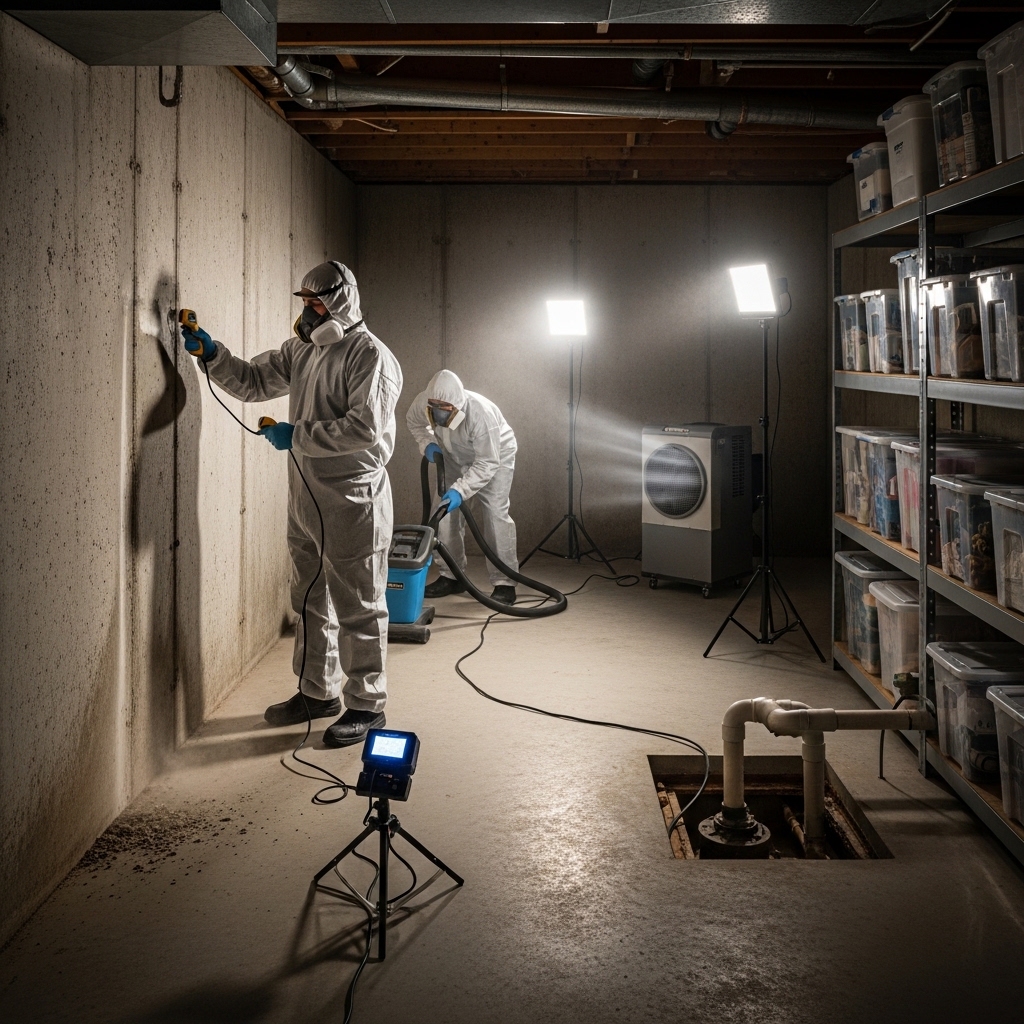
- HEPA vacuum surfaces. Vacuum floors, sills, joists, and the top of foundation walls to capture settled spores and dust that contribute to odor.
- Clean masonry and wood. Use a detergent solution to scrub concrete walls, rim joists, and sill plates. Rinse with clean water and dry thoroughly. Replace deteriorated insulation in rim joists if it is musty or wet.
- Address flooring. For bare concrete, clean and dry fully before applying any sealers. For carpeted basements, perform deep extraction and high-volume drying; if padding or subflooring is damp or odorous, consider selective removal and replacement.
- Handle contents. Launder fabrics, wipe down plastic totes, and consider discarding cardboard that smells musty. Sun-drying washed items helps disperse odor molecules quickly.
- Service drainage equipment. Inspect the sump pump for proper operation, test the float switch, and confirm discharge location is clear. Check floor drains for trap water; add water to dry traps to block sewer gases that can mingle with musty smells.
- Improve ventilation. Where feasible, add supply and return air to finished basements. In unfinished spaces, consider a small, continuous low-speed exhaust fan to cycle air without pulling excessive humidity from outdoors during muggy months.
- Reassess after 72 hours. If odor persists after thorough drying and cleaning, investigate behind paneling, under baseboards, or within wall cavities for hidden sources.
Common Basement Trouble Spots in Bloomfield
- Behind finished walls with older vapor barriers that trap moisture.
- Under stair storage full of cardboard boxes and books.
- Perimeter carpet tack strips absorbing moisture from slab edges.
- HVAC air handler closets with condensate drains that clog and overflow.
- Sump pits without airtight lids allowing humid air into the room.
Odor Neutralization That Works
Odor control should complement—not replace—source removal and drying. Activated carbon filters, mineral sorbents, and baking soda can help reduce lingering smells once the area is clean and dry. Portable air purifiers with HEPA plus carbon are particularly effective in finished basements, capturing both fine particles and odor compounds. Replace carbon filters on schedule to maintain performance.
Safety and Material Decisions
Basements often contain mixed materials—masonry, wood framing, insulation, drywall, carpet, and stored contents. If any porous material stayed wet for more than a day or two, it may require partial replacement to fully eliminate odor. Protect yourself with gloves, eye protection, and a well-fitted respirator during removal and cleaning. Dispose of waste in sealed bags to keep the rest of the home clean.
When Professional Help Makes Sense
If your basement odor returns after DIY efforts, or if the smell is strongest behind finished walls or under flooring, targeted investigation can save time and frustration. Professionals use moisture meters and infrared imaging to pinpoint damp zones, then apply controlled demolition and drying as needed. Local experts familiar with Bloomfield’s soil and drainage patterns can also advise on longer-term solutions like improved grading or sump upgrades. If you prefer a start-to-finish approach, consult a team specializing in mold odor specialists who can evaluate the entire basement system—from exterior water management to interior ventilation.
Prevention: Keep the Basement Fresh Year-Round
- Run a dehumidifier during humid months and monitor humidity with a simple gauge.
- Keep furnishings and storage a few inches off exterior walls to promote air circulation.
- Use plastic or metal shelving and sealed plastic bins instead of cardboard.
- Clean and service the sump pump annually and test after big storms.
- Replace HVAC filters routinely and consider adding a return grille in finished areas.
- Seal gaps where utilities penetrate foundation walls to limit air and moisture entry.
Frequently Asked Questions
Q: My basement smells musty only after rain. What should I check first? A: Start outside with gutters, downspouts, and grading. Then inspect foundation walls for dampness and look at the sump pump and window wells for overflow.
Q: Do I need to remove all basement carpet? A: Not always. If the pad and subfloor stayed dry and odor disappears after deep cleaning and drying, you may keep it. Persistent odor or visible staining often means replacement is best.
Q: Are sealers on concrete a cure-all? A: Sealers can reduce vapor transmission when applied to clean, dry concrete, but they do not replace proper drainage and dehumidification.
Q: Can air purifiers alone remove the musty smell? A: They help with residual odor and particles but cannot overcome ongoing moisture or contamination in materials.
Q: Should I open basement windows in summer? A: On very humid days, outdoor air can add moisture. Ventilate selectively when outdoor humidity is lower than indoors.
Q: How long should drying take? A: With good airflow and dehumidification, lightly damp surfaces may dry in a day or two, while wetter materials require more time and possibly selective removal.
Make Your Basement a Healthy, Usable Space
A fresh, dry basement improves your entire home’s air quality and comfort. If you want a reliable path to lasting results—diagnosis, drying, cleaning, and odor control—partner with local pros who understand Essex County homes. Schedule a thorough evaluation and tailored plan with trusted mold odor services and enjoy a basement that smells as good as it looks.