When a musty smell lingers in your Bloomfield, New Jersey home, it is more than a nuisance—it is a cue that moisture and microbial activity need attention. With the right strategy, you can remove the odor by addressing the source, cleaning methodically, and preventing the problem from returning. If you are weighing a DIY approach against professional assistance, take a moment to review best practices for mold odor so your plan focuses on results, not just cover-ups.
Start With Moisture Control
Odor follows moisture. Your first goal is to identify and stop water intrusions and reduce humidity. Repair leaks, improve ventilation, and dehumidify to maintain RH near 45%. Without moisture control, cleaning alone rarely succeeds.
Quick Wins
- Ventilate bathrooms and kitchens during and after use for at least 20 minutes.
- Replace HVAC filters and clear condensate lines.
- Open closets on exterior walls to equalize temperature and humidity.
- Remove damp cardboard, fabrics, and clutter from basements.
- Run a dehumidifier in humid months, especially in basements or closed rooms.
Deep Fixes
- Improve exterior drainage by cleaning gutters and extending downspouts.
- Seal plumbing penetrations and repair slow leaks in traps and supply lines.
- Inspect attics for blocked soffits and ensure exhaust fans vent outdoors.
- Replace or professionally clean contaminated carpet padding when odors persist.
Cleaning That Actually Works
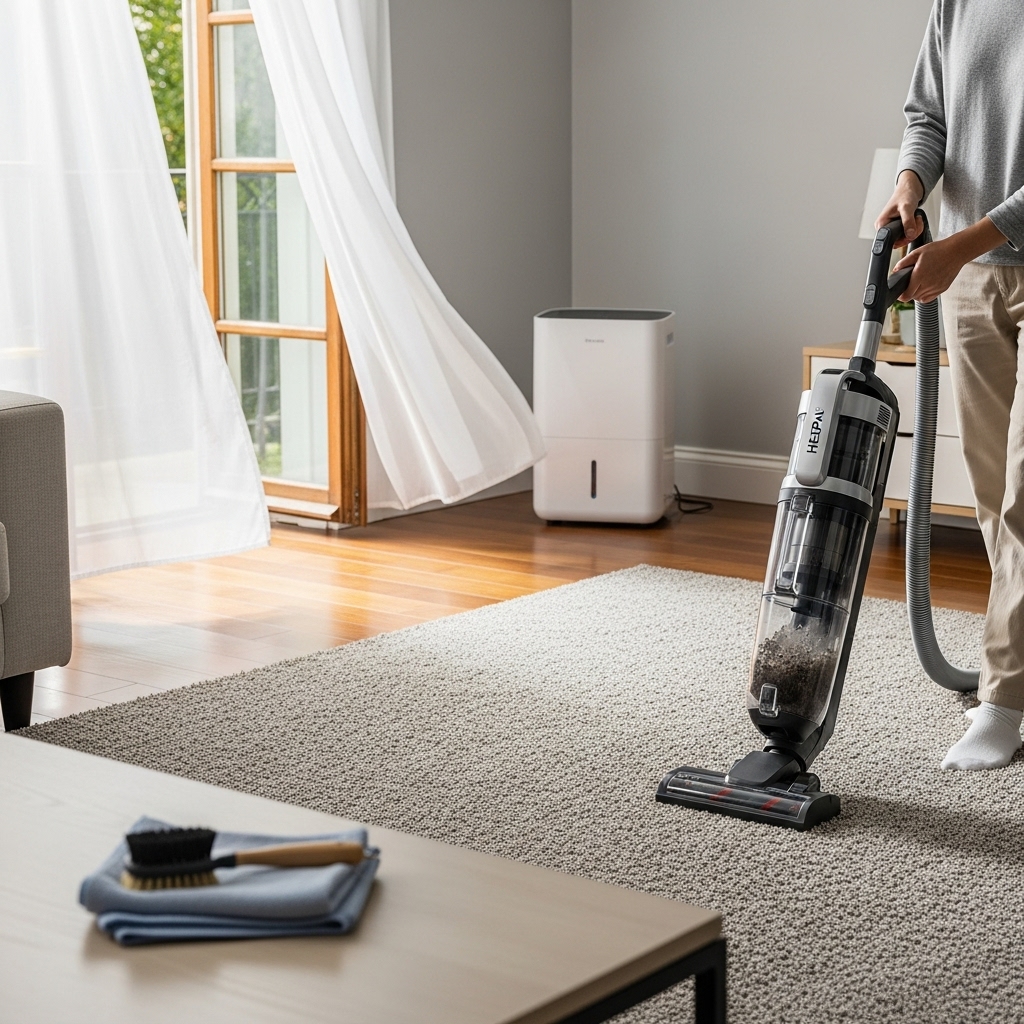
- HEPA vacuum surfaces to capture fine particles before wet cleaning.
- Wash non-porous surfaces with mild, unscented detergent; rinse lightly and dry fast.
- Use microfiber cloths to lift residues and reduce streaking.
- Avoid heavy fragrances that mask rather than fix the cause.
Handling Porous Materials
Porous items can absorb and release odors for weeks. For rugs and upholstery, test small sections with minimal moisture and maximize airflow during drying. If strong odors persist, consider replacement of padding or affected items. For unfinished wood shelving, a light detergent wipe-down followed by thorough drying can help. Always dry within 24–48 hours.
HVAC Considerations
Odors that spike when the system runs often point to damp dust, dirty coils, or return leaks near a musty area. Clean return grilles, change filters, clear condensate lines, and evaluate accessible ductwork for gaps. Seal leaks with proper materials and confirm that the system drains correctly.
Bathroom And Kitchen Focus
These rooms generate humidity daily. Use your bath fan during showers and for 20–30 minutes afterward. In the kitchen, run the range hood while cooking. Inspect under sinks for stains or swollen cabinet bottoms. Re-caulking around tubs, showers, and backsplashes can prevent water from entering drywall.
Basement And Crawl Space Tips
Basements in Bloomfield often need dehumidification in summer months. Keep storage off the floor in plastic bins with lids, remove cardboard, and check for cold corners where condensation may form. In crawl spaces, ensure the ground is covered with a well-sealed vapor barrier and that vents and access doors are intact.
Attic Strategy
Attics can trap moisture from roof leaks or from bathroom fans that terminate there. Confirm that soffit vents are clear and that there is adequate exhaust at the ridge or gable. Inspect insulation for dampness and address any roof penetration leaks promptly.
Mid-Project Checkpoint
After you have taken initial steps—leak repairs, dehumidification, and first-round cleaning—pause to reassess. If odors have only partially improved, look for overlooked micro-sources: a damp doormat, a saturated carpet tack strip, or a wet cardboard box. At this point, you may find it useful to review a concise outline of methods for mold odor to be sure you are not missing a key step like HVAC return sealing or targeted cavity inspection.
Do’s And Don’ts
- Do act quickly after leaks; dry within 24–48 hours.
- Do use HEPA filtration when vacuuming.
- Do monitor RH with a hygrometer.
- Don’t mask odors with heavy fragrances.
- Don’t ignore small, persistent leaks; they add up to big odor problems.
- Don’t over-wet carpets during cleaning; dry them thoroughly with fans and dehumidifiers.
Seasonal Considerations For Bloomfield
- Spring: Inspect gutters, downspouts, and grading before heavy rains.
- Summer: Run dehumidifiers and manage AC settings to avoid condensation.
- Fall: Check roof flashing and attic ventilation before cold weather.
- Winter: Manage indoor RH to prevent window condensation and wall dampness.
Frequently Asked Questions
Q: How long should it take to notice improvement? A: After source control and drying, many homes show noticeable improvement in days. Porous items may take longer or require replacement.
Q: Is bleach necessary? A: Not always. Detergent cleaning and drying address many cases. Be cautious with bleach, never mix it with other cleaners, and avoid use on porous materials.
Q: Will an air purifier solve the smell? A: It can help reduce particles but does not address moisture or contamination in materials.
Q: Why does the odor return after rain? A: Exterior drainage or foundation issues may be letting water enter. Re-check gutters, downspouts, grading, and basement walls.
Q: What RH should I target? A: Aim for 40%–50% year-round, adjusting slightly in winter to prevent condensation on windows.
Q: Do I need to remove drywall? A: Only if there is evidence of hidden moisture or growth that can’t be dried in place. Start with targeted inspections.
Q: How do I evaluate carpet padding? A: Lift a corner, smell the pad, and check the subfloor with a moisture meter. Musty, stained, or wet padding often needs replacement.
With a clear plan and consistent follow-through, you can restore freshness to your Bloomfield home. If you would like a partner to confirm your progress or handle the tougher parts, connect with a local provider skilled in mold odor so you can breathe easier and feel confident about the long-term results.