
The Ultimate Mold Odor Troubleshooting Checklist for Bloomfield Homes
When a musty smell appears in your Bloomfield home, it is more than a nuisance—it is a signal that moisture is present somewhere it should not be. This detailed checklist helps you track down the source, restore fresh air quickly, and prevent the smell from returning. Work through each section methodically, recording what you find so you can act decisively. If you would rather have a local pro diagnose and resolve the issue while you carry on with your day, schedule professional mold odor removal and get back to comfort sooner.
This checklist is designed for rapid action and long-term success. It covers safety, moisture mapping, targeted drying and cleaning, HVAC considerations, content management, and preventive upgrades tailored to Bloomfield’s climate and housing stock.
Safety and Preparation
- Ventilate Immediately: Open windows when weather allows and set a fan to exhaust musty air outdoors.
- Personal Protection: Wear gloves and a snug-fitting mask during cleanup. Keep children and pets away from affected areas.
- Electrical Caution: If water is near outlets or appliances, shut off power to that circuit until the area is safe.
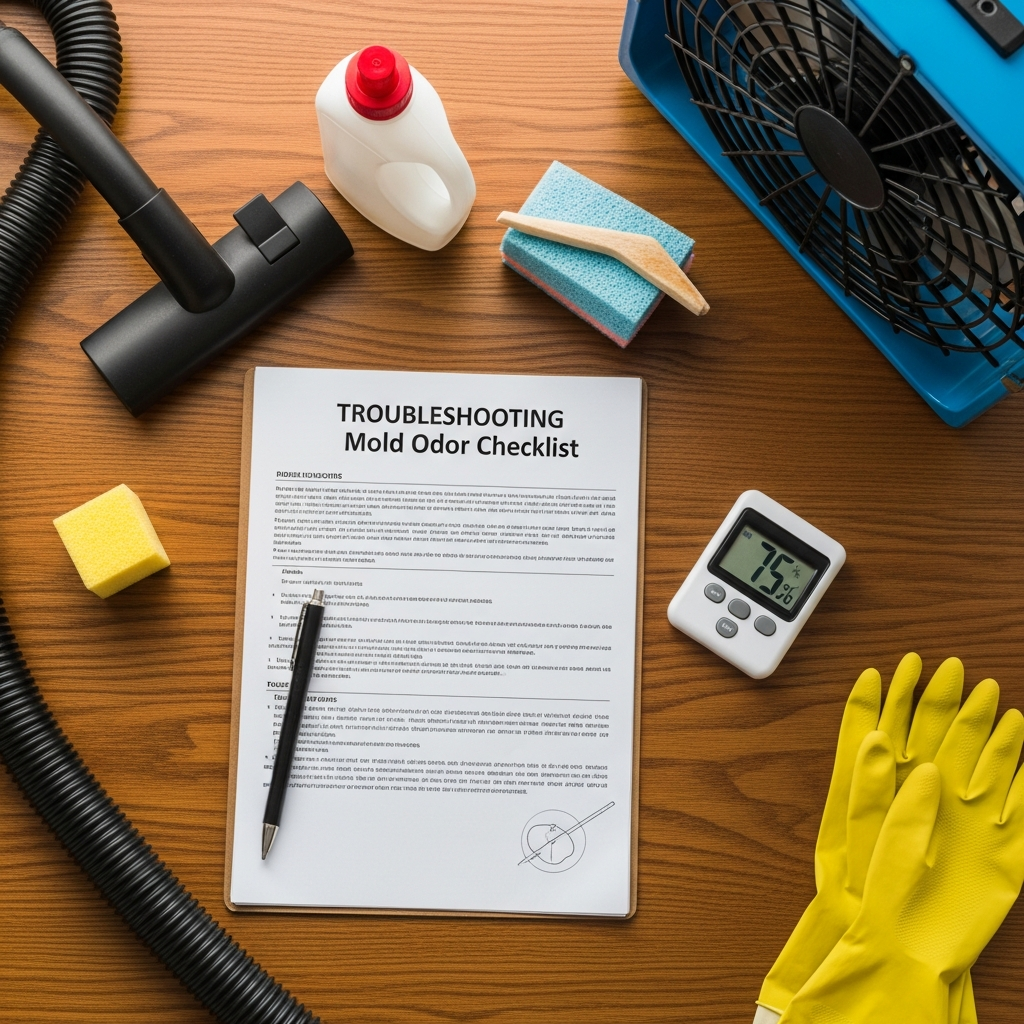
- Supplies: Gather a hygrometer, trash bags, towels, a wet/dry vacuum, mild detergent, and extra HVAC filters.
Step 1: Map the Moisture
- Smell Survey: Note where odor is strongest—basement corners, bathrooms, closets, or near vents.
- Touch Test: Feel walls and floors for cool, clammy surfaces that suggest high humidity or condensation.
- Weather Correlation: Did the smell follow heavy rain, a plumbing event, or a humid spell? Timing narrows the cause.
- Visual Clues: Look for discoloration, peeling paint, warped trim, or efflorescence on masonry.
- Tool Check: If available, use a moisture meter to compare suspect areas to known-dry spots.
Step 2: Stop Water at the Source
- Plumbing: Tighten fittings, replace brittle hoses, and place a bucket under active drips until repairs are made.
- Appliances: Inspect the water heater, washing machine, and dishwasher. Clear condensate lines on HVAC equipment.
- Exterior: Clean gutters, extend downspouts, and regrade soil to direct water away from the foundation.
- Ventilation: Ensure bathroom and laundry vents exhaust outdoors, not into attics or crawl spaces.
Step 3: Dry Aggressively
- Dehumidify: Target 30%–50% RH and run units continuously during recovery.
- Airflow: Aim fans along walls, under lifted carpet edges, and across damp corners.
- Heat: Add gentle warmth if safe to accelerate evaporation in cool spaces like basements.
- Open Up: Remove baseboards or a small section of drywall if readings stay high behind surfaces.
- Monitor: Recheck humidity and surface dryness every few hours the first day.
Step 4: Clean to Reset Surfaces
- HEPA Vacuum: Capture fine dust on floors, sills, and shelves.
- Wash Nonporous Surfaces: Use a mild detergent solution, rinse, and dry thoroughly.
- Spot-Treat Wood: Wipe lightly stained framing and keep airflow on it until fully dry.
- Launder Textiles: Wash and dry curtains, throw rugs, and washable covers. Replace odor-saturated cardboard with plastic bins.
Step 5: Evaluate Contents
- Sort Items: Remove damp boxes, papers, and fabrics from problem areas.
- Sun and Air: Dry items outdoors when weather is favorable, bringing them in before evening moisture returns.
- Decide Quickly: Discard porous items that remain musty after drying and cleaning.
- Reintroduce Carefully: Return only fully dry, odor-free items to the space.
Step 6: HVAC and Air Quality
- Filter Change: Replace HVAC filters after any moisture incident.
- Condensate Check: Confirm drains are clear and pans are clean to avoid standing water.
- Return Leaks: Seal return ducts in basements or utility rooms that may draw in musty air.
- Supplemental Filtration: Consider portable HEPA units with carbon during cleanup.
Basement and Crawl Space Focus for Bloomfield
Lower levels are common odor sources locally due to groundwater pressure, masonry wicking, and humid summer air. Inspect slab perimeters, window wells, the sump basin, and rim joists. Insulate cold pipes, keep storage elevated, and maintain a year-round plan for humidity control. If seepage is routine, explore interior drainage or sump upgrades and improve exterior grading.
Bathroom and Laundry Focus
These rooms produce daily moisture that can keep odors alive. Ensure bath fans are ducted outdoors and run them during and for 20 minutes after showers. Reseal failing caulk, fix toilet base leaks, and avoid drying racks in closed rooms. Vent the dryer outdoors and clean lint ducts to limit both odor and fire risk.
Kitchen and Living Areas
Check under sinks, behind the refrigerator, and around dishwashers for hidden leaks. In living rooms and bedrooms, look behind furniture pushed against exterior walls where condensation can occur. Lift area rugs and verify subfloors are dry. Avoid wall-to-wall carpet in moisture-prone areas.
Middle-Mile Decision Point
If, after 24 to 48 hours of drying and cleaning, the odor persists or intensifies, suspect hidden cavities, saturated pads, or subfloors, or recurring infiltration after rain. At this point, many homeowners choose expert help to shorten the process and ensure the source is truly fixed. Coordinated mold odor removal can combine moisture diagnostics, structural drying, and targeted deodorization so the smell does not return.
Preventive Upgrades Checklist
- Exterior Water Management: Maintain gutters, extend downspouts, and correct grading.
- Vapor and Air Barriers: Encapsulate crawl spaces and air seal rim joists.
- Insulation Improvements: Address cold surfaces prone to condensation.
- Smart Storage: Use plastic bins and wire shelving, keeping items off floors and away from exterior walls.
- Routine Monitoring: Keep hygrometers on each level and check readings weekly during humid seasons.
Frequently Asked Questions
Q: How quickly should I expect results? A: Many homes notice improvement within the first 24 to 48 hours of steady drying and cleaning, with full relief as the moisture source is resolved.
Q: Do I need to remove drywall to find the source? A: Only if materials remain damp or odors concentrate near the baseboards and readings indicate moisture behind the surface. Targeted opening is more effective than guessing.
Q: Will sealing the basement floor stop odors? A: Not if moisture is still wicking through the slab or walls. Control water and humidity first; then consider breathable sealers on dry surfaces.
Q: Are air purifiers enough? A: They help reduce airborne particles and some odors, but they do not fix moisture problems. Use them as a supplement during cleanup.
Q: Can I use bleach? A: Use cautiously on nonporous surfaces only. It is not a cure for odor in porous materials and may add moisture. Focus on drying and detergent cleaning.
Q: What humidity level should I maintain? A: Keep indoor relative humidity between 30% and 50% year-round. Adjust ventilation, heating, and dehumidification to maintain this range.
Q: Could the smell be in the HVAC system? A: Yes. Replace filters, inspect returns, and make sure the system is not drawing air from musty basements or crawl spaces.
Finish Strong: Verify and Maintain
- Confirm RH is stable at 30%–50% for several days without spikes.
- Odor Check: Walk the home after a shower, laundry, or rain event. No new odor should appear.
- Maintenance Rhythm: Put gutter cleaning, sump testing, and fan maintenance on a seasonal calendar.
- Documentation: Keep notes and photos of issues and fixes for future reference.
Reclaim Fresh Air in Your Bloomfield Home
By following this checklist, you can move from uncertainty to a clear, step-by-step plan that stops odors at their source and keeps your home healthy. If you want certainty without the learning curve, schedule local professionals for comprehensive mold odor removal and enjoy the confidence that comes with expert diagnostics, proven drying methods, and durable prevention.