
Musty air can make a home feel damp and uncomfortable, but it is also a reliable signal that moisture is present where it shouldn’t be. In Bloomfield, New Jersey, fluctuating humidity and seasonal storms can push moisture into basements, attics, and wall cavities, leading to persistent mold odors. This guide presents a practical troubleshooting sequence you can follow to locate the root cause and correct it. If you decide you would like guidance along the way, you can review professional strategies for mold odor to benchmark your process and expectations.
Recognize Patterns Before You Start
Odor behavior reveals clues. Does the smell worsen after rain or snowmelt? Does it intensify when the HVAC starts or when rooms are closed overnight? Do particular rooms smell stronger? Record your observations. Note baseline relative humidity (RH) across rooms and times. Monitoring these patterns creates a map that will guide your troubleshooting steps and help you confirm progress later.
Essential Tools
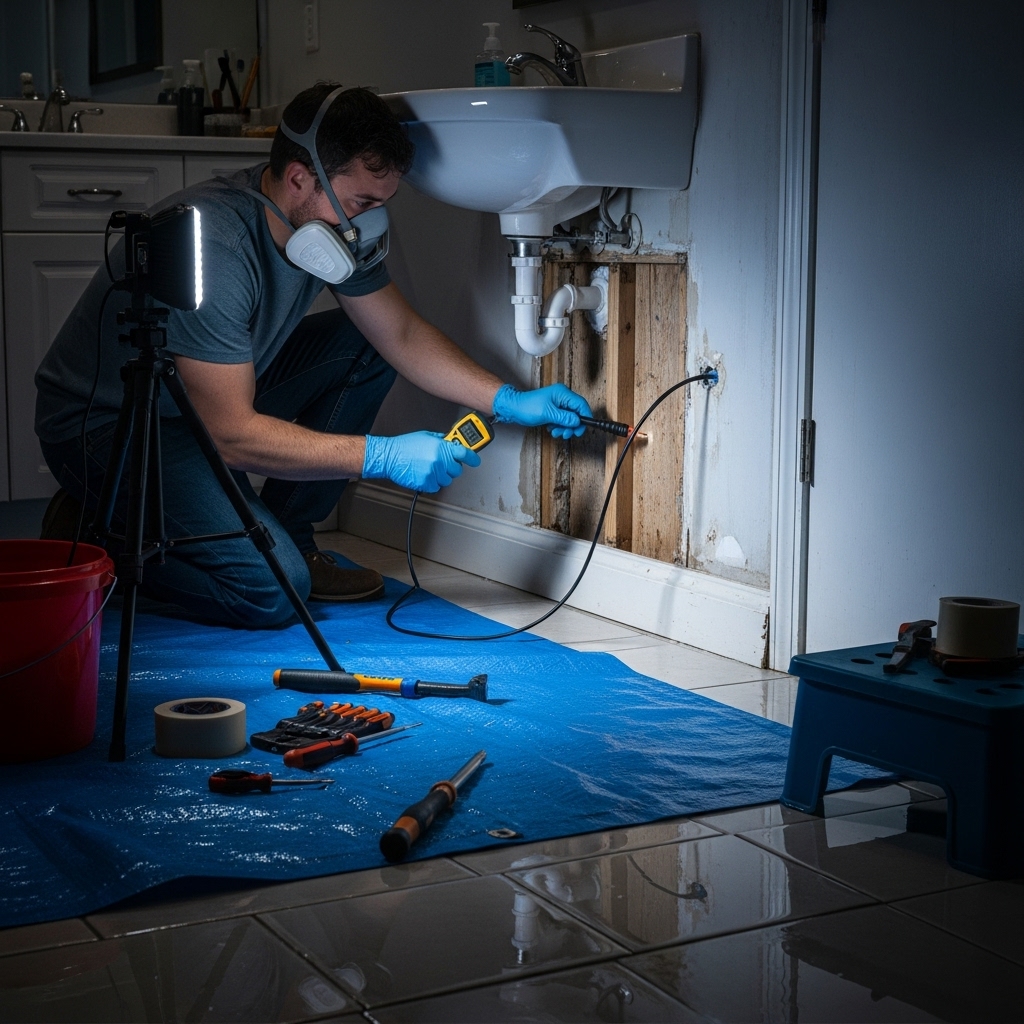
Gather a flashlight, hygrometer, moisture meter (pin or pinless), HEPA vacuum, detergent, microfiber cloths, scrub brushes, and plastic sheeting. A small inspection mirror, borescope, or infrared thermometer can be helpful to investigate tight spaces or thermal anomalies that indicate moisture.
Step-By-Step Troubleshooting Sequence
- Start where the odor is strongest: Move slowly and sniff carefully along baseboards, around windows, and inside closets. Check adjacent spaces above and below the smelliest area.
- Test humidity: Measure RH in the affected room and in a known-drier area. If the affected room is consistently 10%+ higher, suspect a moisture source nearby.
- Check for leaks: Inspect plumbing, including supply lines, shutoff valves, and traps. Look for mineral deposits that suggest slow leaks.
- Evaluate ventilation: Confirm bathroom and kitchen fans exhaust outdoors and run for 20–30 minutes after generating moisture.
- Examine the HVAC system: Replace the filter, clear the condensate line, and check for water in the pan. If the smell intensifies during HVAC operation, inspect return ducts near damp areas.
- Inspect porous materials: Carpets, padding, cardboard boxes, and fabrics can harbor odors. Lift carpet corners to evaluate padding and subfloor. Remove damp storage items.
- Look outside inward: Verify that gutters are clear and downspouts discharge away from the foundation. Check grading and foundation cracks.
- Attic and roof review: Inspect for leaks around penetrations and evaluate insulation for dampness. Ensure soffit vents are open and ridge or gable vents are unobstructed.
- Dry thoroughly: Once you find moisture, dry it rapidly. Combine air movement with dehumidification. Aim for RH near 45% and normal moisture meter readings for the material.
- Clean systematically: HEPA vacuum, then wash non-porous surfaces with mild detergent. Avoid over-wetting porous materials; dry immediately when damp cleaning is necessary.
- Reassess: After 48–72 hours, walk the home again. If the odor persists, revisit suspect zones and consider more advanced checks like borescope inspections behind baseboards or inside vanity walls.
Decision Points And Next Actions
If you encounter recurring odors after drying and cleaning, ask: Is moisture still present? Do HVAC cycles spread the smell? Are there sealed cavities with slow leaks? Each answer leads to different actions:
- Ongoing moisture: Re-check plumbing and exterior drainage. Consider a continuous dehumidification strategy in basements.
- HVAC distribution: Seal return duct leaks, clean coils and pans, and evaluate ducts near damp spaces.
- Hidden cavities: Open a small inspection point to check behind baseboards or inside walls near fixtures. Use a borescope if available.
What If Odor Persists After “Everything”?
Persistent odor despite repairs often means a small, overlooked reservoir remains. Common examples: a damp cardboard stack in a basement corner, a wet cushion, a saturated carpet tack strip at an exterior door, or moldy dust on the backside of a closet shelf. Remove suspect items entirely, dry beneath, and re-check. Systematic elimination works.
Special Considerations For Bloomfield Homes
Basements: Bloomfield’s climate can create “microclimates” where corners or storage rooms remain cooler and wetter than the rest of the house. Use a hygrometer to find these pockets and add targeted airflow. Attics: With older roofing or limited ventilation, sunny days can heat trapped moisture and release musty odors into living areas via ceiling penetrations. Bathrooms: Frequent showers require robust exhaust ventilation and sometimes supplemental dehumidification to prevent continual dampness.
Cleaning Techniques That Support Odor Removal
- HEPA first: Capture fine particles that hold odor compounds and allergens.
- Detergent next: Mild, unscented detergent lifts residues without masking. Rinse lightly and dry fast.
- Porous caution: Upholstery, rugs, and padding can remain smelly even after surface cleaning. Evaluate replacement if odors persist.
- Odor adsorbents: Baking soda can help with residual smells, but always pair with source control and drying to prevent recurrence.
Mid-Process Benchmark
About halfway through your troubleshooting, compare your findings with a reputable outline of best practices so you do not miss a step. Reviewing guidance on mold odor can help you validate whether you have addressed root causes, not just symptoms.
Verification: Proving The Problem Is Solved
- Odor test: After drying and cleaning, close windows and doors for 24 hours, then reassess the smell.
- Moisture readings: Compare moisture levels in suspect materials to control areas and to your initial notes.
- Humidity trend: Track RH for a week. Sustained RH under 50% is a good sign.
- HVAC check: Run the system in fan-only mode and during cooling or heating to confirm no odor spike.
Frequently Asked Questions
Q: Do I need specialized chemicals? A: Often no. Effective odor elimination usually comes from stopping moisture, cleaning with detergent, and thorough drying.
Q: How long should I dehumidify? A: Continue until RH stabilizes near 45% and moisture meter readings normalize. In basements, a dehumidifier may be needed seasonally.
Q: Is it safe to open a wall? A: Small, controlled openings can help you inspect and dry hidden areas. Wear protective gear and avoid disturbing large areas without containment.
Q: Why do odors worsen when HVAC runs? A: Damp dust in ducts or return leaks near musty areas can spread odor. Clean and seal as needed.
Q: Can I rely on air fresheners? A: No. They mask smells and may trap humidity. Focus on source control.
Q: When should I call for help? A: Extensive growth, recurrent leaks, or health concerns are reasons to consult a professional.
Q: What’s a quick diagnostic win? A: Check under sinks, behind toilets, around exterior doors, and near windows. These spots frequently hide slow leaks.
Working methodically will help you resolve most musty situations in Bloomfield. If you want confirmation, a second opinion, or hands-on support, connect with a local team that specializes in mold odor so you can move from uncertainty to a clear plan and fresher air.