Choosing the Right Mold Remediation Partner in Bloomfield, New Jersey
Selecting a company to remove mold from your home or business in Bloomfield is a decision with long-term health and property implications. Mold impacts indoor air quality, building materials, and peace of mind. A qualified contractor does more than wipe visible growth; they uncover the moisture source, contain spores, protect belongings, and help you return to a safe, normal routine. In this guide, you will learn how to evaluate credentials, processes, safety standards, and communication practices so you can choose with confidence. If you are still early in your research, keep in mind that a company’s approach to mold remediation tells you a lot about their professionalism and their commitment to your health.
Bloomfield’s housing mix includes century-old homes with basements and crawl spaces, mid-century multifamily buildings, and newer construction. Each presents different moisture pathways: foundation seepage, roof flashing failures, plumbing supply leaks, and ventilation gaps. A strong local firm understands municipal code expectations, typical construction assemblies, and seasonal humidity patterns that influence mold growth in Essex County. That knowledge shows up in their inspection strategy, containment design, and post-remediation verification plan.
What Sets an Excellent Mold Remediation Company Apart
Quality remediation companies share recognizable traits. They perform a careful initial assessment, document conditions with photos and notes, and create a written scope that aligns with industry standards. They prioritize safety through personal protective equipment, source control, and negative pressure containment. They also communicate clearly with clients, adjust plans as hidden conditions emerge, and provide a final report that helps you understand what was done and why.
Beware of firms that promise quick fixes without discussing moisture control and post-remediation testing criteria. Mold removal without addressing the cause is a short-term cosmetic change. The remediation team should advocate for drying and environmental stabilization, not just demolition and cleaning. Ask how they handle occupants who are sensitive to allergens, and whether they offer guidance on temporary living arrangements if needed.
Credentials, Training, and Standards in New Jersey
When comparing companies in Bloomfield, review training and adherence to recognized standards. Look for technicians trained in microbial remediation and supervisors who can articulate the difference between source removal and encapsulation. A competent company follows industry best practices for containment, filtration, cleaning, and verification. They will be familiar with relevant guidance for water damage restoration and mold remediation, including procedures for Category 1–3 water losses, proper use of HEPA filtration, and criteria for returning spaces to service.
Ask how the company stays current. Do team members receive ongoing education on building science, moisture diagnostics, and HVAC-related condensation issues? Are supervisors able to explain how stack effect and negative pressure in winter can pull humid air through wall cavities? The best companies can translate technical concepts into practical actions: fix the leak, lower humidity, clean or remove contaminated materials, and confirm results.
Assessment and Moisture Diagnostics
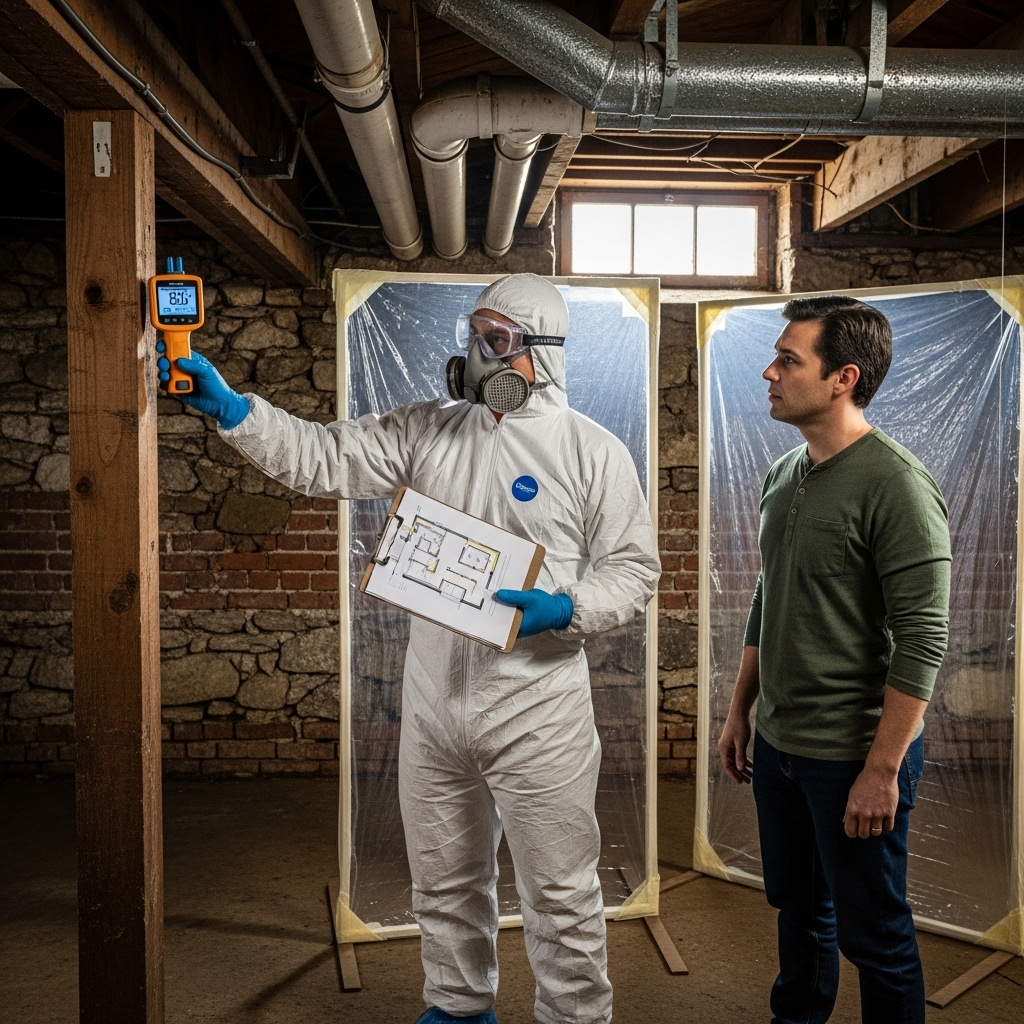
A thorough assessment is the backbone of a successful project. Expect the company to ask about the building’s history, recent water events, odors, and occupant symptoms. Visual inspections should be paired with moisture measurements using pin or pinless meters and, when appropriate, thermal imaging to locate cool, damp areas behind finishes. The assessor should identify suspected mold reservoirs, assess cross-contamination risks, and propose a logical containment plan.
Equally important is identifying the moisture source. Roof leaks, plumbing failures, poor grading, clogged gutters, and insufficient ventilation can all drive mold. A company that simply plans to remove damaged drywall without a plan to dry the structure and prevent recurrence is not protecting your long-term interests.
Containment and Engineering Controls
Containment prevents mold spores and dust from spreading to clean areas. In Bloomfield’s multi-floor homes, stairwells and shared HVAC systems complicate containment. Ask how the company will isolate work zones with plastic barriers, zipper doors, and negative air machines equipped with HEPA filters. Proper differential pressure should be maintained and monitored. Supply and return registers in the affected area should be sealed or the HVAC system turned off to avoid spreading spores.
For larger projects, decontamination chambers allow workers to enter and exit without tracking debris. Walk-off sticky mats and regular vacuuming with true HEPA units keep adjacent spaces clean. Responsible companies protect belongings with poly sheeting and instruct occupants on what spaces to avoid during the work.
Cleaning, Removal, and Material Decisions
Different materials demand different tactics. Non-porous surfaces like metal and glass can be cleaned and left in place when not structurally damaged. Semi-porous materials such as wood framing often respond well to HEPA vacuuming, wire brushing, and damp wiping with appropriate cleaners; aggressive techniques like soda blasting may be used when growth is embedded. Porous materials like drywall and insulation typically require removal when mold growth is present. A good company explains why each choice is made and documents the condition of materials before and after treatment.
Equally critical is dry standard verification. Cleaning without drying sets the stage for regrowth. The remediation team should monitor moisture content and relative humidity, aiming for stability that aligns with local seasonal norms. Dehumidification and targeted airflow help reach those goals without causing secondary damage.
Communication, Documentation, and Transparency
Clear communication gives you control over the process. Before work starts, you should receive a written scope, containment plan, and sequence of activities. During the project, request daily progress updates and photos. After completion, you should receive a summary detailing the areas treated, materials removed, cleaning methods, and moisture readings. If third-party verification is part of the plan, coordinate access for testing in a way that avoids recontamination.
Transparency extends to unforeseen discoveries. Opening walls can reveal hidden moisture, pest damage, or structural concerns. A trustworthy company will pause, explain options, and revise scope documents in writing. They will also coordinate with plumbers, roofers, or HVAC technicians when the moisture source lies outside the remediator’s scope.
Insurance, Safety, and Liability
Ask for proof of general liability and workers’ compensation insurance. Clarify how the company manages hazardous materials like lead paint or asbestos that might be encountered in older Bloomfield homes. If a pre-job screening suggests risk, separate certified abatement services should be coordinated before mold work proceeds. Safety training should cover PPE selection, respirator fit testing, electrical safety around wet areas, and best practices for ladder and scaffold use in tight spaces.
Occupant safety matters too. Discuss how the company will protect children, elderly family members, and pets from exposure during the project. Good contractors set clear rules for access, noise, and airflow, and they schedule phases to minimize disruption.
Local Expertise and Responsiveness
Local knowledge shortens the learning curve. A company accustomed to Bloomfield’s climate patterns knows when spring rains or tropical remnants can saturate basements, and how summer humidity interacts with cool AC supply ducts to create condensation. They also understand local permitting and disposal rules for construction debris. Responsiveness matters when heavy weather hits. Ask how quickly the team can mobilize and whether they maintain on-call capacity for urgent situations.
Questions to Ask Before You Hire
- What standards and procedures will guide the project, and can you walk me through them?
- How will you identify and verify the moisture source?
- What containment strategy will you use, and how will you maintain negative pressure?
- Which materials will be removed, which will be cleaned, and why?
- What is your plan for drying and verifying normal moisture levels?
- How will you protect the rest of my home and my belongings?
- How do you document progress and completion?
- What insurance do you carry, and can you provide a certificate?
- How do you coordinate with third-party inspectors or hygienists if needed?
- What is your policy if hidden damage is discovered mid-project?
Red Flags to Watch For
- Guarantees of instant results without discussing moisture control.
- Reluctance to use containment or HEPA filtration.
- Unwillingness to show proof of insurance or training.
- One-size-fits-all approaches that ignore material differences.
- Pressure to skip documentation or verification.
- Lack of interest in occupant safety or scheduling needs.
Comparing Proposals and Scopes
When you receive multiple proposals, read beyond the bottom line. Compare the thoroughness of assessment, the specificity of containment language, and the clarity of cleaning and removal steps. Look for measurable criteria such as target moisture levels, air changes per hour in containment, and return-to-service definitions. A robust scope makes outcomes predictable. If two scopes differ dramatically, ask each contractor to explain the reasoning. The conversation reveals expertise and values, helping you choose a team whose approach to mold remediation aligns with your goals and risk tolerance.
Preparing Your Home and Family
Preparation sets the stage for efficiency. Remove small personal items from the affected area and adjacent rooms. Discuss with the contractor whether closet contents, books, and fabrics need packing or cleaning. Plan pet care if noise or restricted areas could cause stress. Identify parking and access routes for equipment. If drying equipment will run continuously, understand the sound levels and power requirements, and plan for safe cord routing to avoid tripping hazards.
After Remediation: Preventing Recurrence
Post-remediation success depends on controlling moisture and maintaining ventilation. Keep indoor relative humidity in a healthy range through dehumidification and consistent HVAC use. Repair exterior drainage issues, maintain gutters and downspouts, and ensure soil slopes away from the foundation. In bathrooms and kitchens, use exhaust fans that vent outdoors and run them long enough to remove humidity. For basements, consider air sealing and insulation strategies that reduce condensation on cool surfaces.
Case-Style Scenarios from Bloomfield Homes
In one common scenario, a partially finished basement shows spotty growth on the back of paneling. The cause is a combination of capillary moisture in the foundation wall and summertime humidity. A responsible contractor proposes selective demolition, cleaning of framing, installation of a proper vapor control strategy, and a dehumidification plan. In another case, a second-floor bath leak migrates into a kitchen ceiling. The company outlines how to contain the kitchen, remove wet drywall, dry the cavity, and verify moisture levels before closing the ceiling. These examples illustrate how process rigor protects your home.
Frequently Asked Questions
Q: Do I need to leave my home during remediation? A: It depends on the size and location of the work area, the containment strategy, and occupant sensitivities. For small, well-contained projects, staying may be possible. For larger or centrally located work areas, temporary relocation can reduce stress and exposure risk.
Q: Will all visible mold be removed? A: The goal is source removal from contaminated materials and thorough cleaning of surfaces and dust. Porous materials with embedded growth are typically removed. Cleanable surfaces are addressed with HEPA vacuuming and damp wiping. The result should be a visibly clean environment that meets agreed-upon verification criteria.
Q: Is testing always necessary? A: Not always. Many projects rely on a visual cleanliness standard and moisture verification. However, third-party testing can add confidence in complex situations, post-flood events, or when occupants have heightened sensitivities.
Q: How long does a typical project take? A: Duration varies based on size, materials, moisture levels, and access. A clear scope and moisture targets help set realistic timelines. Drying is often the pacing factor.
Q: Can paint or encapsulants solve the problem alone? A: No. Encapsulation can be part of a strategy after thorough cleaning and drying, but it does not replace source removal or moisture control.
Q: What about belongings? A: Remediators can advise on cleaning strategies for non-porous and semi-porous items. Textiles and paper goods may require specialized cleaning or, in some cases, disposal if contamination is significant.
Q: How do I prevent mold after remediation? A: Control humidity, fix leaks promptly, ventilate wet areas, and maintain exterior drainage. Routine inspections of basements, attics, and plumbing can catch issues early.
Your Next Step in Bloomfield
When you select a company, you are choosing a partner to protect your health and property. Look for competence, transparency, and a commitment to moisture control. Start conversations early, ask detailed questions, and trust the team that demonstrates a clear, science-based process. If you are ready to evaluate options and want a reliable approach to results-driven mold remediation, connect with a reputable local provider, outline your goals, and set a plan that returns your space to a clean, dry, and comfortable condition.