Commercial properties in Bloomfield, New Jersey—offices, retail suites, restaurants, medical facilities, warehouses, and multifamily common areas—face unique challenges when it comes to fungal contamination. The presence of occupants, the need to maintain operations, and the requirements for documentation all elevate the stakes. This compliance guide explains how a well-run program aligns safety, regulations, and business continuity. At the outset, remember that professional mold remediation is far more than cleaning: it integrates hazard controls, moisture science, communication plans, and verifiable outcomes.
Commercial mold events arise from roof leaks, mechanical failures, window intrusion, plumbing issues, or chronic humidity. In multi-tenant buildings, responsibilities can be shared among owners, managers, and occupants. Navigating these relationships requires clear documentation and consistent communication, especially when work areas intersect with public corridors or shared mechanical systems.
Core compliance principles
Compliance in a commercial setting rests on a few steady pillars. First, protect occupant health by establishing engineering controls that isolate the work area. Second, document findings, decisions, and results in a way that withstands scrutiny. Third, correct underlying moisture sources to avoid recurrence. Fourth, align actions with recognized industry standards and applicable rules. These principles guide decisions from the first phone call to the final verification.
While specific regulations can differ by facility type, the general expectation is that building owners and operators control hazards, manage indoor air quality responsibly, and maintain records that describe conditions and corrective actions. Doing so reduces liability and builds trust with occupants and stakeholders.
Assessment and risk characterization
The initial assessment in a commercial space is about scope and risk. Inspectors map visible contamination, measure moisture in building materials, and consider pathways that could allow particles to travel into occupied zones. They also review HVAC conditions, because shared systems can spread odors or particulates if not properly sealed during work. Risk characterization informs how robust containment should be, how schedules might minimize occupant exposure, and whether independent oversight is appropriate.
In sensitive environments, such as healthcare or childcare, additional precautions may be recommended. These can include tighter pressure differentials, more comprehensive barriers, or coordination with infection control protocols. The goal is to integrate mold abatement into the facility’s broader safety framework.
Containment and engineering controls
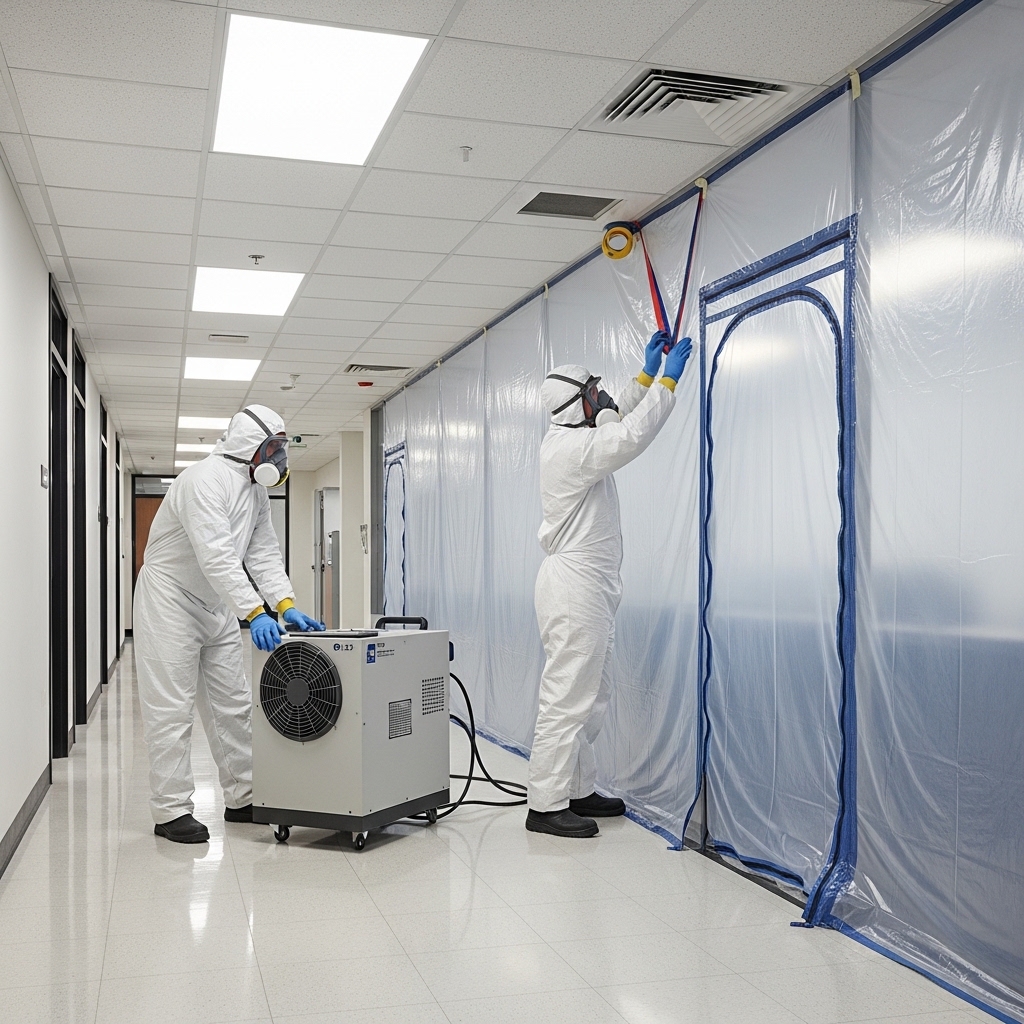
Containment is the heart of safe remediation. Plastic barriers with sealed edges form the work zone, while negative air machines with HEPA filtration maintain a pressure differential that draws air inward. Doors, vents, and pass-throughs are managed carefully, and worker entry/exit follows defined protocols to avoid cross-contamination. In commercial hallways and lobbies, signage and barrier placement protect the public and maintain order.
Noise and airflow management are also part of engineering controls. Coordinating equipment placement, power loads, and exhaust routes prevents unintended impacts on daily operations. When work must occur during business hours, crews plan around peak times and establish clear routes for transporting materials discreetly and safely.
Source correction and building systems
Compliance means solving the moisture problem, not just removing visible growth. Roof penetrations, window seals, plumbing chases, and air handler condensate management are common culprits. In some buildings, insulation or vapor control layers are incomplete or compromised, leading to condensation on cold surfaces. A remediation plan should identify moisture drivers and outline steps for repair or upgrade—either as part of the project or through coordinated trades.
HVAC plays a central role in stability. Filters, coils, drain pans, and outside air settings influence humidity and airflow balance. During remediation, supply and return vents in the work area may be sealed temporarily. Afterward, system settings and maintenance schedules should be reviewed to support long-term indoor air quality.
Removal, cleaning, and material decisions
In commercial suites, material choices vary widely: gypsum board, acoustic ceiling tiles, metal studs, wood framing, carpet tiles, luxury vinyl, and more. Porous items with sustained wetness often require removal, while non-porous and semi-porous surfaces can be cleaned and restored. HEPA vacuuming, controlled agitation, and appropriate cleaning agents are used to remove residues. Decision criteria are based on moisture readings, visual indicators, and the function of the space.
Ceiling plenums and mechanical closets deserve special attention. Dust loads can be high, and minor leaks can go unnoticed, allowing hidden growth. Thorough cleaning, combined with inspection of condensate drains and insulation, helps restore a stable baseline.
Communication and occupant coordination
Transparent communication is a compliance best practice. Before work begins, management should inform affected tenants and staff about the schedule, areas involved, and safety measures. Providing a simple FAQ and point of contact reduces anxiety and keeps support requests organized. Daily or milestone updates, especially during disruptive phases, build confidence and minimize complaints.
When access restrictions are necessary, clear signage and alternate routes maintain operations. For retail and hospitality, work is often staged outside peak hours to protect revenue and guest experience. The remediation team should collaborate with facility managers to align work windows with business needs.
Documentation and verification
A defensible record includes assessment notes, photographs, moisture logs, containment layouts, cleaning methods, and disposal documentation for removed materials. When appropriate, independent post-remediation verification provides an objective measure that work areas meet cleanliness and dryness objectives. This third-party step supports risk management and is especially useful in complex or high-profile projects.
Document control matters. Organize files by location and date, retain contractor certifications and training records, and keep correspondence with tenants. A tidy file demonstrates diligence and simplifies future audits or inquiries.
Training and contractor qualifications
Choose remediation partners with specialized training, experience in commercial environments, and strong safety culture. Ask about containment strategies in occupied buildings, experience coordinating with property management, and references for similar projects. Verify insurance coverage and request a clear scope of work that reflects the building’s operational realities.
In-house teams should also be trained to recognize early signs of moisture problems, report incidents promptly, and implement interim controls such as isolating wet areas and shutting down affected HVAC zones until assessment is complete.
Integration with emergency response plans
Mold events rarely occur in isolation. Water intrusions from storms, fire suppression, or plumbing failures require rapid response that includes extraction, drying, and protection of contents. Your emergency plan should designate vendors, define notification trees, and specify priorities for critical rooms and equipment. Early action limits the extent of demolition later and shortens downtime.
Conduct periodic drills or tabletop exercises that involve facilities, operations, and tenant representatives. The time to discover communication gaps is before an emergency, not during it.
Frequently Asked Questions
Q: Can we keep operating while remediation occurs? A: Often yes, with proper containment, scheduling, and coordination. Sensitive tasks can be staged after hours, and public areas protected with clear routes and barriers.
Q: Do we need independent testing? A: Independent verification is helpful for large or sensitive projects and for documentation that must stand up to outside review. For small, straightforward scopes, visual and moisture-based clearance may be sufficient.
Q: How do we avoid complaints about odors and noise? A: Plan equipment placement, ensure proper exhaust, and communicate schedules. Choose cleaning products thoughtfully and ventilate work areas within containment.
Q: What about our HVAC system? A: Seal supplies and returns within the work area during removal and cleaning. After remediation, confirm that filters, coils, and drain pans are clean, and review settings that affect humidity and airflow.
Q: Who is responsible in a multi-tenant building? A: Responsibilities are guided by leases and building policies. Clear documentation of moisture sources, affected areas, and corrective actions helps all parties coordinate fairly.
Programmatic prevention
Compliance is not a one-time event. Build a preventive program around periodic inspections, moisture monitoring in high-risk zones, and training for custodial and maintenance staff. Track small leaks and respond quickly. Over time, this vigilance reduces the severity of events and the scope of future projects, keeping businesses running smoothly and occupants comfortable.
Bring your building back to stable operations
When commercial spaces face moisture and growth, timely, well-documented action protects occupants and preserves assets. If your team needs guidance tailored to your facility type and operational priorities, partner with specialists who can coordinate engineering controls, verification, and communication. For disciplined, standards-aligned mold remediation that supports business continuity in Bloomfield, reach out to a trusted local provider and start building your compliance-ready plan today.