When Mold Is an Emergency in Bloomfield, New Jersey
Storm-driven water intrusions, burst pipes, and sudden roof failures can turn a normal day into a property emergency in minutes. In Bloomfield’s dense neighborhoods, water moves quickly through shared walls, finished basements, and multi-story layouts. Within the first 24 to 48 hours of uncontrolled moisture, mold can gain a foothold on porous materials. Emergency mold remediation focuses on rapid stabilization, safe containment, and coordinated drying to protect health and property. Understanding the process helps you act decisively when time is critical, and it prepares you to assess a provider’s readiness for urgent response. A well-prepared team will explain how their emergency approach to mold remediation integrates immediate actions with longer-term verification and prevention.
Immediate Priorities: Safety First
Before any demolition or cleaning begins, ensure personal safety. Confirm that electricity is safe to use, especially in wet basements. Avoid standing water that may conceal hazards. If you smell gas or suspect structural compromise, contact emergency services. Once basic safety is secured, focus on stopping the water source: shut off supply lines, cover roof openings, or coordinate with a plumber or roofer. Document conditions with photos and short videos; they guide responders and help you track progress.
Rapid Assessment and Triage
Emergency responders conduct a quick but thorough assessment to map the wet areas and prioritize actions. They look for migratory water paths through ceilings, walls, and floors, and they use moisture meters to determine how deep water has traveled. High-risk spaces—children’s bedrooms, kitchens, and shared hallways—may be prioritized for containment. The goal of triage is to stabilize conditions so that damage and contamination do not escalate while a complete remediation plan is developed.
Containment Under Pressure
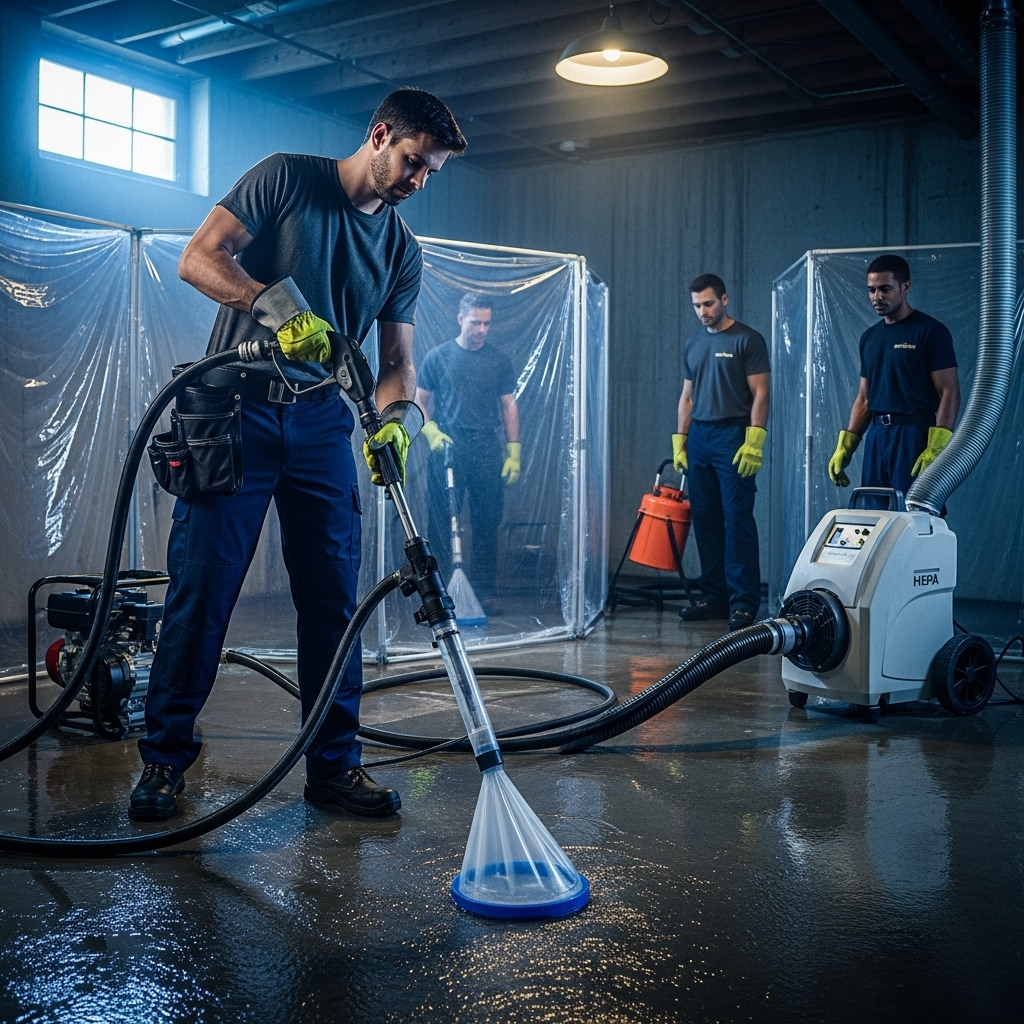
In an emergency, containment cannot wait. Crews install plastic barriers, seal HVAC registers, and deploy negative air machines with HEPA filters. Directional airflow is established to move air from clean areas toward the work zone and out through filtration. This setup reduces cross-contamination as demolition and drying begin. Where multiple units share air pathways, extra care is taken to isolate shared corridors and stairwells.
Water Extraction and Source Control
Standing water is removed with extraction equipment, and wet materials that cannot be saved are identified quickly. Source control—stopping the leak or weatherproofing the opening—happens in parallel. These steps limit the spread of moisture, reduce the load on dehumidifiers, and shorten the drying timeline. Early removal of saturated carpet pads, for example, can prevent moisture from wicking into baseboards and wall cavities.
Strategic Demolition and Salvage
Emergency demolition targets materials that trap moisture or harbor contamination. Baseboards may be removed to allow wall drying. Access holes can be drilled to ventilate cavities, or cut lines established where drywall is heavily impacted. Items with low replacement value that are heavily contaminated may be disposed of, while valuable belongings are moved to a clean area for evaluation and cleaning. Every cut and removal decision should be documented so repairs can proceed efficiently later.
Drying, Dehumidification, and Environmental Stabilization
Drying equipment—dehumidifiers and air movers—runs continuously in the contained area. Technicians measure progress with moisture meters and adjust equipment placement to target problem zones. Environmental stabilization is the objective: reducing humidity and returning materials to a normal moisture range. This step often determines how long containment remains in place and when it is safe to move from emergency measures to full remediation.
Communication During an Emergency
Clear, frequent updates reduce stress during high-pressure situations. Expect responders to outline immediate goals, provide timelines for the next 24 to 72 hours, and explain how containment affects household routines. If parts of the home remain safe to occupy, you will receive guidance on access routes and ventilation. If temporary relocation is recommended, the team will advise on securing and protecting the property.
Transitioning from Emergency Response to Full Remediation
Once water is controlled and drying is underway, the focus shifts to comprehensive remediation. This includes careful removal of unsalvageable materials, detailed cleaning of surfaces, and verification of cleanliness and moisture levels. Additional containment phases may be added as hidden damage is uncovered. The transition is successful when the plan expands from immediate stabilization to a complete, documented path back to a healthy indoor environment.
Emergency Response Capabilities to Look For
- 24/7 Mobilization: Teams that can deploy quickly with the right equipment.
- On-Truck Containment Supplies: Poly sheeting, zipper doors, tape, and HEPA-capable negative air machines.
- Drying Equipment Fleet: Sufficient dehumidifiers and air movers to handle multi-room events.
- Skilled Assessment: Technicians who can distinguish salvageable materials from those requiring removal.
- Documentation Discipline: Photo logs, moisture maps, and written updates even under time pressure.
Special Considerations for Bloomfield Properties
Bloomfield homes often feature basements and mixed construction that allow water to travel behind finishes. Row-style housing shares walls that complicate containment. When storms stall over Essex County, sump pumps can be overwhelmed and groundwater can enter through slab cracks. Emergency responders familiar with local patterns anticipate these challenges and adjust containment and drying strategies accordingly. They will also advise on exterior measures—clearing gutters, extending downspouts, and grading corrections—to reduce future risk.
Minimizing Cross-Contamination During Chaos
In emergencies, normal routines are disrupted. Keep doors to unaffected rooms closed and restrict traffic through the work zone. If you must pass through containment, follow crew instructions on PPE and decontamination. Avoid running the central HVAC until the team confirms it is safe. These simple actions preserve the gains achieved by negative pressure and HEPA filtration.
Documentation You Should Expect
Even during emergency response, documentation should be professional. Expect a summary of the initial condition, a map of containment and equipment placement, moisture readings with dates and times, and photos that show progress. This record supports decision-making and coordinates post-emergency repairs. It also helps you understand why certain materials were removed and what steps remain before the project is complete.
Frequently Asked Questions
Q: How fast should a team arrive? A: Rapid response matters. The goal is to stabilize conditions as soon as possible, ideally within hours, to limit secondary damage and contamination.
Q: Can we stay in the home during emergency work? A: Sometimes. It depends on the size and location of containment and occupant sensitivities. Clear guidance from the team will help you decide.
Q: Is testing needed right away? A: The immediate priority is safety, source control, and drying. Testing may be considered later as part of verification for larger or complex cases.
Q: What belongings can be saved? A: Non-porous and some semi-porous items can often be cleaned. Heavily contaminated porous items may require disposal. The team will advise case by case.
Q: How do we prevent this from happening again? A: Address drainage, maintain roofs and gutters, use dehumidification where needed, and ensure ventilation is effective. Post-event inspections after major storms are wise.
Preparing for the Unexpected
Building resilience involves both home improvements and planning. Install water alarms near appliances and in basements, service sump pumps, and consider battery backups. Know how to shut off your water supply and keep emergency contact information accessible. Maintain a simple checklist for evacuation and for sheltering safely at home, including flashlights, extension cords for critical equipment, and protective gear.
From Crisis to Restoration
Emergency mold remediation is not only about speed; it is about precision under pressure. The right team combines rapid mobilization with disciplined containment, smart demolition, and data-driven drying. With clear communication and strong documentation, they guide you from chaos to control, and finally to a clean, dry, and healthy space. If you want a responder whose emergency plan leads smoothly into verified, long-term mold remediation, connect with a local professional prepared to protect your home around the clock.