Safe Mold Remediation in Bloomfield, New Jersey: What Homeowners Need to Know
In Bloomfield, New Jersey, the combination of humid summers, chilly winters, and many charming older homes creates conditions where moisture can linger and mold can thrive. Whether it is a leaky roof after a nor’easter, a slow plumbing drip hidden behind a wall, or humidity trapped in a basement, mold flourishes wherever moisture remains unchecked. Addressing mold the right way is about more than just appearances—it is a health, structural, and indoor air quality priority. Done improperly, cleanup can spread spores, expose occupants to allergens and irritants, and cause recurring problems that cost more time and effort to fix later. The goal of this guide is to help Bloomfield homeowners remediate mold safely, systematically, and confidently.
If you are just beginning your plan, it helps to understand the big picture: stop the water, contain the work, remove contamination, clean deeply, dry thoroughly, and verify results. When you follow those pillars, you minimize risks and reduce the chance of future regrowth. For some households, especially where contamination is extensive or occupants are sensitive, partnering with trained specialists for mold remediation is the safest path. For others, small and well-contained projects may be feasible with careful preparation and strict adherence to safety protocols.
Recognizing Mold and Its Moisture Source
Mold is a symptom of a moisture problem. Searching for discoloration alone can be misleading because some growth hides in cavities or beneath finishes. Your first job is to find and fix the cause of moisture so that remediation is not undone by the next humid spell. In Bloomfield homes, common culprits include roof flashing leaks, clogged gutters spilling water near the foundation, basement seepage after heavy rains, poorly vented bathrooms, undersized or broken dehumidifiers, and HVAC condensate line issues. Odors that seem musty after the home is closed up for a weekend, condensation on windows, or bubbled paint can all hint at excess moisture and potential mold activity.
- Trace water pathways from roof to foundation and from plumbing supply to drain lines.
- Measure humidity; aim for indoor relative humidity between 30% and 50% throughout the year.
- Look for hidden dampness using simple cues: cool-to-the-touch surfaces, swelling trim, or staining.
- Investigate ventilation: bathroom and kitchen exhausts should vent outdoors and be used regularly.
Only after moisture is controlled should removal and cleaning begin. Sealing or painting over visible growth before drying invites failure. Similarly, running fans across uncontained moldy materials can push spores to other rooms.
Health and Safety Considerations
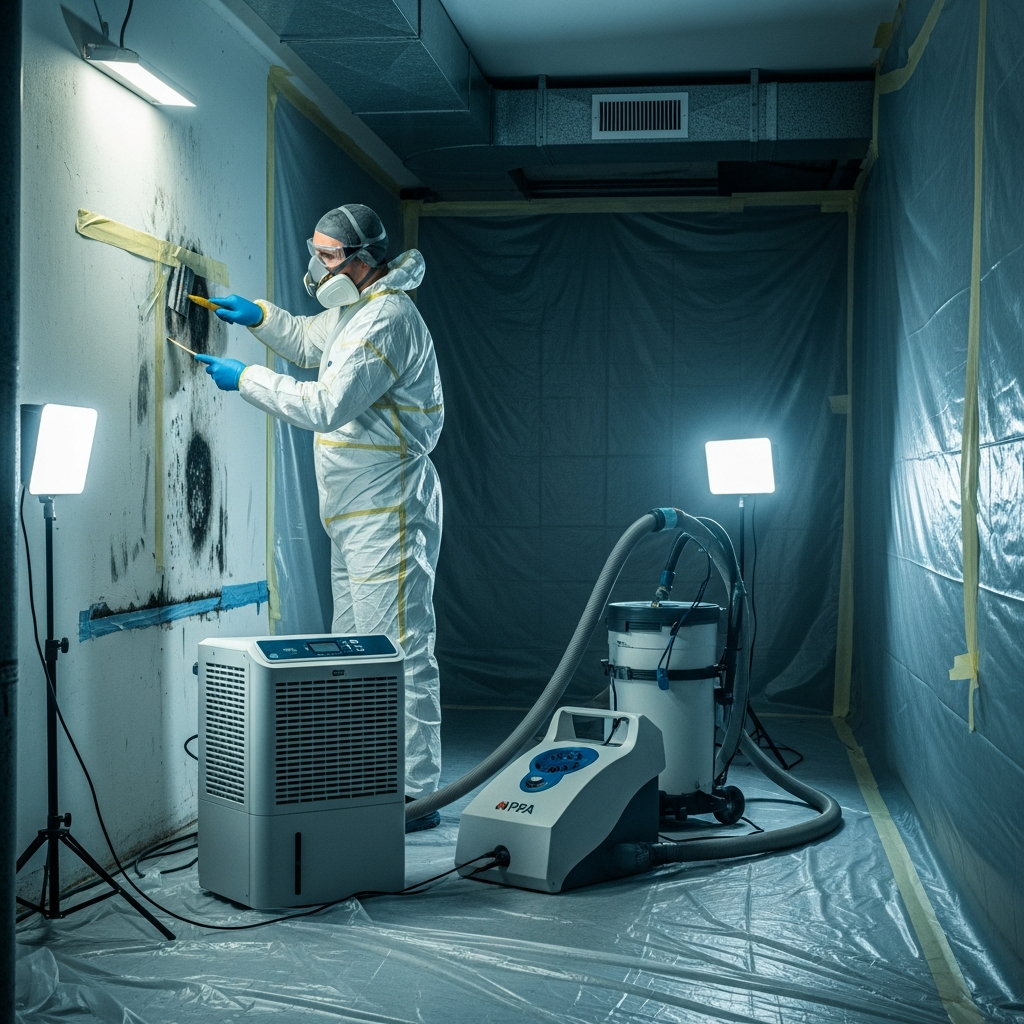
Even if you feel fine, treat remediation like a construction and cleaning project combined. Dust, fragments, and spores generated during removal can irritate the eyes, skin, and respiratory tract. Children, older adults, and anyone with asthma or allergies may be more sensitive. Minimize exposure by isolating the work area, wearing proper personal protective equipment (PPE), and using HEPA filtration to capture fine particles. Avoid improvising with household vacuums or inadequate masks—they are not designed for this task.
Personal Protective Equipment You Should Use
- Respiratory protection: At minimum, a NIOSH-approved N95 respirator for small, contained projects; for larger or dustier work, consider elastomeric half-face respirators with P100 filters.
- Eye protection: Sealed goggles protect from debris and cleaning agents.
- Gloves: Nitrile or rubber gloves prevent skin contact with contaminants and cleaners.
- Protective clothing: Disposable coveralls or dedicated work clothing reduce cross-contamination; tape sleeves and ankles if working in dusty cavities.
- Foot protection: Work shoes you can clean thoroughly; use disposable booties for larger projects.
Dress before entering the work zone and remove PPE carefully to avoid contaminating clean areas. Dispose of single-use items in sealed bags and wash reusable gear according to manufacturer instructions.
Set Up Containment and Control Airflow
Containment prevents mold and dust from spreading into clean rooms. In a Bloomfield colonial with a finished basement, for example, the stairwell can funnel air—and spores—upstairs if not sealed correctly. Build a plastic barrier around the work area, seal off HVAC vents, and create a single, zipper-style entry if possible. Use negative air pressure within the containment when feasible so air flows from clean to dirty zones and not the other way around. Pair this with a HEPA-filtered air scrubber inside the containment to collect fine particles while you work.
- Lay sticky mats outside the entry to capture dust from shoes.
- Switch the central HVAC off while you disturb materials, or isolate returns and supplies fully.
- Keep doors and windows in adjacent spaces closed to stabilize pressure differentials.
Plan Your Removal Methods Carefully
Choose removal techniques that effectively eliminate colonized material without unnecessary demolition. Porous materials with embedded growth—like drywall, carpet padding, and some ceiling tiles—generally require removal and disposal. Semi-porous and non-porous materials—like framing lumber, concrete, and metal—can often be cleaned and saved if they are structurally sound.
- Score and cut drywall a few inches beyond visible staining to capture hidden growth.
- Bag debris inside the containment; use heavy-duty contractor bags and twist-tie or tape them shut.
- Use gentle, controlled demolition methods to limit dust; avoid aggressive grinding unless necessary.
- Keep a spray bottle of water or cleaning solution handy to lightly mist dusty surfaces and suppress particles.
- Label and track waste so it moves directly from containment to disposal without crossing clean rooms.
Use only cleaners appropriate for the surface. Many professionals favor a sequence of HEPA vacuuming, damp wiping with a detergent, targeted antimicrobial application where appropriate, and a final HEPA vacuum. Harsh chemicals are not always necessary, and strong fragrances do not indicate cleanliness. The goal is to remove contamination rather than mask it.
Best Practices for Cleaning and HEPA Filtration
Cleaning is a multistep process. Start with source removal—cut out the damaged carpet or drywall. Then conduct a first pass with a HEPA vacuum to capture loose spores and dust. Next, use a mild detergent or specialized cleaner to wipe surfaces, working from clean to dirty and top to bottom. For wood framing, a careful scrub followed by a rinse and thorough drying is key. Avoid saturating materials; too much water adds drying time and risk. After wiping, perform another HEPA vacuum to collect any dislodged particles. Many crews also run a HEPA air scrubber continuously during and after work to polish the air.
Do not forget the little details: the backside of baseboards, the undersides of stair treads, and the interior corners of closets. Wherever dust settles, spores can settle too. Replace filters in your home’s HVAC system once the job is complete and use a high-efficiency filter during the first weeks after remediation.
Drying to the Proper Moisture Targets
Drying completes the job. Even the best cleaning cannot overcome continued dampness. Use moisture meters to compare suspect building materials to known dry baselines or to unaffected areas. In Bloomfield’s humid summer months, a dehumidifier in the basement or crawlspace can speed the process and help you maintain targets. Air movers can be helpful inside containment after removal is complete, but do not run them during demolition because they may spread dust. If reaching stable moisture levels proves difficult, or if you do not have the equipment to measure progress, consider engaging a professional for targeted support; a qualified team that focuses on mold remediation will know how to combine airflow, dehumidification, and heat to achieve safe, stable conditions.
Prevent Cross-Contamination During and After Work
Cross-contamination can undermine a carefully executed project. Keep a clean/dirty boundary and minimize foot traffic between zones. Carry debris out along preplanned routes that are protected with plastic or easily cleaned runners. Wipe down tools before removing them from the work area. Bag and tag cloths and disposable wipes. Once work is complete, conduct a meticulous cleaning of adjacent spaces: damp-dust horizontal surfaces, vacuum with a HEPA-filtered machine, and change HVAC filters.
- Shower and change clothes promptly after completing work.
- Wash reusable gloves and goggles per manufacturer guidance.
- Store dehumidifiers and air movers dry and clean to avoid microbial growth on equipment.
Verification: How to Know the Area Is Ready
Verification is more than a quick glance. A safe, successful remediation area should be visibly clean, smell neutral, and measure dry relative to baseline readings. If you used a containment with negative pressure and HEPA scrubbers, allow the air to turn over several times after final cleaning before dismantling plastic barriers. Visual inspections under bright lighting, white-glove style checks of ledges, and spot moisture checks provide confidence. Some households also choose third-party verification for peace of mind, especially if sensitive individuals live in the home or if the project was extensive.
Protecting Your Family While Work Is Underway
When remediation occurs in an occupied Bloomfield home, protect living spaces and routines. Keep children and pets out of the work area at all times. If work is in a central room or the kitchen, stage a temporary area for meals and supplies in another part of the house. Use portable air purifiers with HEPA filters in bedrooms or frequently used rooms away from the work area to keep overall dust levels down. Communicate daily start and end times, and post signs on containment to avoid accidental entry.
- Relocate porous items like upholstered furniture and curtains from nearby rooms during dusty phases.
- Launder bedding and frequently used textiles after the project ends to remove residual dust.
- Open windows for fresh air only after containment is removed and when outdoor humidity is moderate.
Special Considerations for Older Bloomfield Homes
Many Bloomfield homes were built before lead paint and asbestos regulations changed how building products are made and handled. If you suspect lead-based paint or asbestos-containing materials, do not disturb them without proper testing and controls. Cutting into plaster or old vinyl flooring, for instance, may require specialized protocols. In such cases, pause and bring in professionals to test and plan safe removal. It is better to wait a day for clarity than to unfold an avoidable hazard.
When to Call in Professional Help
Some projects are simply too large, complex, or sensitive for a DIY approach. Consider calling in help when growth is widespread, when moisture involves sewage or greywater, when structural elements are affected, or when occupants are highly sensitive. Professional teams bring specialized tools—like negative air machines, calibrated moisture meters, thermal imaging, and HEPA vacuums—and follow established standards of care to manage contaminants safely from start to finish.
Frequently Asked Questions
Q: Can I just paint over mold with a stain-blocking primer? A: No. Primer can hide stains, but it does not remove contamination or stop growth. Address moisture, remove affected materials where needed, clean thoroughly, and dry to normal levels before any repainting.
Q: How long should containment and air scrubbers run? A: Keep containment until removal, cleaning, and drying are complete. Air scrubbers typically run throughout work and for a period afterward to allow multiple air changes; duration depends on room size and equipment capacity.
Q: Are bleach solutions the best cleaner for all situations? A: Not necessarily. Bleach can be harsh, may not penetrate porous materials, and can create fumes. Mechanical removal plus HEPA vacuuming and detergent cleaning are often preferred. Use antimicrobials where appropriate and follow label directions.
Q: What relative humidity should I maintain after remediation? A: Aim for 30% to 50% relative humidity. In Bloomfield’s summer months, dehumidification is often necessary, especially in basements and lower levels.
Q: Do I need testing before starting? A: Testing is not always required for small, clearly defined problems with obvious moisture sources. However, testing or third-party assessment can help clarify scope in complex or extensive situations and provide documentation for sensitive occupants.
Q: Is it safe to be home during remediation? A: Yes, if containment and airflow controls are set up properly and work is limited to a defined area. For large or central projects, consider staying elsewhere for comfort and reduced exposure.
Q: What if the smell lingers after cleanup? A: Persistent musty odors can indicate remaining dampness or residual dust. Reassess for hidden moisture, re-clean horizontal surfaces with HEPA vacuuming and damp wiping, and ensure adequate ventilation and filtration.
Q: How do I know when wood framing can be saved? A: If the wood is structurally sound and can be cleaned to a visibly mold-free condition and dried to normal moisture, it is often salvageable. Severely decayed or warped members may need replacement.
Q: Should I run the central HVAC during work? A: Generally, keep it off in the work zone or fully isolate vents to prevent spreading dust. Afterward, replace filters and run the system to stabilize temperature and humidity.
Action Steps for a Safer Home
Plan your project in phases: stop the moisture, prepare containment, remove and bag debris, clean with HEPA and detergent, dry to target levels, and verify results. Keep people and pets out of the work area, and use checklists to ensure no steps are missed. The effort you invest in preparation and protection pays for itself with cleaner results and fewer surprises.
Get Help Today in Bloomfield
If your project is larger than expected, involves vulnerable family members, or you simply want expert support from start to finish, reach out to a trusted local team for comprehensive mold remediation. With the right plan and careful execution, you can restore a healthier indoor environment and protect the comfort and value of your Bloomfield home for years to come.