
Maintenance Guide to Keep Bloomfield, New Jersey Homes Mold-Free After Remediation
Completing mold remediation is a major milestone, but long-term success depends on the habits and home upgrades that follow. In Bloomfield, New Jersey, seasonal humidity, sudden downpours, and snowmelt all test a home’s ability to stay dry. This maintenance guide shows homeowners how to protect their investment by controlling moisture, circulating air, and monitoring conditions year-round. With a proactive plan, you can preserve the clean, healthy environment you worked hard to restore.
The guiding principle is simple: mold needs moisture. Keep materials dry and indoor humidity stable, and spores have little chance to colonize. Home maintenance that addresses water outside, air movement inside, and rapid response to leaks is the difference between a one-time fix and a home that stays consistently comfortable. If you prefer help setting up systems or fine-tuning trouble spots, enlist a local specialist in mold remediation to calibrate your strategy for Bloomfield’s climate and your home’s unique layout.
Control Water at the Source: Exterior Priorities
Water that never reaches your foundation or walls is water you do not have to manage indoors. Start with the exterior and work inward. In neighborhoods with mature trees, gutters and downspouts clog quickly. When that happens, roof runoff spills over, soaks siding, and pools near the foundation—right where basements are most vulnerable.
- Clean gutters at least twice a year and after major leaf drops; verify downspouts extend several feet from the foundation.
- Use splash blocks or extensions to disperse water away from the home.
- Check grading; soil should slope away from the house to direct water downhill.
- Seal gaps around utilities, windows, and doors to prevent wind-driven rain from entering.
- Inspect roof flashing at chimneys, valleys, and skylights, especially after storms and freeze-thaw cycles.
Basement and Crawlspace Strategies
Basements in Bloomfield often serve as family rooms, home gyms, or storage. Keep them dry by combining bulk water control with humidity management. Even if you have never seen standing water, persistent dampness can encourage musty odors and mold activity on cardboard boxes, fabrics, and wood finishes.
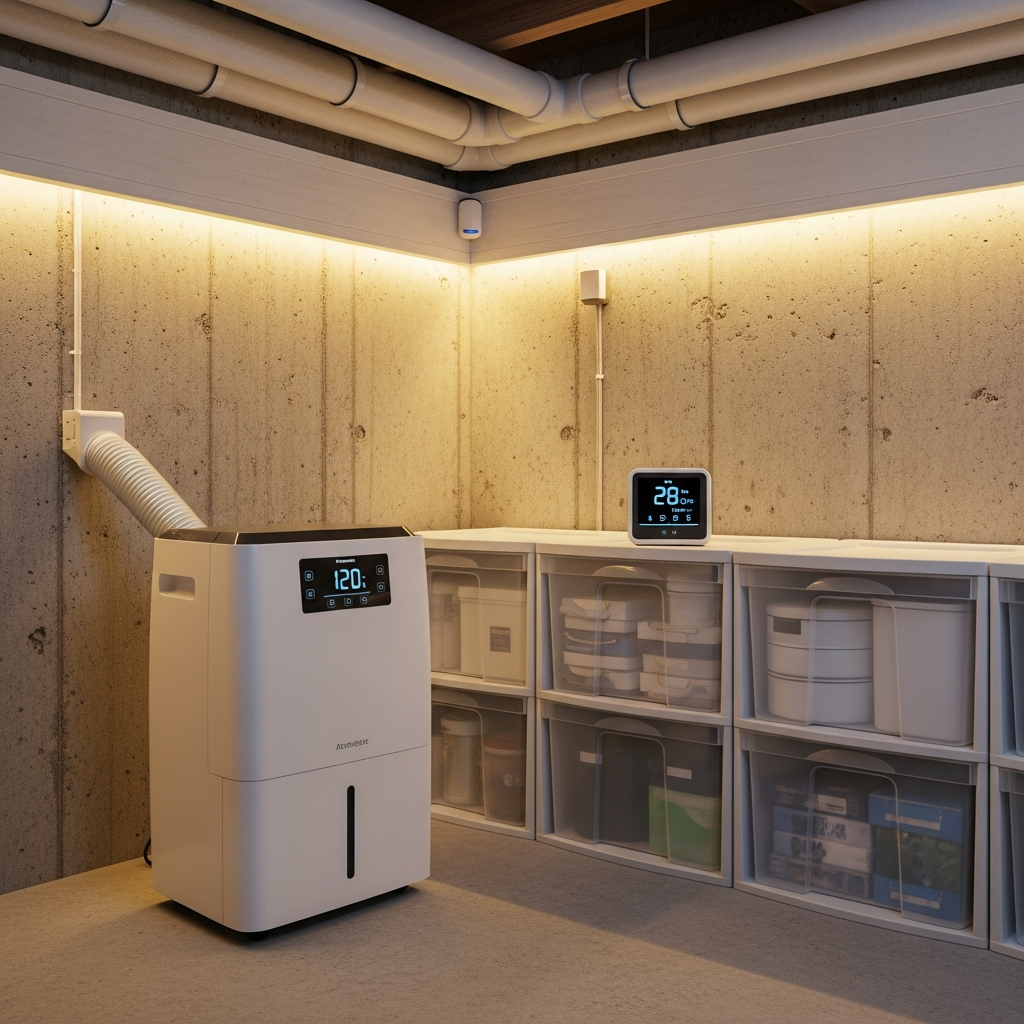
- Run a properly sized dehumidifier during humid months; target 30% to 50% relative humidity.
- Seal rim joists and penetrations to limit humid air infiltration; insulate where appropriate.
- Elevate stored items on shelves or pallets; avoid storing porous items directly on concrete.
- Insulate cold water lines to prevent condensation drips.
- Test sump pumps and battery backups before heavy rain; keep discharge lines clear and directed away from the foundation.
Bathrooms, Kitchens, and Laundry: Everyday Moisture Control
Daily routines generate a surprising amount of moisture. Showers, cooking, and laundry release steam that needs a clear path outdoors. Small upgrades and consistent habits keep humidity from accumulating in corners and closets.
- Vent bathroom fans outdoors and use them for 20 to 30 minutes after showers; consider timers or humidity-sensing switches.
- Use range hoods that exhaust outside; run them during cooking and for a few minutes afterward.
- Dry laundry fully before putting it away; repair dryer vents that leak or crush behind the unit.
- Seal backsplash and countertop joints; fix small plumbing drips promptly to prevent cabinet damage.
HVAC Maintenance and Filtration
Your HVAC system is the home’s circulatory system. Keep it clean and tuned so it moves air efficiently and controls humidity. Change filters on schedule and choose a higher-efficiency option compatible with your system. Service technicians should verify that condensate pans and drains are clear—clogs can overflow and create hidden wet spots inside air handlers or nearby closets.
- Replace filters regularly based on manufacturer guidance and household conditions.
- Have the system serviced seasonally to check airflow, refrigerant charge, and condensate management.
- Seal obvious duct leaks to improve efficiency and reduce unfiltered air entry from attics or basements.
Materials and Finishes That Resist Moisture
Where dampness is hard to avoid—bathrooms, basements, entryways—choose materials that tolerate occasional moisture and dry quickly. This reduces the risk of surface growth and makes routine cleaning more effective.
- Use tile, sealed concrete, or moisture-resistant flooring in lower levels prone to humidity.
- Choose mold-resistant drywall or cement board in shower surrounds and bath areas.
- Seal grout and caulk joints regularly to prevent water intrusion.
- Opt for washable paints with low permeability where appropriate.
Smart Monitoring and Early-Warning Tactics
Early detection prevents minor issues from becoming major damage. Affordable sensors and simple routines make a big difference. A weekly walk-through can reveal a slow leak before it becomes a soaked wall or damaged flooring. Train the household to notice and report musty odors promptly; they are often the first sign of hidden dampness.
- Use hygrometers in basements and problem rooms to track relative humidity.
- Install leak sensors under sinks, behind toilets, near water heaters, and at HVAC air handlers.
- Record seasonal baselines for humidity and moisture so deviations are obvious.
- Inspect after storms, thaw cycles, or plumbing work to confirm conditions remain dry.
Cleaning Habits that Support a Healthy Home
Dust is more than a nuisance; it is a carrier for spores and allergens. Regular, efficient cleaning minimizes what mold needs to settle and thrive. HEPA-filtered vacuums and damp dusting are especially effective at capturing fine particles that ordinary methods can miss.
- Vacuum carpets and rugs with a HEPA-filtered machine on a consistent schedule.
- Damp-dust horizontal surfaces rather than dry-dusting to avoid scattering particles.
- Wash or replace shower curtains and liners; clean exhaust fan grilles periodically.
- Launder bedding and washable textiles regularly to reduce allergens.
Respond Rapidly to Leaks and Spills
Time is the most important variable in preventing mold after a leak. The first 24 to 48 hours are critical. Keep a small emergency kit ready: towels, a wet/dry vacuum, plastic sheeting, tape, and a moisture meter. Stop the water, protect adjacent areas, and start drying immediately. If materials remain damp beyond a day or two, or if you see signs of wicking into walls or floors, escalate your response.
- Shut off water at the source and contain the affected area quickly.
- Extract standing water and lift or remove soaked rugs and mats to speed drying.
- Set up fans and dehumidifiers, then monitor moisture with a meter to ensure progress.
- Document the incident with photos and notes to guide any follow-up work.
Seasonal Maintenance Calendar for Bloomfield Homes
Organize tasks by season to stay ahead of weather-related risks. Spring and fall are ideal times to service gutters, roofing, and exterior seals. Summer requires vigilant humidity control. Winter emphasizes insulation, condensation management, and monitoring for ice dams.
- Spring: Clean gutters, test sump pumps, inspect caulk and flashing, check grading after thaw.
- Summer: Run dehumidifiers, verify bathroom and kitchen ventilation, watch for basement condensation, and maintain HVAC filters.
- Fall: Clear leaves from gutters and yard drains, extend downspouts, seal exterior gaps, and prepare backup power for sump pumps.
- Winter: Monitor for window condensation and cold corners; use bath fans reliably; check attics for signs of ice dams or frost.
Aftercare in Areas That Were Remediated
Spaces that previously hosted mold need extra attention during the first months after remediation. Keep them clean, maintain humidity targets, and revisit moisture-vulnerable details like window seals or foundation walls. If odors return or moisture readings drift upward, intervene early. This is also the time to evaluate whether design changes—like adding a drain tile or improving ventilation—might create a more resilient space.
- Recheck moisture in previously affected materials at regular intervals.
- Replace HVAC filters more frequently during the first few months.
- Consider portable HEPA air purifiers in bedrooms or living spaces near the remediated area.
When to Bring in Professional Help
Even the best maintenance plan cannot eliminate every risk. If you find widespread dampness, repeated leaks, or musty odors you cannot trace, consider enlisting professional support. Specialists bring diagnostic tools—like thermal imaging and advanced moisture mapping—and can redesign drainage, ventilation, or dehumidification strategies. Professional follow-up is especially helpful in older homes with complex assemblies or when health sensitivities are a concern. For a tuned plan that accounts for Bloomfield’s climate and your home’s architecture, a provider focused on mold remediation can help you make durable improvements.
Frequently Asked Questions
Q: What indoor humidity should I target year-round? A: Keep relative humidity between 30% and 50%. In Bloomfield summers, dehumidifiers often run daily; in winter, ensure ventilation prevents condensation in cold corners.
Q: How often should I change HVAC filters after remediation? A: Replace them more frequently for the first two to three months, then follow the manufacturer’s schedule adjusted for pets, occupancy, and sensitivity levels.
Q: Are portable dehumidifiers enough for a basement? A: Many basements do well with properly sized units, but larger or very damp spaces may require multiple units or integrated solutions. Monitor results and adjust as needed.
Q: What signs suggest a hidden leak? A: Persistent musty odors, localized high moisture readings, bubbling paint, swollen trim, or recurring spots after cleaning indicate hidden dampness that needs investigation.
Q: Can I store cardboard in the basement? A: It is better to use plastic bins with tight lids. Cardboard absorbs moisture and can harbor growth when humidity spikes.
Q: Do air purifiers prevent mold? A: HEPA purifiers reduce airborne particles, including spores, but they do not control moisture. Use them as a supplement to humidity and source control.
Q: How soon should I act after a spill or leak? A: Immediately. Extract water, start drying, and monitor with a moisture meter. The first 24 to 48 hours are critical to prevent colonization.
Q: Should bathroom doors be open or closed after showers? A: Close the door while running the exhaust fan during and after showers to capture humid air, then open once humidity normalizes.
Keep Your Home Resilient
Maintenance is an ongoing partnership between your home and your habits. By keeping water out, humidity down, and airflow moving, you preserve the gains made during remediation and keep living spaces comfortable and healthy. If you would like help tailoring a long-term plan, schedule a consultation with a local team experienced in mold remediation who can optimize prevention strategies for Bloomfield’s climate and your home’s unique needs.
Protect Your Investment and Peace of Mind
Ready to lock in the results of your cleanup and enjoy a healthier Bloomfield home year-round? Connect with trusted professionals for targeted maintenance planning, follow-up checks, and proven prevention through expert mold remediation. With consistent care, you can keep mold at bay and comfort levels high through every season.