
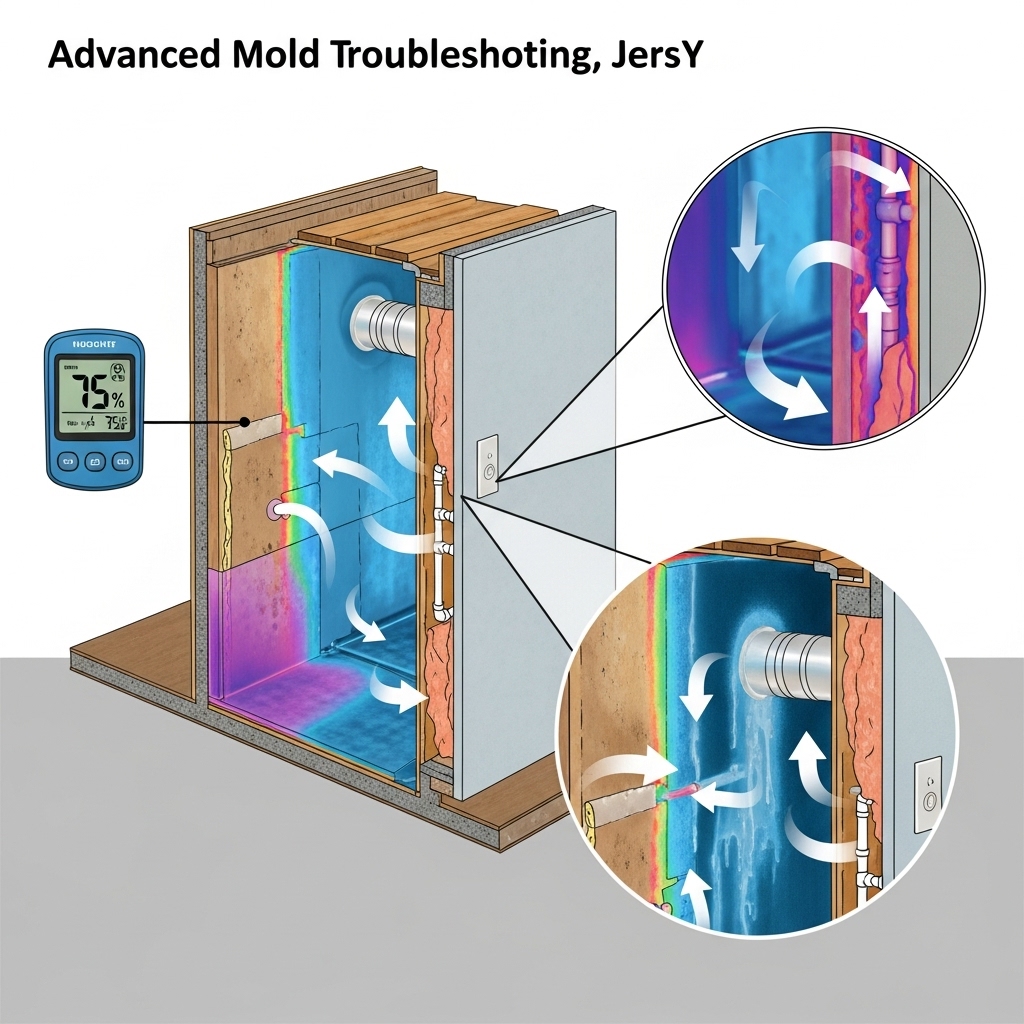
Most homeowners can handle a small area of surface mildew with basic cleaning and better ventilation. But some situations are stubborn, puzzling, or keep returning even after careful work. This advanced troubleshooting guide focuses on those persistent problems in Bloomfield, New Jersey homes—recurring odors, hidden moisture, HVAC-related spread, and mysterious staining that resists ordinary fixes. If you want reinforcements at any stage, seeking expert mold removal support can speed up diagnosis and help you resolve the root cause rather than chasing symptoms.
What makes advanced cases challenging is not the existence of mold spores—they are everywhere—but the complex conditions that let colonies establish and reappear. Successful troubleshooting requires a combination of detective work, measurement, targeted removal, thorough drying, and preventive modifications that change the building’s behavior.
Symptom Clusters and What They Mean
Start by grouping observations into clusters. For example, a musty odor that intensifies after showers points to bathroom ventilation. Odor after rain implicates exterior drainage or foundation seepage. A smell concentrated near supply vents can indicate duct or coil contamination. Staining that spreads along a ceiling below an upper-floor bath suggests a slow plumbing leak or condensation in a chase. By clustering symptoms, you can narrow the investigation and avoid random trial-and-error.
Hidden Moisture Pathways
Advanced cases often involve pathways that are easy to overlook:
- Capillary wicking in masonry that dampens baseboards and drywall in contact with exterior walls.
- Intermittent plumbing drips that evaporate quickly but keep nearby cavities moist.
- Condensation in uninsulated chases where warm, humid air meets cold surfaces.
- Backdrafting of moist air from bathrooms or kitchens due to pressure imbalances.
- Window frames that trap condensation, wetting sills and the surrounding drywall.
Use moisture meters to compare readings across suspected areas and thermal imaging to identify cold zones where condensation is likely. Keep a log of humidity levels during different weather conditions to reveal patterns.
Containment and Airflow Nuances
In complex scenarios, containment must adapt. If odor emanates from a wall cavity, cutting a small inspection opening inside containment can confirm conditions before broader removal. Direct airflow so that it exits to the outside, not into hallways. Avoid positive pressure in the work area; it can push particles into adjacent rooms. If work occurs near returns, shut down the HVAC or isolate affected ducts to prevent distribution.
Selective Demolition Strategies
Advanced troubleshooting is as much about what you do not remove as what you do. Target removal to areas with elevated readings or visual damage, but avoid unnecessary demolition that increases dust and rebuild effort. When removing baseboards, inspect behind for staining or dampness and check the bottom edge of drywall. Where tile or stone is installed, examine backer boards and seams for signs of intrusion.
Persistent Odor After Cleaning
Odor remaining after thorough cleaning often signals hidden moisture or residues in porous materials. Inspect carpet tack strips, subfloor edges, and the back side of trim. Consider the underside of stairs and the void beneath shower curbs. Sometimes a small, overlooked area drives the entire odor perception. Continue dehumidification, re-clean surfaces, and expand inspection until the source is found.
HVAC-Related Complications
When supply vents, returns, or coils are near affected areas, particles can enter the airstream. Replace filters during and after remediation. If odor is most noticeable when the system runs, investigate the coil, drain pan, and nearby insulation. Ensure that return cavities are properly sealed and lined where required. Ducts running through damp basements can also pick up odor; keeping the surrounding air dry is part of the solution.
Bathrooms and Wet Rooms
Bathrooms generate moisture daily. Ensure fans are sized correctly, run during and after showers, and discharge outdoors. Reseal grout and caulk, and inspect areas around tub flanges and shower niches. If a vanity hides a slow drip, remove the back panel to inspect. In older installations, water may bypass tile through microscopic cracks; monitor over time and repair as needed.
Basements and Foundations
In Bloomfield, basements often require sustained dehumidification during warm months. Evaluate exterior drainage and extend downspouts. Inside, consider raised subfloor systems or area rugs rather than wall-to-wall carpet. Seal small cracks where appropriate and monitor for efflorescence, which indicates moisture movement through masonry. If you see consistent dampness along a particular wall after storms, track the weather and your indoor readings to correlate the pattern.
Material-Specific Tactics
- Drywall: Cut beyond staining to a clean edge; inspect the back side for discoloration and odor.
- Insulation: Remove any damp or musty insulation; it is difficult to clean and dries slowly inside cavities.
- Wood framing: Clean thoroughly and allow extended drying. If the wood is soft or crumbling, replacement may be needed.
- Concrete and masonry: Clean, dry, and control humidity. Consider surface sealing as part of a broader moisture strategy.
- Cabinetry: Inspect toe kicks and backs; hidden areas can harbor residues long after visible surfaces look clean.
Verification Beyond the Visual
Visual cleanliness matters, but advanced troubleshooting looks for stable conditions over time. Revisit the area after several days of normal living. If odor returns with showers or rain, your moisture control needs refinement. Measure humidity during different weather events, and log readings to confirm that interventions are working.
Project Management for Complex Cases
Set milestones: initial containment set-up, targeted demolition, moisture control verification, cleaning completion, drying milestones, and final verification. Document each phase with photos and notes. This discipline keeps the project on track and helps you decide when it is safe to rebuild.
When to Escalate
Escalate when the affected area grows, when hidden cavities keep showing damp readings, or when odor persists despite meticulous cleaning and drying. At that point, it is prudent to bring in specialized mold removal professionals who can deploy advanced tools and provide the extra labor and containment needed to resolve the issue fully.
Prevention Through Design and Habits
- Ventilation: Use timers on bath fans and ensure kitchen range hoods are used during cooking.
- Humidity control: Operate dehumidifiers in basements during humid months and maintain consistent indoor conditions.
- Exterior management: Keep gutters clean, extend downspouts, and maintain grading that moves water away from the foundation.
- Material choices: Favor finishes that resist moisture and clean easily in areas prone to dampness.
- Routine inspection: Check under sinks, around appliances, and near windows for early signs of moisture.
Frequently Asked Questions
Why does mold recur after a seemingly successful cleanup? Recurrence indicates a lingering moisture source, inadequate drying, or hidden contamination in porous materials. Reinspect, measure, and address the underlying pathway.
Do I need to open walls to solve persistent odor? Sometimes. If measurements or patterns point to a cavity, a small, controlled opening within containment can confirm conditions and guide targeted removal.
What role does the HVAC system play in advanced cases? HVAC can distribute particles or amplify odors if returns or ducts are near affected areas. Replace filters, inspect coils and drain pans, and ensure ducts are clean and properly sealed.
How long should I run a dehumidifier after remediation? Continue until readings stabilize and odors are gone. In basements, ongoing use during humid seasons is a practical long-term strategy.
Can materials be salvaged after repeated events? It depends on the material and the extent of impact. Non-porous surfaces clean well; repeatedly damp porous materials often need replacement to ensure a lasting solution.
Take Control of Persistent Problems
Advanced cases can be solved with a disciplined approach that combines measurement, targeted removal, careful drying, and preventive upgrades. When you are ready for extra assurance and speed, coordinate with experienced mold removal help and restore a fresh, stable indoor environment in your Bloomfield home.