
Bloomfield, New Jersey homeowners face a blend of weather patterns that can feed indoor mold—from humid summers to stormy shoulder seasons that push moisture into basements, attics, and behind walls. This complete guide walks you through identification, safety, containment, cleaning, and long-term prevention so you can restore healthy indoor air with confidence. To start on the right foot, use careful assessment, put safety first, and, when needed, turn to trusted local experts for thorough mold removal. With a clear plan, disciplined technique, and follow-through, you can stop mold at its source and prevent it from returning.
Know the Enemy: What Mold Needs to Thrive
Mold requires moisture, a food source, and the right temperature. In homes, cellulose-based materials like drywall and wood offer ample food, and everyday activities such as showering, cooking, and doing laundry add humidity. Condensation collects on cold surfaces, leaks wet framing, and flooding leaves lingering moisture. In Bloomfield, older basements, tight window assemblies, and insufficient ventilation often allow dampness to persist. Understanding these fundamentals clarifies why mold often appears near bathrooms, laundry rooms, mechanical spaces, and the lower corners of exterior walls. Once you see the pattern, prevention becomes much easier, because it centers on controlling moisture rather than simply scrubbing stains.
Health Considerations and Household Readiness
Before you begin any mold work, think about the people in your home. Some individuals are uniquely sensitive to spores and microbial fragments, and even healthy occupants can experience irritation when mold is disturbed. Plan the work for times when occupants can avoid the immediate area. Consider using a separate entrance if the affected space is in the basement to reduce traffic through living areas. Prepare a cleanup route to prevent tracking debris into clean rooms. Safe work reduces stress, and a calm, methodical pace typically leads to better, cleaner outcomes.
Initial Inspection: How to Map the Problem
Use your eyes, nose, and hands to identify the extent of the issue. Look for stained drywall, swelling baseboards, peeling paint, or fuzzy growth along edges and corners. Musty odors often point to concealed moisture behind paneling, under flooring, or around window wells. Check plumbing connections under sinks, behind toilets, and at appliances. Examine exterior drainage: downspouts should discharge water far from the foundation, and gutters must flow freely. Make a rough diagram of the affected areas and possible moisture sources. If your home has a history of seepage, note where it appears after heavy rain; this record will guide both removal and prevention.
Deciding Between DIY and Professional Help
Scope and complexity determine the best path. Small, contained patches on non-porous surfaces may be handled safely with basic PPE and careful technique. Larger areas, strong odors across multiple rooms, hidden reservoirs behind finishes, or growth within HVAC systems are often better handled by trained professionals. If occupants are especially vulnerable or if water originated from unsanitary sources, expert support is recommended. Professional teams bring specialized containment, filtration, and verification protocols, making professional mold removal a practical choice when safety and completeness are priorities.
Safety Gear and Workspace Preparation
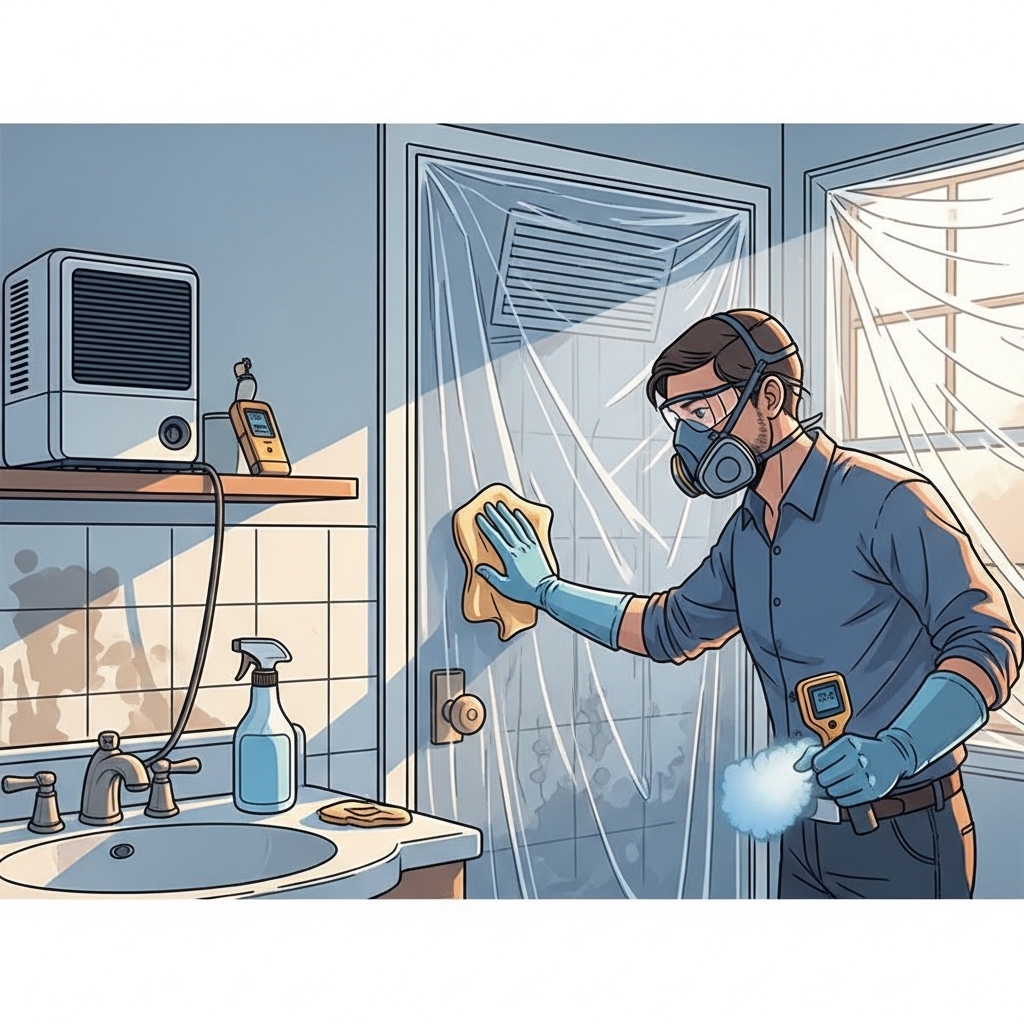
Protective measures reduce risks. Use a suitable respirator, eye protection, gloves, and clothing you can wash immediately. Close doors to isolate the area, seal off gaps with plastic, and create a single entry. Cover supply and return vents in the workspace to avoid spreading spores through the HVAC system. Stage tools and disposables inside the containment so you limit trips in and out. Keep a trash station ready with sturdy bags. Safe preparation streamlines the job and preserves air quality in the rest of the house.
Containment and Airflow Strategy
Containment ensures spores do not migrate to clean areas. Air should move from clean zones toward the workspace; avoid direct airflow that blasts colonies. If you use a portable air cleaner, set it up to circulate within containment so it captures particles without pushing air into the house. Protect floors along the access path and keep doors to the rest of the home closed. After the work, carefully remove barriers to avoid shaking loose dust. A mindful approach to airflow distinguishes safe remediation from risky cleaning that spreads contamination.
Removal Approaches by Material Type
Mold on non-porous surfaces like tile, metal, or glass is typically removed with thorough wiping and follow-up cleaning. Semi-porous materials such as sealed wood and concrete may need more persistent agitation and drying. Porous materials, including unsealed drywall, insulation, carpet, and ceiling tiles, frequently require removal and disposal when contaminated. When removing porous materials, cut a controlled margin beyond visibly affected areas and place debris directly into sealed bags. Work from cleaner to dirtier zones so you are not walking through contamination and tracking it back across cleaned sections.
Minimizing Aerosolization while Working
Keep movements deliberate and gentle. Mist lightly if appropriate to reduce dust, avoiding saturation that prolongs drying. When cutting drywall, score and remove small sections rather than yanking. Avoid power sanding or aggressive scrubbing that throws fragments into the air. Collect and bag debris as you go, and periodically wipe tools so they do not become a spread source. This measured approach protects your lungs, preserves the containment boundary, and sets you up for a smoother cleanup.
Cleaning Sequence: From Coarse to Fine
After source removal, focus on detail. Use appropriately filtered vacuuming to capture settled particles, then follow with surface cleaning of surrounding materials. Wipe horizontal surfaces in the workspace and just outside it, because dust often settles there. Repeat passes until wipes show minimal residue. Keep windows or controlled ventilation running after cleaning to encourage drying. Resist the urge to rush; thoroughness here prevents rework later. Once surfaces are clean and dry, you can evaluate whether finishes need replacement or touch-up.
Moisture Control: The Long-Term Solution
Mold returns when moisture returns. In Bloomfield’s climate, consider dehumidifiers for basements during damp months, exhaust ventilation in bathrooms and kitchens, and air sealing to reduce condensation on cold surfaces. Extend downspouts and adjust grading so water drains away from the foundation. Insulate cold pipes to curb sweating, and repair weatherstripping and caulking around windows and doors to eliminate drafts that lead to temperature mismatches. During remodeling, choose materials designed to resist moisture in high-risk rooms and ensure shower walls, floors, and backsplashes are properly detailed to shed water.
Post-Remediation Checks and Documentation
Look, smell, and measure. Surfaces should appear clean, moisture readings should match known dry references, and musty odors should be gone. If you used containment, remove it gently, working from top to bottom. Clean the path from the workspace to the exit and return rooms to normal function. Document what you did with photos and notes about moisture sources, materials removed, and steps taken to prevent recurrence. Good records help you track outcomes, communicate with future contractors, and reassure prospective buyers if you sell the home later.
Frequently Asked Questions
Q: Can I rely on paint or primer to seal out mold? A: Primers are finishing products, not remediation solutions. They should be used only after proper removal, cleaning, and drying. Sealing over mold traps the problem rather than solving it.
Q: How important is humidity control in Bloomfield? A: Very important. Seasonal humidity drives condensation and sustained dampness. Dehumidification, ventilation, and prompt drying after spills or leaks are key to keeping mold away.
Q: What if the smell persists after cleaning? A: Persistent odors suggest remaining contamination or lingering moisture. Reassess hidden areas, verify moisture readings, and consider an independent evaluation to confirm that the source has been fully addressed.
Q: Should I turn off my central HVAC during removal? A: Yes, in most cases. Keep the system off to avoid distributing spores. Cover vents in the workspace, and clean registers and nearby surfaces before you restart the system.
Q: Is attic mold different from basement mold? A: The organisms may be similar, but the causes differ. Attic issues often involve roof leaks or inadequate ventilation, while basements suffer from seepage and humidity. Tailor your prevention strategy to the location.
Putting It All Together
Safe, complete remediation is a process: identify the source, contain the area, remove contaminated materials, clean thoroughly, and establish moisture control. Take your time, protect occupants, and favor careful, low-dust techniques over speed. When the scope grows, when health concerns are present, or when hidden moisture complicates the picture, partnering with a proven local provider for mold removal ensures thorough results and peace of mind for your Bloomfield home. With a structured plan and disciplined execution, you can restore healthy air and keep it that way.
Get Help for Your Bloomfield Home Today
If you are ready to protect your family’s health and preserve your home, make a plan that addresses the moisture source and follows safe, step-by-step remediation. When you need expert support, choose a team that prioritizes containment, verification, and long-term prevention. Do not wait for humid weather or a heavy rain to make things worse—act now and schedule trusted mold removal so your Bloomfield home stays clean, dry, and comfortable all year.