
When mold shows up in a Bloomfield, New Jersey home, quick action and smart prevention can make the difference between a small weekend project and a larger remediation. Bloomfield’s climate, with humid summers, nor’easter-driven rain, and cold snaps that cause condensation, creates conditions where small moisture issues can quickly become larger problems. This guide explains practical steps you can take right away, what to avoid, and when to call in professionals. If time is short and you need trusted guidance from the outset, explore expert mold removal services that follow industry-standard remediation practices.
Safety First: Know When to Pause DIY
Not every mold problem is a DIY fix. If you see widespread growth, smell strong musty odors throughout multiple rooms, or have a recent history of significant water intrusion, the safest route is to consult professionals. Likewise, if anyone in the home has respiratory sensitivities, it is wise to avoid disturbing mold without proper controls.
For small, localized issues on non-porous surfaces, homeowners can often handle cleanup safely with careful technique. The key is to control dust, limit spread, and address the underlying moisture source so the mold does not return.
Find and Control the Moisture Source
- Inspect plumbing lines, shut-off valves, and traps for drips or corrosion.
- Check the basement cove joint and slab edges after heavy rain; look for dampness or white mineral staining.
- Verify bathroom fans vent outdoors and are used during and after showers.
- Confirm that gutters are clear and downspouts direct water at least several feet from the foundation.
- Use a hygrometer to monitor indoor humidity. Aim for 30–50 percent.
Moisture control is not optional. Without it, even the best cleaning will only offer temporary relief. Sometimes the fix is simple: re-caulking around tubs, adjusting downspouts, or running dehumidifiers. Other times, air sealing and better attic ventilation are needed.
Step-by-Step Approach for Small, Localized Areas
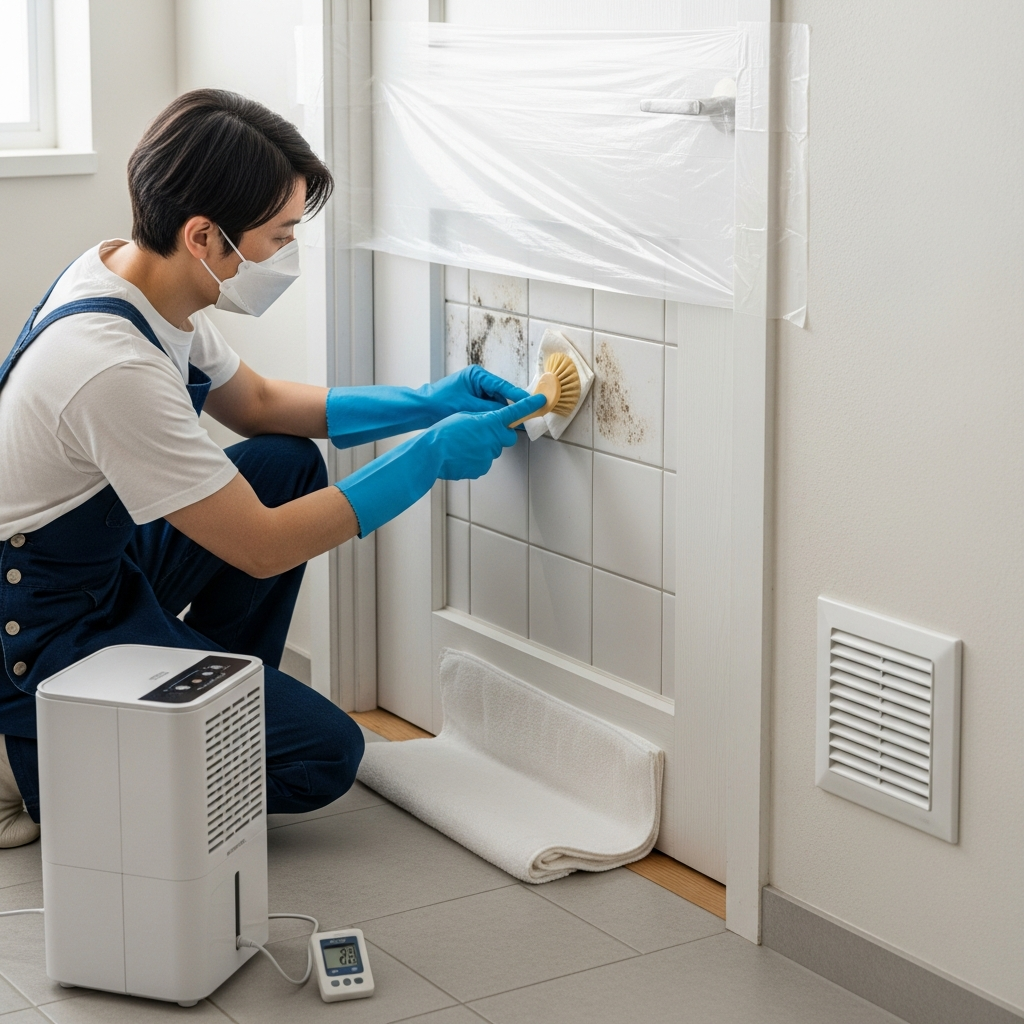
- Protect Yourself and Others: Wear appropriate protection and close doors to limit air movement. If possible, keep pets and sensitive occupants away.
- Limit Air Disturbance: Turn off fans or devices that could blow spores around. Close nearby HVAC registers.
- Contain the Work Area: In a small bathroom or closet, you can create a basic barrier by closing doors and placing a towel at the threshold to capture dust.
- Careful Removal on Non-Porous Surfaces: Wipe away visible growth with appropriate cleaning methods, working from the cleanest areas toward the affected spots.
- Discard Porous Items When Necessary: If small sections of drywall or ceiling tile are affected, replacement is often the most reliable solution.
- Dry Thoroughly: Use a dehumidifier and allow surfaces to dry completely. Moisture meters can help confirm dryness if you have access to one.
- Monitor and Prevent Recurrence: Keep an eye on the area for new spots or odors over the next few weeks.
Bloomfield-Specific Prevention Tips
- Basements: Consider a dedicated dehumidifier, especially in summer. Seal cracks and check the sump system before the rainy season.
- Attics: Ensure adequate ventilation and consistent insulation depth to prevent winter condensation on roof sheathing.
- Bathrooms and Kitchens: Use exhaust fans that vent outside and run them long enough to clear humidity after cooking or showering.
- Entryways: Wet boots and coats can raise humidity in a confined space. Provide drainage mats and airflow.
- Windows: Condensation on panes signals a humidity or insulation issue. Address drafts and consider storm windows or upgrades.
When the Problem Is Larger Than It Looks
Mold can hide behind baseboards, beneath vinyl flooring, and inside wall cavities after even a minor leak. If an area feels soft, or if paint bubbles and pulls away from drywall, there may be trapped moisture. In these cases, a professional inspection can save time and reduce the chance of repeated repairs. Expert teams use moisture meters, thermal imaging, and disciplined containment to open and dry areas safely.
As you research your options, keep a reliable reference on hand about professional mold removal to better understand the steps a reputable team will take, from source control and HEPA filtration to post-remediation verification.
Common Mistakes to Avoid
- Painting Over Mold: Paint can trap moisture and hide growth, allowing the problem to expand behind the surface.
- Skipping Containment: Even a small project can spread spores if you work without basic isolation of the area.
- Relying Solely on Fragrance: Air fresheners or deodorizers mask odors but do not solve moisture or contamination.
- Ignoring Attic Bath Fan Venting: Venting into the attic is a frequent cause of roof sheathing mold. Always vent outdoors.
- Waiting for “Dry Weather”: Moisture problems rarely resolve on their own. Early action is best.
Frequently Asked Questions
How do I know if the mold is dangerous? All mold requires attention because it indicates moisture problems. Some species produce allergens or irritants. The safest approach is to control moisture and remove contaminated materials following best practices.
Do I need lab testing? Testing is not always necessary for straightforward cases with visible growth and clear moisture sources. It may be recommended for hidden issues, sensitive occupants, or documentation.
Will cleaning products alone solve the problem? Not without moisture control. Dryness and ventilation are essential. Otherwise, growth can return even after thorough cleaning.
Can I run my HVAC during cleanup? It is better to minimize airflow that could spread spores. Close registers in the work area and consider pausing the system until cleanup is contained.
How can I prevent mold long term? Maintain gutters and grading, ventilate damp rooms, run dehumidifiers in basements, and respond quickly to leaks.
Take the Next Step Toward a Healthier Home
If you have reached the point where DIY steps are not enough—or you want confidence that the job is done right—partner with seasoned Bloomfield specialists who focus on moisture control, containment, and lasting results. To move forward with confidence, connect with trusted mold removal experts and protect your home for seasons to come.