
Advanced Steps for Mold Inspection in Bloomfield, New Jersey
When signs of moisture are subtle, intermittent, or concealed, an advanced inspection approach can reveal what a basic walkthrough might miss. Bloomfield’s mix of historic homes and updated properties presents a wide range of building assemblies and ventilation patterns, which means diagnostics must be adaptable and methodical. This guide details advanced steps, tools, and decision points so you can understand what top-tier inspections entail and how they translate into effective, lasting solutions. If you are evaluating providers, it helps to begin conversations with specialists offering comprehensive mold inspection services that emphasize building science and clear documentation.
Advanced inspections are not just about more gadgets; they are about using the right tools in the right sequence, interpreting data accurately, and correlating findings across disciplines. A sophisticated approach blends visual assessment, moisture mapping, airflow diagnostics, sampling when justified, and structured reporting that leads to actionable steps.
Pre-Assessment Intelligence
Before anyone brings a meter or camera into the home, a strong pre-assessment clarifies hypotheses. Inspectors review building history, renovation timelines, and occupant observations about odors, symptoms, or seasonal patterns. They identify known moisture events, from roof leaks to slow plumbing issues, and note whether previous efforts addressed symptoms rather than root causes. This background frames the on-site strategy, ensuring time and tools are directed where they matter most.
Moisture Mapping with Multiple Methods
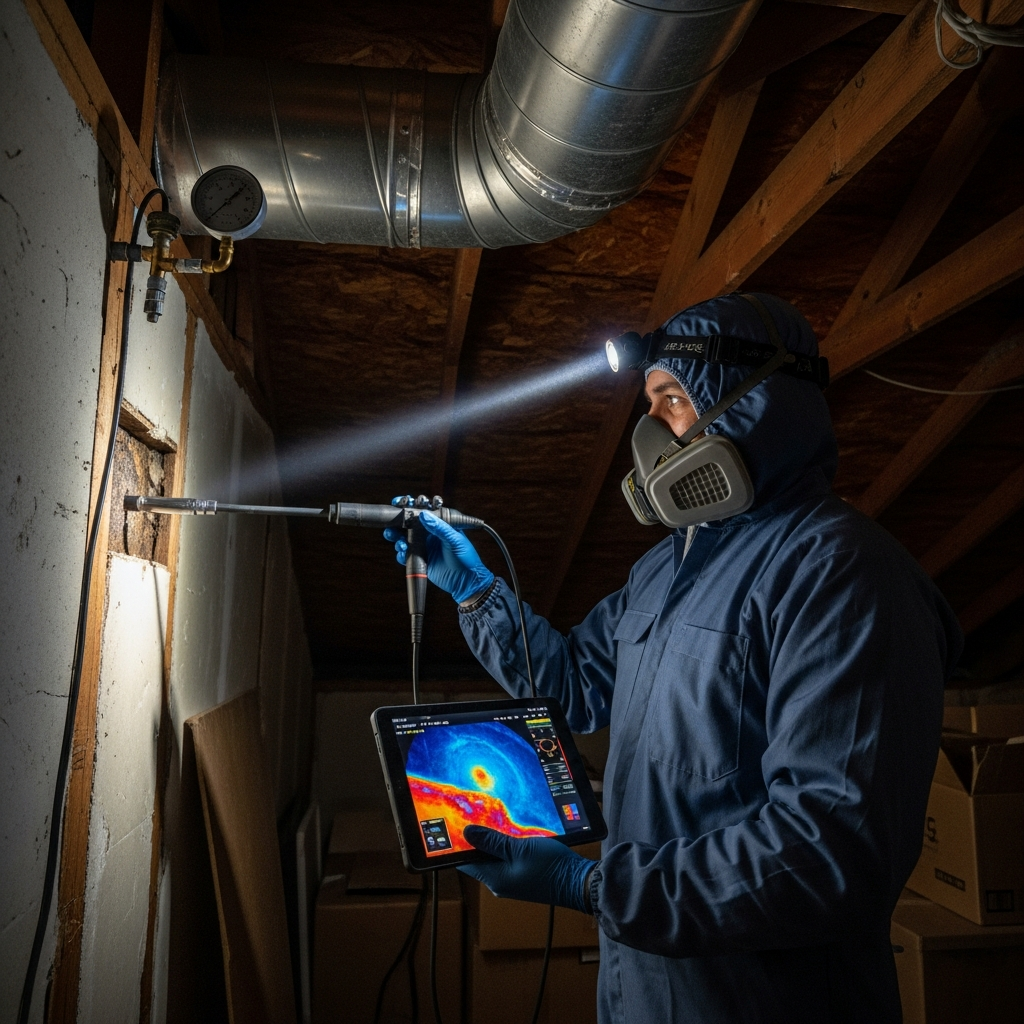
Moisture rarely stays put. It wicks through porous materials, condenses on cold surfaces, and travels along framing. Advanced inspections combine non-invasive moisture meters, thermal imaging, and strategic verification. Infrared thermography can spot anomalies—cooler areas that may indicate dampness—but it is the pairing with meter readings and building context that confirms significance. For example, a cool band under a window could signal missing insulation or wind washing rather than active moisture; meters and inspection of exterior flashing details help distinguish between the two.
Airflow and Pressure Diagnostics
Air carries moisture and spores. Understanding pressure differences between rooms, floors, and the outdoors is fundamental. Advanced inspections may evaluate how exhaust fans, range hoods, and HVAC operations influence pressure. If a basement is under negative pressure relative to the outdoors, humid air may be drawn in through cracks, sustaining mold-friendly conditions. Adjusting ventilation strategies, sealing bypasses, and confirming proper termination of exhaust ducts are all outcomes of this diagnostic lens.
Targeted Cavity Inspection
Where warranted, minimally invasive techniques allow a look inside cavities. Borescopes can reveal hidden staining, microbial growth, or wet insulation without large-scale demolition. Small access points near baseboards or behind removable plates can confirm suspicions raised by odors or moisture mapping. Any invasive step should be justified by evidence and performed with containment practices that prevent cross-contamination.
Sampling that Answers Specific Questions
Sampling is most valuable when it is designed to answer defined questions: Is the discoloration fungal? Is airborne spore concentration elevated relative to outdoors? Has remediation returned levels to a typical range? Advanced inspections specify sampling locations, types, and methods ahead of time. Chain-of-custody, calibrated pumps, and standardized time/flow settings ensure defensible results. Interpretation then weaves lab data with on-site evidence, avoiding overreliance on numbers without context.
Attic and Roof Envelope Analysis
Attics in Bloomfield homes often reveal the tug-of-war between insulation and ventilation. Advanced inspectors assess soffit intake, baffle placement, ridge vent continuity, and air sealing around penetrations. They also consider roof color, solar exposure, and local wind patterns that may influence moisture transport. Condensation stains on sheathing, even if old, are analyzed in light of current conditions to determine whether past issues persist or have been resolved.
Basement and Foundation Forensics
Below-grade spaces require a forensic mindset. Inspectors examine grading, downspout discharge zones, window well drainage, and interior signs like efflorescence lines that reveal historic water heights. They may track moisture migration through slab cracks or control joints, using meters to differentiate between surface dampness and deeper saturation. Recommendations can include drainage adjustments, sump maintenance, sealing strategies, and humidity management tailored to the building’s occupancy and mechanical systems.
HVAC Microbial Control
Advanced steps extend into the mechanical core of the home. Inspectors scrutinize coil cleanliness, drain pans, and insulation inside air handlers for signs of microbial growth. They assess filter specifications, replacement intervals, and whether air handlers are drawing in unconditioned, humid air from adjacent spaces. If ductwork runs through unconditioned attics or crawl spaces, insulation and air sealing become vital to prevent condensation and particulate intrusion.
Decision Trees and Prioritization
An advanced inspection culminates in a decision tree: If moisture source A is confirmed, implement corrective action 1; if symptoms persist, proceed to branch B for further verification. This structure prevents piecemeal fixes and aligns homeowners and contractors around a shared plan. Prioritization typically flows from water entry control to ventilation balancing to material remediation and, finally, verification testing when applicable.
Reporting that Drives Action
High-quality reports do more than describe problems—they direct solutions. Expect clear narratives, annotated photos, and moisture readings organized by location. Findings are paired with root-cause explanations and recommended actions. Where sampling occurs, lab summaries are translated into plain language. The report should also set expectations for timelines, limitations, and any areas that require monitoring over subsequent seasons.
Quality Assurance and Verification
Post-correction verification is a hallmark of advanced practice. Inspectors return to re-measure moisture, visually confirm that problem areas remain clean and dry, and, if used initially, repeat sampling to establish that conditions have normalized. Verification builds confidence that improvements are holding and supports documentation for future transactions.
Working with the Right Team
Advanced inspections often intersect with roofing contractors, plumbers, HVAC technicians, and remediation professionals. Coordinated communication prevents gaps and ensures that each specialist understands the moisture control goals. Midway through vendor evaluation, comparing providers who deliver thorough mold inspection services can clarify which teams offer the diagnostic depth and reporting clarity your home needs.
Frequently Asked Questions
Q: When is an advanced inspection necessary? A: When odors persist without visible mold, when prior remediation did not resolve issues, or when building complexity suggests multiple interacting causes.
Q: Do advanced inspections always include sampling? A: No. Sampling is used strategically to answer specific questions and should not replace thorough moisture and airflow diagnostics.
Q: Can data from winter apply to summer? A: Some insights carry over, but humidity dynamics change with seasons. Inspectors may recommend follow-up checks during different weather patterns.
Q: How disruptive are advanced steps? A: Most are non-invasive. Any cavity access is kept minimal and justified by evidence, with care taken to maintain cleanliness and containment.
Q: What if lab results seem confusing? A: Your report should interpret results in context, outlining what they do and do not indicate, and tying them back to practical next steps.
Elevate Your Inspection Strategy
If moisture mysteries are undermining comfort and confidence, it is time to pursue a more rigorous path. Choose a team that pairs building science with clear communication, coordinates with trades, and verifies success after corrections. For advanced diagnostics and actionable reporting, connect with specialists who provide comprehensive mold inspection services and bring clarity to even the most complex Bloomfield homes.