
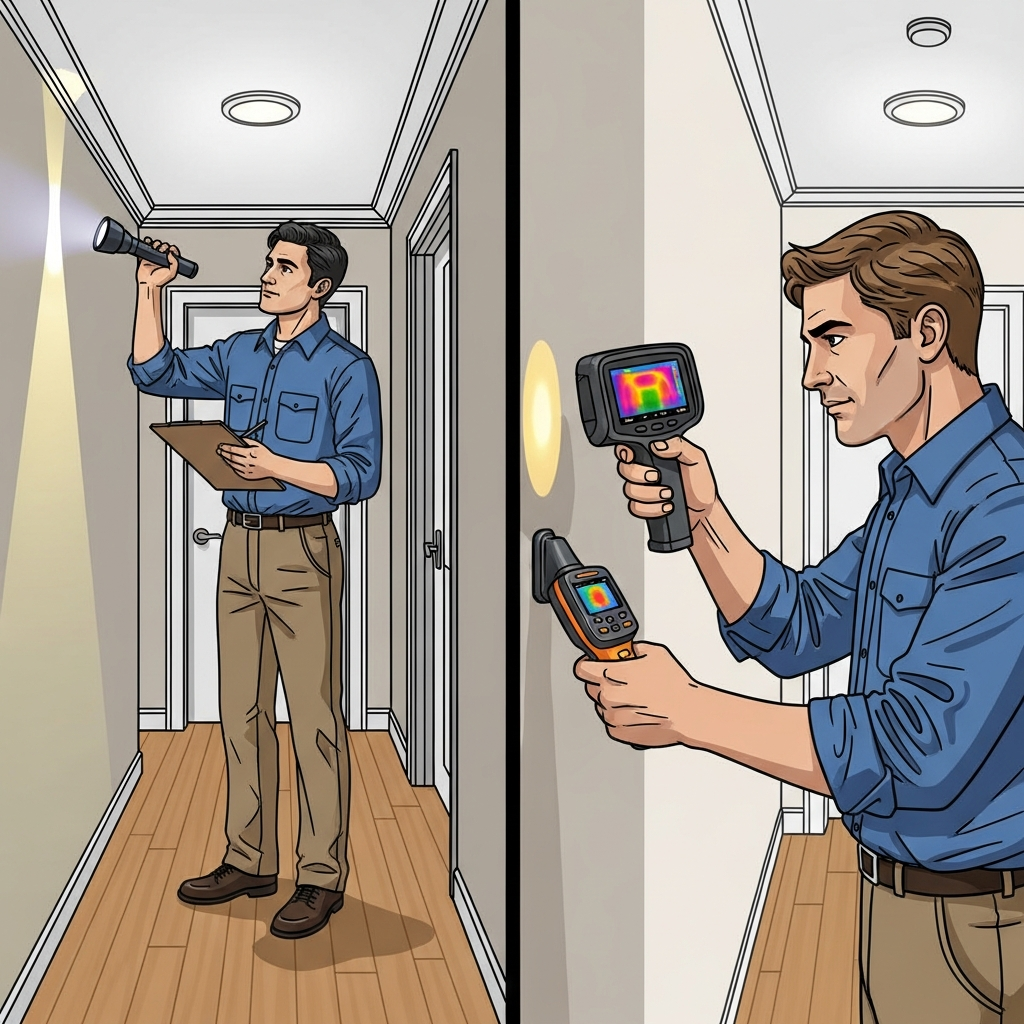
Introduction: Home Inspector Versus Mold Inspection in Bloomfield, New Jersey
When buying, selling, or maintaining a home in Bloomfield, it is common to schedule a general home inspection. But a generalist’s review and a specialized mold inspection serve different purposes. Understanding where each shines—and where limitations exist—will help you decide what you need, when you need it, and how to coordinate both for the best outcome. If moisture concerns, musty odors, or visible staining are on your radar, scheduling a professional mold inspection can turn uncertainty into a practical plan.
This guide outlines the differences in scope, tools, reporting, and outcomes so you can make informed decisions in any property scenario, from pre-listing checks to post-leak evaluations.
Scope: Broad Condition Survey vs. Targeted Moisture and Mold Assessment
A general home inspection examines overall condition and safety: structure, roof, plumbing, electrical, HVAC, and major appliances. The inspector identifies visible defects and safety concerns within a standard of practice and time-limited visit. By contrast, a mold inspection focuses specifically on moisture, humidity, and microbial concerns. It traces odor complaints, investigates staining, maps moisture in materials, and, when appropriate, uses sampling to confirm conditions or verify cleanup success.
Tools and Methods: Overlap and Specialization
- General tools: Both professionals rely on strong lighting, ladders, and basic moisture meters to document obvious conditions.
- Specialized diagnostics: Mold inspectors frequently employ thermal imaging, calibrated moisture meters, hygrometers, borescopes, and, when indicated, air, surface, or wall-cavity sampling. These tools help them pinpoint hidden dampness and evaluate indoor air conditions relative to outdoor controls.
- Focus on moisture: A mold inspection’s central objective is to locate and control moisture sources, then outline cleaning or removal of affected materials.
Reporting: Summary vs. Detailed Remediation Roadmap
A home inspection report summarizes the home’s overall condition with photos and explanatory notes tied to safety and maintenance. It rarely prescribes mold remediation protocols or provides lab-backed evidence unless a separate, specialized service is requested. A mold inspection report, on the other hand, typically includes room-by-room narratives, moisture readings, humidity context, and prioritized recommendations that begin with moisture source control, followed by cleanup and, when appropriate, verification sampling.
When to Choose Each Service
- Choose a general home inspection: For routine pre-purchase, pre-listing, or one-year warranty checks. You will gain a high-level overview of systems, safety, and maintenance needs.
- Choose a mold inspection: When musty odors persist, visible staining appears, a water event occurs, or a general home inspection flags moisture concerns that require deeper investigation.
- Choose both: In real estate transactions where moisture risk is suspected, pairing services provides a complete picture. The generalist covers broad condition and safety, while the specialist delivers a targeted plan for moisture and mold issues.
Real Estate and Property Management Contexts
In a competitive market, clarity reduces surprises. Buyers use mold inspections to quantify risk, while sellers use them to address issues proactively. Property managers rely on periodic assessments to confirm that reported odors, leaks, or humidity are resolved promptly and documented thoroughly. Coordinated communication among buyers, sellers, managers, and inspectors streamlines decisions and keeps projects on schedule.
Limitations to Keep in Mind
- Time constraints: General home inspections are time-limited, making deep moisture diagnostics unlikely unless additional services are added.
- Visibility: Neither professional can see through walls without minimally invasive access. Strategic wall-cavity screening is sometimes needed to confirm hidden conditions.
- Sampling context: Lab results make sense only when paired with strong visual and moisture evidence. Sampling without context can confuse more than clarify.
Why Specialization Matters in Bloomfield
Bloomfield’s climate and housing stock—older homes with plaster and lath, multifamily buildings with stacked bathrooms, and newer tight construction—create varied moisture pathways. Specialists who routinely evaluate these assemblies move faster, choose the right tools, and craft recommendations that reflect local realities such as basement humidity management, attic ventilation, and drainage improvements.
Coordinating Both Services Effectively
- Start broad if you are buying or selling: A home inspection identifies system-level issues, safety hazards, and maintenance needs.
- Deepen the focus for moisture: If the generalist flags dampness, odors, or staining, book a dedicated mold assessment to map moisture, consider sampling, and outline cleanup steps.
- Share information: Provide your mold inspector with the home inspection report, photos, and any leak history so the visit is as efficient and targeted as possible.
- Use reports strategically: Hand the mold report to remediation professionals or contractors so recommendations translate into action quickly.
Frequently Asked Questions
Q: Does a standard home inspection test for mold? A: Not typically. While general inspectors may note visible concerns or elevated humidity, specialized mold sampling, wall-cavity screening, and moisture mapping are separate services.
Q: If I only see stains, do I still need a mold inspection? A: Stains signal a moisture history but may not reveal the current status or full extent. A targeted assessment determines whether materials are still damp and whether cleanup or removal is appropriate.
Q: Can my general inspector take air samples? A: Some do, but sampling without a detailed moisture investigation can be misleading. A dedicated mold inspection provides the context needed to interpret results properly.
Q: Is a mold inspection disruptive? A: Most visits are minimally invasive. Inspectors may open small access points when evidence points to hidden dampness, prioritizing least-disruptive methods first.
Q: How do I choose between the two in a transaction? A: Start with a general home inspection, then add a mold inspection if moisture risk is suspected. This sequence delivers both a broad condition overview and a detailed plan for moisture and mold concerns.
Make the Right Choice for Your Bloomfield Property
General home inspections and specialized mold assessments are complementary, not competing. Use each for its strengths: broad condition and safety versus focused moisture diagnostics and cleanup guidance. If odors, staining, or leaks are on your mind, schedule a comprehensive mold inspection to protect your investment and maintain a healthy indoor environment.