
Introduction: What Professional Mold Inspection Services Deliver in Bloomfield, New Jersey
When dampness intrudes, the difference between guesswork and a clear plan is a professional evaluation. In Bloomfield, varied housing—from historic single-family homes to multifamily buildings—presents unique moisture challenges. Professional services bring building-science expertise, specialized tools, and a reporting process that prioritizes moisture control, surface cleanliness, and verification. If you want a reliable roadmap for action, scheduling a professional mold inspection is the first step toward protecting your property and your indoor air.
This guide explains what professional inspectors do, how they structure an investigation, and what you can expect from the final report so you can make decisions confidently.
Core Service Components
- Client interview and history: Inspectors start by learning where odors or staining appear, what water events have occurred, and how the building is used day-to-day. This context shapes the on-site strategy.
- Exterior evaluation: Gutters, downspouts, grading, roof penetrations, and window flashing are reviewed to identify water pathways before they reach interior finishes.
- Interior visual assessment: Rooms, closets, and mechanical spaces are inspected using strong lighting to find staining, bubbling paint, warped trim, or visible growth.
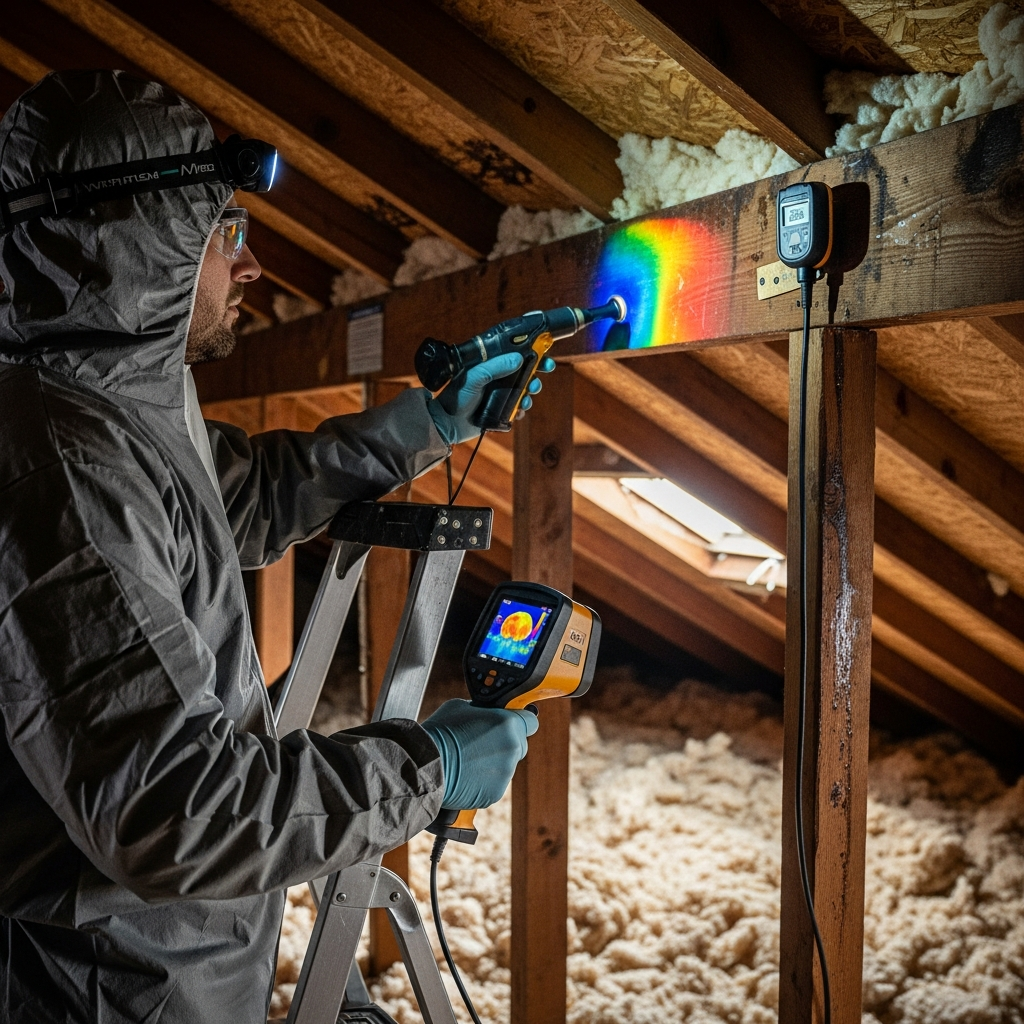
- Moisture diagnostics: Moisture meters and thermal imaging help locate damp building materials and hidden anomalies behind drywall, tile, or paneling.
- Humidity and temperature checks: Spot readings or short-term logging put indoor air parameters in context.
- Strategic sampling: When appropriate, air, surface, wall-cavity, or dust sampling corroborates visual and moisture findings and helps verify that cleanup has succeeded.
- Documentation and reporting: Photo-rich reports with room-by-room notes, moisture data, and prioritized recommendations turn observations into a step-by-step plan.
Specialized Tools and Techniques
Professionals tailor tools to the problem at hand. Thermal imagers reveal temperature differences that hint at moisture. Pin and pinless moisture meters quantify dampness in building materials. Hygrometers check indoor humidity. Borescopes allow limited, minimally invasive views inside cavities. Collectively, these tools help inspectors confirm or rule out hidden issues and choose the least disruptive strategies for further investigation or cleanup.
Sampling with Purpose
Sampling augments, but never replaces, a thorough visual and moisture assessment. Air samples compare indoor levels to outdoor control air to determine whether an indoor source is elevating airborne spores. Surface samples identify what is growing on a given area and whether it reflects a humidity problem, a past wetting event, or ordinary settled dust. Wall-cavity air screens help confirm whether hidden spaces require targeted remediation or can remain intact. Each sample should have a clear diagnostic goal tied to your concerns.
Local Knowledge for Bloomfield Buildings
In Bloomfield, basements, crawlspaces, and stacked bathrooms in multifamily layouts are frequent moisture hotspots. Attics with blocked soffits or bath fans terminating under the roof can trap humidity. Professional inspectors who understand these patterns can move quickly, evaluate likely failure points first, and deliver recommendations that match local building styles and seasonal weather.
Clear, Actionable Reporting
At the end of the process, you should receive a report that answers three core questions: Where is moisture getting in or being generated? What building materials or furnishings have been affected? What steps will restore and maintain healthy conditions? The most useful reports are practical documents you can hand to a remediation contractor, a building superintendent, or keep for your own maintenance plan.
When to Call a Professional
- After a water event: Roof leaks, pipe failures, dishwasher overflows, or sump pump issues can rapidly elevate indoor humidity.
- Persistent odors: Musty smells without visible staining often indicate hidden dampness that needs careful mapping.
- Real estate transactions: Buyers and sellers benefit from clarity when a general inspection flags moisture concerns.
- Post-cleanup verification: Independent confirmation that moisture targets and cleanliness have been achieved provides peace of mind.
What Sets Professionals Apart from DIY Efforts
- Holistic approach: Pros combine building history, visual cues, moisture data, and targeted sampling to create an integrated picture.
- Efficiency: Experience helps them sequence the inspection efficiently, reducing disruption while gathering robust evidence.
- Documentation: Their photographic records, diagrams, and data make it easier to communicate with contractors, insurers, or property managers.
- Objectivity: Independence from cleanup helps keep recommendations focused on best practices and real-world building science.
Preparing for Your Appointment
- Access: Clear space in basements, attics, and mechanical rooms; move items from under sinks and along basement perimeter walls.
- Notes: Prepare a list of concerns and any history of leaks or condensation, including seasonal patterns.
- HVAC: Install a fresh filter to create a clean baseline for airflow during the visit.
- Pets and occupants: Secure pets and, if sensitive individuals are present, minimize activity in areas where dust may be disturbed.
From Findings to Solutions
Professional inspectors do more than identify a problem; they show you how to fix it and keep it from returning. Expect moisture source control to come first—improved drainage, leak repair, ventilation upgrades—followed by cleaning or removal of affected materials as needed. For significant projects, post-remediation verification confirms that the objectives have been met before spaces are fully reoccupied and rebuilt.
Midway through your decision process, you may compare providers based on responsiveness, clarity, and sample reporting. Many Bloomfield homeowners prefer specialists who emphasize evidence-based protocols and deliver comprehensive documentation. For many, the most straightforward approach is to schedule a professional team focused on thorough mold inspection so they can act with confidence.
Frequently Asked Questions
Q: Will the inspector always take samples? A: Not always. Sampling is recommended when it will clarify hidden conditions, quantify airborne levels, or verify cleanup success. Otherwise, the focus may remain on moisture control and visual evidence.
Q: How long does the visit take? A: Single-family homes typically require a few hours on-site. Larger or more complex buildings and any laboratory analysis extend the overall timeline.
Q: Can I stay in my home during the inspection? A: Yes. Normal activity can continue, though it is smart to limit traffic in areas being examined or where access points are opened briefly.
Q: What will the report include? A: Expect clear photos, moisture readings, humidity context, and prioritized recommendations that address moisture sources first, then cleanup and verification steps.
Q: Do professionals work with property managers and HOAs? A: Yes. Coordinating access to common areas and communicating findings clearly is an important part of multifamily evaluations.
Q: Why is local experience important? A: Knowledge of common Bloomfield building assemblies, climate stresses, and frequent failure points speeds diagnosis and tailors recommendations to realistic solutions.
Take the Next Step in Protecting Your Bloomfield Home
Protecting your property starts with clarity. A professional evaluation provides the evidence and guidance you need to control moisture, clean effectively, and keep indoor conditions healthy over the long term. If you are ready to move from concern to a clear plan, schedule a comprehensive mold inspection and put expert insight to work for your home.