
Practical Mold Odor Removal For Bloomfield Homeowners
Mold odor is a warning light for the indoor environment. In Bloomfield, New Jersey, older homes, finished basements, and seasonal humidity can produce resilient musty smells that migrate through living spaces. While air fresheners provide a quick cover-up, lasting relief requires a strategic approach grounded in moisture control, targeted cleaning, and ventilation. With a clear plan, you can remove odors, safeguard indoor air, and prevent the problem from returning.
Start by understanding that odor is a symptom, not the root cause. Moisture—whether from leaks, spills, condensation, or humid air—creates the conditions where odor-producing microbes thrive. Your job is to track and eliminate those conditions. If you want a roadmap that aligns with professional methods, review reliable guidance on mold odor removal so you can prioritize the right steps in the right order.
Control Moisture First
Exterior water management sets the stage for success. Clean gutters and ensure downspouts discharge well away from the foundation. Adjust landscaping so water flows away from the house. After heavy rain, walk the perimeter to confirm you do not see pooling near the foundation or along window wells. Inside, monitor relative humidity and keep it below 50% using a dehumidifier during humid months. In bathrooms and kitchens, run exhaust fans during and after showers and cooking to clear moisture quickly.
Locate Odor Hotspots
Odors commonly originate in basements, bathrooms, under sinks, around AC air handlers, near water heaters, and behind washing machines. Use a moisture meter on baseboards and drywall seams. Inspect caulk and grout in wet rooms and reseal where necessary. Check the AC condensate drain for clogs and confirm that drain lines slope correctly. Look under appliances for unnoticed spills or slow leaks, and clean dust that can trap odor compounds.
Clean Methodically
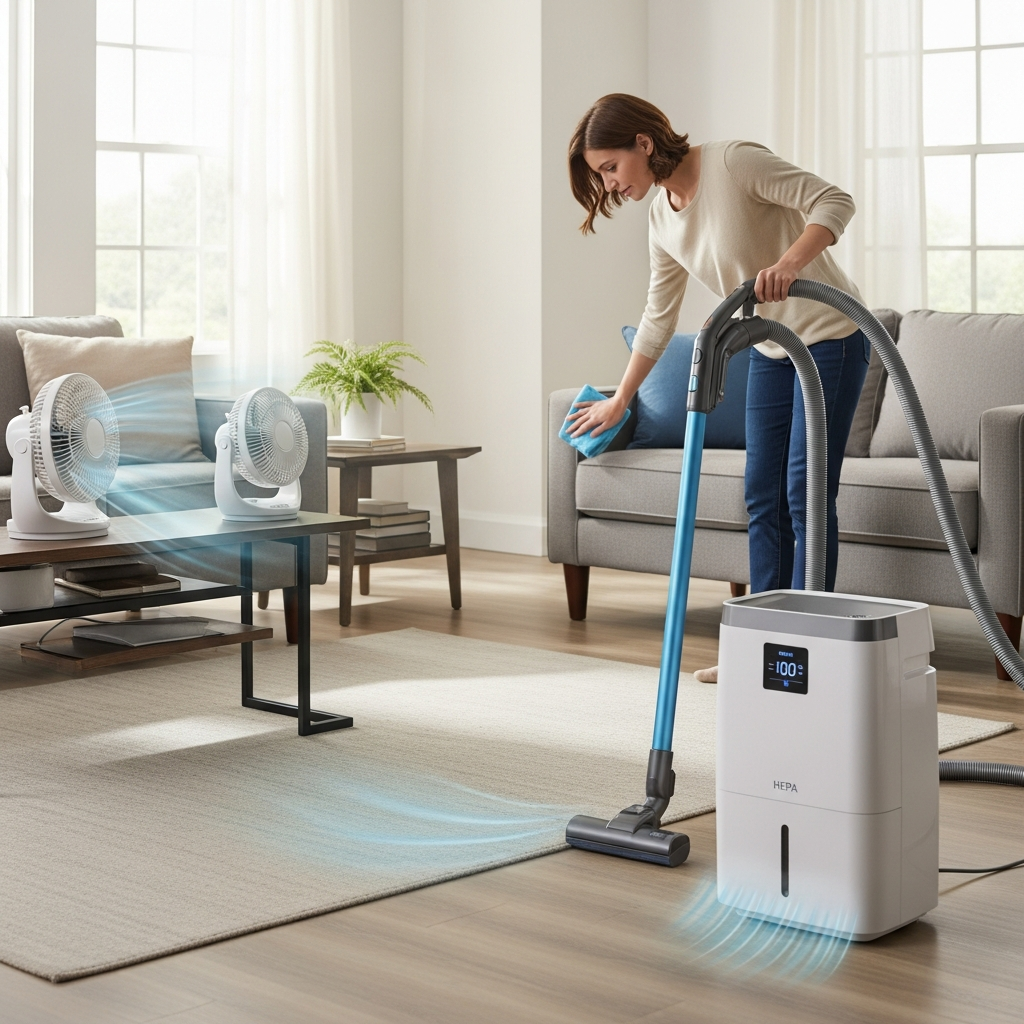
Vacuum with a HEPA-filtered machine to remove fine particles from floors, baseboards, and window sills. Wet-wipe hard surfaces with a mild detergent solution, then rinse. Avoid relying solely on bleach; it can irritate lungs and is less effective on porous materials. For stubborn areas on non-porous surfaces, scrubbing with a detergent and water solution is typically sufficient. Dry the area thoroughly with fans and dehumidifiers so moisture does not linger.
Porous Materials: Save Or Replace?
Carpet pad, particleboard, and water-damaged drywall often hold onto odor even after surface cleaning. If these items smell musty up close after drying, replacement is usually the best route. When removing materials, cut at least 12 inches beyond any visible staining or detectable odor. Bag debris immediately and ventilate the workspace to the outdoors while you work.
Ventilation And Air Movement
Increase air exchanges in affected rooms. On dry days, open windows to flush out stale air. Use a box fan in a window to exhaust air outdoors while drawing in fresh air from a different opening. Inside, maintain consistent airflow with your HVAC fan to mix air and improve filtration. Upgrade to quality pleated filters that your system can support without restricting airflow. Keep supply and return vents unblocked and doors slightly open to enhance circulation.
HVAC Hygiene
Replace filters regularly and inspect the evaporator coil and drain pan for buildup. Clear the condensate line and confirm the trap has water to prevent air from pulling through the line. If odors intensify when the HVAC runs, the system may be recirculating musty air from a return leak near a source. Seal joints in accessible ducts with mastic or foil tape rated for HVAC use.
Odor Absorption And Deodorization
Activated carbon, baking soda, and open windows can help reduce residual smells while you address root causes. Place carbon near bookshelves, closets, or media cabinets where odors tend to linger. Launder washable textiles and sun-dry them when possible. For upholstered furniture, use a hot-water extractor and dry rapidly with fans. Remember, absorbers are supplemental; they will not solve an ongoing moisture issue.
Middle-Of-The-Project Reality Check
Halfway through any odor-removal project, it is smart to pause and evaluate progress. Are moisture readings back to normal? Has relative humidity stabilized? Do previously musty areas now smell neutral up close? If you are unsure, compare your steps with those used by mold odor experts. This quick audit can reveal whether you missed a hidden source or if further drying time is all you need.
Common Pitfalls
Painting over damp surfaces traps moisture and can worsen odor later. Overusing fragrances can hide symptoms and delay necessary repairs. Aggressive sanding or demolition without containment can spread dust and odor compounds through the house. Ignoring attic or crawlspace moisture allows smells to migrate into living spaces through the building’s natural airflow.
Decision Points For Professional Help
Contact a specialist if you find extensive contamination, recurring leaks, or smells associated with the HVAC system that do not improve after filter changes and coil cleaning. Likewise, if finished basements have a history of seepage or if wall cavities feel damp after storms, targeted investigation with thermal imaging or small inspection ports may be warranted.
Long-Term Prevention
Prevention is simpler than remediation. Keep gutters clear, extend downspouts, and verify grading annually. Run bath fans for 20–30 minutes after showers. Use a dehumidifier in basements or closed-up rooms during humid months. Insulate cold pipes that sweat, and seal air leaks around sill plates, rim joists, and penetrations. Schedule seasonal HVAC maintenance and change filters as recommended.
Frequently Asked Questions
Q: What is the quickest way to make a room smell better while I fix the source? A: Open windows on a dry day, run a fan to the outdoors, and place activated carbon in the space. Then focus on moisture control and cleaning.
Q: Do essential oils remove mold odor? A: They add fragrance but do not address the cause. Use them sparingly, if at all, after you have corrected moisture and cleaned thoroughly.
Q: Can I salvage a musty area rug? A: Often yes. Clean both sides, rinse thoroughly, and dry quickly with airflow and dehumidification. If the pad or backing still smells up close, replacement may be needed.
Q: Should I use ozone? A: Ozone can irritate lungs and react with household materials. Source removal and drying are safer and more reliable.
Q: How do I know the odor is truly gone? A: Step away for a few hours and return with a fresh nose. Check RH readings, sniff test close to previous hotspots, and verify that no new moisture is present after rain.
Q: Will painting with primer seal the smell? A: Odor-blocking primers can help after thorough cleaning and drying, particularly on stained wood or masonry. Do not use them to hide active dampness.
Q: Can HVAC filters remove all odor? A: Filters help but cannot fix moisture problems. Combine filtration with humidity control and source removal.
Homeowner’s Odor-Removal Checklist
- Keep indoor RH between 40–50% and verify with a hygrometer.
- Inspect known hotspots: bathrooms, kitchens, basements, and HVAC closets.
- Clean with detergent and water; avoid harsh chemicals that add fumes.
- Use HEPA vacuuming before and after cleaning to capture fine particles.
- Remove and replace porous materials that hold odor after drying.
- Improve ventilation and maintain HVAC components seasonally.
- Seal air leaks and manage exterior water with gutters and grading.
Restore Fresh Air And Peace Of Mind
When you follow a moisture-first, cleaning-focused plan, mold odors in Bloomfield homes can be removed efficiently and for the long term. If you prefer expert guidance or need assistance with complex areas like finished basements or HVAC components, reach out to local mold odor solutions support and reclaim a healthier, fresher home.