
Inviting a professional into your Bloomfield, New Jersey home for a mold inspection can feel like a big step, but the process is designed to give you clarity and control. This guide walks you through each phase—preparation, on-site evaluation, and the final report—so you know exactly what will happen and how to use the results. If you have lingering doubts about odors, recent leaks, or persistent humidity, it may be time to schedule a mold inspection and get an informed plan for improving indoor air quality and protecting your property.
Preparing your home for the visit
Preparation helps the inspector focus on diagnosis instead of logistics. Clear 3 feet of space around mechanicals and plumbing fixtures, unlock utility closets, and ensure safe ladder access to the attic. Move stored items away from suspect walls in the basement or closets. Secure pets and coordinate with family members so rooms are available on schedule. Gather documents such as roof age, window replacements, leak repairs, and any humidity logs or photos you have taken. This context speeds up the process and strengthens the final report.
What happens first: intake and exterior survey
The inspection usually begins with a brief interview about your concerns: where odors occur, when they are strongest, what repairs you have already made, and which rooms feel damp. Inspectors then walk the exterior to assess how water interacts with your property. They look at roof edges, flashing, gutters, downspouts, grading, siding, and window penetrations. The goal is to map out any likely moisture pathways that could affect basements, walls, or attics. Photos and notes are captured to support the report’s recommendations.
Interior walkthrough: top to bottom
Inside, the inspector generally proceeds from top to bottom. In the attic, they look for darkened roof sheathing, visible leaks, blocked soffits, and fans that discharge into the space instead of outdoors. In living spaces and bedrooms, they evaluate condensation patterns around windows and at exterior walls, especially during temperature swings. Bathrooms and kitchens are checked for grout and sealant failures, plumbing leaks, and ventilation shortfalls. Basements and crawl spaces receive close attention for seepage, efflorescence, damp sill plates, and musty odors. Mechanical rooms are assessed for condensate drainage, filtration, and any signs that ducts may be distributing humidity or particulates.
Tools and techniques used during the visit
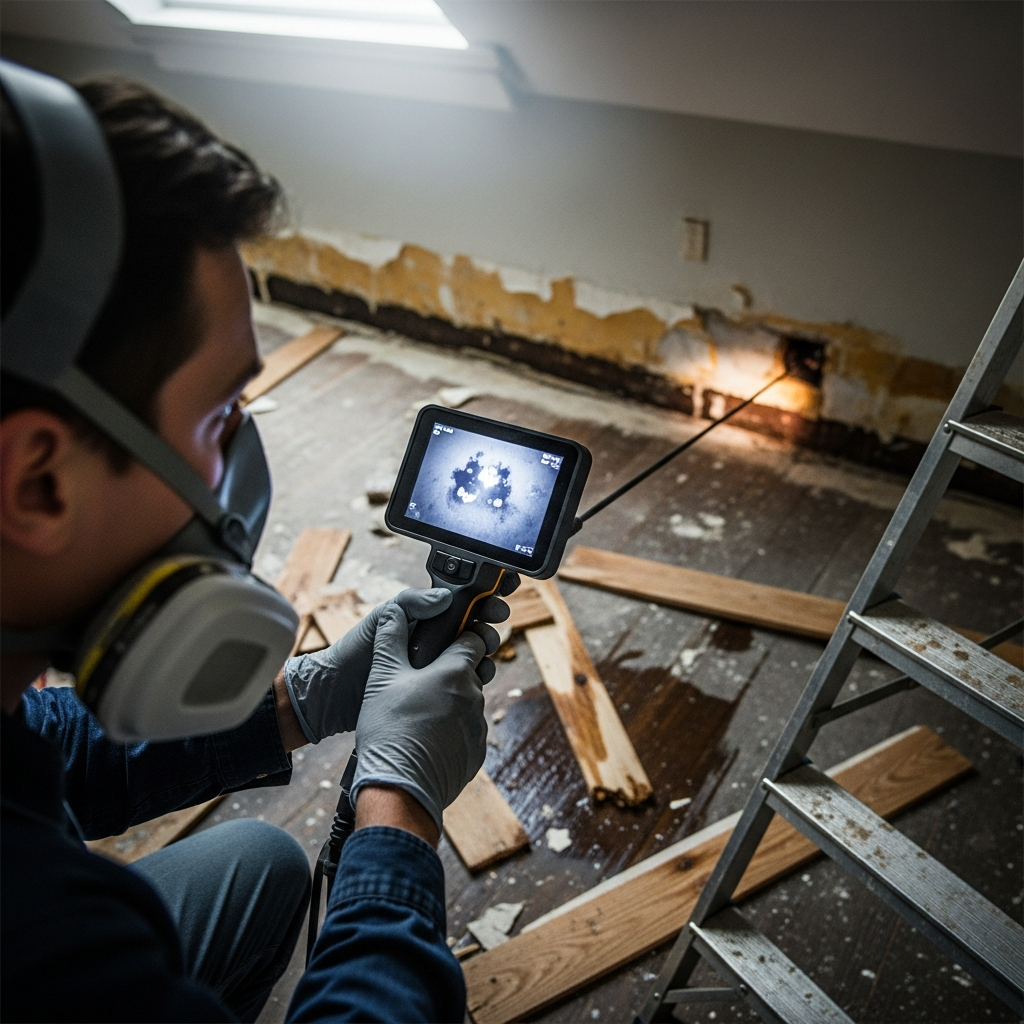
Beyond keen observation, inspectors rely on instruments that quantify and visualize conditions. Moisture meters detect elevated content in drywall, trim, or subfloors. Hygrometers measure indoor relative humidity. Thermal imaging reveals cold spots that may correspond to damp insulation, air leakage, or vapor drive. Borescopes can peer into otherwise inaccessible cavities through small openings. If there is no obvious growth yet air quality is suspect, air sampling may be proposed; ambiguous discoloration on surfaces can be addressed with surface sampling. These tools, used thoughtfully and explained in plain language, turn hunches into evidence-based conclusions.
How inspectors decide whether to sample
Sampling is not automatic. It is most useful when the inspector needs to answer a specific question that visual and moisture diagnostics alone cannot resolve. For example, air samples can document indoor spore levels relative to typical outdoor conditions, while surface samples verify whether discoloration is suspect material. The decision to sample should follow the initial assessment, with a clear plan for interpreting results in context rather than in isolation.
Safety, containment, and occupant comfort
If visible growth is present, inspectors avoid disturbing it unnecessarily. They may recommend that any invasive checks be scheduled during remediation under proper containment. Occupant comfort is also considered; inspectors coordinate to minimize disruption, and sensitive individuals can discuss temporary avoidance of specific rooms during portions of the visit. Communication is key: you should always feel informed about what is being examined and why.
Reading the signs: what inspectors look for
- Musty odors that correlate with certain rooms, weather, or activities.
- Staining or bubbling paint that suggests chronic dampness behind walls.
- Warped trim, cupped flooring, or rust on fasteners that indicate moisture exposure.
- Condensation on windows and cold surfaces, especially in winter.
- Efflorescence on masonry, often a marker of intermittent seepage.
- Insufficient bathroom or kitchen ventilation, evidenced by lingering humidity.
What your report should include
A strong report translates findings into action. Expect a clear summary of issues, annotated photos, moisture readings with locations, and prioritized recommendations. If sampling was performed, results should be interpreted alongside the day’s observations and local outdoor conditions. The best reports explain root causes, not just symptoms, so you can address moisture control, material repair or removal as needed, and ventilation improvements in the right order.
How to use the report effectively
Start with immediate moisture control: fix active leaks, adjust downspouts, and verify that bath fans discharge outdoors. Next, plan for any targeted material work that is warranted. Share the report with relevant contractors to solicit precise scopes of work. If HVAC factors are involved, consult a qualified technician about filtration, condensate drainage, and airflow balance. Schedule a follow-up check to confirm that conditions have stabilized after corrective work.
Bloomfield-specific insights
Homes in Bloomfield encounter seasonal humidity and temperature swings that stress building envelopes. Attic ventilation, grading, older window units, and basement drainage are frequent sources of moisture concerns. Many properties feature mature trees that keep roofs damp after storms, slowing evaporation. An inspector familiar with the area can quickly spot these patterns and tailor the investigation to the most revealing areas.
Frequently asked questions
Q: Do I need to leave my home during the inspection? A: Usually not. Inspectors coordinate with you to access each area safely and efficiently.
Q: Will sampling be part of every inspection? A: No. Sampling is recommended only when it addresses a specific uncertainty and will be explained before proceeding.
Q: How long does the visit take? A: Duration varies with home size, access, and whether sampling is indicated. Most appointments are completed in a single visit, with reports following after analysis.
Q: Can I prepare anything that will help? A: Yes. Clear access to attics, crawl spaces, and mechanicals; gather repair documents; and list times when odors or dampness are most noticeable.
Q: What if visible growth is found? A: The inspector will document it carefully and advise on next steps. Invasive checks are often reserved for remediation under proper containment.
Setting expectations for next steps
Once you receive the report, use it as a roadmap. Address moisture first, then any material repairs or removal that is warranted, and finally consider a verification check. This sequence prevents recurring problems and helps you invest effort where it matters most. If you are preparing for a property sale or a renovation, share the report with your real estate agent or contractor to align plans with clear data.
Confidence through clarity
The purpose of a home mold inspection is not just to find spots; it is to uncover why moisture accumulates and what to do about it. By understanding the process and partnering with an experienced professional, you gain a clear picture of your home’s health and a prioritized plan to protect it. When you are ready to begin, consider arranging a professional mold inspection with a local expert who understands Bloomfield’s unique housing and climate.
Take action with a trusted local team
If odors linger, humidity persists, or past leaks keep returning to mind, it is time to move from worry to action. Prepare your access points, gather your documents, and bring in a specialist who can translate observations into a step-by-step plan. To get the clarity you need, schedule a mold inspection and take the next confident step toward a healthier, more resilient Bloomfield home.