
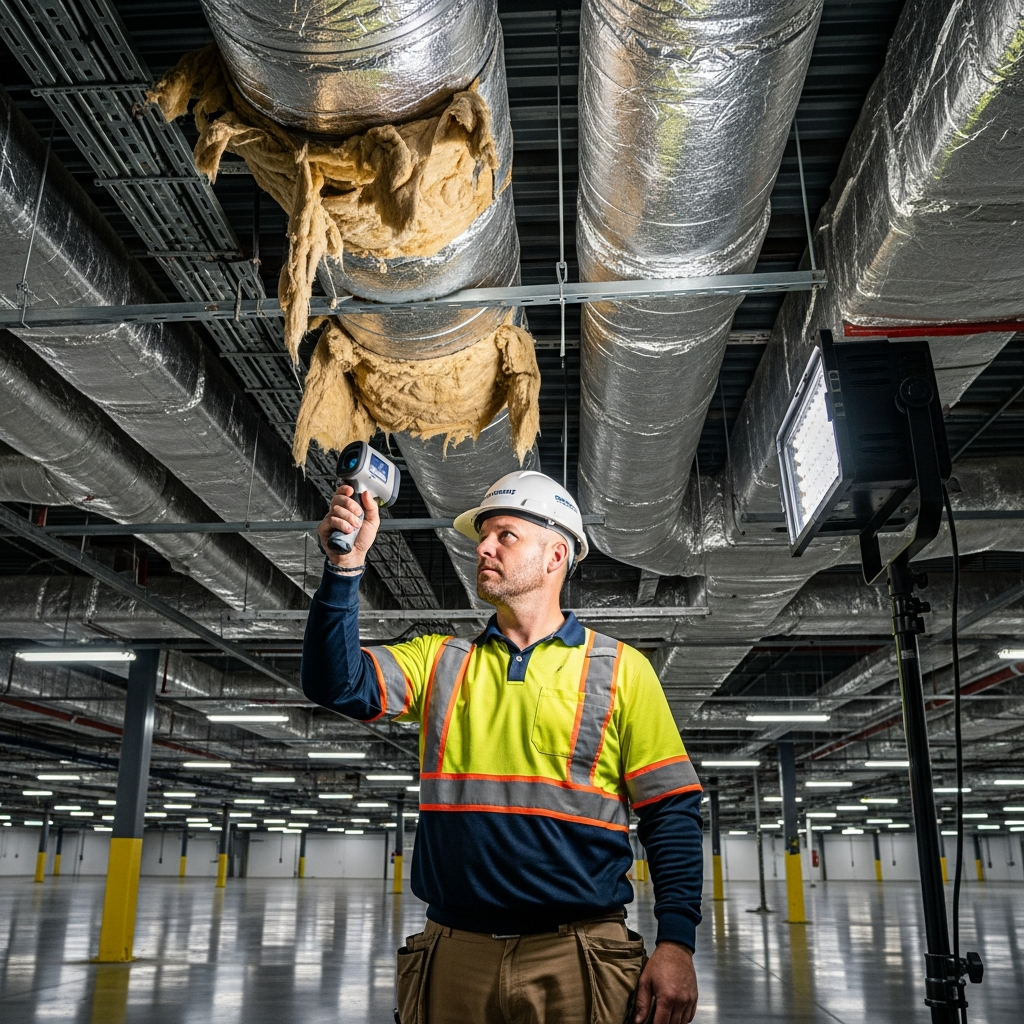
Commercial properties in Bloomfield, New Jersey—from offices and retail spaces to restaurants, schools, and healthcare facilities—depend on healthy indoor environments to protect occupants and maintain operations. A comprehensive commercial mold inspection identifies hidden moisture sources, assesses air quality risks, and outlines practical steps to stabilize conditions with minimal disruption. This expert guide explains how commercial inspections are structured, how to prepare your site, and how to coordinate next steps with facilities teams and service providers. If you are at the planning stage, consider booking a baseline mold inspection so your organization can move from uncertainty to a documented action plan.
Why commercial inspections differ from residential
Commercial buildings present unique challenges: larger footprints, complex HVAC systems, varied occupancy patterns, and critical operations that cannot pause for extended periods. Materials and finishes differ across zones—kitchens, restrooms, labs, storage rooms, and tenant suites—each with distinct moisture dynamics. A tailored inspection accounts for these variations and integrates safety, communication, and scheduling to minimize disruption to staff, customers, and sensitive activities.
Core objectives of a commercial mold inspection
- Identify active and historical moisture pathways: roof penetrations, façade joints, windows, slab transitions, and plumbing chases.
- Assess ventilation and HVAC influences on humidity, pressure balance, and particulate distribution.
- Document conditions with photos, moisture readings, and, when warranted, air or surface samples for lab analysis.
- Prioritize corrective actions that reduce risk and support business continuity.
- Provide a clear report suitable for facilities planning, tenant communication, and contractor coordination.
Pre-inspection planning with your facilities team
- Define goals: occupant complaints, visible staining, post-leak verification, or due diligence for a lease or acquisition.
- Assemble documents: roof warranties, maintenance logs, tenant requests, and recent renovation plans.
- Plan access: rooftops, mechanical rooms, ceiling plenums, kitchens, restrooms, and storage areas with known issues.
- Coordinate escorts and keys: ensure secure, efficient movement through restricted and after-hours spaces.
- Communicate with stakeholders: alert staff and tenants about timing, areas of focus, and safety considerations.
Exterior envelope assessment
Inspectors evaluate roofing membranes, flashings, parapets, and penetrations for signs of ponding or failures. Façade joints, sealants, and weep systems are examined for detailing gaps. Window assemblies are checked for failed seals or missing backer rods. At grade, inspectors consider drainage patterns that drive water toward slabs or below-grade walls. These observations guide interior priorities and help correlate stains or odors with specific building envelope weaknesses.
Interior and HVAC evaluation
Inside, the focus turns to high-risk zones: restrooms, kitchens, locker rooms, janitorial closets, mechanical rooms, and storage areas containing absorbent materials. Ceiling plenums and above-ceiling spaces are inspected for past leaks, stained tiles, and corroded hangers. HVAC systems are reviewed for condensate management, filtration, and supply/return balance. In some buildings, pressure differentials between zones can push humid air into cooler areas, driving condensation and hidden growth; this dynamic is assessed and documented with practical recommendations.
Sampling strategy in commercial settings
Sampling in commercial properties is targeted to answer specific questions: verifying occupant complaints where no visible growth is present, documenting post-remediation results, or assessing difficult-to-access areas. Air and surface samples are taken using calibrated methods and proper chain of custody. Results are later interpreted against outdoor conditions, building layout, and the day’s findings to avoid over- or under-reacting to isolated readings.
Reporting that drives decisions
Commercial reports emphasize clarity and action. Expect a concise executive summary for leadership, detailed narratives for facilities and safety teams, photographic documentation, moisture readings with locations, and prioritized recommendations grouped by risk and effort. This structure supports budgeting, scheduling, and clear communication with tenants or departments affected by corrective work.
Maintaining operations during and after the inspection
Continuity is critical. Inspectors coordinate with management to schedule work during low-occupancy periods when possible, establish safe temporary boundaries, and minimize noise. If visible growth is found, disturbing it is avoided unless containment is in place. The goal is to gather the information needed for a durable plan without interrupting essential functions or creating unnecessary alarm.
Common findings in Bloomfield commercial properties
- Roof drain or scupper issues causing intermittent ceiling leaks after heavy rains.
- Condensate overflows or clogged lines at air handlers leading to hidden damage in mechanical rooms.
- Restroom exhaust imbalances that allow humidity to linger and affect adjacent corridors.
- Façade sealant failures at window perimeters, letting water track into wall cavities.
- Basement or ground-level seepage near slab transitions and loading docks.
- Stored paper goods and fabrics absorbing moisture in poorly ventilated stockrooms.
Coordinating with contractors and stakeholders
Once the report is in hand, facilities managers can request targeted proposals from roofing, envelope, mechanical, and remediation contractors. Sharing annotated photos and measurements keeps the scope aligned with actual conditions. Tenants or department heads should receive clear updates on timelines and any temporary work zones. After corrective actions, a follow-up verification confirms that moisture has been controlled and conditions are stable.
Risk management and documentation
Good recordkeeping supports safety programs and reduces future uncertainty. Maintain inspection reports, work orders, and verification records together, along with roof warranty details and maintenance logs. If a new complaint arises later, this file provides context and shortens the path to resolution.
Frequently asked questions
Q: Will our operations need to shut down during the inspection? A: Usually not. Inspections are planned to minimize disruption, with after-hours or low-traffic scheduling when needed.
Q: Do all buildings require sampling? A: No. Sampling is recommended when it answers a specific question and is interpreted alongside visual and moisture findings.
Q: Can we limit the inspection to certain zones first? A: Yes. A phased approach is common. Start where complaints or risks are highest, then expand based on findings.
Q: How detailed is the final report? A: Expect an executive summary, detailed narratives, photos, measurements, and prioritized recommendations suitable for facilities planning.
Q: What role does HVAC play in mold concerns? A: A significant one. Humidity control, filtration, airflow balance, and condensate management are critical to preventing recurring issues.
Training frontline staff to spot early warning signs
- Teach teams to report musty odors immediately, noting time, location, and weather conditions.
- Encourage quick documentation of new stains on ceiling tiles or walls, with photos and work orders.
- Schedule routine checks of roof drains, condensate lines, and restroom exhaust performance.
- Rotate stock and avoid storing absorbent materials directly against exterior walls or on floors.
From findings to action
A commercial mold inspection is more than a checklist—it is a roadmap for protecting occupants and ensuring reliability. By focusing on moisture control, ventilation, and targeted repairs, your organization can reduce risk and maintain a healthy indoor environment. When you are ready to take the next step, coordinate a professional mold inspection that aligns with your operational needs, provides clear documentation, and supports confident, timely decision-making across your Bloomfield facilities.
Move forward with confidence
Your building’s health underpins productivity, customer trust, and regulatory compliance. With a thorough assessment, practical recommendations, and well-planned verification, you can stabilize conditions and prevent future issues. To put a clear plan in motion with minimal disruption, schedule a mold inspection and give your team the data it needs to act decisively and keep your spaces safe and resilient.