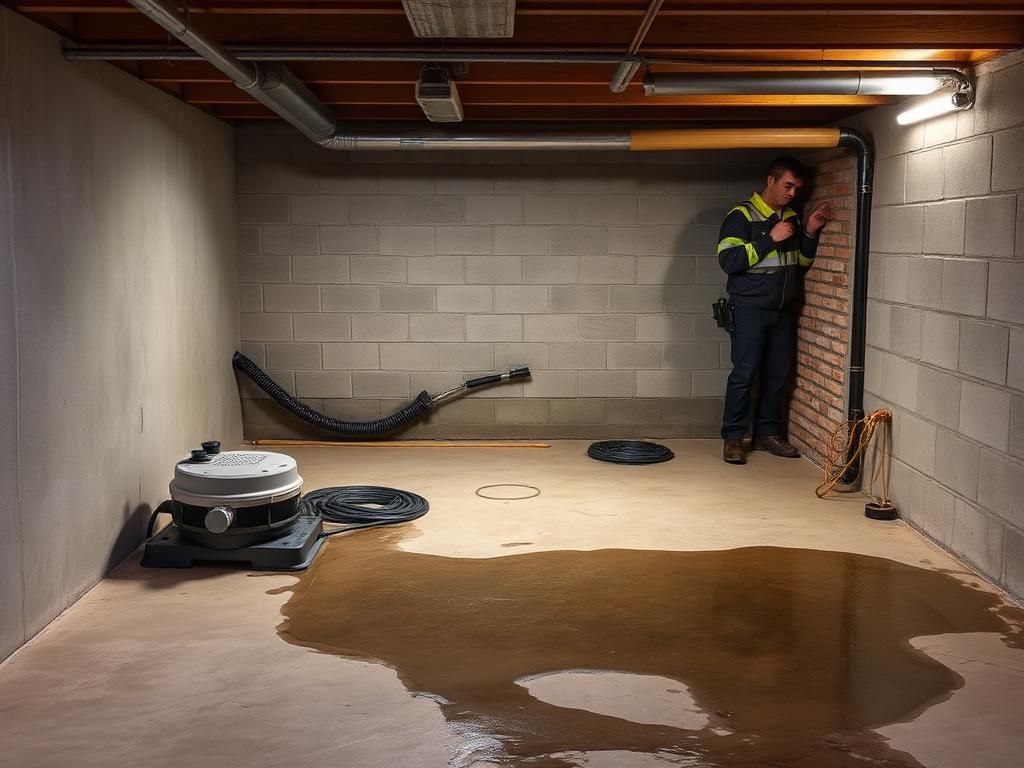
Below-grade rooms combine cool surfaces with humid summer air, which is the exact recipe for condensation. That is why most calls we take in July start with the word basement.
Why basements colonize first
Foundation walls stay cool year round. When 80-degree July air with high dew point meets a 65-degree block wall, moisture condenses and stays there.
Add paper-faced drywall, carpet on slab and stored cardboard, and you have three food sources sitting in the wettest room in the house.
What removal looks like below grade
We cut affected drywall to a clean line above the moisture level, pull the pad and carpet if it has been wet, then HEPA-clean and treat the framing and block.
Contents get triaged: hard goods are cleaned and returned, saturated cardboard and upholstered items usually do not come back.
The changes that make it stick
A properly sized dehumidifier with a condensate pump, holding 45-55% relative humidity, does more than any coating. Fix the exterior grading and downspout extensions in the same season.
When you rebuild, choose inorganic materials at the bottom of the wall — that alone prevents most repeat calls.
Key takeaways
- Cool foundation walls plus humid air equals condensation, no leak required
- Rebuild below grade with inorganic materials
- A sized dehumidifier at 45-55% RH prevents most recurrences
Frequently asked questions
- How fast can DHL start mold removal in Northeastern New Jersey?
- We answer 24/7 and typically reach homes across Northeastern New Jersey within 60–90 minutes for emergencies. Non-urgent mold removal is usually scheduled within 24–48 hours, and every visit starts with a free written estimate.
- What does a mold removal job include?
- Certified mold removal that cuts out colonized porous material, HEPA-cleans every surface and treats the cavity with EPA-registered antimicrobials. Every job covers colonized material removal, hepa vacuuming & damp wiping, antimicrobial treatment, written clearance result.
- Is mold removal covered by homeowners insurance?
- It depends on the cause of loss — sudden and accidental damage is usually covered, gradual wear typically is not. We document moisture readings, photos and scope so your adjuster has what they need, and we can speak with them directly.
Need mold removal in Northeastern New Jersey?
Certified mold removal that cuts out colonized porous material, HEPA-cleans every surface and treats the cavity with EPA-registered antimicrobials.
More from week 4: Prep & maintenance
End-of-summer checklists that prevent the next loss before fall arrives.