Mold Inspection Certification Requirements in Bloomfield, New Jersey: Credentials, Best Practices, and What to Ask
Understanding mold inspection certification requirements in Bloomfield, New Jersey helps homeowners, buyers, property managers, and contractors choose qualified professionals who will deliver accurate, actionable findings. While New Jersey does not maintain a dedicated statewide license specifically for mold inspectors at the time of this writing, the market recognizes a set of respected credentials, competencies, and insurances that demonstrate professionalism and accountability. This guide explains which certifications matter, how they relate to real-world inspection quality, and what you should expect from a certified inspector operating in Bloomfield’s unique housing stock. If you are in the research phase and want an unbiased baseline for comparison, lining up a professional mold inspection early in your process can help you evaluate methods, documentation, and communication standards against the benchmarks below.
Bloomfield’s homes present distinct moisture challenges: older basements and masonry, plaster and lath walls, attic conversions, steam or hot-water radiators, and mixed-age additions. The combination of humid summers, heavy spring rains, and cold winters amplifies condensation and leakage risks. Certification alone does not solve these issues; it signals the inspector has the training to identify building science causes, select appropriate sampling strategies, interpret results in context, and communicate remediation steps without overreach.
What Certifications Are Commonly Recognized?
Because there is no single mandatory state license specific to mold inspection in New Jersey, multiple nationally recognized certifications and trade-standard trainings have become the de facto expectation among top-tier practitioners. You may encounter the following:
- IICRC training: Water damage restoration and applied microbial remediation coursework establish foundational knowledge in moisture dynamics, materials, and cleaning methods.
- ACAC designations: Board-awarded credentials focused on indoor environmental consulting signal advanced competencies and ethics oversight.
- NORMI or equivalent: Training programs that emphasize assessment protocols, documentation, and remediation planning.
- OSHA safety courses: While not mold-specific, they help ensure safe practices during attic, crawlspace, or confined-space inspections.
- Continuing education in building science: Airflow, pressure diagnostics, and ventilation training support accurate cause identification.
When you evaluate an inspector’s background, prioritize depth and recency of training, and look for a combination of moisture, building envelope, and microbial assessment education rather than a single course certificate.
Insurance and Professionalism: Non-Negotiables
Beyond certifications, two pillars define a professional inspection practice in Bloomfield:
- Professional liability (E&O) insurance: Protects the client and underscores that the firm stands behind its opinions and reporting.
- General liability insurance: Essential for on-site work, especially in finished basements, attics, and mechanical areas.
Request proof of active coverage and verify that your inspector’s contract clearly describes the scope, limitations, and deliverables. Reputable professionals are transparent and forthcoming with this documentation.
Competencies That Matter in Bloomfield Homes
Credentials are only the starting point. Bloomfield’s building profiles demand inspectors who pair training with practical, local insight:
- Basement diagnostics: Hydrostatic pressure, efflorescence interpretation, vapor barriers, and sump/discharge design.
- Attic moisture control: Air sealing, insulation strategies, soffit-to-ridge ventilation, and bath fan terminations to exterior.
- HVAC moisture management: AC coil cleanliness, condensate routing, duct leakage, and dehumidification targets.
- Window and envelope condensation: Thermal bridging, interior humidity targets, and air exchange considerations.
A certified inspector should also be comfortable explaining why sampling is or is not necessary and how any results connect to moisture causes, not just to species lists or generic thresholds.
Sampling Knowledge: Using Labs to Support, Not Replace, Forensics
Certified inspectors understand when to collect air, surface, or cavity samples and how to interpret lab results. They also know when not to sample. Sound practice involves:
- Hypothesis-driven sampling: Only collect samples that can clarify a decision (e.g., hidden growth suspected behind a finished wall).
- Outdoor controls and comparative sampling: Context is crucial for interpreting airborne spore data.
- Documentation: Chain of custody, sample locations, environmental conditions, and methods noted in the report.
- Plain-language interpretation: Explaining what the results mean for remediation and prevention plans.
Look for inspectors who emphasize moisture and source control first, rather than leaning on lab printouts to do the heavy lifting.
How Certifications Translate into Your Report
The ultimate proof of competency is your deliverable. In Bloomfield, your report should address the realities of basements, attics, and older framing while giving you step-by-step actions:
- Annotated photos and moisture maps
- Root-cause explanations for each finding
- Remediation scope outlining containment, removal, and cleaning methods
- Ventilation and dehumidification targets, including seasonal guidance
- Post-remediation verification steps
When you review sample reports from prospective inspectors, you will quickly see who has the training—and the discipline—to translate technical knowledge into a practical, homeowner-friendly plan.
Questions to Ask a Certified Inspector
Use your first call to test both credentials and communication:
- Which certifications do you hold, and how often do you renew them?
- How does your inspection process adapt to older Bloomfield basements and plaster walls?
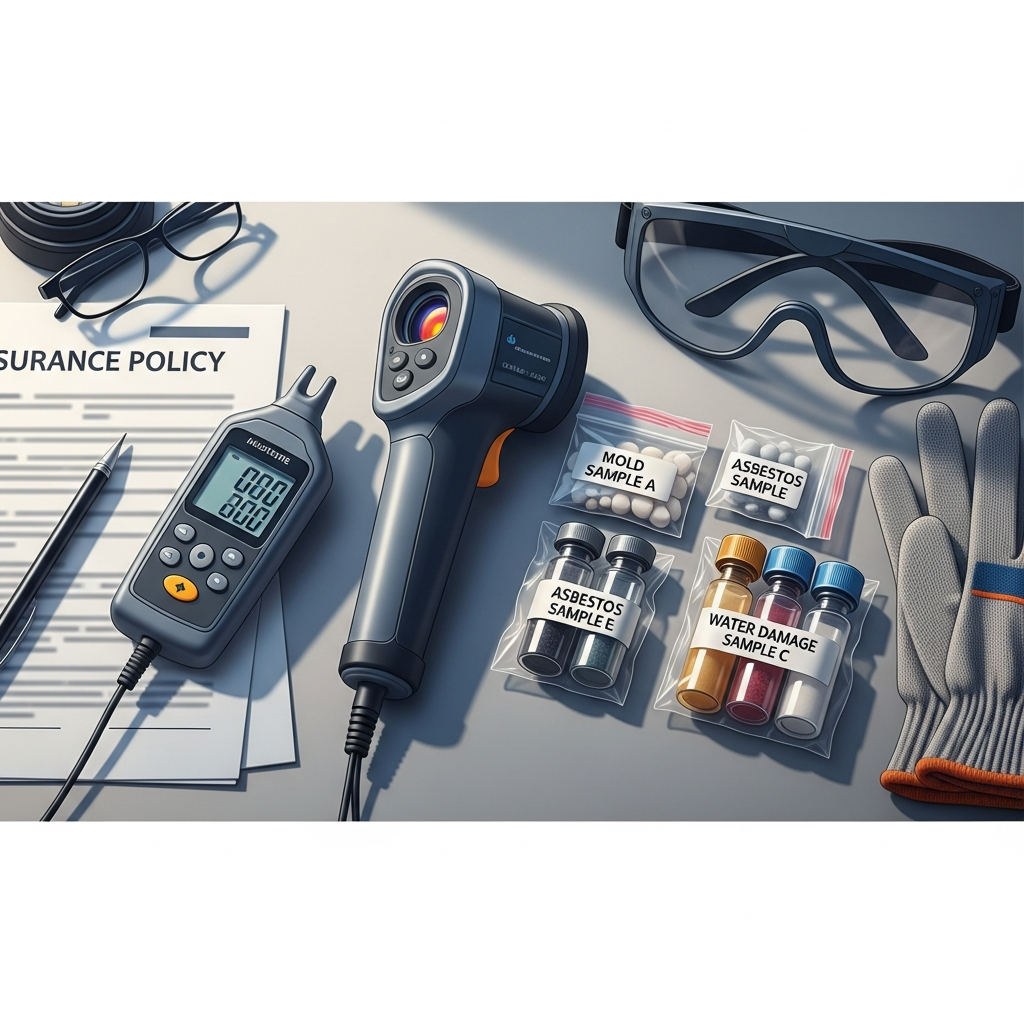
- What instruments will you use on my property?
- When do you recommend sampling, and why?
- Can I review a sample report before booking?
- What insurances do you carry?
A confident professional will answer without hedging and will relate each answer to your type of home, whether it is a multifamily near the Bloomfield Green or a single-family near Watsessing Park.
Limitations and Ethical Boundaries
Certified inspectors should be clear about what they can and cannot do. Honest limitations include hidden conditions inside wall cavities, inaccessible roofs during storms, and the difference between visual observation and destructive testing. Ethically, an inspector should avoid conflicts of interest—many focus solely on assessment and leave remediation to separate firms to preserve objectivity.
Bloomfield-Specific Scenarios
In practice, here is how certification-backed expertise shows up in local homes:
- Finished basements with laminate over slab: Inspectors use both pin and pinless meters to check for elevated moisture without damaging finishes.
- Attic conversions with knee walls: They look for missing air barriers, inadequate ventilation, and bath fans dumped into the attic space.
- Brick or stucco exteriors: They evaluate flashings, weep details, and grade transitions that can trap moisture at the sill plate.
- Radiator heating: They check around valves and expansion tanks for slow leaks that elevate humidity.
Certified inspectors weave these diagnostics into clear recommendations, not just observations, so you can act with confidence.
Real Estate Context in New Jersey
Home inspectors in New Jersey follow state licensing requirements for general home inspection, but mold inspection is typically an optional, specialized service. In real estate transactions around Bloomfield, a dedicated mold assessment can help identify active leaks before closing and provide remediation scopes to streamline negotiations. A certified mold inspector’s methodical approach reduces uncertainty for both buyers and sellers.
Frequently Asked Questions
Q: Is there a New Jersey state license specifically for mold inspectors? A: As of this writing, there is no statewide mold inspector license; certifications and insurances are the primary professional markers.
Q: Which certification is “best”? A: Look for a combination of recognized credentials and recent continuing education. The inspector’s process and reporting quality ultimately matter more than the logo on a certificate.
Q: Do certifications guarantee results? A: Certifications indicate training and standards, but outcomes depend on the thoroughness of the inspection and the effectiveness of remediation and moisture control.
Q: Do I always need air testing? A: No. Sampling should be hypothesis-driven. Many issues can be diagnosed through moisture and visual assessment alone.
Q: Can the same company inspect and remediate? A: Some do, but many clients prefer third-party assessment to avoid conflicts of interest.
Q: Will the inspector advise on prevention? A: Yes. Expect humidity targets, ventilation improvements, drainage fixes, and maintenance checklists.
How to Verify a Professional
- Request copies of certifications and renewal dates
- Ask for proof of insurance
- Review a sample report
- Check references or reviews that mention reporting clarity and moisture diagnostics
These steps quickly separate experienced professionals from generalists.
From Certification to Actionable Results
Credentials provide a foundation; measurable results come from disciplined diagnostics, lucid reports, and a roadmap you can follow. In Bloomfield, that means identifying where water is entering, how air moves through attics and basements, and which materials need removal versus drying and cleaning. Choose an inspector who can connect the dots and stand behind their recommendations.
Take the Next Step with Confidence
If you are comparing credentials or preparing for a transaction, schedule a conversation with a qualified professional and ask to see their process in writing. For an objective evaluation that blends certification with practical building science, consider arranging a professional mold inspection so your Bloomfield home or property can move from uncertainty to a clear, prioritized plan. The right expertise turns complex moisture challenges into straightforward, achievable steps.