Carpet can hold on to musty smells long after a spill, leak, or humid spell passes—especially in Bloomfield, New Jersey, where basements, seasonal rain, and summer humidity challenge even well-maintained homes. This guide explains, in practical detail, how to remove mold odor from carpet the right way, so the freshness lasts. You will learn how to identify the source, dry and clean effectively, decide when replacement is smarter than restoration, and keep odors from coming back. For a complete approach that combines moisture control and odor remediation, many Bloomfield homeowners lean on trusted mold odor removal methods like those summarized below.
Start with Moisture Mapping
Odor in carpet nearly always begins with moisture in the backing, pad, or subfloor. Before cleaning, find out where and how far the wetting occurred. Use your nose to locate the strongest zone, then press a dry white towel firmly into the carpet; if it picks up moisture or discoloration, the pad may still be damp. Check nearby baseboards for swelling, stains, or rust on tack strips. In basements common in Bloomfield, inspect perimeters after heavy rain and around stair landings where water sometimes accumulates.
Dry Thoroughly—Top and Bottom
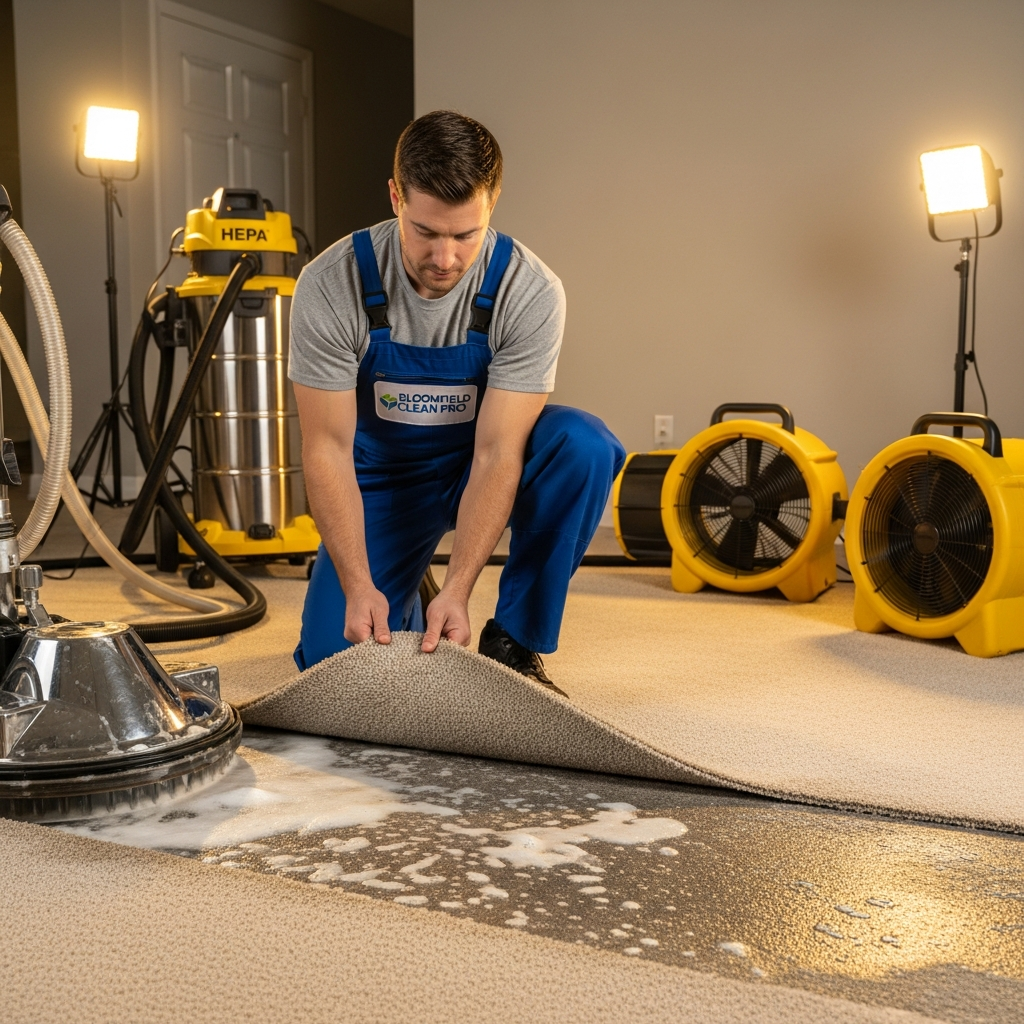
Drying is non-negotiable. Run a dehumidifier to bring indoor relative humidity into the 40–50% range. Use air movers or box fans to increase circulation. If the pad is wet, pull back a corner of the carpet carefully from a threshold and inspect. Replace soaked padding; it is inexpensive and often the main odor reservoir. Dry the subfloor with airflow until a moisture meter shows normal levels for the season. Re-tack and stretch the carpet only after everything beneath is fully dry.
Deep Clean the Carpet Fibers
Vacuum the carpet thoroughly with a HEPA-capable machine to remove dust that can trap odor. Pre-treat visible spots with a mild detergent solution, then perform a hot water extraction (commonly called steam cleaning) to rinse soils from the fibers. Be cautious not to over-wet during cleaning; multiple light passes followed by strong extraction remove more residues with less risk of driving moisture deeper. Allow ample drying time with dehumidification and airflow before moving furniture back.
Target Odor in the Backing and Pad
When odor persists after cleaning, the backing and pad are likely culprits. If you can access a pulled-back section, clean the backing with a light detergent rinse, then allow to dry completely. Replace padding that still smells after drying, especially if there was a prolonged leak or flood. In areas where pets had accidents, urine salts can keep backing and pad damp by absorbing humidity; a targeted rinse to dissolve and extract these residues helps prevent recurring mustiness.
Deal with Perimeter Trouble Spots
Perimeter tack strips and the first few inches of carpet along walls often harbor odor. If the baseboard area shows staining or the tack strip is dark and crumbly, replace the strip and cut away a narrow edge of contaminated carpet if needed. This small surgical repair can make a disproportionate difference because odor tends to concentrate along cool exterior walls where condensation occurs.
When Replacement Beats Restoration
Replace carpet and pad if they were saturated for more than 24–48 hours, if sewage was involved, or if odor remains after thorough drying and cleaning. Also consider replacement when the backing is delaminating or when the subfloor has extensive staining. In basements with chronic seepage, switching to hard surface flooring with area rugs may prevent recurrent odors. The cost of repeated attempts and lingering smell often exceeds the benefit of trying to save severely affected materials.
Air Management Matters
Even after fiber and backing issues are addressed, stale air can linger. Replace HVAC filters, clean supply and return grilles, and maintain steady ventilation. In musty basements, run a dehumidifier continuously in warm months. If odor seems to spread when the system runs, have ducts inspected for leaks in musty zones and for dust accumulation that can store odor compounds.
Mid-Project Reality Check
Before reattaching pulled-back carpet, pause for a smell test. If the subfloor or surrounding materials still smell musty after drying, you may need to remove a bit more pad or address a hidden moisture entry such as a wall leak or foundation crack. Many homeowners choose to consult professional mold odor guidance at this stage to confirm moisture is truly under control before finishing reinstallation.
Preventing the Next Odor Episode
Place walk-off mats at entries and keep gutters and downspouts clear to reduce water tracking and foundation moisture. Use bath and kitchen exhaust fans to shed humidity generated indoors. In basements, store items off the floor and away from exterior walls. Address small leaks promptly, and run dehumidifiers during humid months. For pet households, clean accidents as soon as possible and consider periodic professional hot water extraction to prevent residues from building up.
FAQs
Q: Will carpet powders or sprays fix mold odor? A: They may mask smell temporarily but rarely solve it. The key is drying the pad and subfloor, removing odor-holding materials, and cleaning thoroughly.
Q: Can I keep the carpet if only the pad smells? A: Often yes. Replacing the pad and cleaning the backing can save the carpet if fibers are in good shape and the subfloor is dry and odor-free.
Q: How long does drying take after cleaning? A: With good airflow and dehumidification, most carpets dry within 6–24 hours. Pulled-back sections and pads may take longer; do not reattach until completely dry.
Q: Do I need to worry about mold spores spreading when I pull carpet back? A: Limit dust by vacuuming first with HEPA filtration and avoid aggressive agitation. Good containment and negative pressure, such as a fan exhausting outdoors, help protect the rest of the home.
Q: What if the smell keeps returning every summer? A: Seasonal humidity may be re-wetting residues or the pad. Increase dehumidification and inspect for foundation moisture or condensation along exterior walls.
Restore Freshness to Your Bloomfield Home
With careful moisture control, targeted material removal, and thorough cleaning, you can eliminate musty carpet odor and keep it from coming back. If you want assurance that your approach addresses both carpet and building factors, reach out to experienced mold odor specialists for carpet and floors who understand Bloomfield homes and can help you finish strong.