
Why Basements In Bloomfield Often Smell Musty
Basements sit at the intersection of soil, structure, and indoor air. In Bloomfield, New Jersey, heavy rains, aging foundations, and seasonal humidity spikes make basements especially vulnerable to musty, mold-like odors. Even if there is no visible growth, a faint earthy smell can indicate that moisture is present behind finished walls, under flooring, or along the rim joist. Early detection is your best defense against costly repairs and persistent odors upstairs.
Detecting mold odor is part art, part science. Your nose is sensitive, but it can also adapt quickly, which is why smells seem stronger when you first enter the basement and fade after a few minutes. To compensate, use structured walkthroughs, moisture measurements, airflow tests, and strategic isolation to track down the source. With a plan, you can separate old smells locked into materials from active odors caused by ongoing dampness.
Before you begin, remember that odor is a symptom of an underlying condition. Your goal is to map that condition accurately. Reading about proven mold odor removal practices can help you understand what to look for and how to gather clues that lead you to the precise location of moisture.
Prepare For A Methodical Investigation
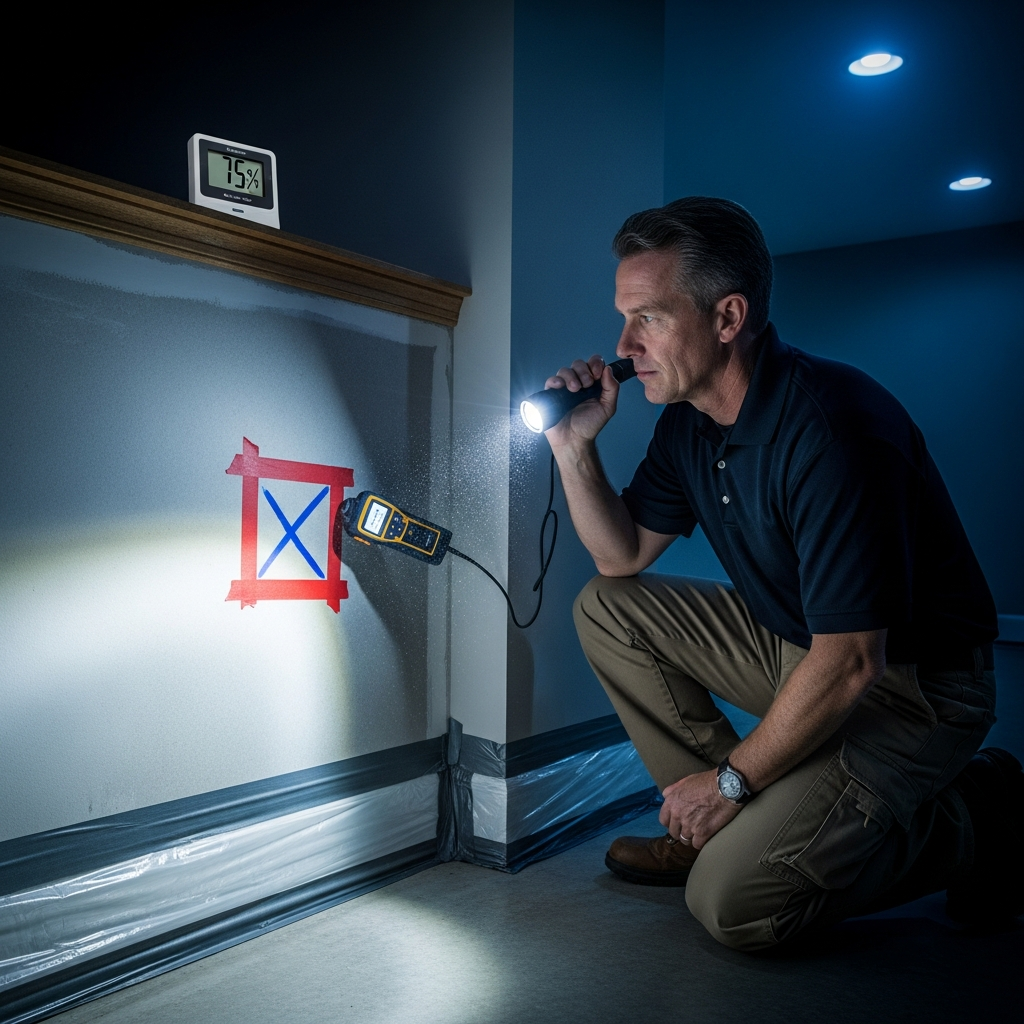
Gather tools that make detection easier: a hygrometer for relative humidity, a non-invasive moisture meter for surfaces, painter’s tape to label suspect areas, a strong flashlight, and a notebook or phone for photos and notes. If you have a small blower fan and incense or a smoke pencil, you can evaluate airflow patterns as well. Wear gloves and a dust mask if you plan to access tight or dusty spaces.
Choose a time when the smell is most noticeable—after a rainy day, during humid weather, or right after the HVAC cycles. Enter from upstairs and take a baseline sniff at the door before stepping down. Note the first place you smell the odor most strongly. Move clockwise around the perimeter, inspecting corners, sill plates, baseboards, window wells, and utility penetrations.
Mapping Moisture And Odor
Use the moisture meter along baseboards and drywall seams every few feet. Mark readings above normal with tape and a note. Pay special attention to bottom plates of walls, the edges of vinyl or laminate flooring, and any transitions where two materials meet. If your basement is finished, lift a corner of carpet where you suspect dampness to smell the pad and inspect the subfloor. In unfinished areas, smell the rim joist and sill plate wood. Darkened or musty-smelling lumber often points to a nearby source.
Relative humidity above 60% signals conditions that can produce odor even without an active leak. Track RH for a day or two. If RH spikes overnight or during certain weather patterns, you may be dealing with condensation rather than direct water intrusion. Condensation forms on cool surfaces when warm, damp air enters the basement, often through leaky bulkhead doors, open windows, or unsealed penetrations.
Check Common Culprits
Window wells: Poor drainage in wells allows water to collect and seep behind frames. Stains or efflorescence on the wall below a window suggest chronic dampness.
Foundation cracks and cold joints: Hairline cracks can leak during heavy rain, leaving a musty patch near the floor that dries later yet continues to smell.
HVAC and dehumidifiers: A dirty air handler, coil, or clogged condensate line can spread odors and raise humidity. Check for slime in drain pans and make sure hoses flow freely.
Laundry areas: Hoses, standpipes, and utility sinks often weep or splash. Lint and dust trap odor compounds; deep clean and sniff-test around appliances.
Stored items: Cardboard boxes, old books, and textiles absorb odors and can obscure the true source. Temporarily remove them from suspect zones to see if the smell changes.
Isolation Tests To Pinpoint Sources
Close interior doors and run a small fan to see how odor moves. If the smell intensifies when air is drawn from a specific corner, the source may be just beyond the visible surface. For finished walls, use removable baseboards or small access holes behind furniture to inspect the cavity discreetly. Smell the back of the baseboard; a strong musty scent here often implicates seepage at the slab-to-wall joint.
For flooring, isolate areas with plastic sheeting taped to the slab. If condensation appears beneath the plastic, ground moisture is evaporating into the room. This test explains why carpeted basements often smell musty even without a leak; the slab humidity feeds the odor.
Distinguish Old Odor From Active Dampness
Old odor embedded in wood or drywall softens as RH drops and intensifies as RH rises, even after leaks are repaired. Active dampness often produces a sharper smell and correlates with high moisture readings. If a wall section shows elevated moisture after rain, you likely have a current intrusion. If readings are normal but the smell waxes and wanes with RH, focus on dehumidification and ventilation rather than demolition.
Airflow And Stack Effect
Basements influence the entire home through stack effect—the movement of air from lower to upper levels. Musty air can ride this flow into living spaces, so sealing air leaks helps both detection and control. Use foam or caulk around penetrations for pipes and cables. Weatherstrip the door between the basement and living area. When you reduce uncontrolled airflow, odor patterns become clearer and easier to trace.
Using Your HVAC For Detection
Set the HVAC fan to On for 20 minutes and observe odor intensity in various rooms. If odor increases upstairs while the fan runs, check the return path and ducts in the basement. A return leak near a musty area can pull air from the source and distribute it. Conversely, if odors diminish with the fan on and a clean filter installed, improved circulation and filtration may be helping, which suggests humidity and dust are dominant contributors.
When To Sample And When Not To
Home test kits and air sampling can be tempting, but detection through moisture mapping and building science is often more reliable for odor problems. Visual inspection, moisture readings, and odor tracking usually reveal the cause. If you decide to sample, interpret results carefully and pair them with physical evidence, not in isolation.
Corrective Steps Once You Find The Source
Address exterior drainage by cleaning gutters, extending downspouts, and adjusting grading. Seal obvious cracks with appropriate products and consult a foundation specialist for structural concerns. Inside, use a dehumidifier to maintain RH below 50%. Remove porous materials that are contaminated beyond cleaning, and clean remaining surfaces with detergent and water before drying thoroughly. If odors involve HVAC components, service the coil and drain pan and consider targeted duct cleaning.
As you confirm findings and plan corrections, you might compare your approach with industry checklists used by mold odor experts. This can validate that you are prioritizing moisture control, cleaning, and ventilation in the right order.
Preventing Future Basement Odors
Keep storage off the floor on shelves, maintain a clear gap along walls to promote airflow, and avoid wall-to-wall carpeting on slabs. Use area rugs you can remove and dry. Insulate and air-seal rim joists to curb condensation. Run bathroom and kitchen exhaust fans upstairs to reduce the moisture load that eventually settles in the basement. Schedule seasonal checks after the first heavy spring rain and before fall humidity drops.
Frequently Asked Questions
Q: Why does my basement smell musty only after storms? A: Storms drive water against foundations and can overwhelm footing drains, allowing seepage. Even if surfaces dry later, odor can linger in porous materials.
Q: Will sealing the floor stop the smell? A: Floor sealers can reduce vapor emissions from the slab, but they work best as part of a larger plan that includes drainage, dehumidification, and cleaning.
Q: How long should I run a dehumidifier? A: Continuously during humid months. Aim for RH under 50% and check the condensate drain so it does not overflow.
Q: Is carpet a bad idea in basements? A: Wall-to-wall carpet can trap moisture and odor. Removable rugs are easier to clean and dry.
Q: Can I rely on scented products? A: Fragrances mask but do not solve odor problems. Focus on finding and correcting moisture sources.
Q: Do I need to remove drywall if readings are normal? A: Not necessarily. If moisture is normal and odor correlates with RH, target dehumidification first.
Q: What about sump pumps? A: A malfunctioning or open sump pit can release odors. Keep lids sealed and maintain the pump.
Basement Detection Checklist
- Track RH with a hygrometer and keep it below 50%.
- Measure moisture at baseboards, rim joists, and floor edges after storms.
- Test slabs with plastic sheeting to check vapor emissions.
- Inspect window wells and extend downspouts away from the foundation.
- Service HVAC coils, filters, and condensate drains regularly.
- Use shelving and maintain airflow along walls; avoid wall-to-wall carpet.
Ready To Zero In On That Musty Smell?
With a methodical approach, you can detect basement odor sources quickly and accurately, then correct them before they affect the rest of your Bloomfield home. If you need guidance or hands-on help confirming your findings, consult local mold odor solutions support to verify the source and restore fresh, clean air downstairs and beyond.