
Your Complete Homeowner’s Guide to Mold Removal in Bloomfield, New Jersey
Bloomfield’s tree-lined streets, historic homes, and four-season climate make it a wonderful place to live, but they also create ideal conditions for indoor mold. From humid summers to heavy spring rains and the occasional winter thaw, moisture can sneak into basements, attics, and bathrooms. Left unchecked, mold can damage building materials, impact indoor air quality, and trigger health symptoms. This guide gives Bloomfield homeowners a clear, actionable roadmap to identify, remove, and prevent mold safely and effectively—without the panic and guesswork.
If you’re already confronting a musty odor, dark spotting on drywall, fuzzy growth on wood, or recurring condensation on windows, you’re in the right place. The sections below walk through safety, tools, step-by-step cleanup, and long-term prevention built around the realities of North Jersey homes. When a situation is extensive or complex, consider professional support, but for small, well-contained issues you can often proceed confidently at home. When you need expert backup, reputable mold removal can provide the containment, filtration, and verification that protect your house and family.
Why Mold Is So Common in Bloomfield Homes
Bloomfield sits in Essex County, where older housing stock, finished basements, and mixed masonry-wood construction intersect with seasonal humidity. During summer, warm air carries moisture indoors, and if ventilation is limited, surfaces remain damp long enough for spores to colonize. In fall and winter, temperature swings and poorly insulated attics can cause condensation on framing members, sheathing, and roof lines—fueling hidden mold in attic cavities. Spring storms drive wind-blown rain beneath shingles and into wall assemblies if flashing is compromised. The result: mold hotspots that keep returning unless the moisture source is fixed.
Common contributors include:
- Foundation seepage after thunderstorms or snowmelt
- Clogged gutters that overflow at the eaves and soak siding
- Attic condensation from inadequate ventilation or bathroom fans venting into the attic
- Window leaks and condensation around older sashes
- HVAC condensate line clogs and dripping drain pans
- High indoor humidity from cooking, showering, or drying clothes indoors
Health, Structure, and Home Value Impacts
Mold affects people differently. Some experience stuffiness, sneezing, or throat irritation; others report headaches or skin irritation. Sensitive individuals—such as those with allergies, asthma, or compromised immunity—may notice symptoms even when growth is modest. Regardless of individual reactions, the building itself suffers: paper-faced drywall, MDF trim, carpet, and insulation can deteriorate; wood framing may discolor and weaken; odors can embed in porous materials. Over time, chronic moisture and mold can affect buyer confidence and slow real estate transactions, especially when a home inspection notes visible growth or musty conditions.
What matters most is prompt action—and the right approach for the size and location of the problem. With careful containment and thorough drying, most small to moderate mold problems can be resolved without extensive demolition.
Safety First: Personal Protection and Containment
Before you start, think safety, dust control, and moisture. Disturbing mold can release spores and fragments into the air. Plan to limit spread and protect your lungs, skin, and eyes. For small, localized areas, homeowners can typically proceed with basic gear. For anything widespread, hidden, or caused by contaminated water, pause and consult professionals.
- Respiratory protection such as a well-fitted N95 or a respirator with P100 filters
- Gloves (nitrile or similar) and protective clothing you can launder hot
- Eye protection to keep spores and debris out of your eyes
- Plastic sheeting and painter’s tape to isolate the work zone
- Box fan exhausting air to the outdoors through a window (never into an attic or crawlspace)
- HEPA vacuum for pre-clean and post-clean particle control
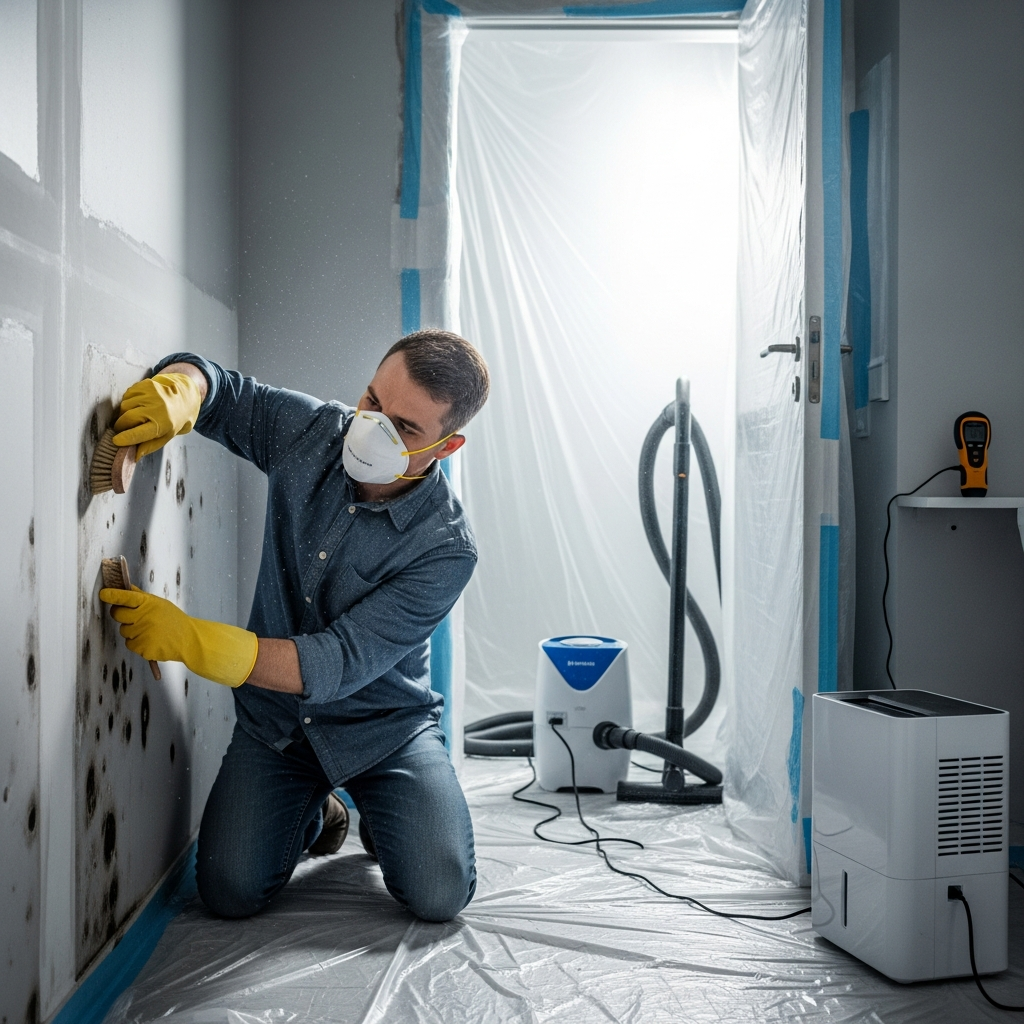
Set up containment by closing doors, covering vents, and taping plastic over doorways with a slit entry. If you can, create gentle negative pressure by slightly exhausting air to the outside from within the work zone. Turn off central HVAC serving the area so spores don’t travel through ducts. Keep occupants and pets away from the work zone until cleaning is complete.
Tools and Supplies Checklist for Bloomfield Homeowners
- HEPA vacuum with crevice and brush attachments
- Scrub brushes and non-shedding microfiber cloths
- Pump sprayer or spray bottles for detergent and rinse water
- Mild detergent or cleaner suited to the surface you’re treating
- Disposable towels for blotting and drying
- Moisture meter or hygrometer to verify drying progress
- Plastic sheeting, tape, and contractor bags for waste
- Utility knife for cutting out damaged drywall
- Dehumidifier capable of maintaining 40–50% relative humidity
- Fans for directed airflow (avoid blasting directly at moldy patches before containment)
Step-by-Step Mold Removal for Small Areas
For small areas (commonly described as less than roughly 10 square feet of visible growth), homeowners can often remediate safely. If you discover hidden mold spanning multiple wall cavities, if the growth returns repeatedly, or if there was contaminated water, call in experts.
- Identify and stop moisture. Fix leaks, unclog gutters, correct grading, or seal foundation cracks. Without moisture control, mold will return.
- Isolate the area. Close doors, tape plastic over openings, and cover supply/return vents. Establish gentle negative pressure to limit spread.
- Pre-vacuum with HEPA. Carefully collect loose spores and dust on both the affected surface and nearby ledges, baseboards, and flooring.
- Remove porous materials that are visibly damaged. Drywall, carpet, carpet pad, and cellulose insulation that are colonized often need discarding. Cut drywall at least 12 inches beyond visible damage and bag debris before removing it from containment.
- Clean nonporous and semi-porous materials. On framing, subfloor, tile, and sealed concrete, use detergent and agitation with a brush or non-shedding cloth. Wipe in controlled passes, changing cloth faces frequently.
- Rinse and wipe. Apply clean water lightly and wipe to remove residues. Avoid oversaturating surfaces.
- HEPA vacuum again after surfaces dry to capture settled spores.
- Dry thoroughly. Use dehumidifiers and gentle airflow. Target 40–50% RH and wood moisture in line with unaffected areas.
- Inspect and spot-treat. If faint discoloration remains on sound wood, an encapsulant or primer designed for restoration can be used after drying to lock in staining—never to “trap” moisture.
- Rebuild with moisture-smart details. Use mold-resistant drywall in bathrooms, properly vent bath fans outside, and seal penetrations.
Where Mold Hides: Attics, Basements, and Bathrooms
In Bloomfield, three areas dominate mold complaints: attics, basements, and bathrooms. Attic mold often traces back to bathroom fans vented into the attic, blocked soffit vents, or inadequate ridge ventilation. Insulation gaps allow warm air to leak upward; when it meets cold sheathing, condensation feeds growth. Basements typically suffer from foundation seepage, poor grading, or high humidity. Bathrooms invite mold via daily steam, slow exhaust fans, and grout or caulk failures that leak into walls.
Addressing these spaces is as much about airflow as cleaning. In attics, restore ventilation paths, air-seal the ceiling plane around light fixtures and plumbing penetrations, and correct fan discharge to the exterior. In basements, combine perimeter drainage repairs with a dehumidifier sized to the space. In bathrooms, upgrade to a quiet, properly ducted exhaust fan and run it during and for 20–30 minutes after showers. If you see recurring growth despite cleaning, it’s time to consider professional mold removal so the root cause and hidden cavities are fully addressed.
Drying Verification and Odor Control
Drying is both a process and a measurement. Surfaces may feel dry yet still hold elevated moisture within. Use a pin or pinless moisture meter to compare suspect materials to known-dry areas. Track relative humidity with a hygrometer and keep it under 50% for several days after cleaning. Odors often fade as materials dry and spores are removed. If a musty odor lingers, re-check hidden cavities—such as beneath baseboards, behind toe-kicks, or inside closet corners where air is stagnant.
Don’t mask odors with fragrances. Odor control comes from source removal, ventilation, and verified dryness. If materials remain damp, spores will settle and recolonize, undoing your hard work.
Prevention: Making Your Bloomfield Home Resilient
Preventive upgrades protect both comfort and indoor air quality. Start outside with water management and work inward to humidity control and insulation details.
- Gutters and downspouts: Clean twice a year and extend downspouts at least several feet from the foundation.
- Grading: Ensure soil slopes away from the house to direct surface water.
- Sump and drainage: Maintain sump pumps and consider battery backup for storm events.
- Air sealing: Seal gaps around plumbing, recessed lights, and attic hatches to reduce warm air leakage.
- Attic insulation: Add insulation and maintain clear soffit-to-ridge airflow paths.
- Bath and kitchen exhaust: Duct to the outdoors and verify airflow with a tissue test.
- Dehumidification: Keep basements and first floors below 50% RH in summer.
- Material choices: Use mold-resistant drywall in wet rooms and choose hard-surface flooring for below-grade spaces.
Working With Professionals in Essex County
When growth is widespread, when you suspect contamination inside wall or ceiling cavities, or when a vulnerable occupant is present, professional help is prudent. A qualified team will establish containment, apply negative air with HEPA filtration, remove contaminated materials, clean and detail remaining surfaces, and verify dryness before rebuild. They should follow established industry practices for safety and documentation. Ask about containment plans, filtration, removal criteria for porous items, and post-remediation verification to ensure nothing is missed.
Good communication is key. Expect a clear plan, daily updates during multi-day projects, and guidance on humidity control and ventilation improvements so the problem does not return.
Frequently Asked Questions
How do I know if I have a mold problem or just staining? Visible fuzzy growth, a musty odor, or surfaces that feel damp and show spreading discoloration are clues. Stains that do not change over time may be historic. If in doubt, address moisture and clean a small test area to see if discoloration lifts and odors fade.
Is bleach recommended? Many building materials respond better to detergent-based cleaning, mechanical agitation, and thorough drying. Bleach can discolor surfaces, add moisture, and is not always effective on porous materials. Focus on source removal and dryness.
When should I call a professional? If growth is extensive, if it keeps returning, if it involves HVAC systems or multiple rooms, or if the home contains vulnerable occupants, professional support is wise. Experts have containment, filtration, and verification tools that exceed typical DIY capabilities.
Can I paint over mold? Paint or primer should only be used after proper removal and drying. Encapsulants can lock in residual staining on sound wood, but they are not a substitute for cleaning or for fixing moisture sources.
Will mold come back after removal? Mold can return if moisture persists. Maintain relative humidity under 50%, correct leaks promptly, upgrade ventilation, and monitor known trouble spots.
What about my belongings? Hard, nonporous items can usually be wiped and HEPA-vacuumed. Soft, porous items that are heavily impacted—like wet ceiling tiles or padded furniture—may need replacement. Launderable fabrics often respond well to hot water washing and thorough drying.
Do I need air testing? Not always. Visible mold and known moisture problems justify corrective action without waiting for test results. When verification is needed, consult a qualified professional about appropriate assessment methods.
How long does small-scale cleanup take? Many small projects can be completed over a weekend: day one for containment and removal, day two for drying and detail cleaning. Timelines extend if materials are very wet or if repairs are needed.
Ready to Protect Your Bloomfield Home?
You don’t have to live with musty odors, stained drywall, or recurring attic growth. Start with moisture control, follow a careful cleanup plan, and verify dryness so the problem stays gone. If you want experienced hands and specialized equipment to accelerate results, reach out to trusted mold removal services that understand Bloomfield’s housing and climate.
Whether you’re dealing with a damp basement after a summer storm or a bathroom that never seems to dry out, a calm, methodical approach restores clean air and peace of mind. Take the next step today and keep your Bloomfield home healthier for years to come.