
Mold Removal Checklist for Apartments in Bloomfield, New Jersey
Apartment living in Bloomfield brings convenience and community—but also shared walls, stacked plumbing, and tight mechanical rooms that can turn minor moisture into building-wide mold concerns. Whether you rent a studio near the Green or manage a multi-story complex, this checklist helps you identify issues early, coordinate responsibilities, and perform safe, effective cleanup in multi-unit settings.
Because ventilation and plumbing are often interconnected in apartments, one leak or fan malfunction can affect neighbors above, below, or adjacent to you. Early reporting and collaborative cleanup are critical. If the situation extends beyond a single unit, if the HVAC system is involved, or if occupants are sensitive, it may be time to engage professional mold removal with building-scale containment and verification.
Phase 1: Immediate Actions When You Spot Mold
- Document and report. Photograph the area, note odors, and notify the property manager or landlord in writing. Include the source if known (e.g., ceiling leak from upstairs bath).
- Protect occupants. Keep children, older adults, and pets away from the affected space. Close doors to limit spread.
- Stabilize moisture. Shut off water to a leaking fixture, place a bucket under drips, and wipe up standing water promptly.
- Vent smartly. Open windows if weather allows, but avoid blowing fans directly at moldy surfaces until containment is set up.
- Clear the area. Move porous belongings like books and fabrics out of the zone to a dry space for later evaluation.
Phase 2: Coordination in Multi-Unit Buildings
In apartments, the source may sit outside your unit—a roof penetration, a stack vent, or a leak from another floor. Managers should trace moisture pathways vertically and horizontally, then schedule repairs and cleanup in the correct sequence. Communication keeps tenants informed and reduces disruption.
- Stacked bathrooms and kitchens: Check all units sharing the stack for leaks and wet finishes.
- Common walls: Inspect for pinhole leaks, failed caulk, or tub surrounds that leak into adjacent units.
- Hallways and mechanical rooms: Look for chronic humidity, dripping condensate lines, and poor ventilation.
Phase 3: Set Containment and Safety
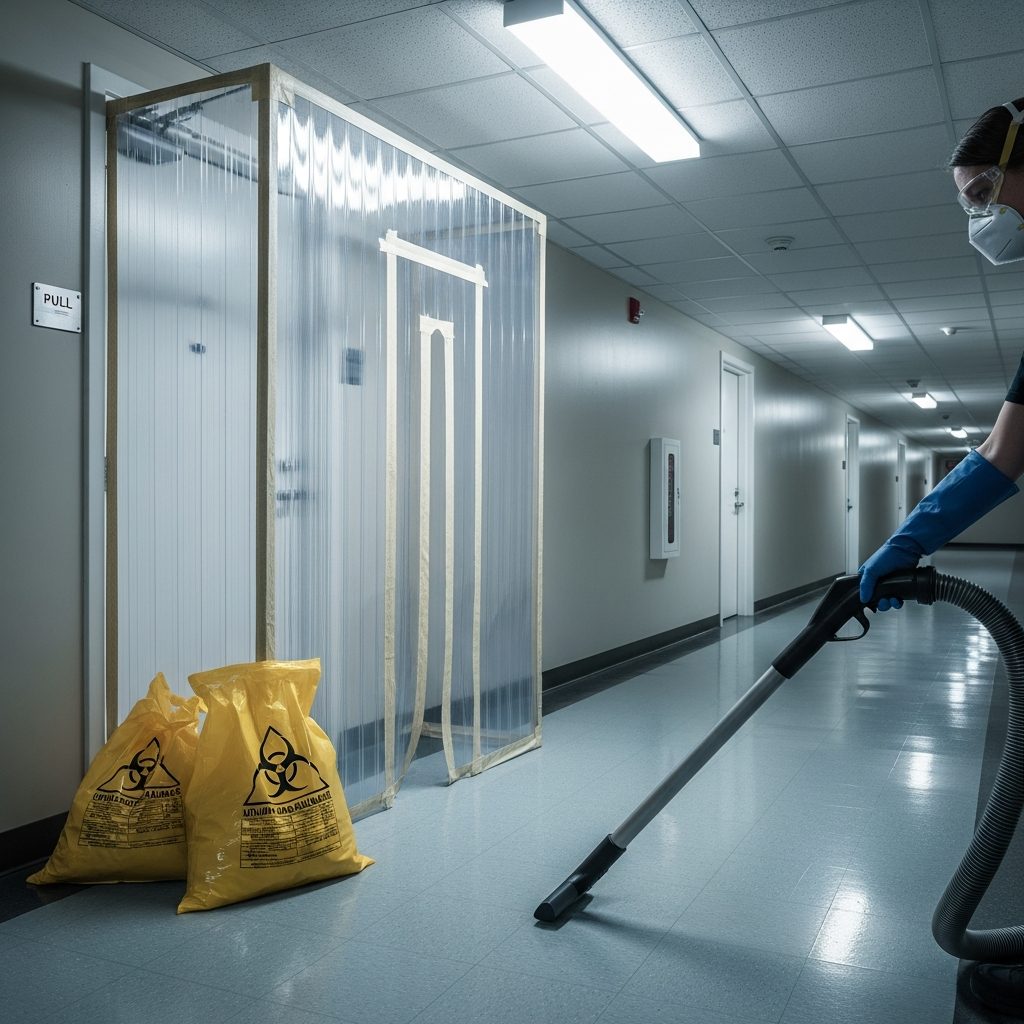
Containment is even more important in apartments due to shared corridors and ventilation. Tape plastic at doorways with a slit entry. Cover supply and return registers in the work zone. If possible, create gentle negative pressure with a fan exhausting to the exterior through a window. Turn off central HVAC serving the area to avoid distributing spores to neighbors.
- Wear an N95 or respirator with P100 filters, gloves, and eye protection.
- Post a simple notice on the door during work to keep others out.
- Bag debris before carrying it through common areas.
Phase 4: Removal and Cleaning Checklist
- HEPA vacuum first. Capture loose dust and spores on the floor, sills, trim, and the affected surface.
- Remove porous, colonized materials. Cut out damaged drywall at least 12 inches past visible growth; discard wet ceiling tiles and carpet pad.
- Clean durable surfaces. Use detergent and agitation on tile, framing, subfloor, and sealed concrete.
- Rinse lightly; avoid saturating finishes, which slows drying in tight apartments.
- Dry aggressively. Deploy a dehumidifier and fans positioned to move air across damp areas without scattering debris.
- HEPA vacuum again after drying, including nearby storage areas where dust may settle.
- Prime or encapsulate staining on sound wood if desired after full drying.
- Rebuild with moisture-smart materials and properly sealed penetrations.
Phase 5: Special Considerations for Apartments
Because apartments pack systems into small spaces, mold often hides in places homeowners don’t expect. Inspect these hotspots thoroughly and in coordination with building staff.
- Behind tub and shower walls if caulk or grout fails
- Under kitchen sinks and dishwashers where slow leaks add up
- Laundry closets with inadequate ventilation for dryers
- PTAC units and fan coil cabinets with clogged condensate pans
- Window sills and frames on shaded elevations prone to condensation
- Shared attics or roof cavities beneath multi-level additions
If recurring growth returns despite cleaning and moisture control, escalate to building management to address system-level causes. Multi-unit situations often benefit from experienced professional mold removal that coordinates repairs across affected apartments and common areas.
Phase 6: Belongings and Soft Goods
Porous items like books, cardboard, and low-density foam can absorb odors and spores. Relocate them from damp rooms, and evaluate case-by-case. Launderable fabrics can often be saved with hot water and thorough drying. Heavily affected mattresses, padding, or ceiling tiles are typically discarded. Always bag items in the work zone before moving them through halls.
Phase 7: Verification and Re-Occupancy
Don’t rush to rebuild. Confirm the moisture source is repaired and surfaces have returned to normal moisture content compared with unaffected areas. Odors should be gone. If multiple units were involved, coordinate final walkthroughs and notes so maintenance teams can monitor potential recurrence during future inspections.
Prevention Checklist for Apartment Dwellers
- Run bathroom fans during showers and for at least 20 minutes after.
- Keep a small hygrometer; aim for 40–50% RH.
- Report drips, stains, or musty odors immediately, even if they seem minor.
- Don’t block PTAC or fan coil airflow with furniture or curtains.
- Use shower curtains or doors properly to limit overspray.
- Avoid storing cardboard on floors; use plastic bins in closets or storage cages.
- Clean window sills regularly and watch for recurring condensation.
Manager/Owner Action Plan
- Implement seasonal roof, gutter, and facade inspections.
- Verify all bath and kitchen fans discharge outdoors and deliver adequate airflow.
- Service PTAC/fan coil condensate drains at the start of cooling season.
- Train maintenance staff in containment basics to minimize cross-contamination during repairs.
- Adopt a standard documentation packet with photos, moisture readings, and repair notes for each incident.
Frequently Asked Questions
Who is responsible for removal in an apartment? Responsibilities vary by lease and local requirements, but landlords typically address building systems and structural components, while tenants manage day-to-day ventilation and housekeeping. Prompt reporting and cooperation are essential.
Can I clean a small spot myself? Many tenants can handle small, surface-level mold when the source is known and simple to control (like a minor bath ventilation issue). Escalate immediately if growth is widespread, if a neighbor’s leak is involved, or if sensitive occupants are present.
Will opening windows help? Natural ventilation can help reduce humidity, but use it strategically. On humid days, outdoor air may add moisture. Mechanical ventilation and dehumidification are more predictable.
What if mold is inside a shared wall? That usually requires professional containment and coordinated repairs across units. Management should investigate vertically and horizontally along plumbing or ventilation pathways.
Can I save my couch or mattress? Soft, thick materials that were damp for more than a short time are difficult to restore and may continue to smell. Hard surfaces and washable fabrics are better candidates for cleaning.
How do I prevent bathroom mold? Run the fan during and after showers, squeegee tile, keep caulk intact, and maintain RH below 50%. Report worn grout or loose tiles promptly.
Is air testing required before moving back in? Not always. Visible cleanliness, absence of odors, and verified dryness are strong indicators. Where verification is needed, management may arrange appropriate assessments.
Make Your Bloomfield Apartment Healthier
Multi-unit buildings demand teamwork. With fast reporting, thoughtful containment, and moisture-focused repairs, you can resolve mold quickly and prevent repeat issues that affect neighbors. When scope or complexity grows, coordinate with management to bring in trusted mold removal services that understand apartment systems and can protect common areas.
Whether you rent or manage, this checklist equips you to act decisively, communicate clearly, and restore fresh, clean air throughout the building.