Introduction: Choosing Effective Products for Mold Odor in Bloomfield, NJ
Walk into a room and catch a whiff of earthy, damp air? That musty signature often points to moisture and microbial activity—and it can linger long after visible dampness has dried. While fixing leaks and controlling humidity are non-negotiable, the right products can help you eliminate stubborn smells faster and keep them from coming back. If you prefer to start with an expert assessment in Bloomfield, New Jersey, you can consult local mold odor removal professionals who understand older basements, bathroom ventilation quirks, and the humid swings of Essex County.
Below, you will find a practical guide to product categories that actually work, how to use them safely, and what to avoid. Pair these options with source control and good airflow for the best results.
First Things First: Products Are Not a Substitute for Source Control
Before opening a bottle or box, chase down moisture. No product can overcome a continuing leak, a perpetually damp basement, or an unvented bathroom shower. Confirm that gutters are clear, downspouts discharge away from the foundation, and bathroom/kitchen fans exhaust outdoors. Use a dehumidifier to hold indoor relative humidity between 30% and 50%, especially during Bloomfield’s muggy summer months.
Top Product Categories That Help
- Detergent Cleaners for Non-Porous SurfacesFor tile, sealed concrete, metal, and sealed wood, a mild detergent with warm water is an effective first-line cleaner. Wet the surface lightly, wipe, rinse, and dry thoroughly. Detergent removes the grime where musty smells cling and prepares surfaces for better airflow and continued drying.
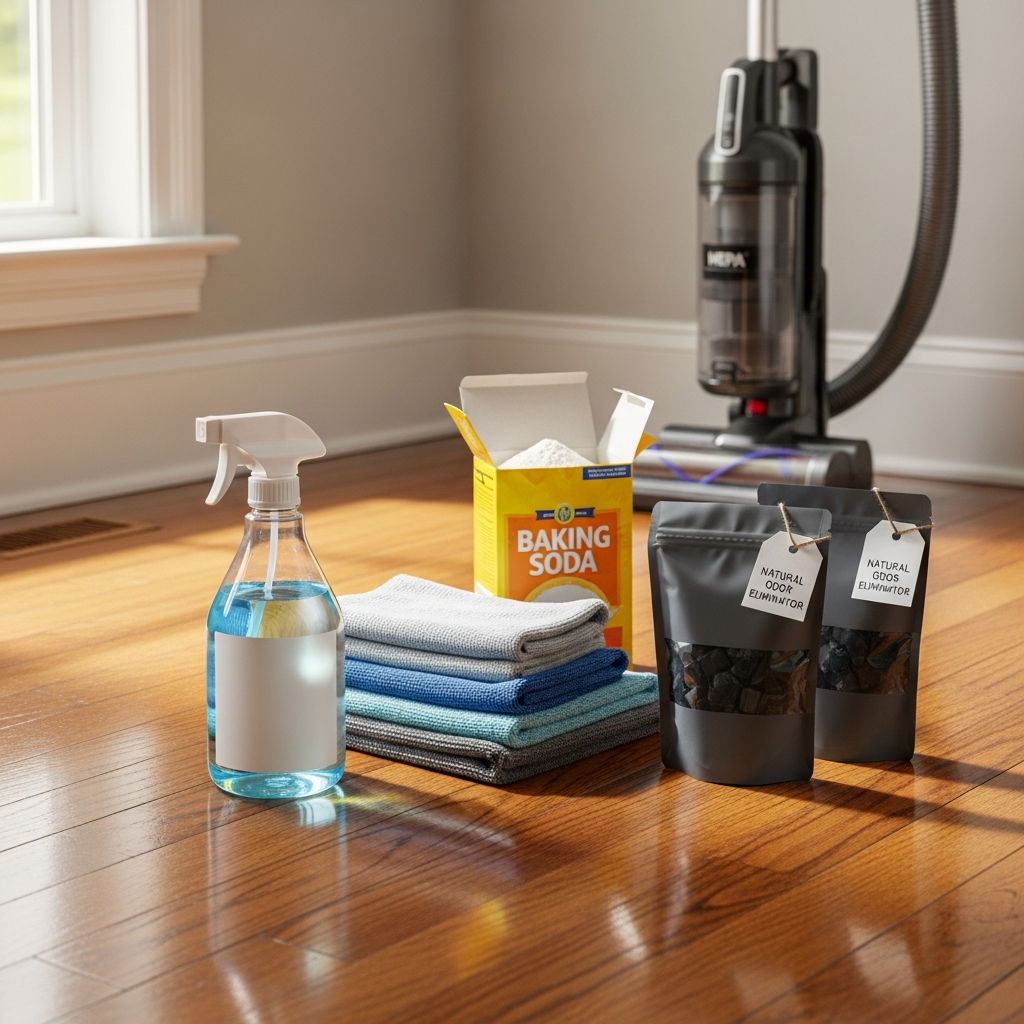
- HEPA VacuumsAfter cleaning and drying, a HEPA-filter vacuum can capture fine particles that carry odors and settle in corners, on baseboards, and in floor crevices. Use the brush and crevice tools, and replace HEPA filters on schedule for best results.
- Activated Charcoal and Carbon FiltersCharcoal is a workhorse odor adsorbent. Place trays or breathable pouches in musty rooms, closets, and basements. Replace or recharge them as they become saturated. Some homeowners also install carbon filters within air purifiers to scrub odors from circulating air.
- Baking Soda (Sodium Bicarbonate)This pantry staple absorbs odors well and is safe on most surfaces. Sprinkle on carpets before vacuuming, leave bowls in enclosed spaces, or place open boxes on shelves. Replace regularly until the smell fades.
- Enzymatic Cleaners for Organic ResiduesWhere organic residues remain (e.g., pet accidents on subfloors, damp drywall dust, or residues under appliances), enzymatic cleaners can break down odor-causing compounds. Always test in an inconspicuous spot and follow label directions.
- Sealers and Primers (After Drying)Once materials are truly dry and odor-free, specialized primers can seal minor residual odors in non-porous or semi-porous substrates. Do not use these to “hide” active problems; they are for finishing after successful drying and cleaning.
- Room Air Purifiers With HEPA and CarbonA portable purifier with true HEPA plus carbon can reduce fine particles and odors. Place units where you spend the most time—bedrooms and living rooms—and size them for the square footage. Replace filters per manufacturer guidance.
How to Use Products Effectively
- Sequence matters: Dry first, clean second, deodorize third, and route fresh air through the space.
- Test first: Try new cleaners on small, hidden areas to ensure compatibility and avoid discoloration.
- Porous caution: If porous items still smell musty after drying and cleaning, consider replacement. Odors often persist in carpet padding, fiberboard, and unsealed drywall.
- Ventilate while using: Open windows when weather permits and use fans to exhaust stale air.
Bloomfield-Specific Tips
In older Bloomfield homes with fieldstone or block foundations, unsealed masonry can hold dampness and contribute to an earthy odor. A detergent scrub followed by steady dehumidification often helps. Keep storage a few inches off the basement floor and use plastic bins instead of cardboard boxes. In bathrooms, products excel when paired with a well-functioning exhaust fan that runs during and 20–30 minutes after showers.
What to Avoid
- Masking fragrances: Strong scents can temporarily hide musty odors but often create a mixed smell that is worse and does nothing to solve the moisture problem.
- Harsh chemical cocktails: Never mix cleaners; follow label directions and keep it simple with detergent-first approaches.
- Overreliance on ozone: Ozone generators can irritate lungs and damage materials. Focus on safe, proven methods.
Sample Product Strategy by Room
- Basement– Dry: Run a dehumidifier to 30%–50% RH; check gutter downspouts and grade outside.
– Clean: Detergent scrub on sealed floors and walls; HEPA vacuum after drying.
– Deodorize: Place activated charcoal trays and replace weekly until odor is gone.
– Maintain: Keep storage in sealed plastic bins off the floor; monitor humidity. - Bathroom– Dry: Confirm the exhaust fan vents outdoors; run it during and after showers.
– Clean: Detergent wash tile and grout lines; replace cracked caulk.
– Deodorize: Use baking soda in cabinets or charcoal pouches near laundry bins.
– Maintain: Reseal grout periodically and keep towels dry. - Kitchen and Laundry– Dry: Inspect supply and drain lines; fix drips immediately.
– Clean: Detergent wipe under sinks and appliances; HEPA vacuum floor edges.
– Deodorize: Baking soda boxes in cabinets and charcoal near trash and recycling.
– Maintain: Replace worn hoses and keep floors dry.
When to Call Professionals
If odors persist despite careful product use and moisture control, suspect hidden dampness (behind walls, under subfloors, or in insulation) or HVAC issues. Trained technicians can trace hard-to-find sources with moisture meters, thermal imaging, and airflow diagnostics. That level of evaluation, followed by targeted cleaning and drying, is often the key to eliminating stubborn mold odor rather than chasing it with endless supplies.
Frequently Asked Questions
Q: Do I need bleach for musty smells? A: Not usually. Detergent and water, followed by thorough drying, are effective for many surfaces. Bleach is harsh and not effective on porous items where odors often reside.
Q: How long should I use charcoal or baking soda? A: Use them continuously and replace as they become saturated—every few days at first, then weekly or monthly as the odor declines.
Q: Will paint or primer stop the smell? A: Only after the area is genuinely dry and odor-free. Primers can help with minor residual smells on certain surfaces, but they should never be used to conceal active issues.
Q: Can air purifiers fix the problem alone? A: Purifiers reduce particles and odors but cannot overcome ongoing moisture. Combine them with drying, cleaning, and proper ventilation.
Q: What if the smell returns after rain? A: Recheck gutters, downspouts, and foundation grading; monitor basement humidity and run a dehumidifier as needed. Odor rebound after rain often indicates moisture ingress.
Bring Back Clean, Neutral Air
The best results come from pairing the right products with smart building practices—drying, cleaning, and ventilation. If you want a clear, end-to-end solution tailored to your home, schedule professional mold odor removal and breathe easier knowing every cause has been addressed.