
Introduction: The Homeowner’s Roadmap to Mold Odor Control in Bloomfield, NJ
Mold odor is the nose’s early warning system—a sign that moisture and organic material have met long enough to support microbial activity. In Bloomfield, New Jersey, where humid summers, periodic heavy rains, and a mix of housing ages converge, the musty smell can appear in basements, bathrooms, or even be carried through your HVAC to living spaces. This comprehensive guide explains how to diagnose, eliminate, and prevent mold odors without guesswork. If you want guidance from the outset, consult local mold odor removal experts who understand the way Bloomfield homes are built, vented, and maintained.
From science to step-by-step practice, you will learn what that smell really means, how to find the source, which cleaning and deodorizing methods work, and how to keep fresh indoor air year-round.
The Science Behind the Smell
The musty odor comes from microbial volatile organic compounds (MVOCs) produced as mold metabolizes. Odor intensity varies with moisture levels, temperature, and air movement. What you smell is not the whole story: even light odors can signal hidden dampness behind drywall, under flooring, or inside insulation. Understanding that the aroma is a symptom—not the problem—keeps you focused on the real target: moisture control.
Common Bloomfield Sources and Patterns
- Basements and crawl spaces: Historic masonry, minor seepage after storms, and high summer humidity create ideal conditions.
- Bathrooms: Long, steamy showers without adequate exhaust leave walls and ceilings damp.
- Kitchens and laundry rooms: Leaks at supply lines, drain traps, and appliances often develop slowly.
- Attics and roofs: Inadequate ventilation, roof leaks, or bath fans venting into attics instead of outdoors.
- HVAC systems: Dirty filters, leaky returns, and clogged condensate drains can circulate musty air.
Assessment: Find Moisture First
Start with your senses: look for staining, bubbling paint, warped trim, and efflorescence on masonry. Touch suspect areas; coolness or dampness signals excess moisture. Simple tools like hygrometers reveal whether rooms exceed 50% relative humidity. If the odor spikes after rain or when the air conditioner starts, note the timing—it can guide you to the cause.
Drying Strategy That Works
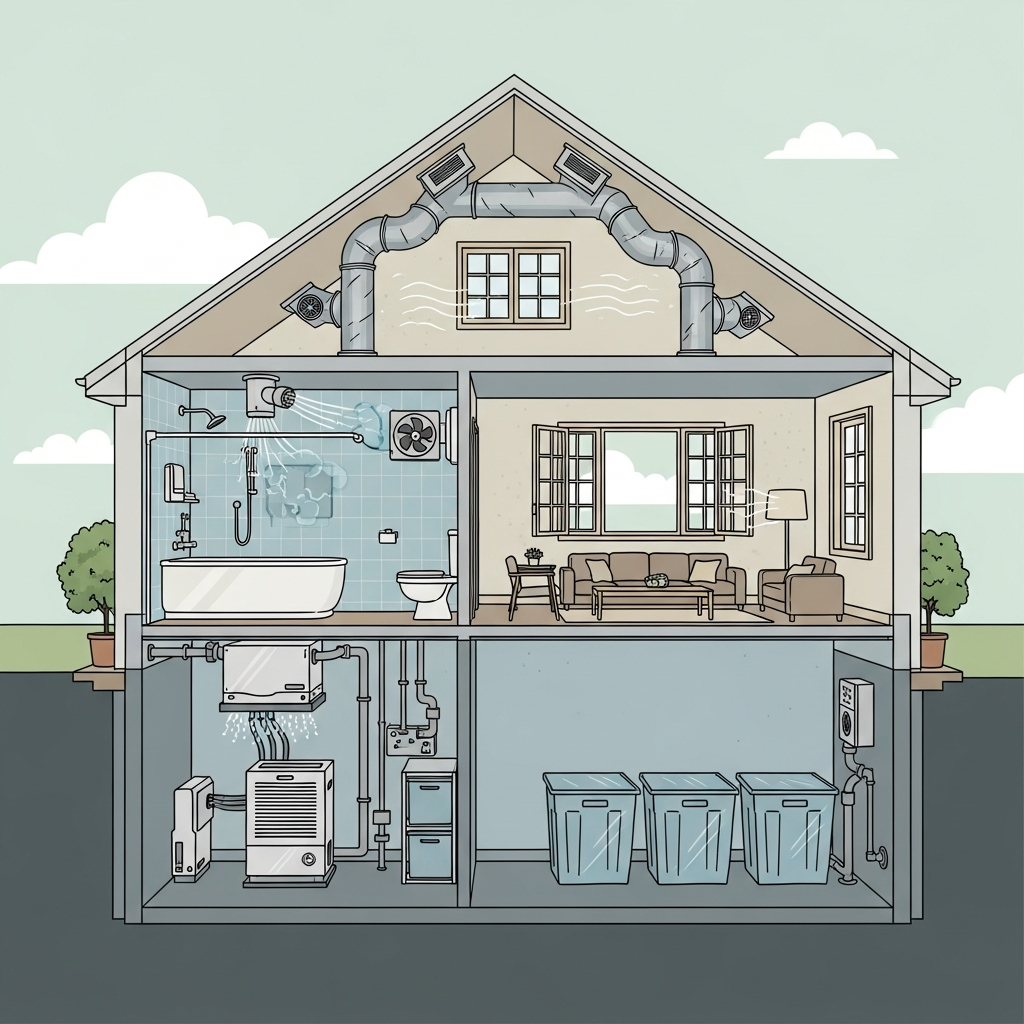
- Ventilation: Exchange stale, humid air with fresh outdoor air when weather allows. Create cross-breezes with window placement and fans.
- Dehumidification: Maintain 30%–50% RH indoors. Basements in Bloomfield often require continuous dehumidifier use in summer.
- Leak repair: Address roof, plumbing, and foundation leaks quickly. Clear gutters and extend downspouts to move water away from the house.
- Air movement: Position fans to sweep across wet surfaces; keep them running until materials are dry to the touch.
Cleaning and Deodorizing, Step by Step
- Non-porous surfaces: Use a mild detergent with warm water. Wipe, rinse, and dry completely.
- Semi-porous materials: Scrub with a stiff brush and repeat as needed; ensure full drying after each pass.
- Porous items: Discard those that hold odor despite cleaning—ceiling tiles, carpet padding, and non-washable insulation are common examples.
- HEPA vacuum: After drying, vacuum floors, baseboards, and vents to collect fine particles.
- Odor adsorbents: Use baking soda or activated charcoal to capture lingering smells; replace regularly.
Special Case Areas
Basements: If the smell originates below grade, focus on water management. Keep storage in sealed plastic bins off the floor, seal minor cracks, and maintain steady dehumidification. Monitor humidity after storms. Bathrooms: Run exhaust fans during and 20–30 minutes after showers, reseal grout and caulk as needed, and keep towels from piling up damp. Attics: Ensure proper ventilation and confirm that bathroom vents discharge outdoors.
HVAC Considerations
Your HVAC system can spread or solve odor problems. Replace filters regularly, seal return duct leaks that draw humid air from basements or attics, and confirm that the condensate drain is clear. If odors coincide with system operation, consider professional inspection. Sometimes, the fix is as simple as a new filter and a cleared drain line; other times, improving duct sealing and balancing airflow pays dividends.
When to Call a Professional
Persistent odors after thorough drying and cleaning often indicate hidden dampness or structural contributors. Professionals use moisture meters, thermal imaging, and building diagnostics to locate concealed issues efficiently. A targeted plan can resolve long-standing odors that have resisted DIY attempts, especially in complex areas like finished basements, behind tiled walls, or within ductwork.
Preventive Maintenance for Bloomfield Homes
- Keep gutters clear and extend downspouts well away from the foundation.
- Inspect basements after heavy rain; dry any wet spots immediately.
- Run bath and kitchen exhaust fans consistently; install timers to maintain the habit.
- Hold indoor humidity between 30% and 50% with dehumidifiers as needed.
- Replace HVAC filters on schedule and keep air returns clear.
- Use sealed plastic bins for storage; avoid cardboard on basement floors.
- Address plumbing drips the same day you find them.
Case-Study Mindset: How Odor Lingers
Imagine a finished basement family room: a minor foundation leak wets the carpet pad after each storm. The surface carpet dries quickly, but the pad remains damp. Each damp episode feeds microbes and reinforces the musty smell. Without lifting the carpet, replacing the pad, sealing the wall crack, and controlling humidity, the odor returns—no matter how much air freshener you deploy. The lesson is simple: eliminate the water pathway, then clean and deodorize.
Signs You’re Winning the Fight
- Humidity stabilizes below 50% even on rainy days.
- No musty spike when the HVAC turns on.
- Previously affected rooms smell neutral in the morning after being closed overnight.
- Charcoal or baking soda trays need replacement less often over time.
Frequently Asked Questions
Q: Will the smell go away if I just repaint? A: Painting is not a fix for active moisture. Correct the moisture source, clean, and dry thoroughly. Use sealing primers only after odors have been eliminated.
Q: Do I need specialized chemicals? A: Often, no. Detergent and water with diligent drying and HEPA vacuuming are enough for many situations. Porous items that keep smelling usually require replacement.
Q: How do I know if the odor is in the HVAC? A: If it worsens when the system starts, check filters, duct leakage, and the condensate drain. Professional duct inspection may be warranted if the issue persists.
Q: Why does odor return after heavy rain? A: Rain can raise ground moisture and push water through weak points. Maintain gutters, downspouts, and grading; keep a dehumidifier running in vulnerable areas.
Q: Is ozone a good solution? A: Ozone can irritate lungs and harm materials. Focus on moisture control, cleaning, and ventilation for safer, reliable outcomes.
From Musty to Fresh: Your Action Plan
You now have a complete roadmap: track moisture, dry fully, clean correctly, and stabilize humidity to maintain results. If you prefer a streamlined solution from diagnosis to final deodorization, schedule professional mold odor removal and enjoy consistent, fresh indoor air in your Bloomfield home.